
Personal experience where language or culture played a significant role in amharic community
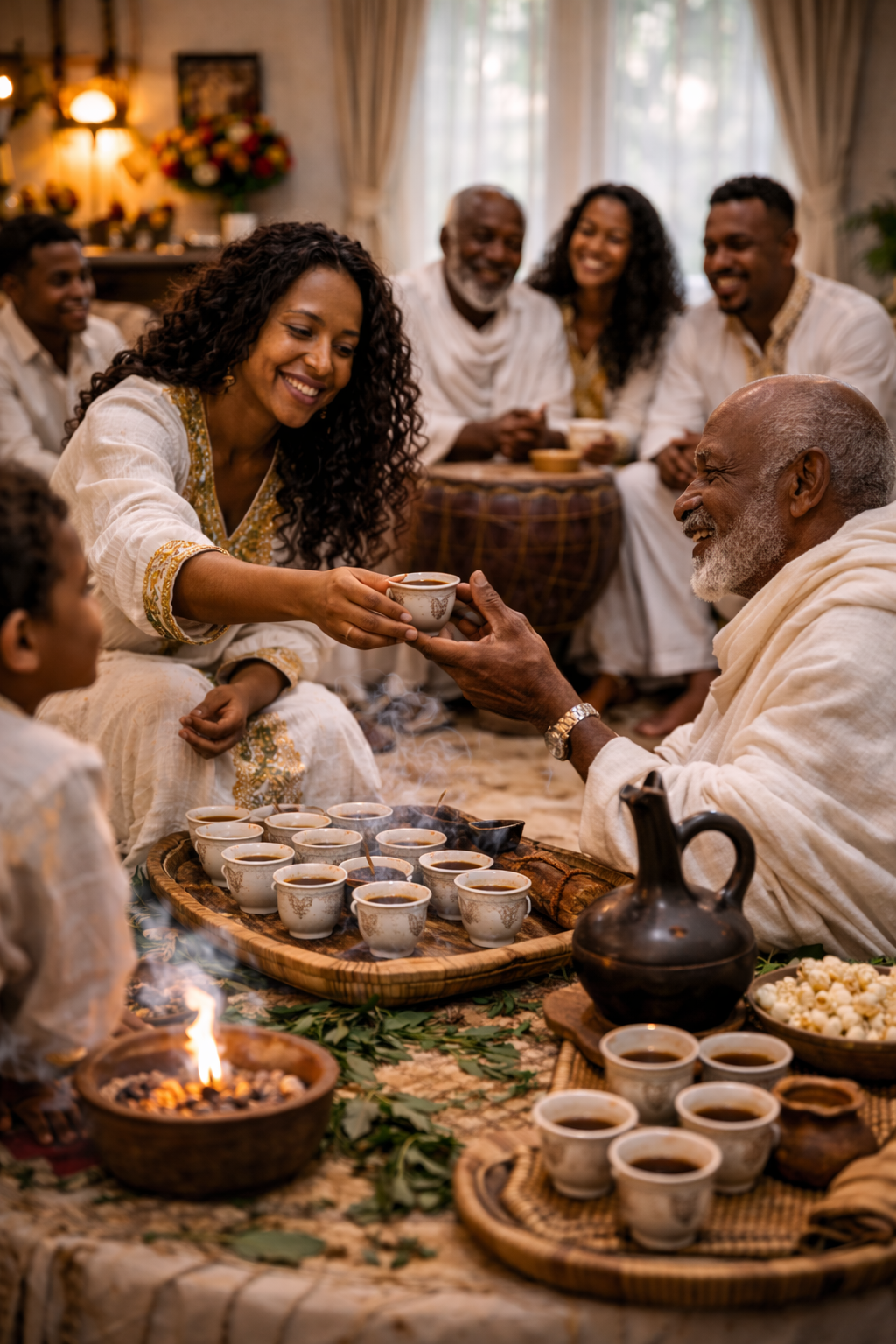
In the Amhara community of Ethiopia, language and culture are deeply woven into everyday life. I once witnessed a moment during a traditional coffee ceremony where this became especially clear. A young man who had grown up abroad returned to visit his grandparents in a rural town. Though he understood Amharic, he was hesitant to speak it fluently. During the gathering, his grandfather began sharing proverbs and stories in Amharic, using expressive tone, humor, and rhythm that simply could not be translated fully into another language. At first, the young man responded in English, and the room felt slightly disconnected. But when he finally answered in Amharic—even imperfectly—the entire mood shifted. Laughter erupted, elders nodded proudly, and the grandmother ululated softly in joy. It was as if speaking the language unlocked a deeper sense of belonging.
That experience showed how language in the Amharic community is more than communication—it is identity and respect. Using Amharic in front of elders signals humility and cultural continuity. Proverbs, blessings, and even everyday greetings carry emotional weight that reflects centuries of tradition. In that moment, the young man was not just speaking words; he was reconnecting with ancestry, heritage, and collective memory. The power of culture was visible in the way everyone embraced him—not because he spoke perfectly, but because he chose to honor his roots.