
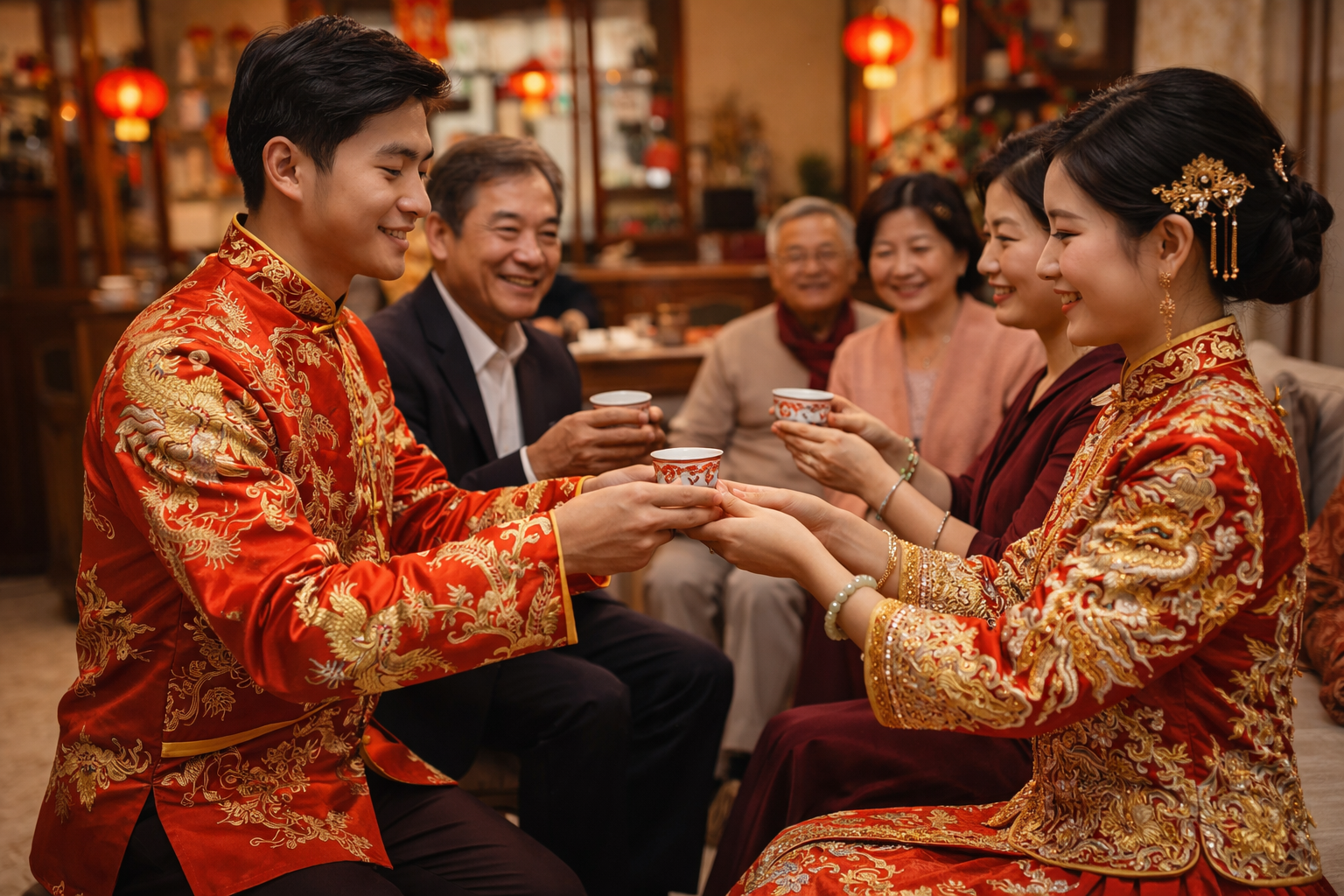
The Tea Ceremony (敬茶 – Jìng Chá)
What It Is
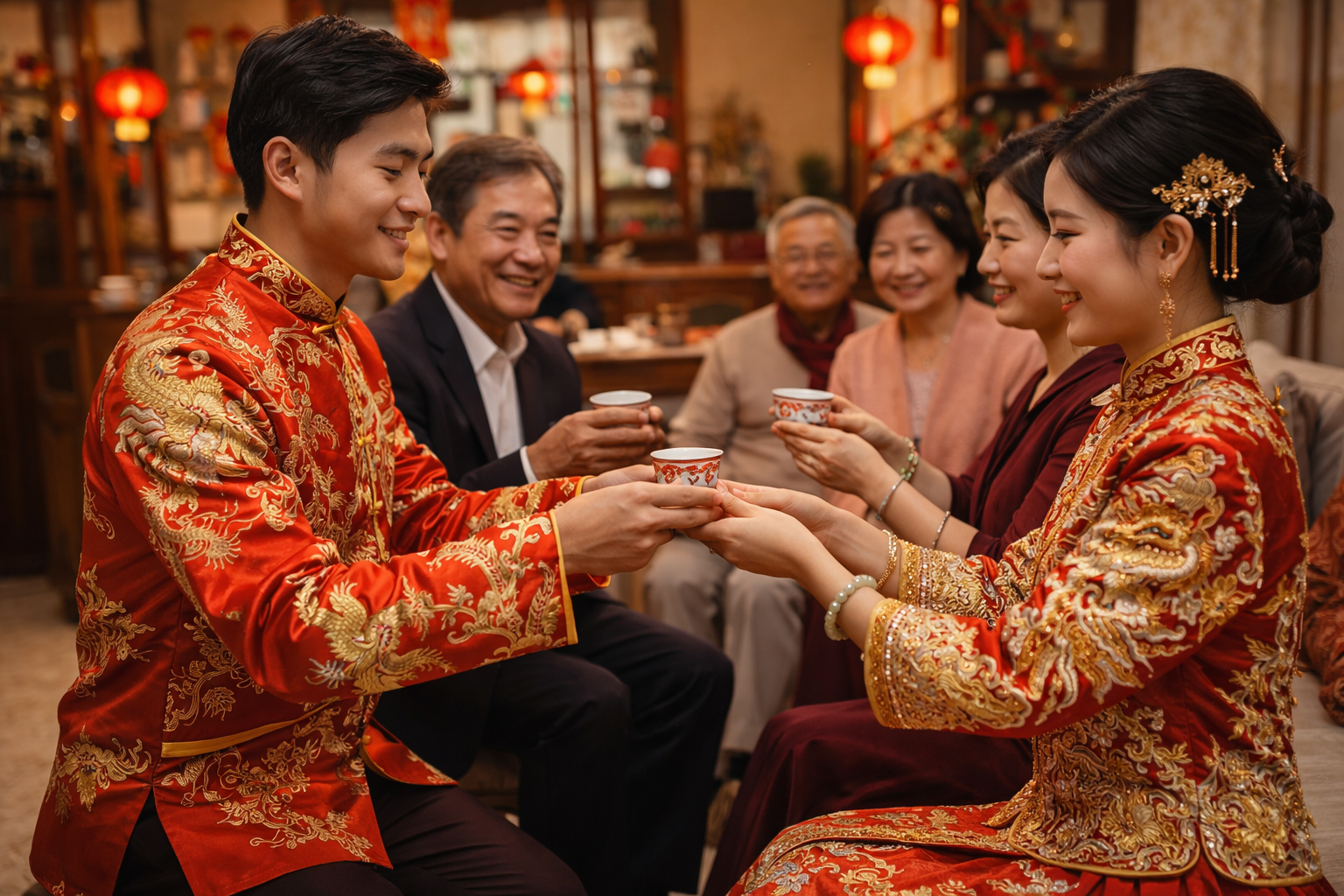
The tea ceremony is a ritual where younger family members serve tea to elders.
It happens during:
weddings
Chinese New Year
important family gatherings
visits to grandparents
It is a simple act — but full of meaning.
Why It Is Important
1. It Shows Respect (孝 – Xiào)
In Chinese culture, filial respect is one of the most important values.
Serving tea means:
thanking parents for raising you
honoring elders’ wisdom
recognizing family hierarchy
It is a physical way to say:
“I appreciate everything you have done for me.”
2. It Strengthens Family Bonds
When tea is served:
elders give blessings
they may give red envelopes or jewelry
emotional moments often happen
It is not just a ritual — it is a moment of connection.
3. It Marks Life Transitions
During weddings, the tea ceremony symbolizes:
joining two families
entering adulthood
accepting new responsibilities
After serving tea, the couple is officially recognized by the family.
4. It Teaches Humility
The act of kneeling or bowing while serving tea reminds younger people to:
stay humble
stay grateful
value tradition
These lessons are passed from one generation to another.
Cultural Meaning
Even in modern cities with busy lifestyles, many Chinese families still keep this tradition.
Why?
Because it represents:
identity
continuity
emotional roots
It reminds people that no matter how modern life becomes, family remains at the center of life.