Traditional wedding customs in amharic culture
The Amhara people of Ethiopia have rich and deeply symbolic wedding traditions that blend Orthodox Christian faith, family honor, and community celebration. Most traditional Amharic weddings are influenced by the Ethiopian Orthodox Tewahedo Church.
Family Negotiations (Shimgilina)
Before the wedding, elders from the groom’s family visit the bride’s family to formally request her hand in marriage. This process is called “Shimgilina.”
Elders speak respectfully and symbolically.
Marriage is seen as a union between two families, not just two individuals.
Agreements about dowry or gifts may be discussed.
This stage emphasizes respect, patience, and family approval.
The Ethiopian Orthodox Church Ceremony
If the couple is Christian (which most Amhara are), the ceremony takes place in an Ethiopian Orthodox Church.
Key features:
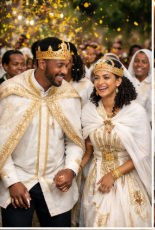
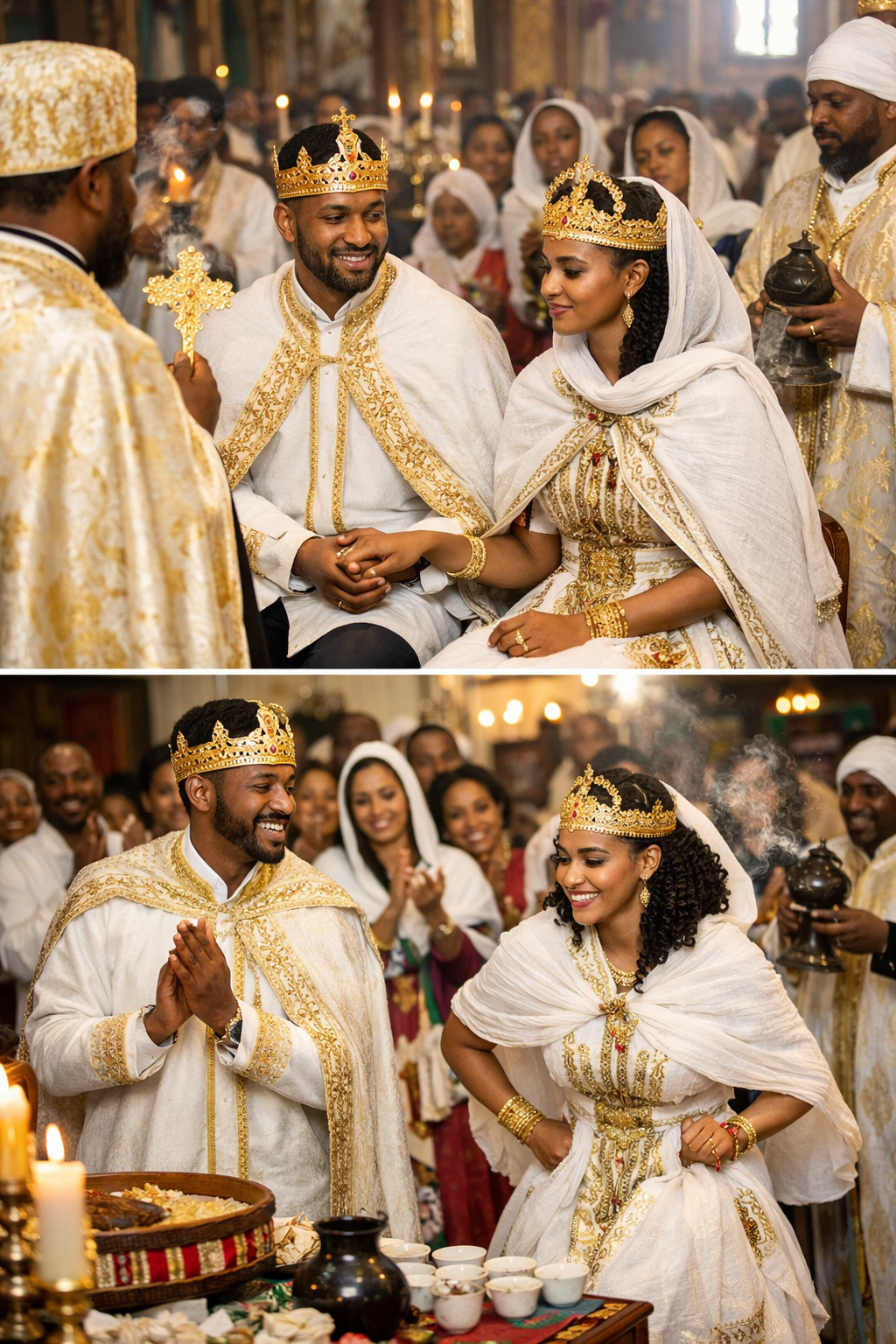
The bride typically wears a traditional white dress with a netela (white shawl).
The groom wears a traditional white garment or suit.
Crowns are placed on the couple’s heads during the ceremony.
The priest blesses them with prayers and holy scripture.
The couple may receive communion together.
The crowns symbolize spiritual royalty and unity under God.
Traditional Attire
Traditional clothing is elegant and modest:
The bride wears a Habesha Kemis, usually white with gold embroidery.
The groom may wear a traditional Habesha outfit with a shawl.
Gold jewelry and braided hairstyles are common.
The color white represents purity and blessing.
Music and Dance
Traditional wedding celebrations include:
Eskista (shoulder dance)
Traditional Amharic songs
Live band or cultural music
Ululation (high-pitched celebratory sound by women)
Dancing is joyful and energetic, often lasting for hours.
Food and Coffee Ceremony
Food plays a major role in celebration:
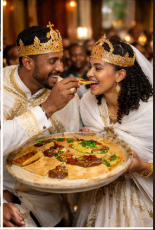
Injera with stews like Doro Wat
Honey wine called Tej
A traditional Ethiopian coffee ceremony
The coffee ceremony symbolizes hospitality, unity, and respect.
Cultural Importance
Amharic weddings are important because they:
Strengthen family ties
Reinforce religious values
Celebrate community unity
Honor cultural identity
Marriage is viewed as sacred and lifelong.
Gallery