

The Legend of Mbéng-Nyə and the Journey of the Akum People
Long ago, before the Akum people settled in the land they now call home, their ancestors were travelling from their former homeland, Tayurakum. The journey was long and difficult. They travelled with their cattle, elders, women, and children, carrying food, traditions, and stories from generation to generation.
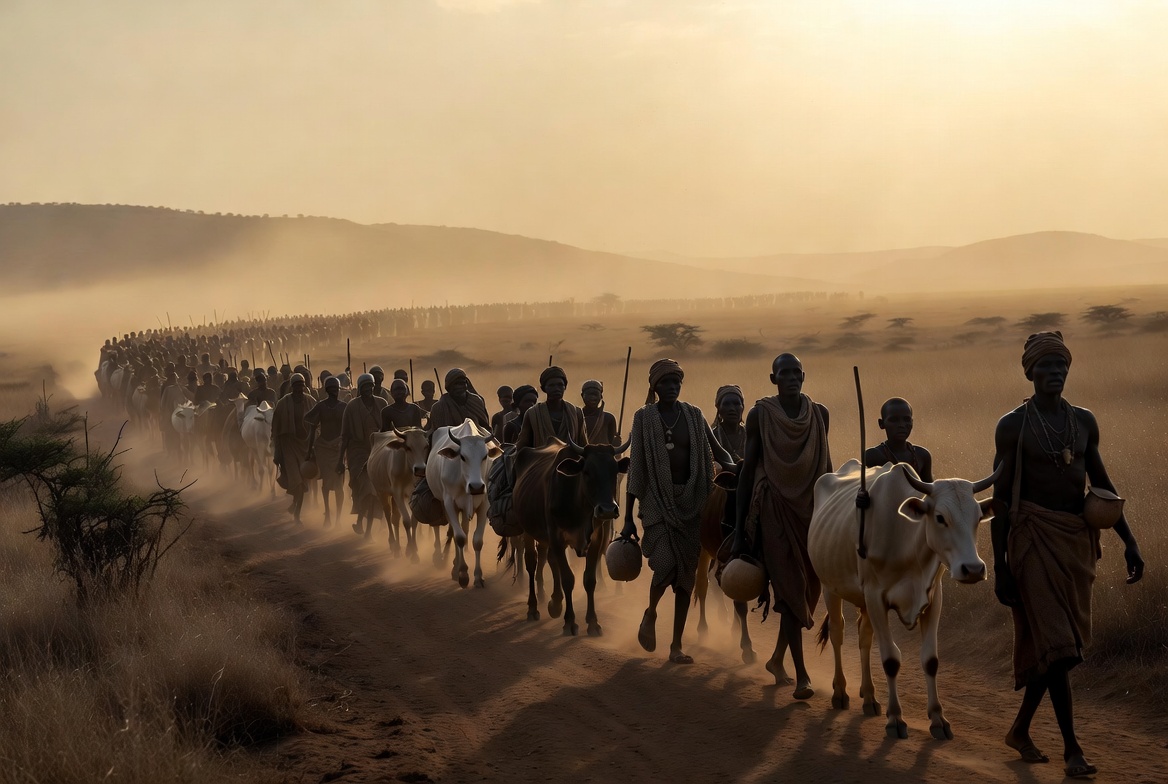
One day, the travellers arrived at a wide and powerful river crossed only by a fragile wooden bridge. Beneath the bridge lived Mbéng-Nyə, the River Spirit — protector of the waters and guardian of safe passage.

The elders warned the people that before crossing, they must honor the spirit of the river by leaving an offering and saying a prayer. They explained that travellers who crossed without respect often brought misfortune upon themselves because the waters did not tolerate pride or disrespect.
However, a young man named Ngwashi grew impatient.
“Why should we leave offerings?” he asked.
“We already labour enough carrying food, wood, and our belongings. This is only a crossing. Let us move quickly.”
Persuaded by his confidence, the group crossed the bridge without stopping, praying, or leaving any offering for Mbéng-Nyə.
That very night, dark clouds gathered overhead. Heavy rains poured from the sky, and fierce winds swept across the land. The river rose violently, crashing against the wooden bridge.
Angered by the people’s disrespect, Mbéng-Nyə loosened the planks beneath the bridge. Suddenly, with a terrible groan, one great plank broke apart. The bridge cracked, and several cattle plunged into the raging waters — many of them belonging to Ngwashi himself.
The people cried out in sorrow. They mourned their losses and called upon their gods and the spirits of the river for mercy.

At dawn, a humbled Ngwashi stepped knee-deep into the river. He called upon Mbéng-Nyə with sincerity and regret. Carrying the largest yam he possessed, he offered it to the river spirit and poured palm wine upon the waters as a sign of repentance.
Slowly, the river calmed.
The broken plank drifted away downstream, and the remaining cattle were spared.
From that moment onward, the travelling group separated. Those who chose to follow Ngwashi continued downstream and settled in a place where the waters were calmer and the land more peaceful. These people later became known as the ancestors of the Akum people.
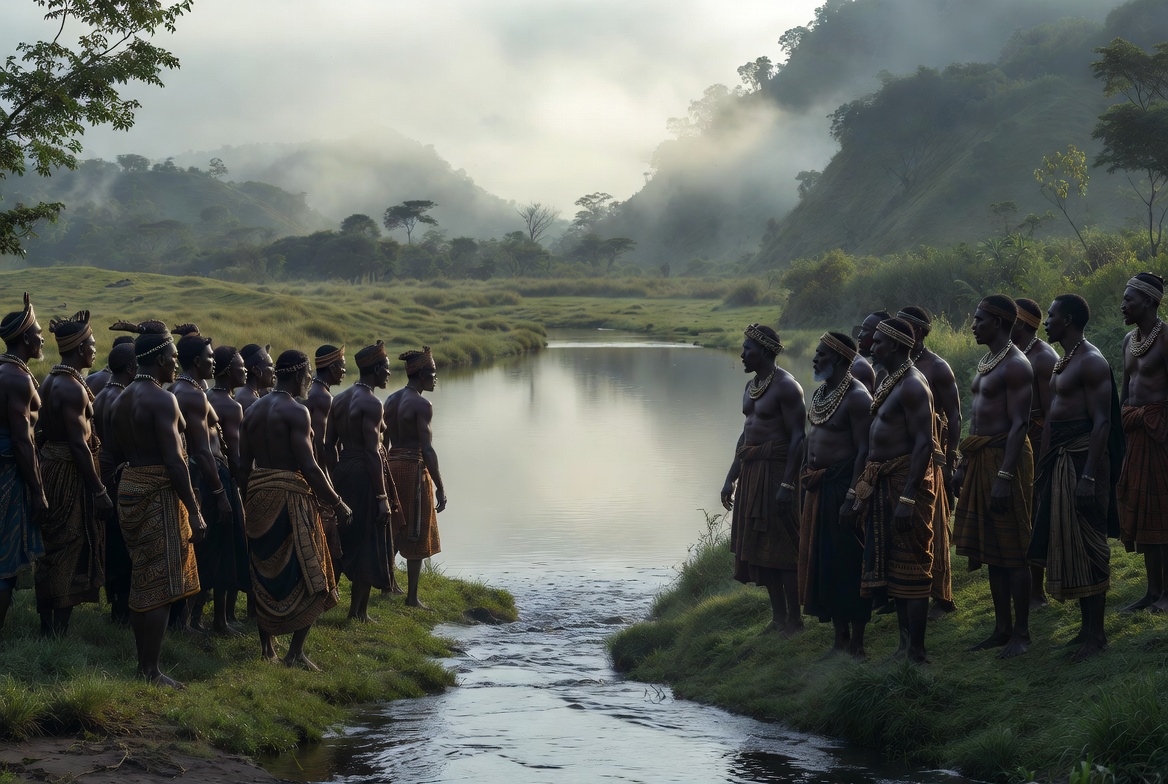
The others, who stubbornly insisted on crossing without humility or respect, remained behind. In later generations, they came to be known as the Mundum people.
Moral of the Story
The legend teaches important values deeply respected in Akum culture:
Respect for nature and the spiritual world
Humility before forces greater than ourselves
The importance of listening to elders
Unity, repentance, and reconciliation
Above all, the story reminds people that pride can lead to destruction, while humility and respect can restore peace.