
The New Yam Festival
The First Yam of the Season
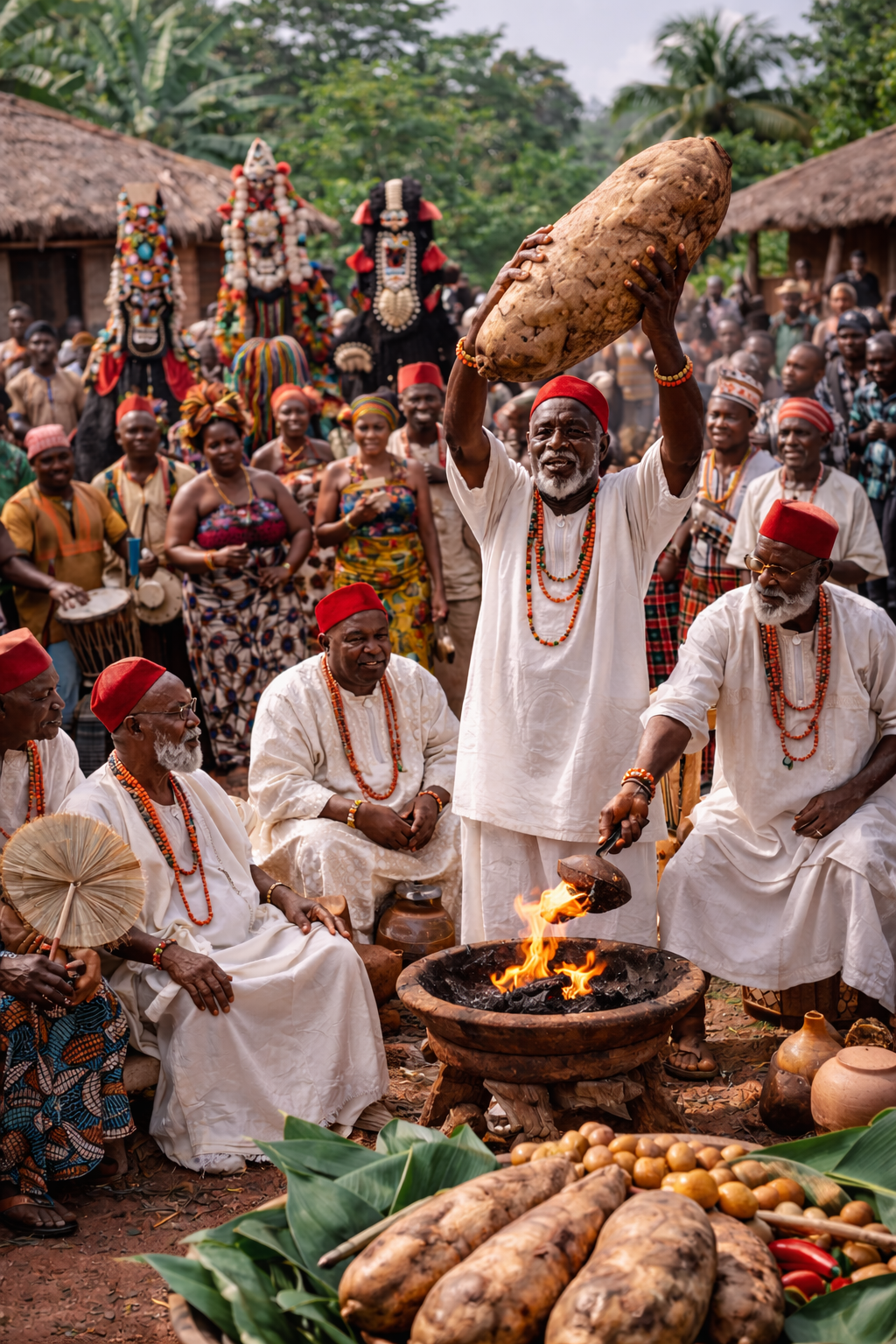
I remember waking up before sunrise in my grandfather’s village in southeastern Nigeria. The air felt different — not just cool from the harmattan breeze, but alive with expectation. It was Iri Ji, the New Yam Festival, the day no one was allowed to eat yam until it had been offered to God and the ancestors.
In Igbo culture, yam is not just food. It is called the “king of crops.” It represents wealth, hard work, masculinity, and survival. A man’s status was once measured by the size of his yam barn.
That morning, the elders gathered in the village square. The oldest man in the community held the biggest yam harvested that year. Women wore colorful wrappers and coral beads. Masquerades waited at the edge of the forest. Drums began to speak.
My grandfather whispered to me:
“We do not eat before we thank the land.”
The chief priest lifted the yam and prayed. He thanked Chukwu (God), the earth goddess Ala, and the ancestors for protecting the farms and bringing rain. A piece of the yam was roasted and offered symbolically.
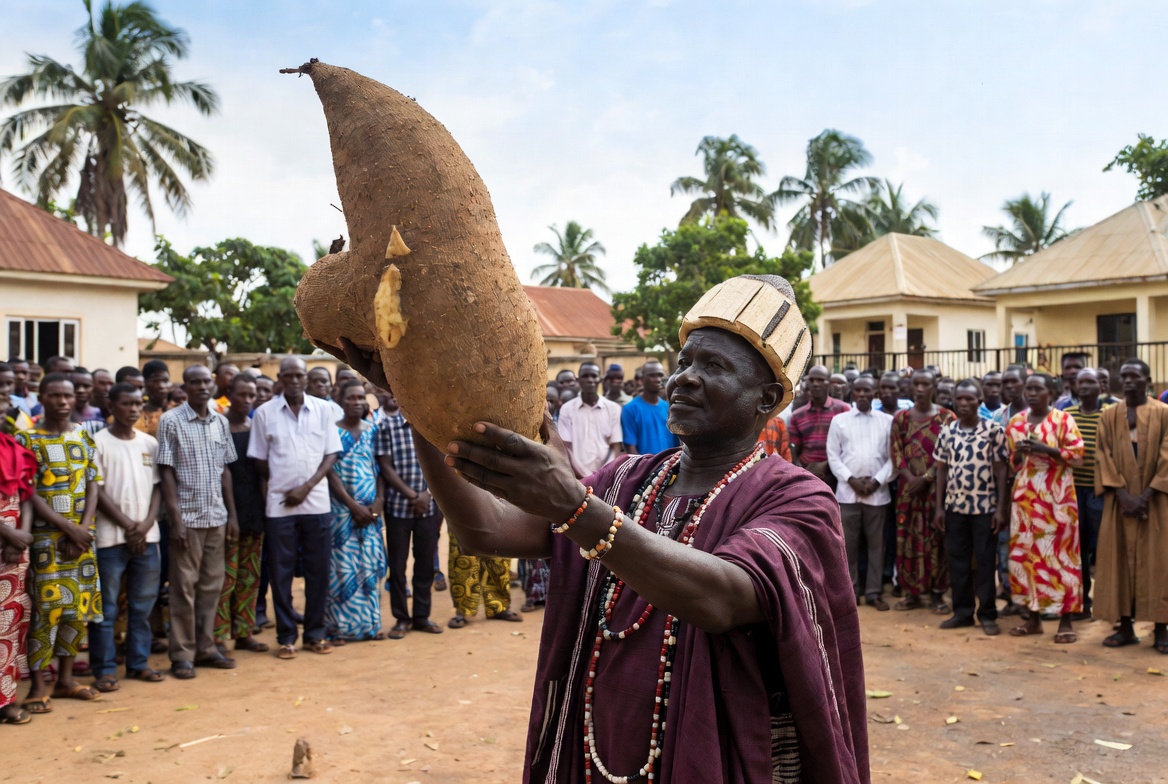
Only after that blessing could the rest of the village cook and eat the new harvest.
Celebration Begins
After the prayers:
Women prepared pounded yam and rich soups.
Young men displayed wrestling skills.
Masquerades danced through the village square.
Drummers played rhythms that echoed into the hills.
Families visited one another sharing food.
There was laughter everywhere. It was not just about yam. It was about gratitude, unity, and identity.
Why It Matters
The New Yam Festival teaches:
Gratitude before enjoyment
Respect for the earth
Community unity
Celebration of hard work
Even today, in cities and abroad, many Igbo families still mark the festival symbolically. It keeps us connected to our roots.
❤️ Why It Is Special
For many Igbo people, Iri Ji is not just a festival — it is a reminder that:
Our land is sacred.
Food is a blessing.
Success must be acknowledged publicly.
Culture survives when it is practiced.