
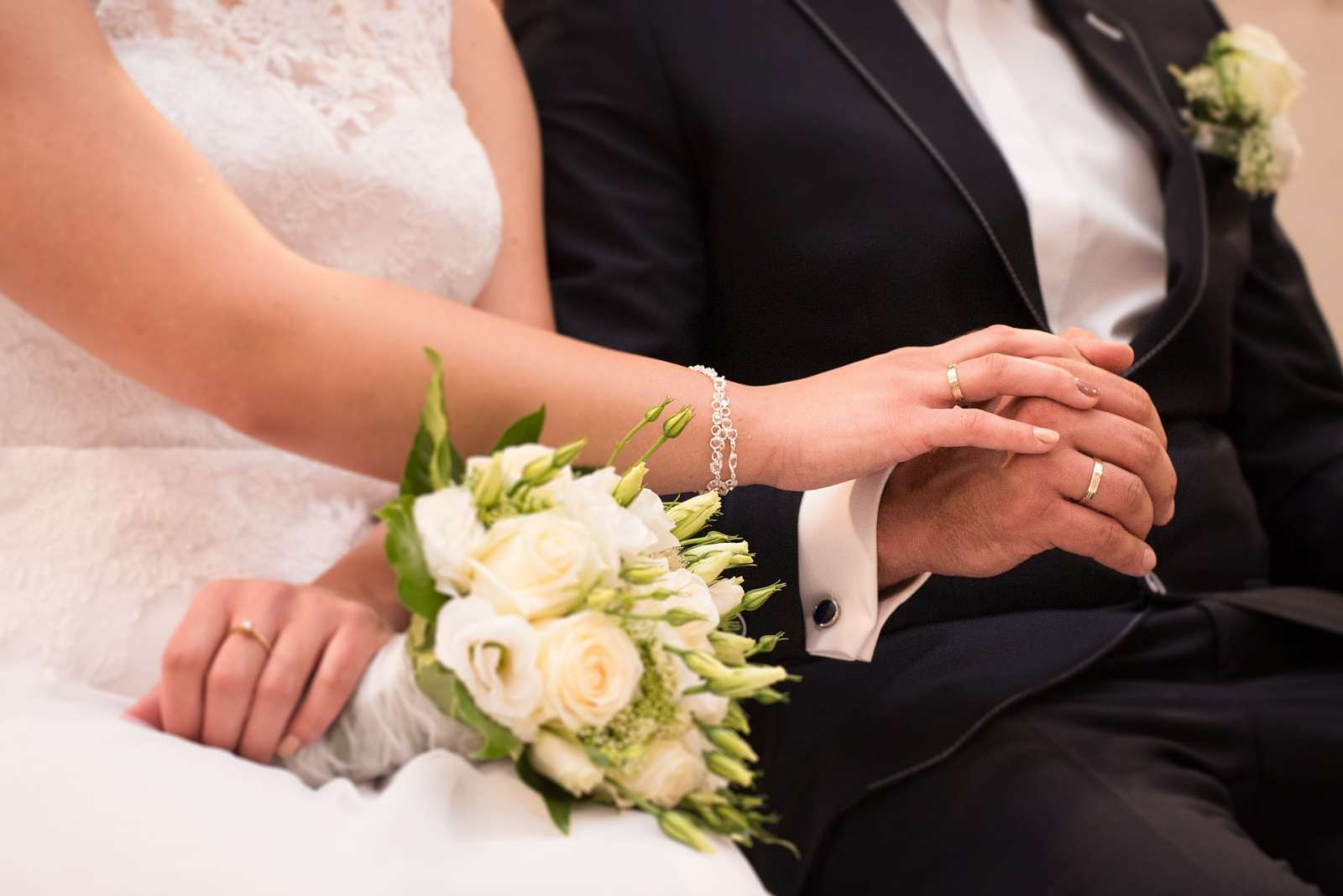
Traditional Russian wedding
Traditional Russian wedding customs blend Orthodox Christian rituals, folk traditions, and lively celebrations. Here are key elements:
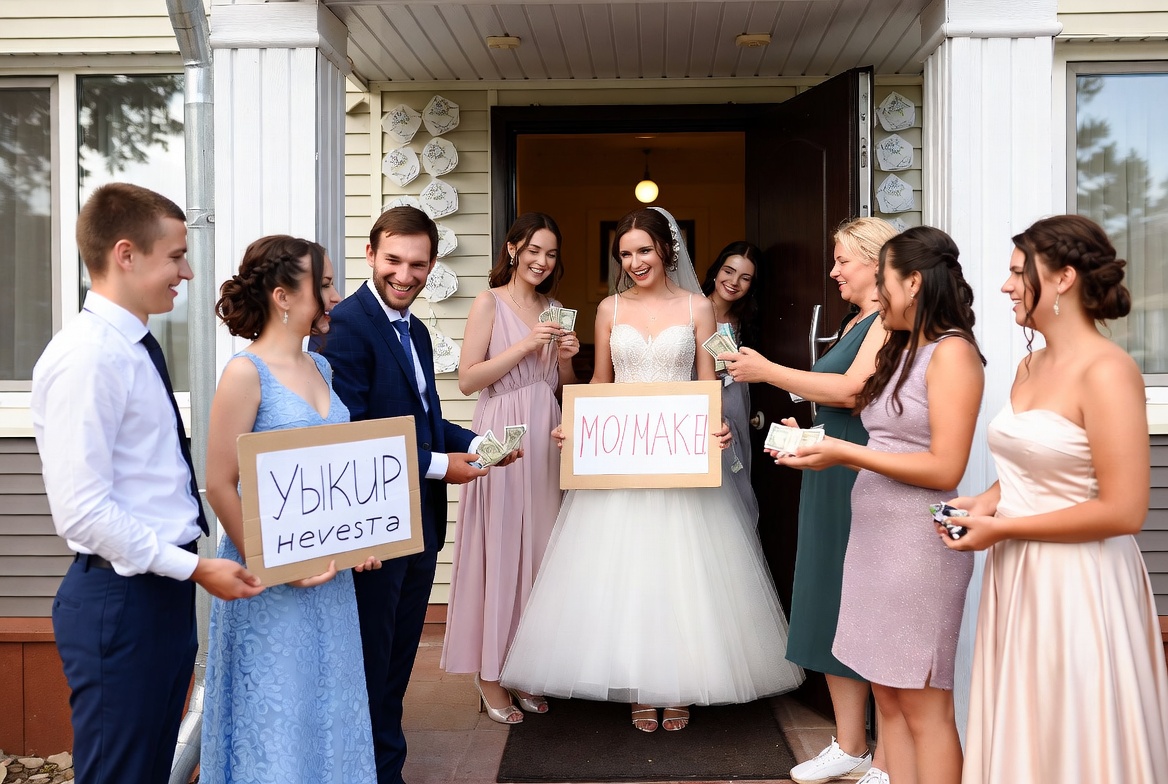
- Ransom (Vykup Nevesty): The groom and friends arrive at the bride's home, where her family/friends "kidnap" her and demand a fun ransom (money, jokes, or tasks) before releasing her.
- Korovai Bread: A large, ornate decorated bread (korovai) symbolizes prosperity and fertility; the couple bites or shares it, often with salt, at the start of festivities.
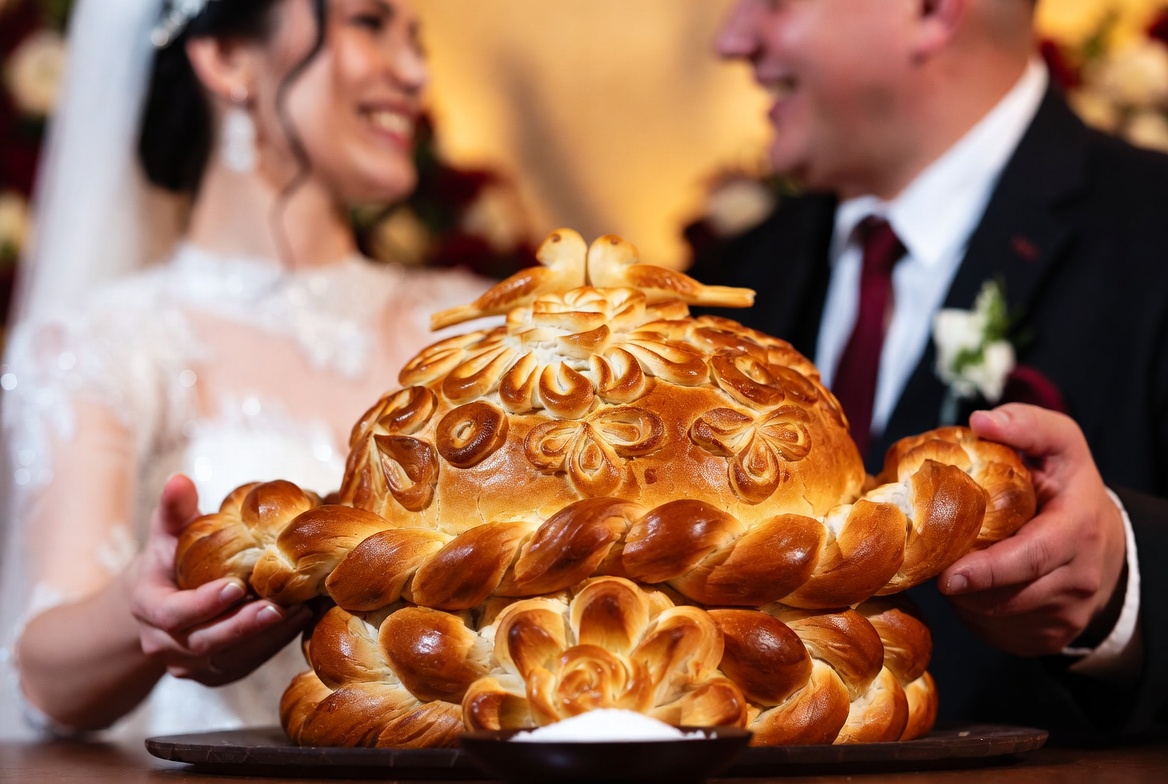
Korovai (Ukrainian Wedding Bread)
- Civil Registration (ZAGS): The official legal ceremony at the registry office, followed by ring exchange (often on the right hand) and signing documents.
 Orthodox Church Crowning: The religious highlight—priest places crowns on the couple's heads (symbolizing royalty in marriage); they share wine and circle the altar three times on rose-colored cloth.
- Traditional Attire: Brides historically wore colorful sarafan dresses (red for joy); modern brides often choose white gowns with veils, while grooms wear suits.
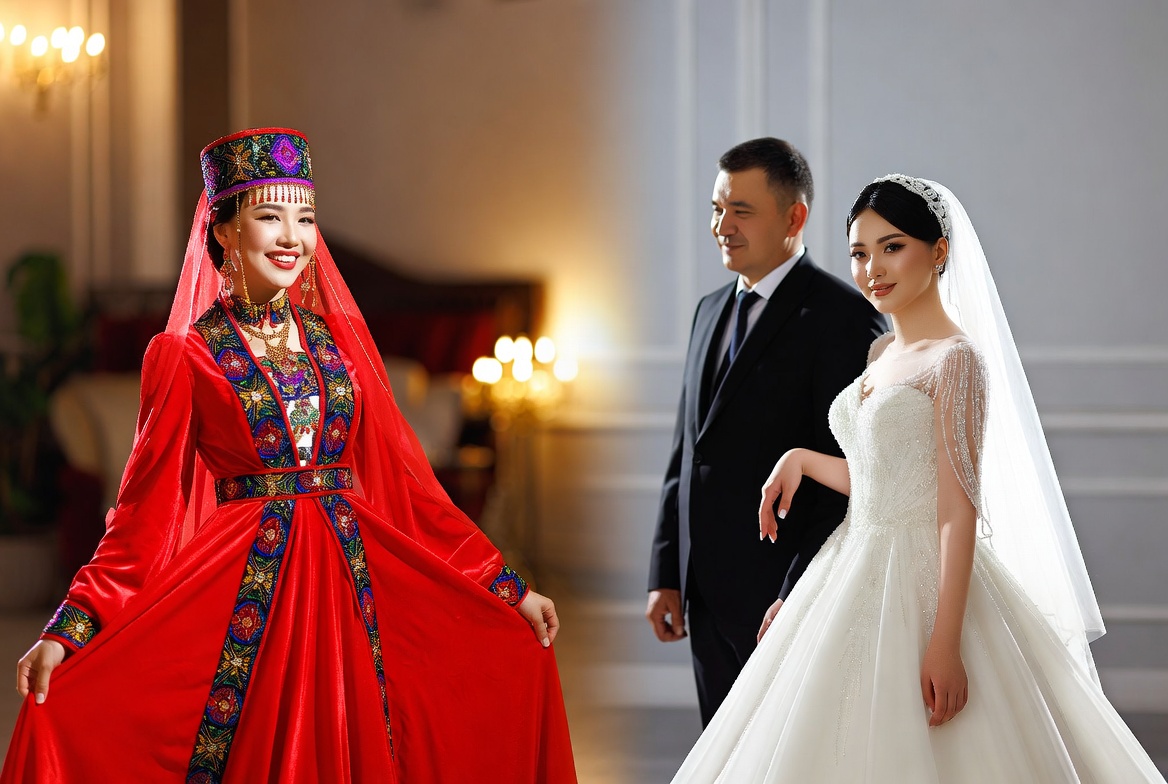
Russian women wearing traditional sarafan dress during a traditional wedding ceremony reenactment in Sibirjachiha village which its members preserve the Old Believers customs and traditions with foundations dating back hundreds of years
- Toasts and "Bitter!" (Gorko!): Guests shout "Gorko!" (bitter) during the reception; the couple kisses to "sweeten" it, often with many lively toasts led by a Tamada (toastmaster).
 Russian Weddings, Toasts, and Table Traditions You Didn't Know Existed | Polyglottist Language Academy
These customs emphasize family, community, fun, and blessings for a long, prosperous marriage. Many couples mix them with modern elements today.