
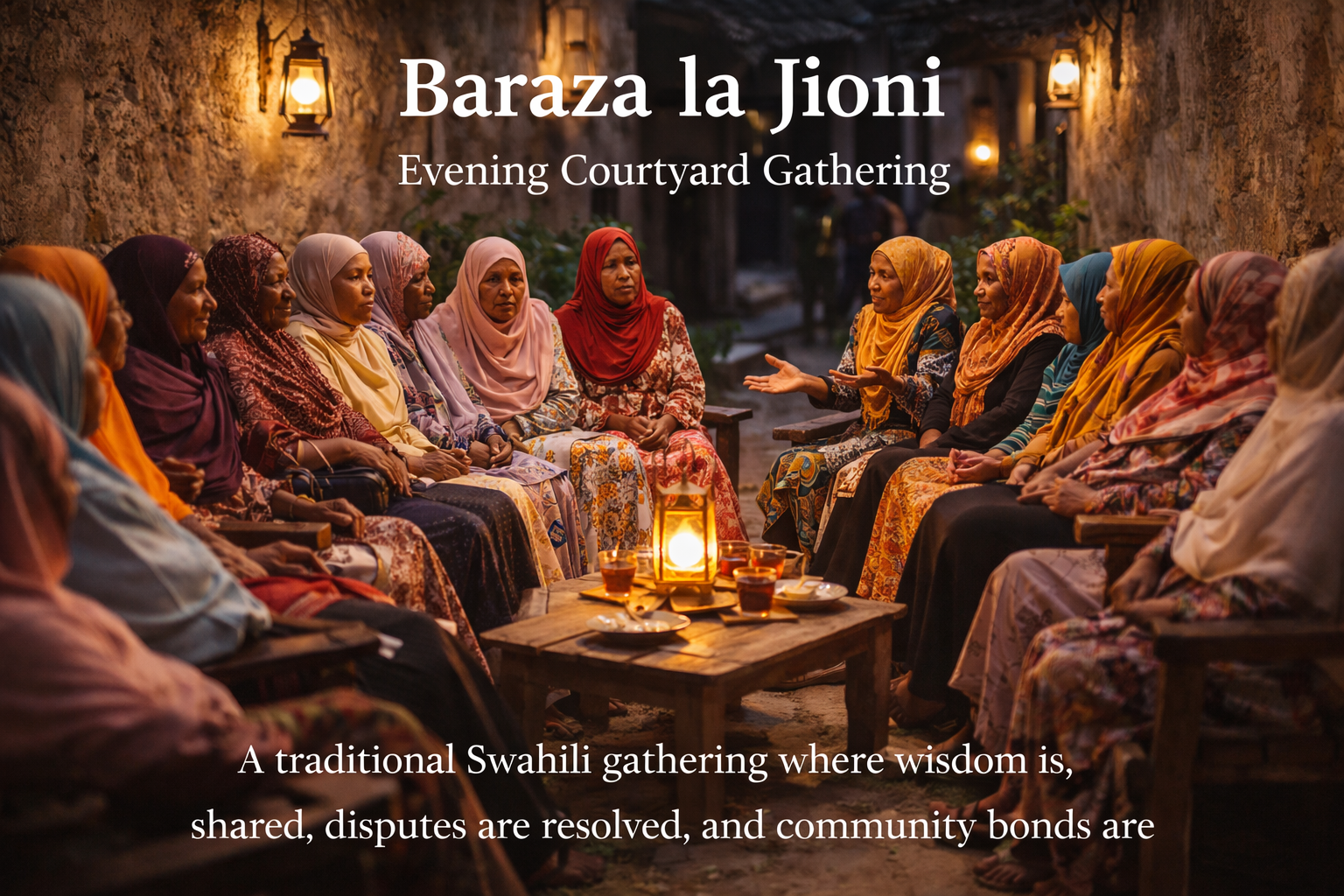
Baraza la Jioni (Evening Courtyard Gathering)
In many Swahili towns — especially Lamu, Mombasa Old Town, and Zanzibar — evenings hold a special place. As the sun sets and the air becomes cooler, people gather outside their homes or in central courtyards. Wooden benches are brought out, tea is poured, and calm conversation begins.
This is the Baraza — a traditional evening gathering that is both social and deeply cultural.
What Happens at the Baraza?
Elders share wisdom and life experiences
Disputes are resolved peacefully
Poetry and proverbs are recited
Community matters and decisions are discussed
Young people sit quietly, listen, and learn
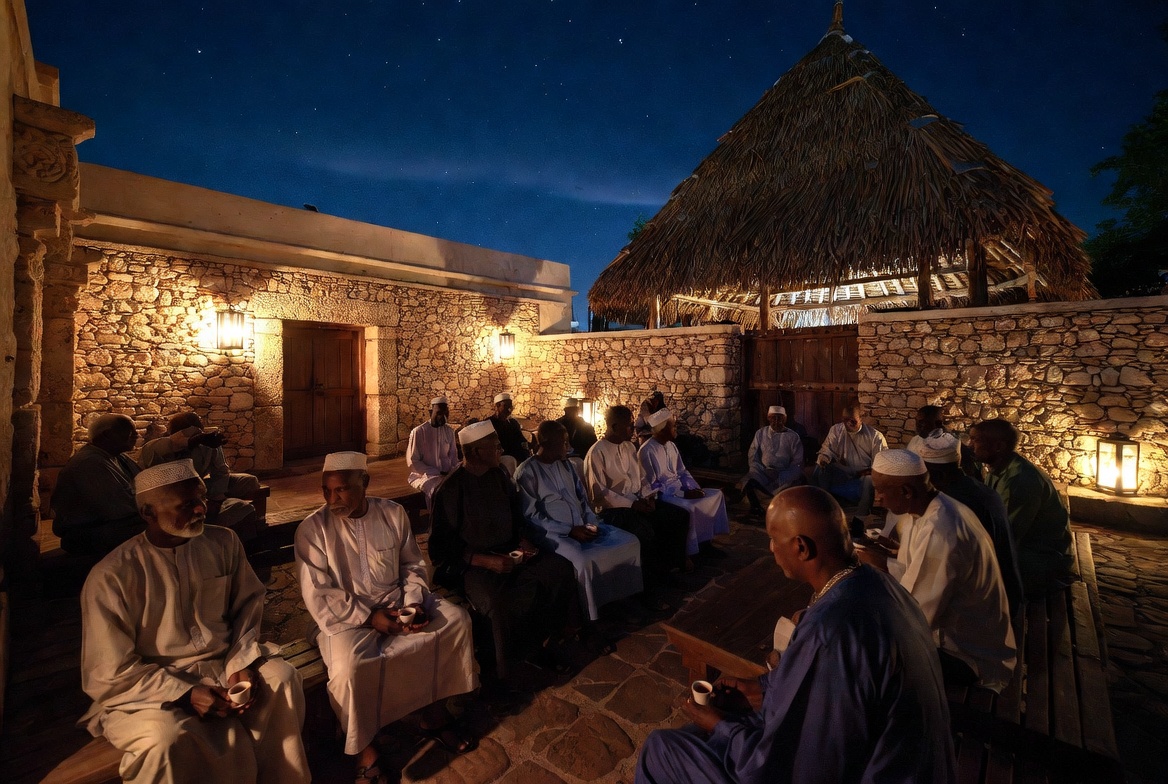
The atmosphere is not noisy — it is thoughtful, respectful, and dignified.
Why the Baraza is Important
Preserves Wisdom It is a living classroom where oral history, stories of ancestors, trade, migration, and faith are passed down from generation to generation without books.
Teaches Respect Young people learn the value of patience — when to speak and when to listen. They observe how elders debate with calmness and respect.
Strengthens Community Problems are solved before they become bigger. Misunderstandings are clarified face-to-face.
Protects Cultural Identity The baraza keeps the Swahili language rich and elegant. It values eloquence — speaking beautifully and wisely.
What It Feels Like
The comforting smell of spiced tea (chai ya rangi)
The gentle sound of the ocean breeze
Soft lantern light flickering on ancient coral stone walls
Slow, thoughtful speech
Occasional warm laughter
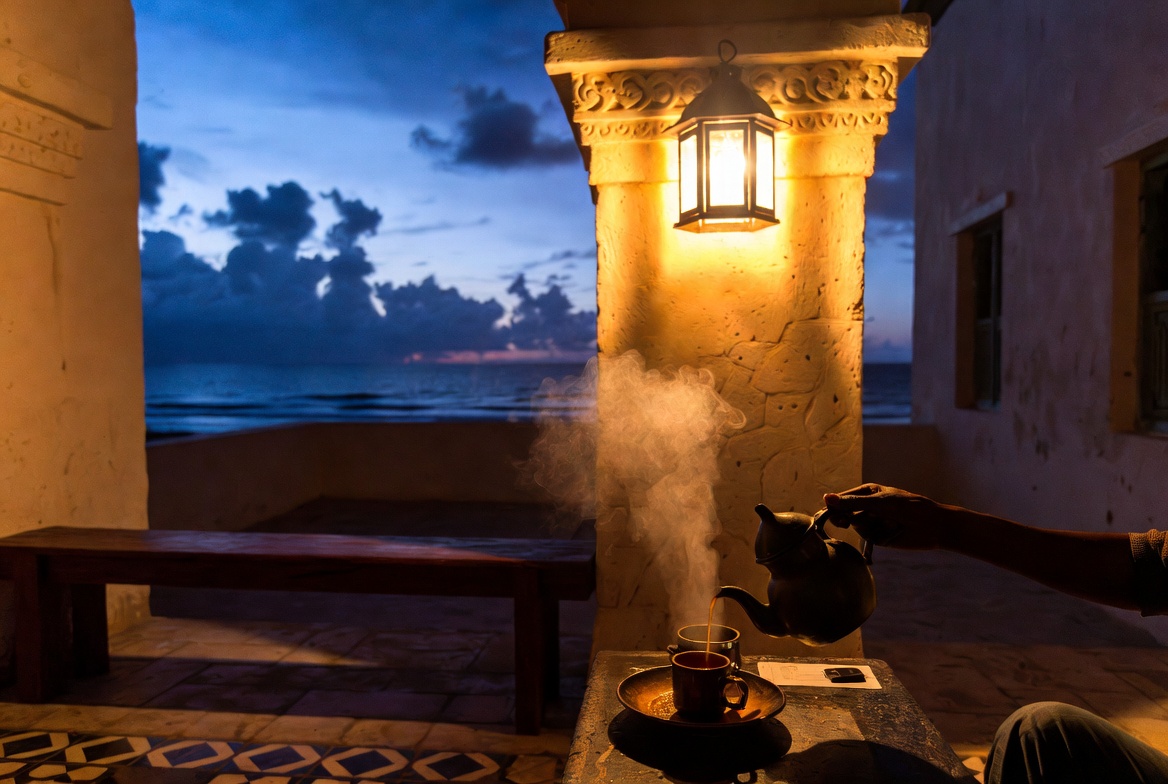
It is a peaceful reminder that community is built through conversation, not haste.
Why It Matters Today
In our fast-paced modern world, the baraza stands as a beautiful tradition that teaches:
Patience
Listening
Unity
Respect
It shows us that true wisdom grows when people sit together and talk with intention.