Madhubani Painting: India's Sacred Wedding Art
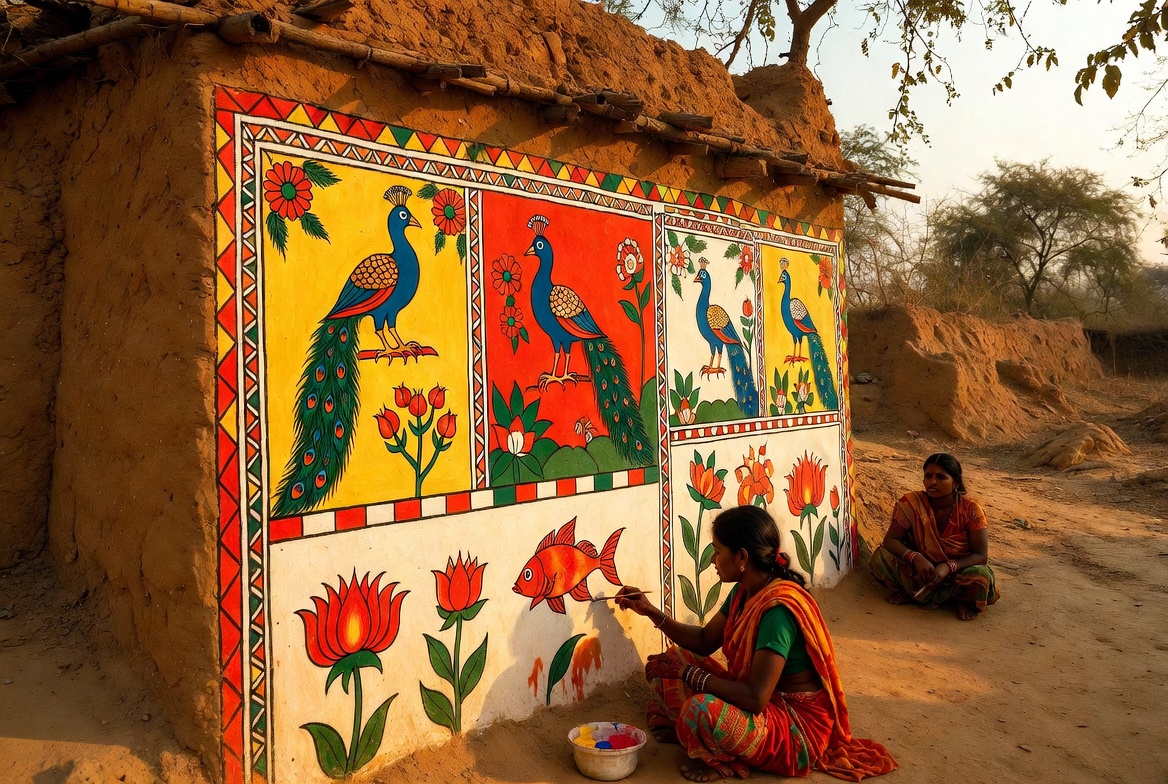
Madhubani painting, also known as Mithila art, originated in the Mithila region of Bihar. It was traditionally painted on mud walls by women for rituals and weddings
What Is Madhubani Painting?
Originated in Mithila region (Bihar, India)
Traditional ritual art painted by women on mud walls
Now painted on handmade paper, cloth, and canvas
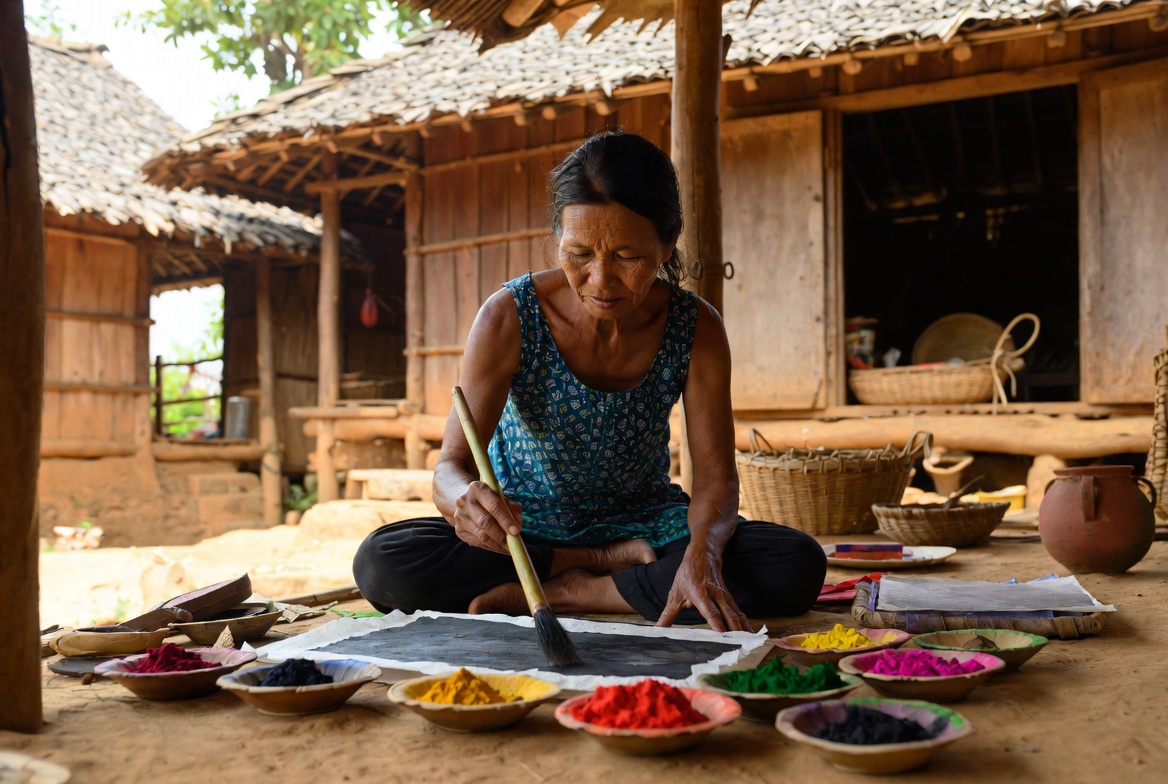
Natural pigments from plants and minerals
Artists draw double lines symbolizing harmony between opposites
Passed from mother to daughter for generations
The Kohbar: Sacred Wedding Painting
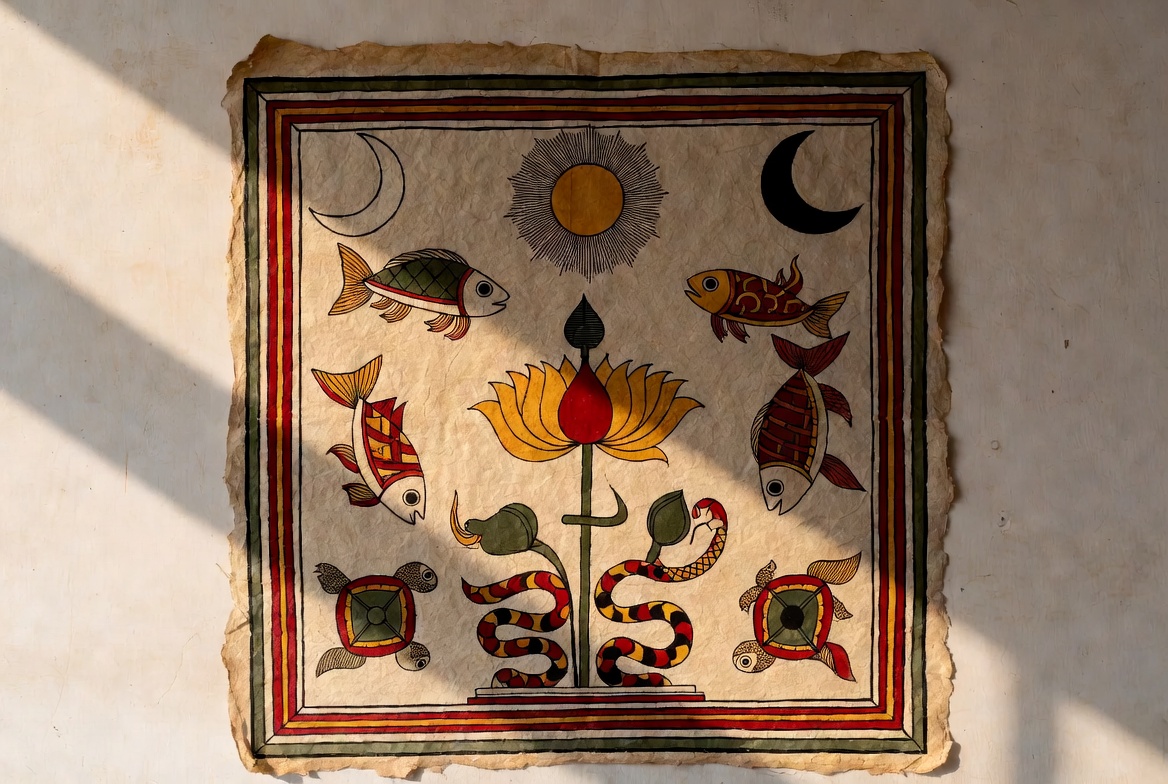
The Kohbar is a traditional ceremonial wall painting created in the bridal chamber during Maithil weddings, symbolizing fertility, prosperity, divine protection, and the sacred union of the couple.
Key Symbols in Kohbar Painting
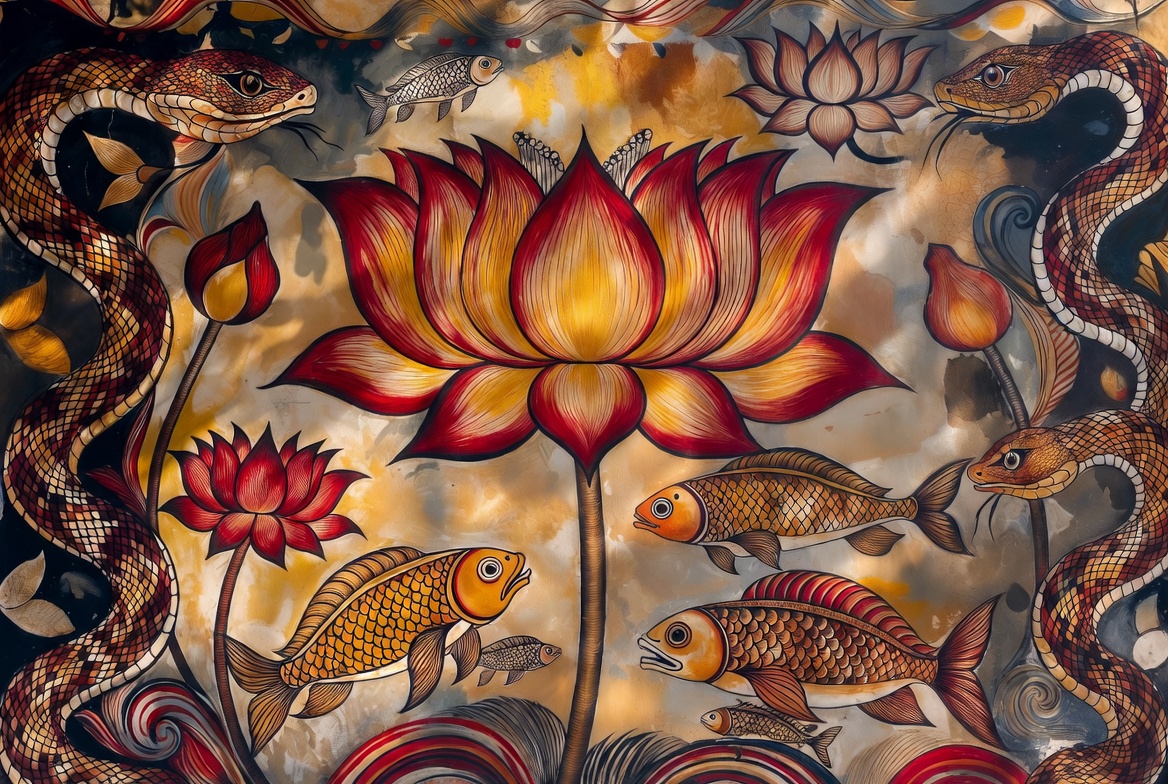
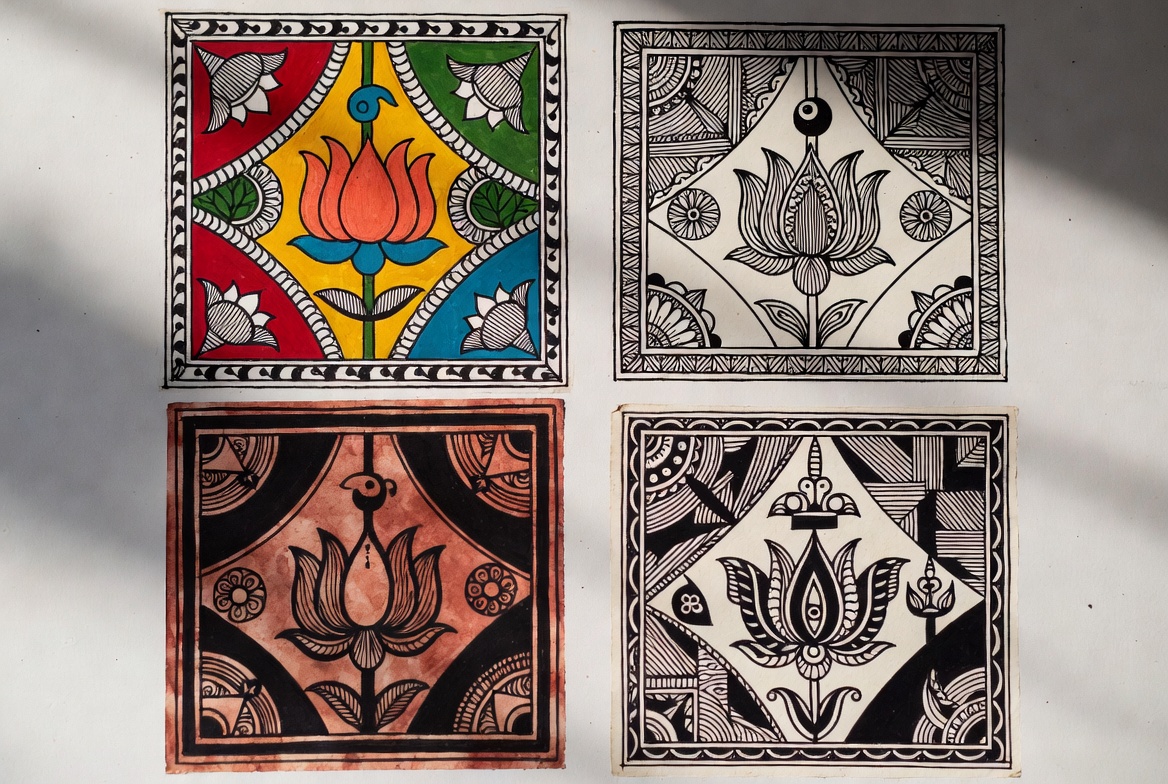
Lotus — Represents a woman’s fertility, purity, and abundance.
Piercing Stem — The lotus stem reaching down into the pond symbolizes rootedness, continuity, and the life-giving connection to the earth.
Fish — A sign of fertility, good fortune, and the flow of life.
Turtle — Symbol of love, stability, and long-lasting relationships.
Snakes — Embody divinity, protection, and the cyclical nature of life.
Sun and Moon — Eternal witnesses to the marriage, representing balance and cosmic blessing.
Durga (central figure) — The goddess placed at the heart of the kohbar ghar, invoking strength, protection, and auspicious beginnings for the couple.
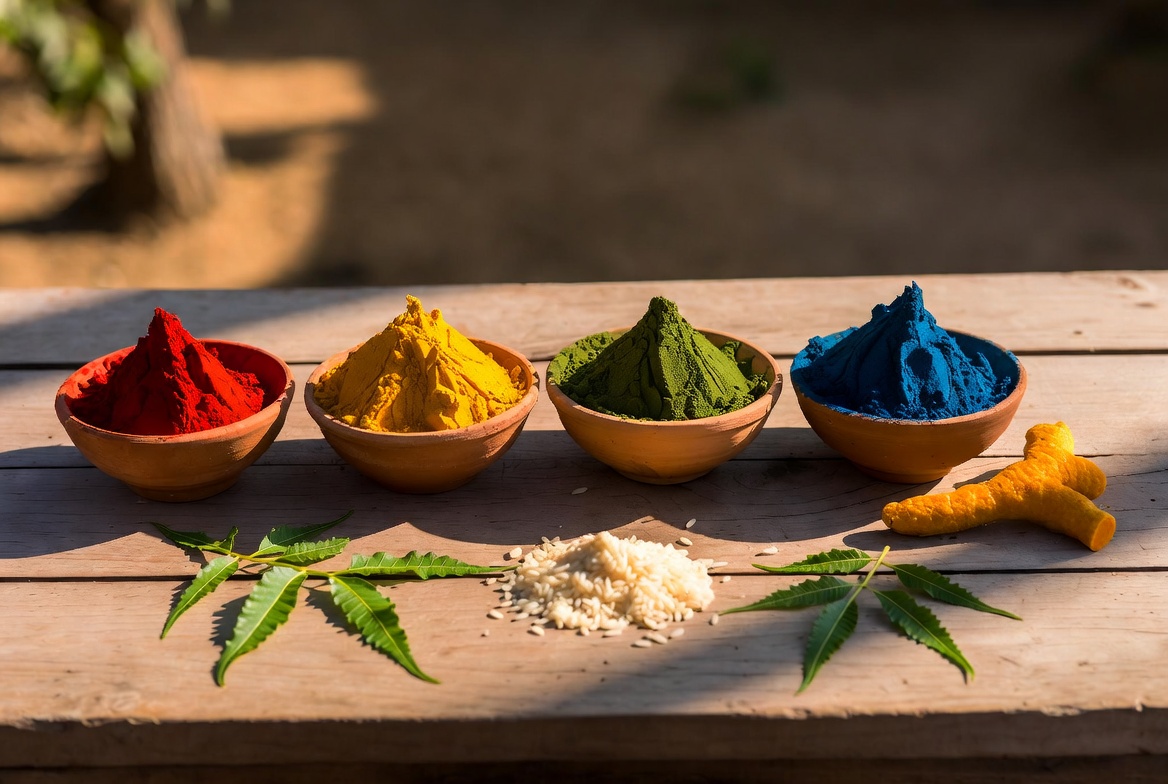
Colors and Their Sources
Black: Burnt rice or soot mixed with water
Yellow: Turmeric or pollen from flowers
Red: Crushed red sandalwood or hibiscus flowers
Green: Crushed neem leaves or bamboo leaves
White: Powdered conch shells mixed with water
Blue: Indigo plants
Styles of Madhubani Art
Bharni: Vibrant color filling (colored style)
Kachani: Ornate, repetitive line work with blank spaces
Geru: Thick black lines, less ornamentation, earthy style
Gobar: Cow dung wash background with black dots
Godna: Inspired by tattoo marks on arms and legs
Why Madhubani Matters
Women created sacred art for rituals without formal training
Paintings record myths, weddings, festivals, and daily life
Practitioners believe the world was formed by union of female and male powers (Ardhnarishwar)
Dalit artists use the form to tell their own stories and heroes
Each painting is a prayer on wall or paper