
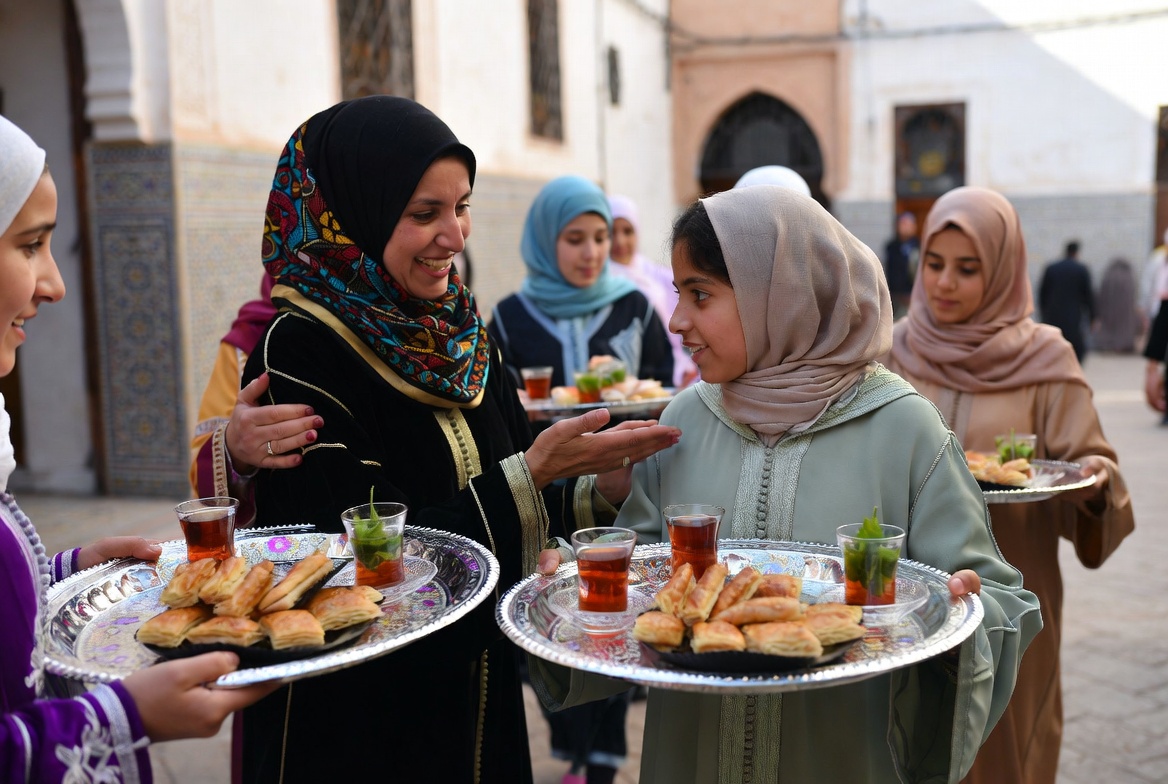
Special Occasions in Moroccan Families & Communities
In Moroccan culture, special occasions are never small — they are vibrant, multi-generational celebrations that bring together extended family, neighbors, and friends. Hospitality, delicious food, beautiful clothing, music, and faith are at the heart of everything.
Here’s how we typically celebrate:
1. Weddings (L’3ers)
Weddings are the biggest events and often last 2–3 days or even a full week in some regions.
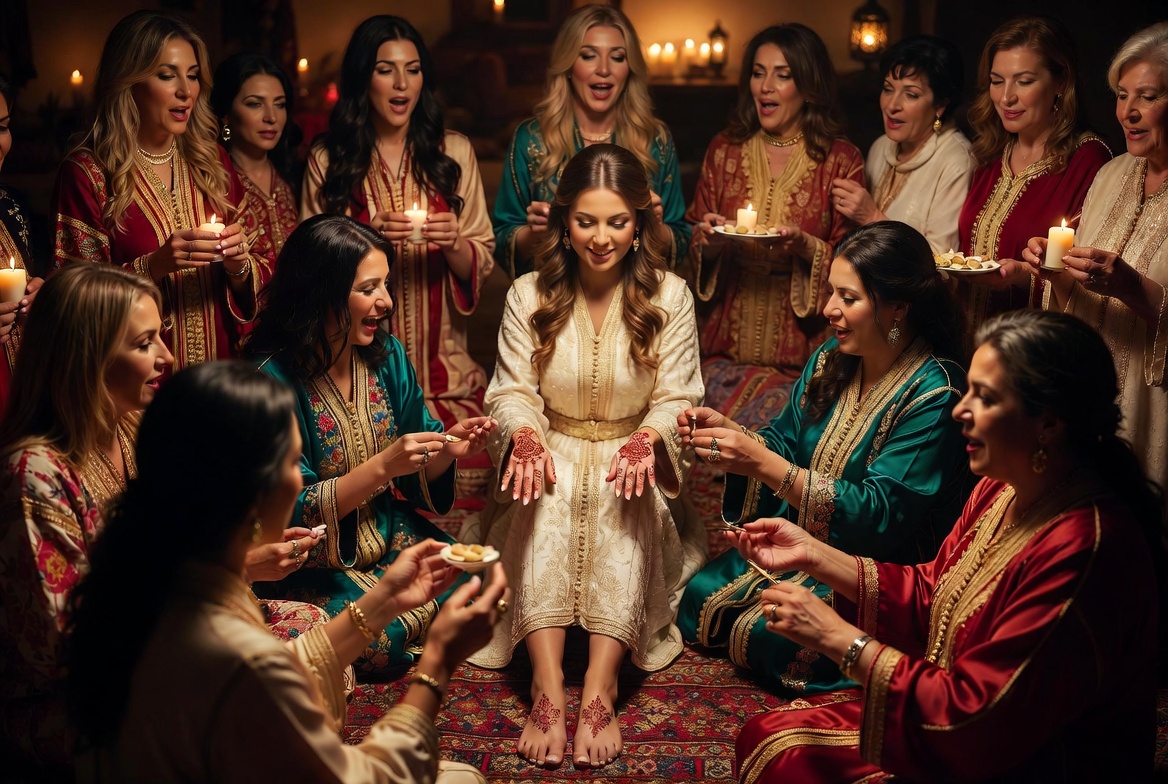
The Henna Night (Laylat al-Henna): for the bride with intricate henna designs, music, and women-only dancing.
The main ceremony includes the Zeffa procession (bride paraded with music and candles), signing the marriage contract (Katb al-Kitab), and lavish feasts with Mechoui (roasted lamb), couscous, tagines, and sweets.
Traditional Andalusian or modern Moroccan music, with lots of dancing (especially Dabke-style or belly dancing).
2. Births & Naming Ceremonies (Aqiqah & Sebou)
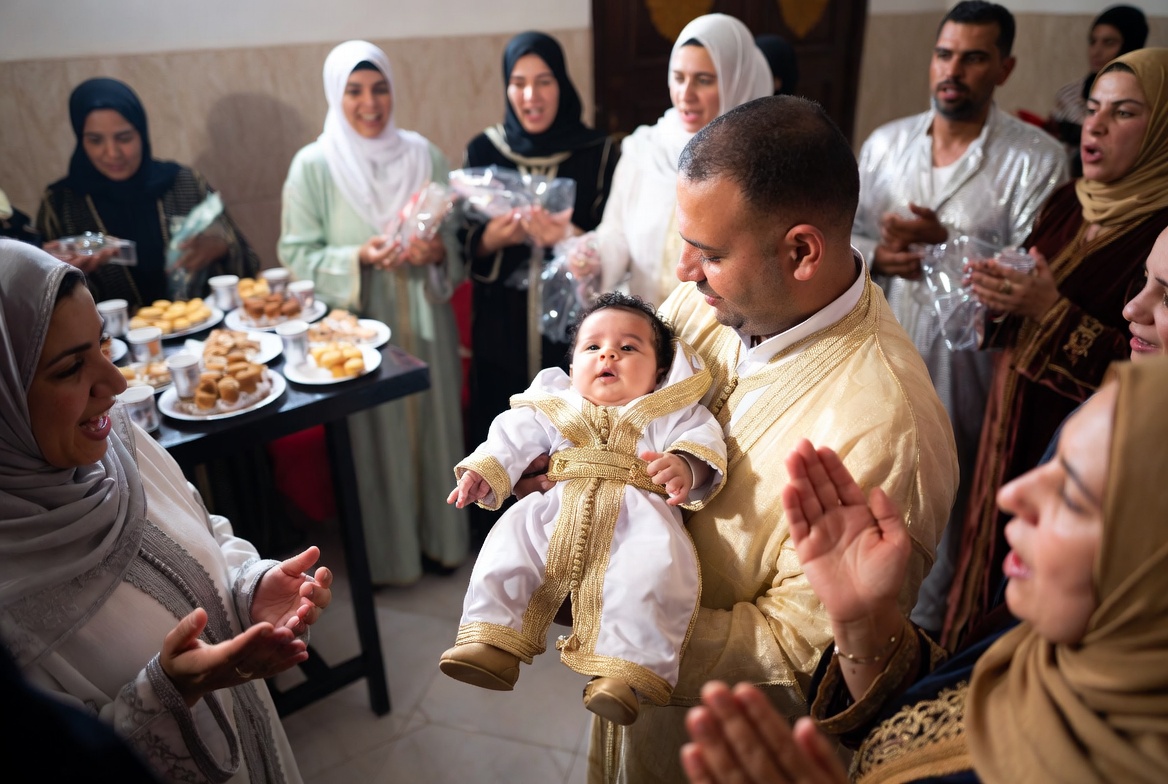
On the 7th day, the Aqiqah sacrifice is performed, followed by a big family meal.
The Sebou (7th-day celebration) : includes the baby’s first bath, dressing in elegant clothes, and gifts. Women sing traditional songs and distribute sweets.
3. Eid Celebrations
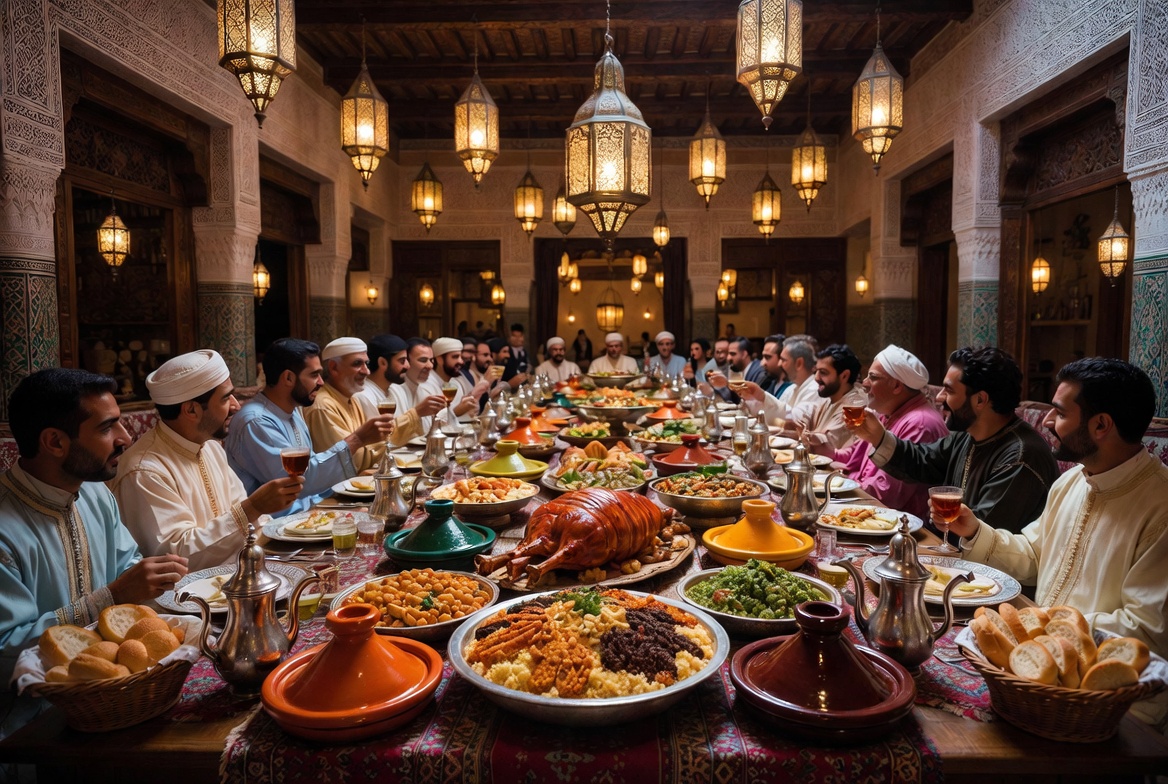
Eid al-Fitr (end of Ramadan) and Eid al-Adha — new clothes, family prayers, big feasts, visiting relatives, and sharing food with the poor.
Homes are filled with the smell of chebakia, msemen, almond pastries, and mint tea.
4. Other Milestones
Engagements, circumcisions, graduations, and housewarmings all involve large family gatherings, prayer, and abundant food.
Music (Andalusian orchestras, Gnawa, or modern Chaabi) and dancing are almost always present.
Common Elements in Every Celebration:
Everyone dresses in elegant kaftans, takchitas, and djellabas.
Food is central — served on large platters for sharing.
Elders give blessings and advice.
Generosity and community are key — no one is left out.
These occasions strengthen family bonds and preserve our rich cultural heritage blending Arab, Berber, and Andalusian influences.