
Traditional Wedding Customs in Glasgow and West Scotland
Glasgow and the west of Scotland are English-speaking. Traditional weddings there are Scottish in form, even when the service and speeches are in English.
Before the wedding
Engagement is announced to family first, then friends.
A hen night and stag night are expected.
In some west-coast and smaller-town families, friends still “blacken” the bride or groom — messy food, drink, and a public walk. It is less common in central Glasgow than in surrounding towns.
Kilts are hired or family tartan is worn. Many Glasgow grooms wear Highland dress even if they do not wear a kilt day to day.
Dress
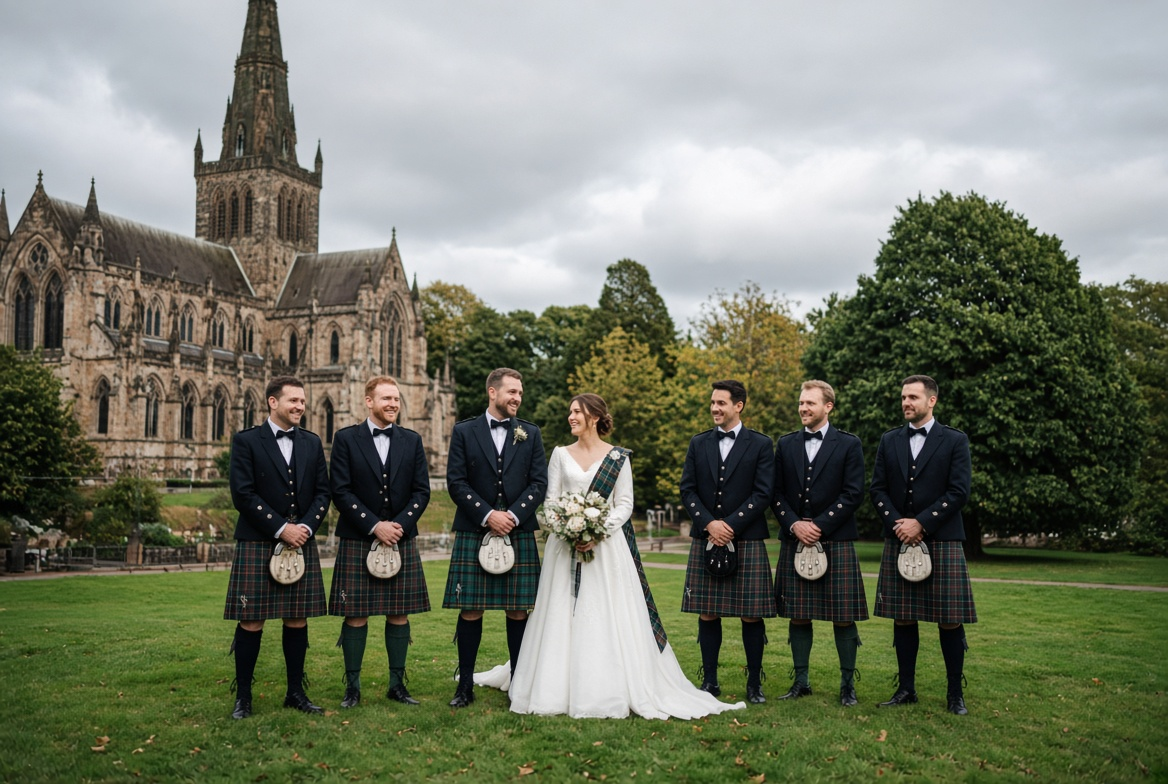
Bride: white or ivory gown, veil optional, often a sprig of white heather or a tartan ribbon in the bouquet.
Groom and groomsmen: kilt, jacket, sporran, hose, and flashes. Clan tartan if they have one; otherwise a hired tartan such as Black Watch or a district tartan.
Guests: smart suits or dresses; kilts are welcome but not required.
Ceremony
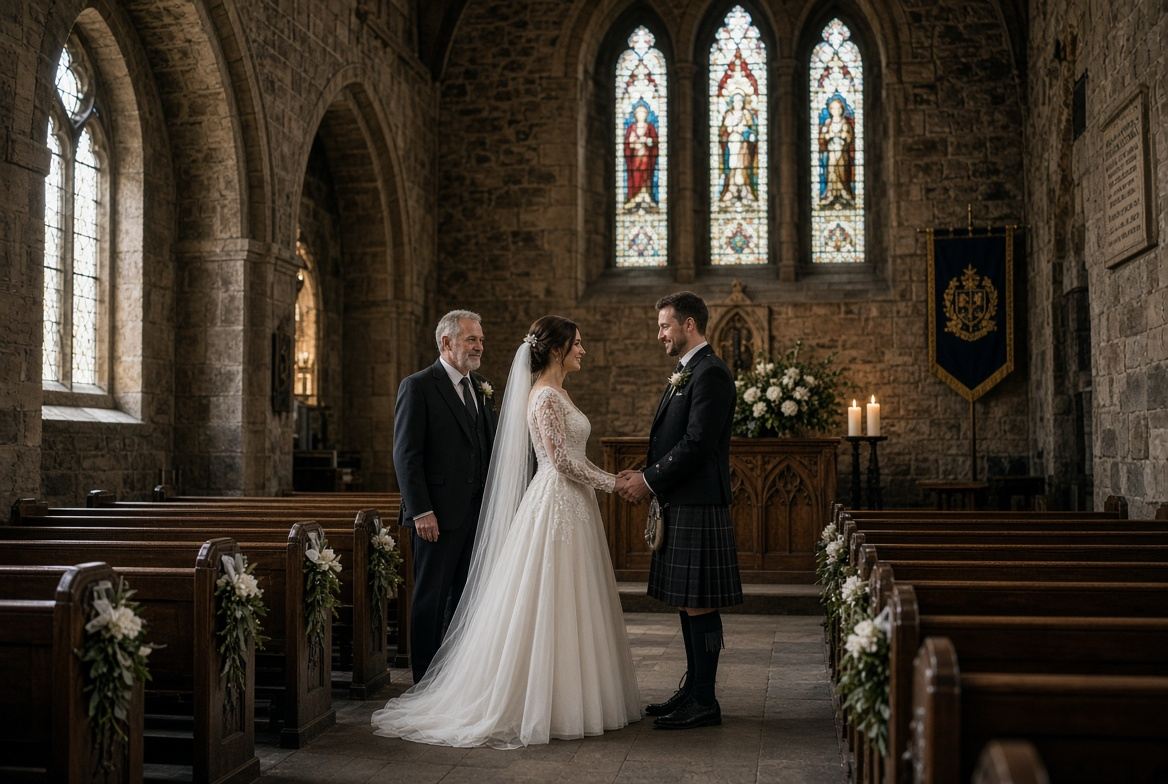
Church of Scotland, Catholic church, or a civil/humanist ceremony in a hotel, castle, or register office.
The bride is usually walked in by her father.
Vows are short and in English.
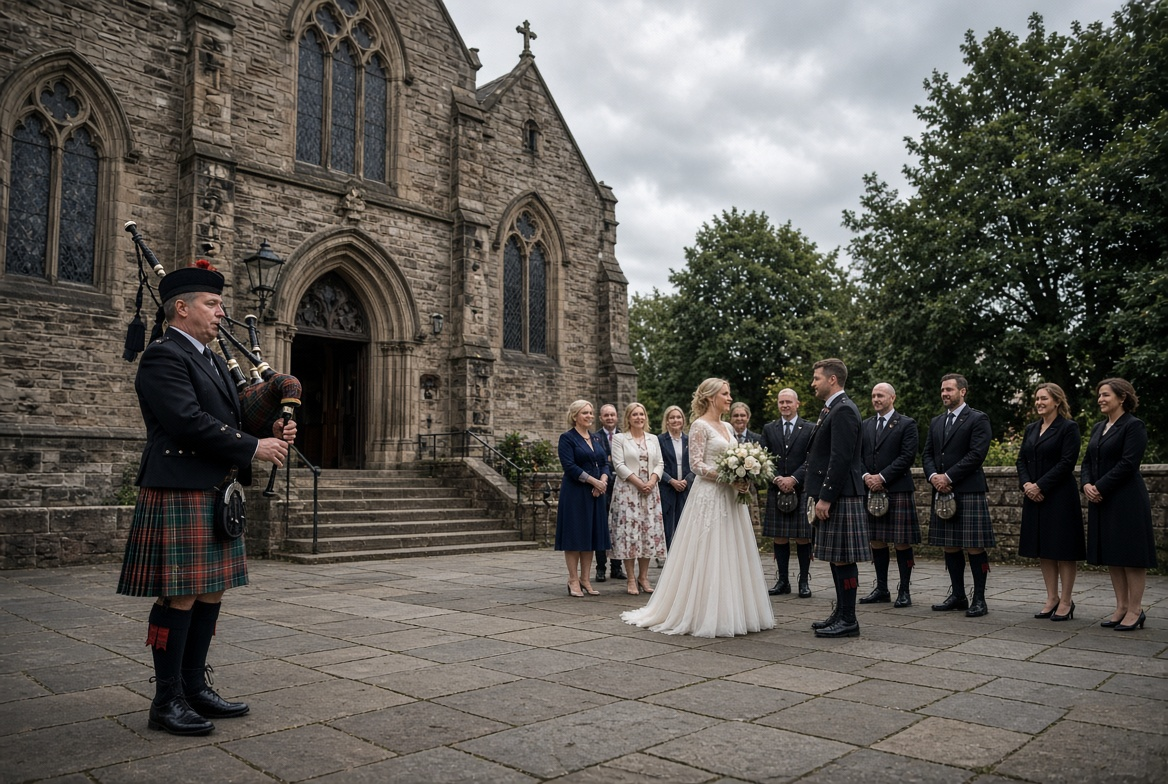
A piper often plays the couple in or out.
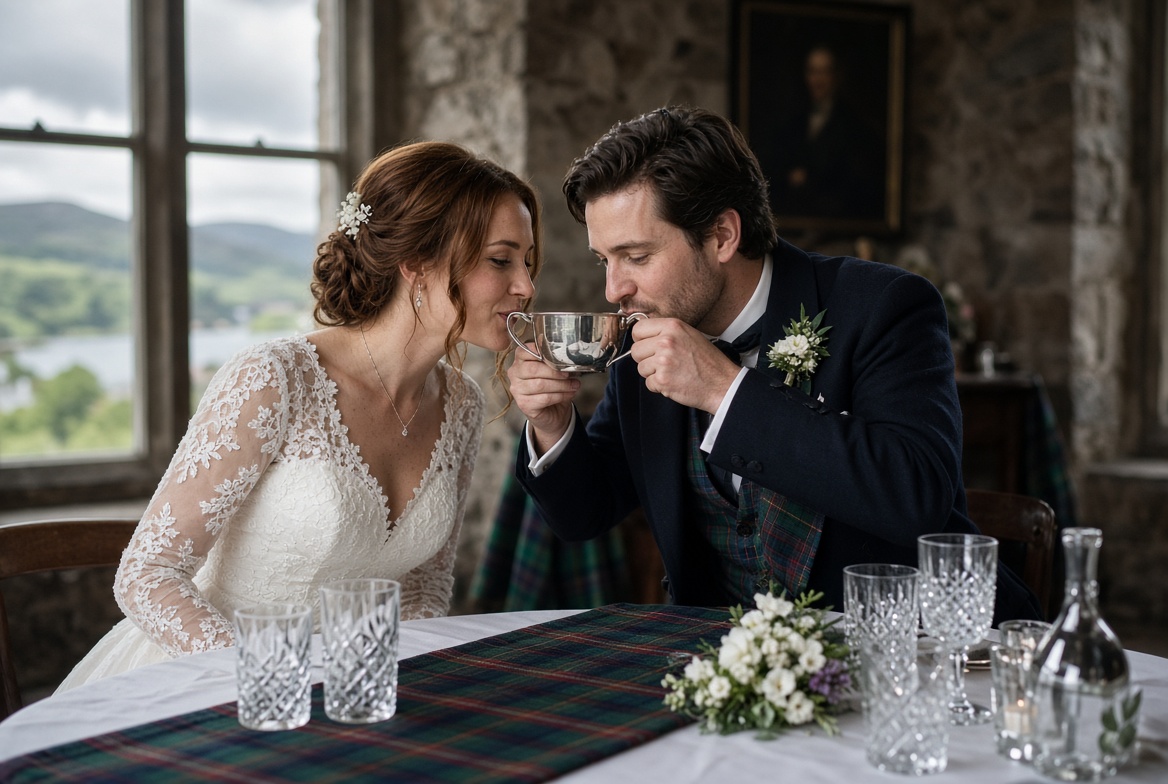
Some couples share a drink from a quaich (two-handled cup) after the vows or at the reception.
Just after the ceremony
Confetti, petals, or bubbles.
In some families the groom still does a scramble — throwing coins for children outside the church.
Photos with the piper and tartan party.
Reception
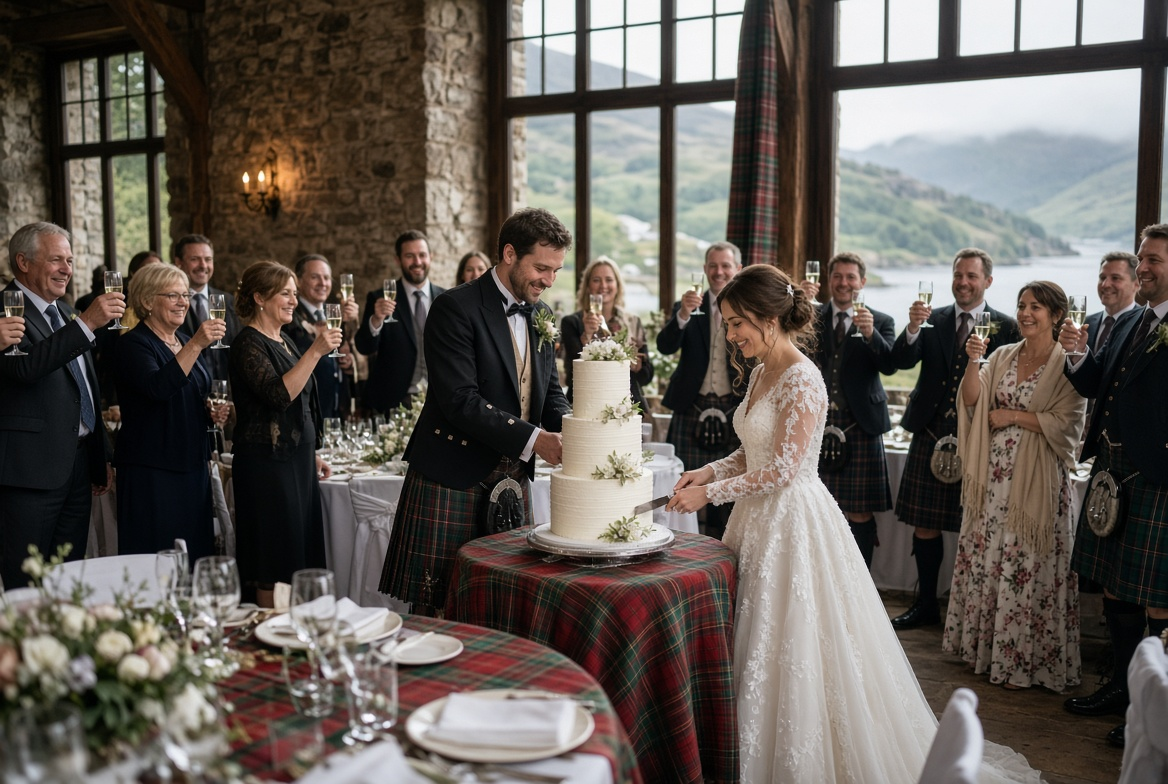
A sit-down meal, often called the wedding breakfast.
Speeches: father of the bride, groom, best man. A maid of honour speech is now common.
Toasts with wine or whisky.
Cake cutting — fruit cake is traditional; sponge is common now.
Ceilidh dancing is the west-of-Scotland signature: Gay Gordons, Strip the Willow, Dashing White Sergeant, Military Two-Step. A ceilidh band usually plays before or instead of a long DJ set.
First dance may be a slow song, then the ceilidh starts.
Luck and tokens
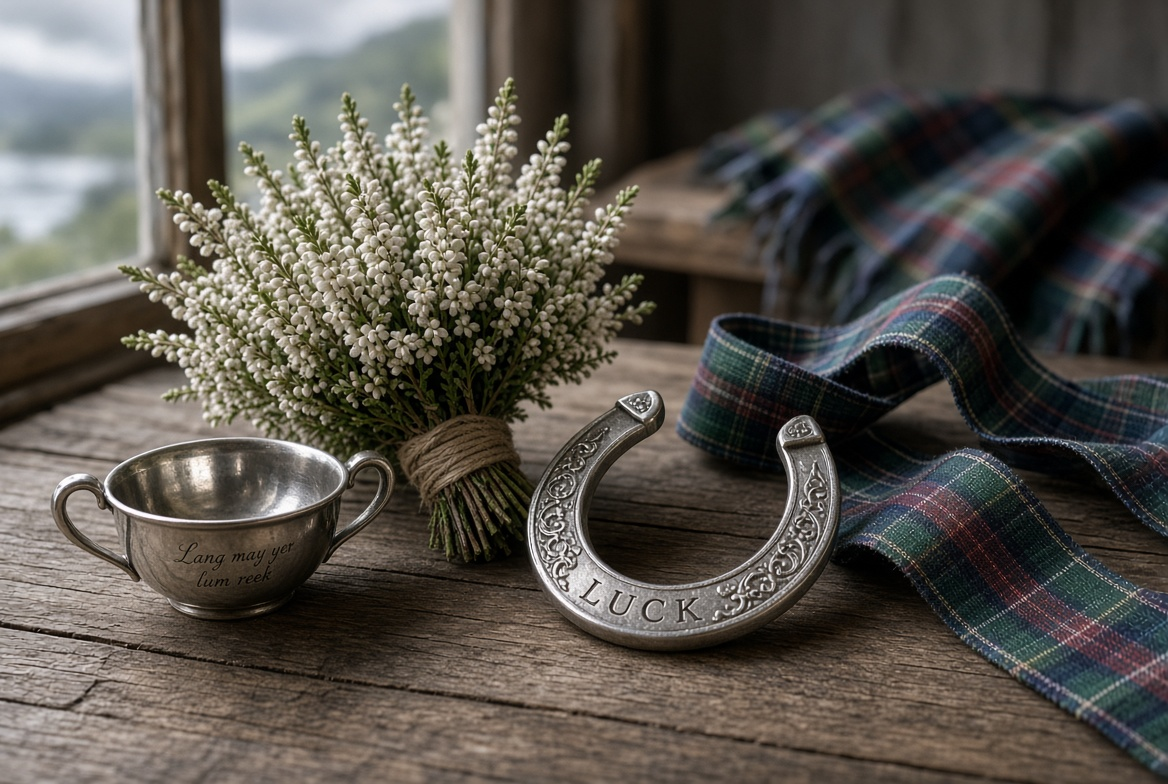
White heather
A horseshoe carried by a bridesmaid or given as a gift
Tartan favours for guests
Quaich as a wedding gift
What “English Scotland” means here
The language of the day is English (or Glasgow Scots in jokes and speeches). The customs themselves are Scottish: kilt, piper, quaich, scramble, and ceilidh, not the English morning-suit and set-piece “wedding breakfast only” pattern, though many Glasgow hotels now blend both.