
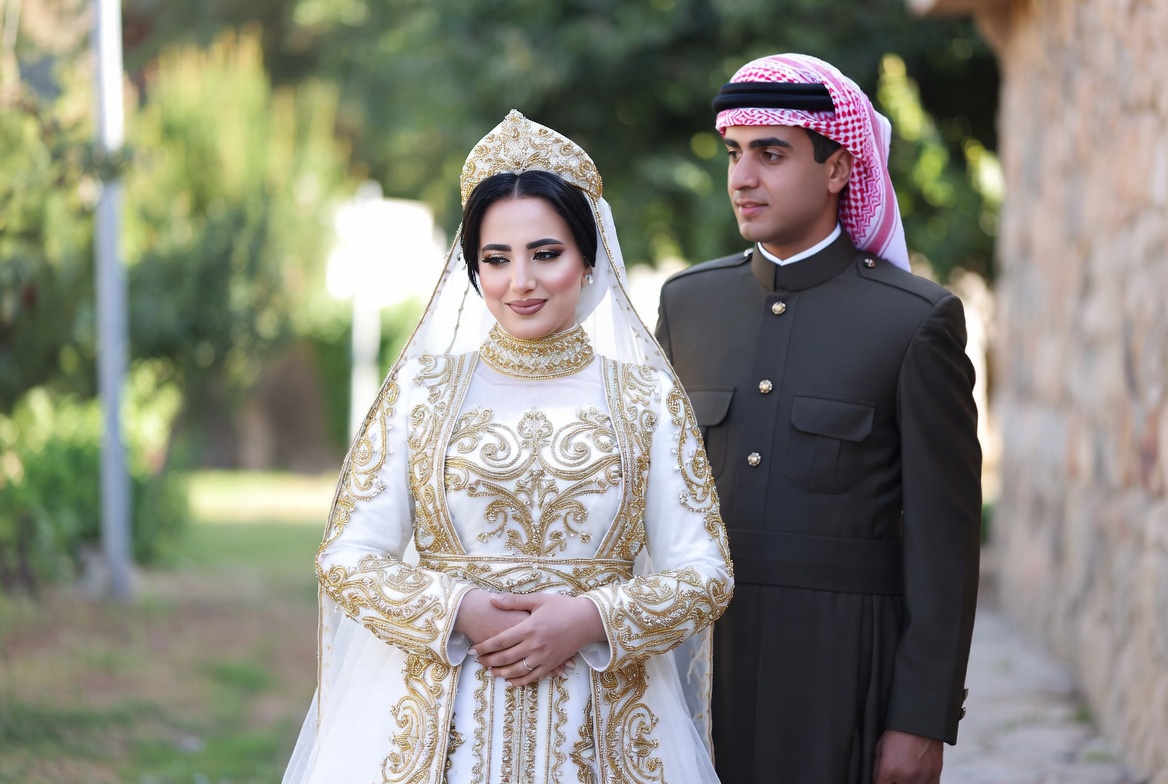
Traditional Wedding Customs in Jordan
Jordanian weddings are vibrant, joyful, and deeply rooted in family, tradition, and hospitality. They are usually big celebrations involving the entire extended family and community.
Main Stages of a Traditional Jordanian Wedding:
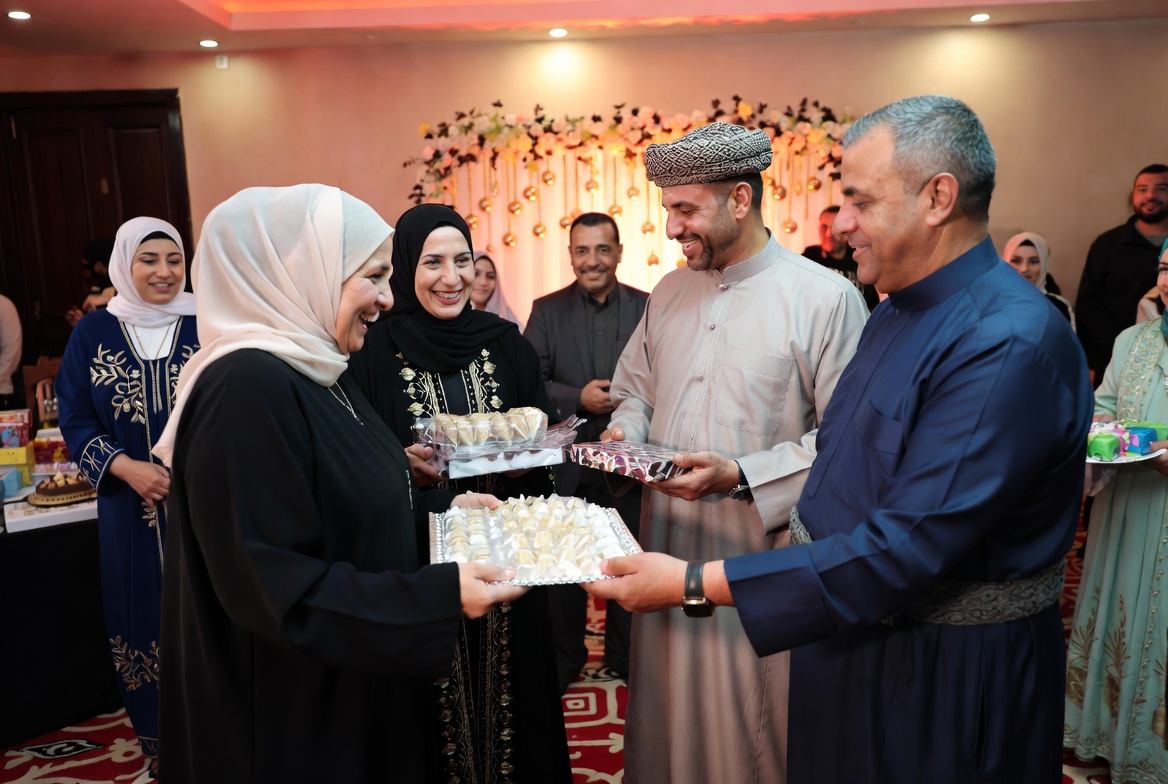
Engagement (Khutba): The families first agree on the marriage. The groom’s family visits the bride’s home with sweets and gifts. A formal engagement party often follows with rings exchanged.
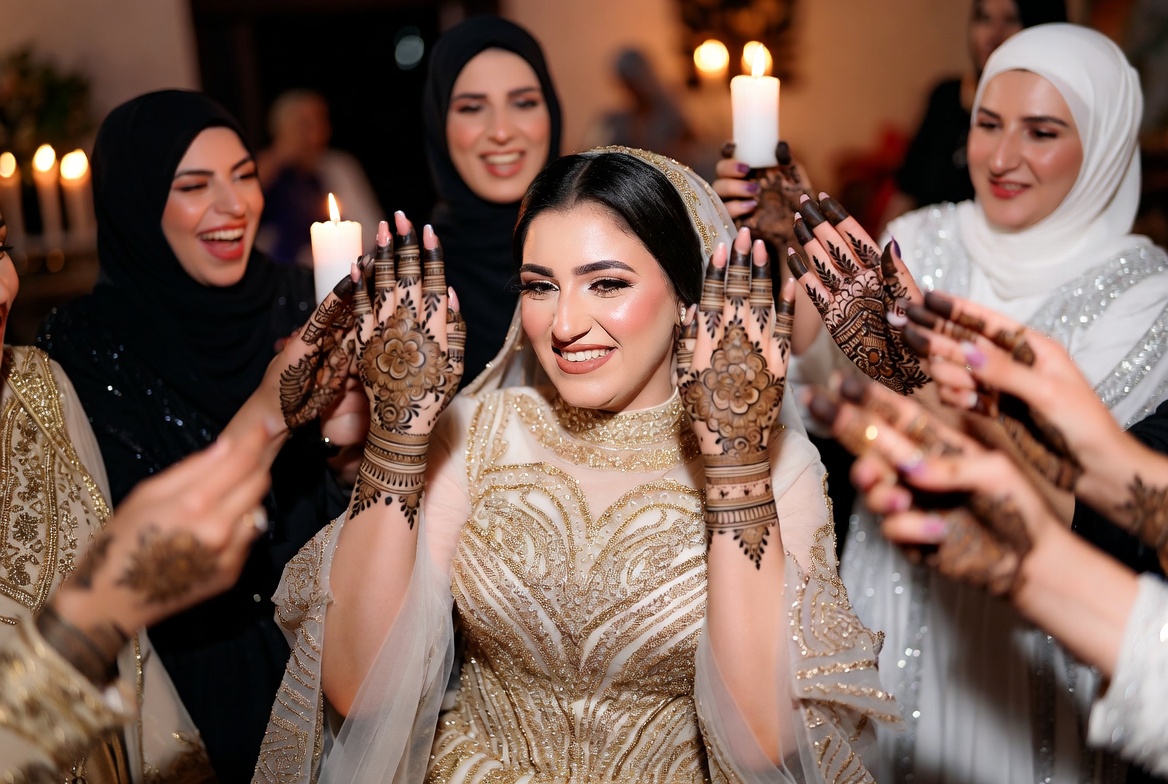
Henna Night (Laylat al-Henna): Held a few days before the wedding, this is a women-only celebration. The bride’s hands and feet are decorated with intricate henna designs while singing traditional songs and dancing.
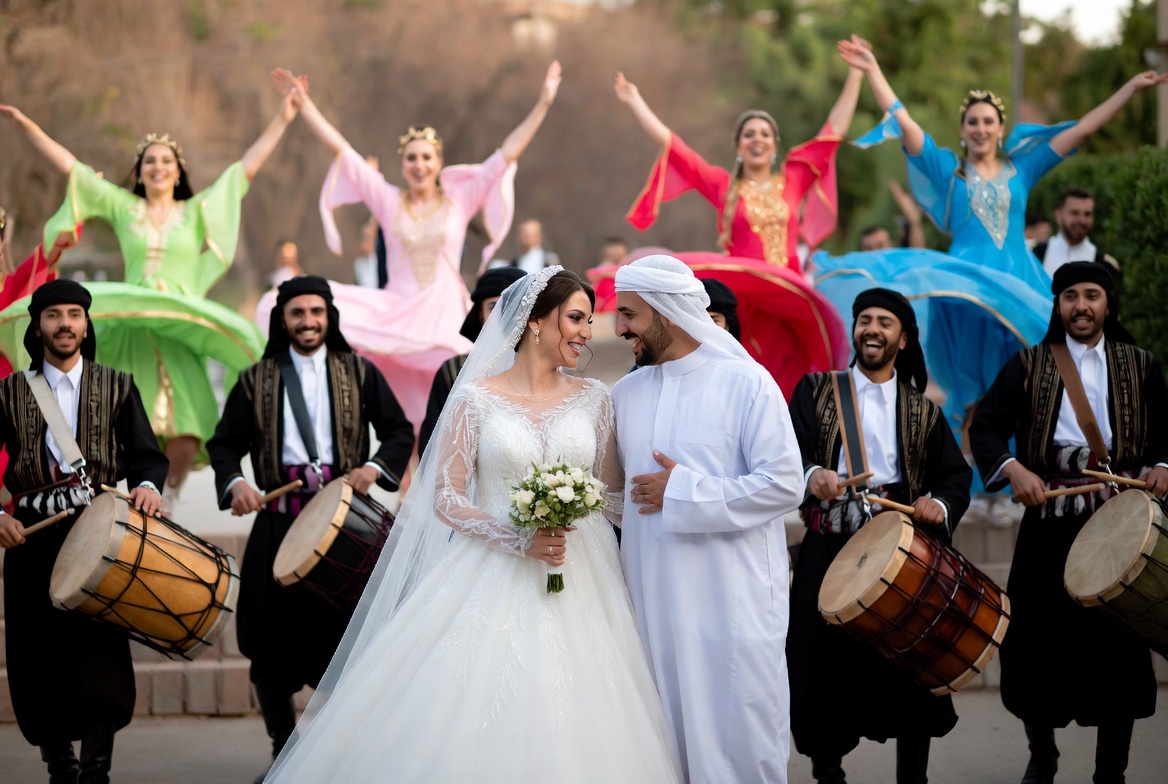
The Zaffa (Wedding Procession): The highlight! The bride and groom are led in a festive procession with loud music (usually the zaffa band with drums and bagpipes), dancing, and joyful zaghareet (ululations) from the women. The groom often arrives on horseback or in a decorated car.
Wedding Ceremony: The religious part (usually Islamic marriage contract) is signed. This is followed by a big reception with food, music, and dancing.
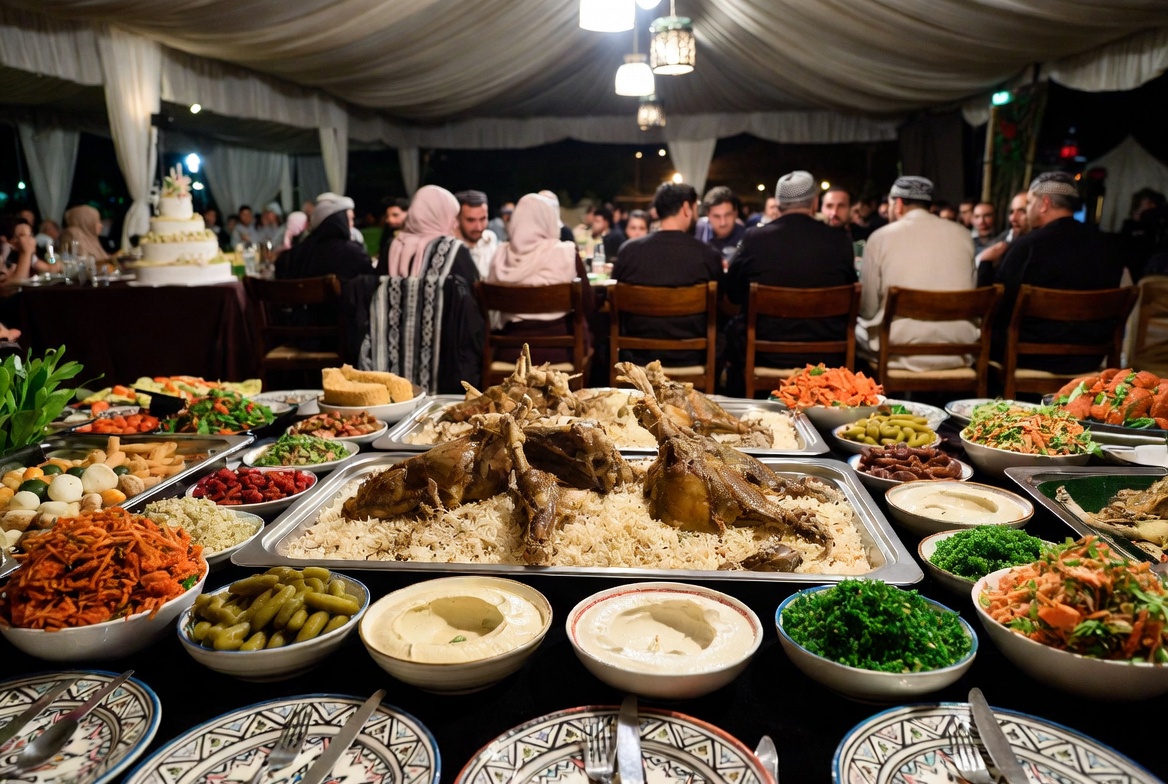
The Feast: Jordanian weddings feature huge amounts of traditional food — mansaf (lamb cooked in fermented yogurt sauce served over rice), stuffed vegetables, grilled meats, and sweets like kunafa and baklava.
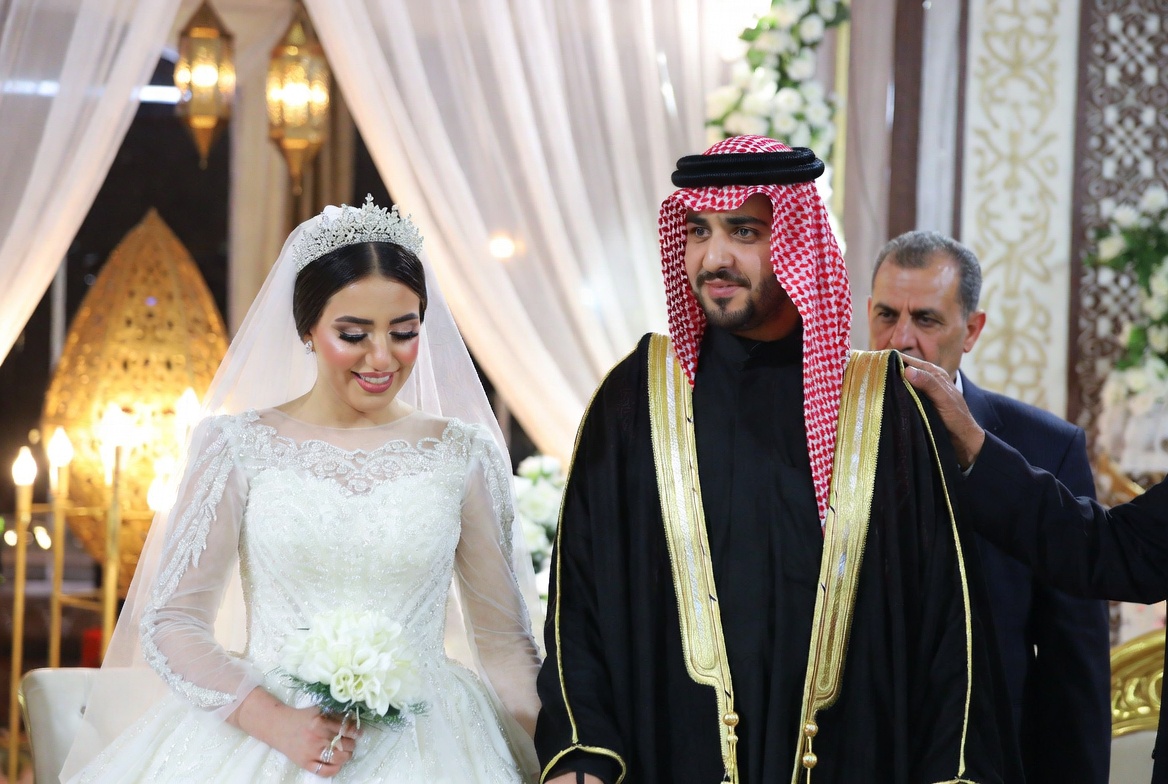
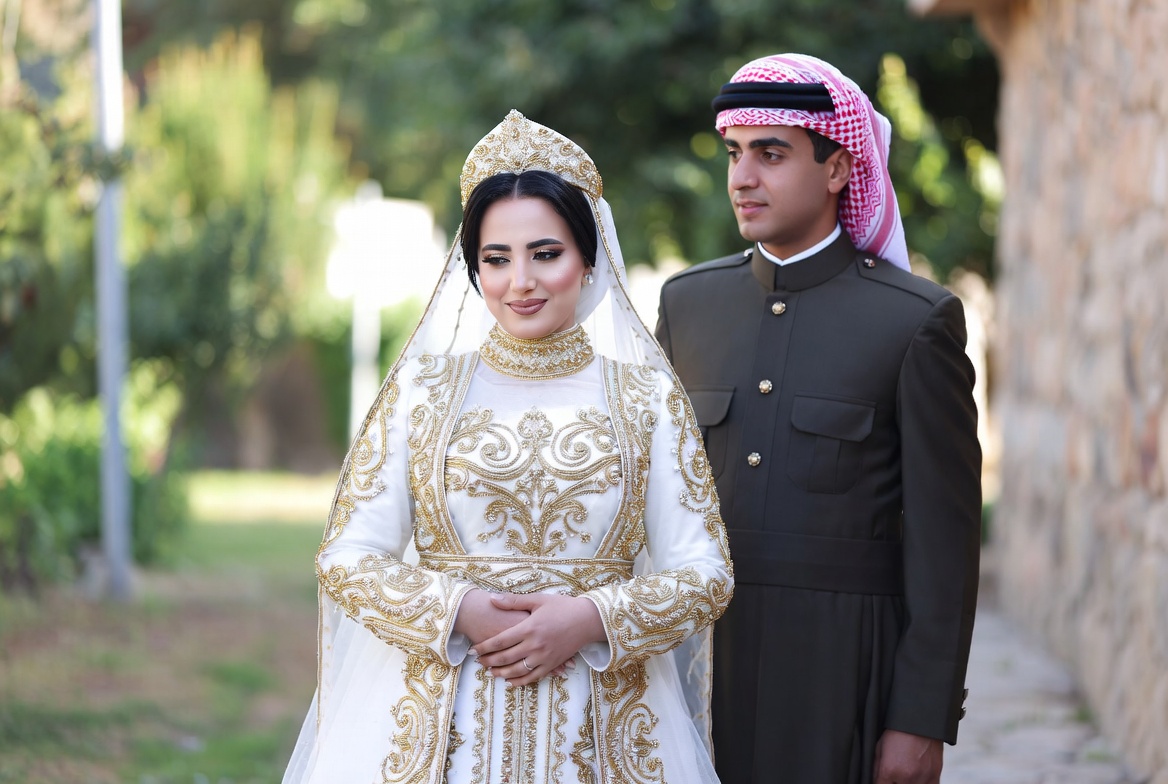
Traditional Attire: The bride often wears a beautiful white or richly embroidered dress. The groom may wear a suit or traditional dishdasha with a keffiyeh (headscarf). Guests also dress elegantly.
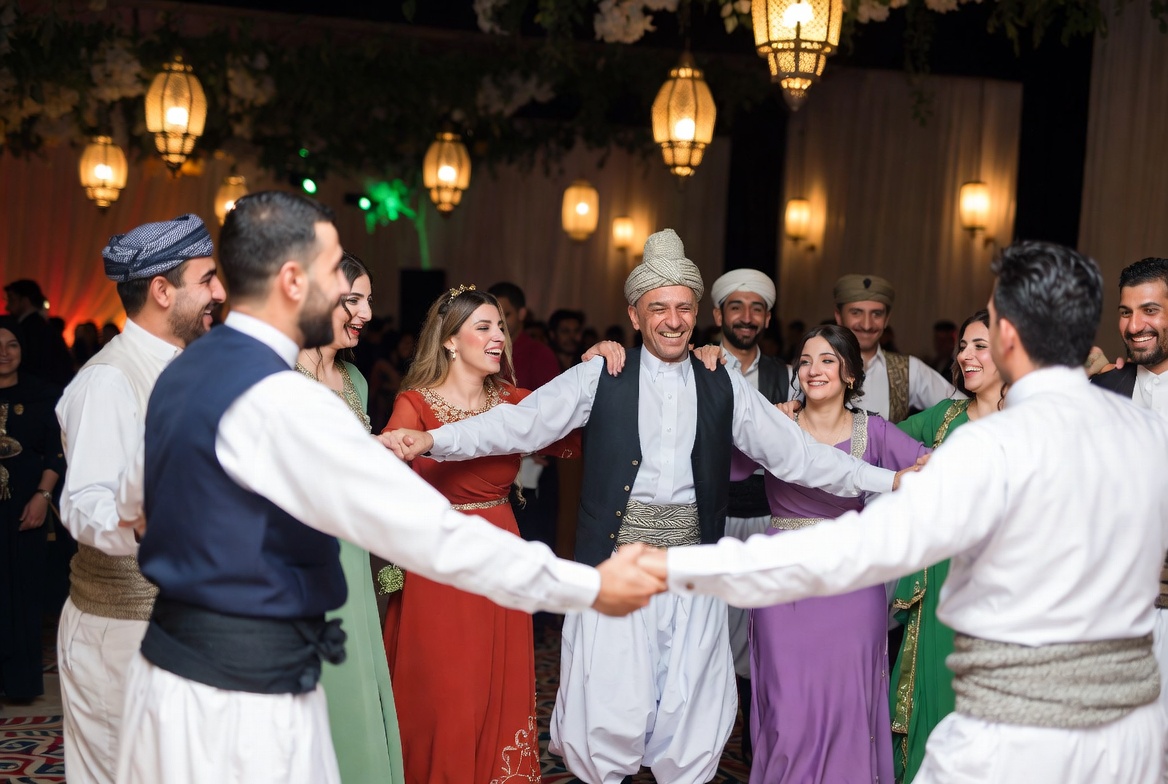
Dabke Dancing: A traditional line dance performed by men and women at the reception — full of energy and joy.
Jordanian weddings emphasize family unity, generosity, and celebration. They can last several days and are known for their warmth and hospitality.