Romanian Music & Dance Styles: Folk, Lăutărească, and Modern Beats
Romania's music is as diverse as its landscapes: from the haunting, free‑form doina to the energetic circles of the hora, the fierce, ritualistic călușari and the irresistible beats of modern manele.
1. Hora – The Circle of Unity
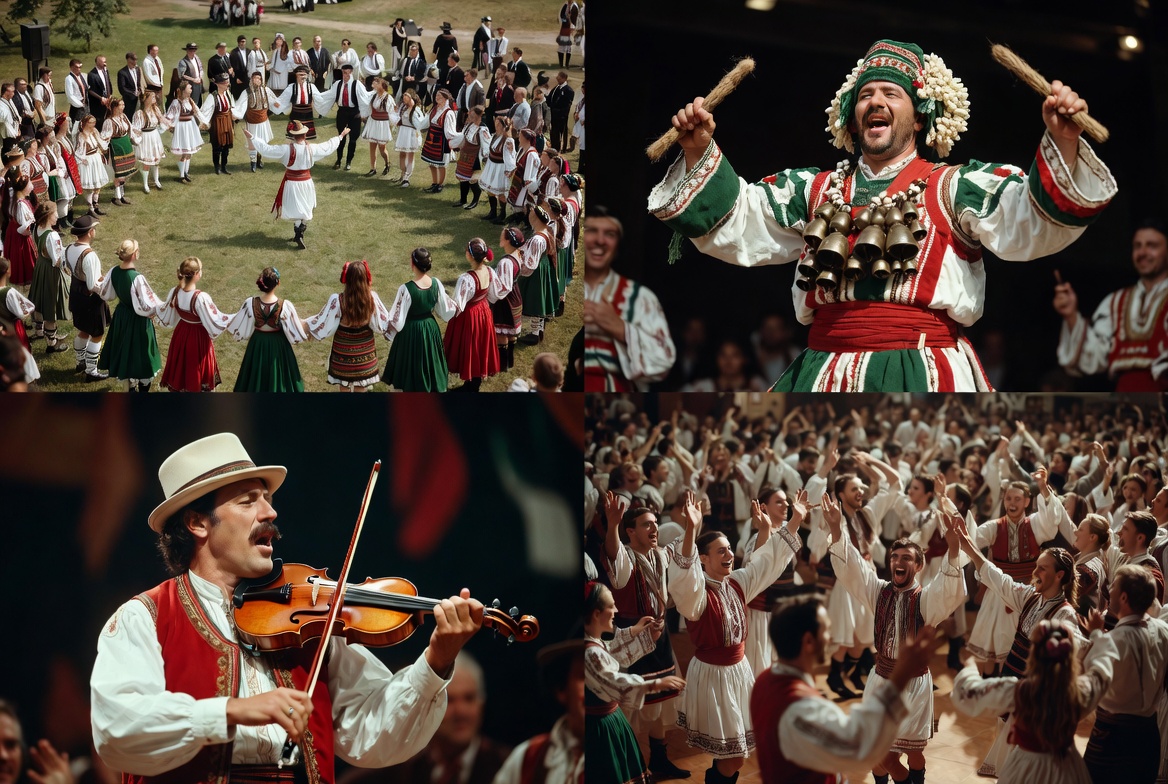
The national dance of Romania; a large closed circle that brings together everyone present at weddings, festivals, and gatherings.
Dancers hold hands and follow three simple steps forward and one step back, making the circle spin counter‑clockwise.
Symbolizes community, belonging, and the rhythm of Romanian life.
In villages, the hora often opens the festivities; in cities, it’s the signature dance that gets the whole family moving together.
2. Călușari – The Apotropaic Ritual Dance
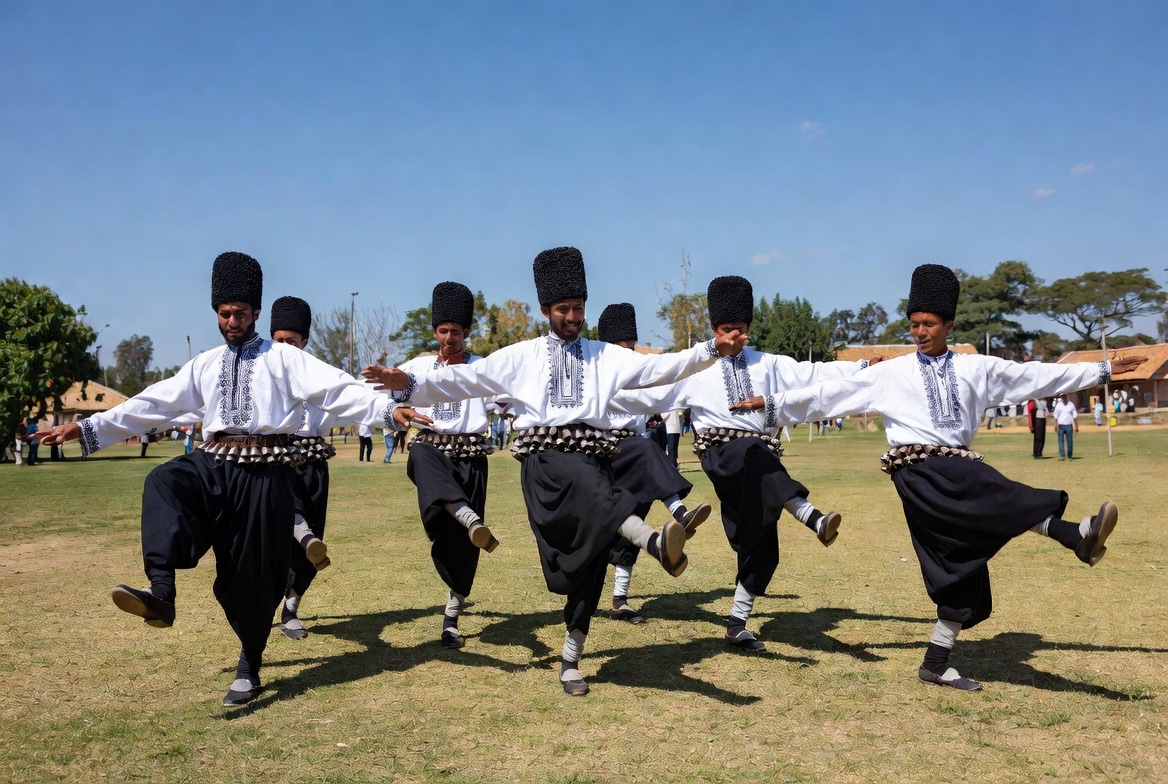
An ancient, all‑male dance listed on the UNESCO Intangible Cultural Heritage list; performed from Easter until Pentecost to heal and ward off evil spirits.
Dancers wear colorful hats, embroidered shirts, trousers adorned with jingling bells, and perform complex movements – stamping, clicking heels, leaping and swinging legs.
Historically, călușari traveled from house to house promising prosperity and driving away illness.
The name “căluș” means “little horse”, referencing the wooden part of a bridle, and the dance often mimics the movements of a horse.
3. Lăutărească – The Music of the Lăutari
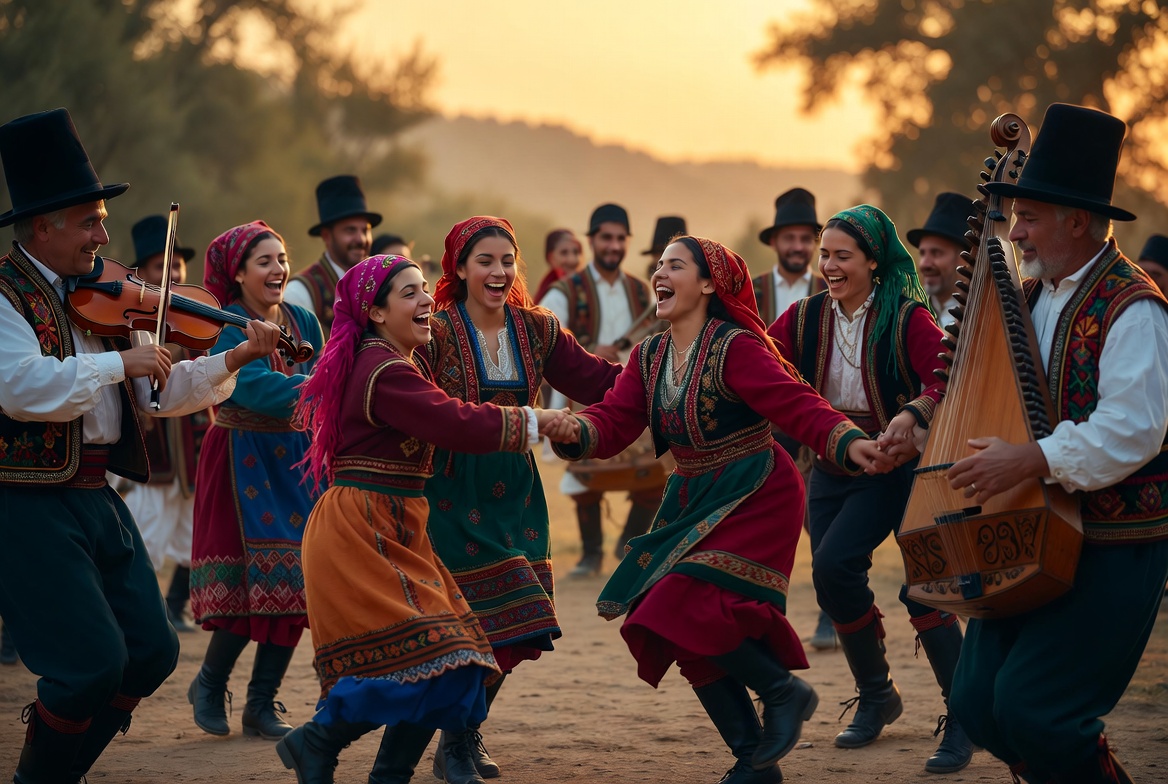
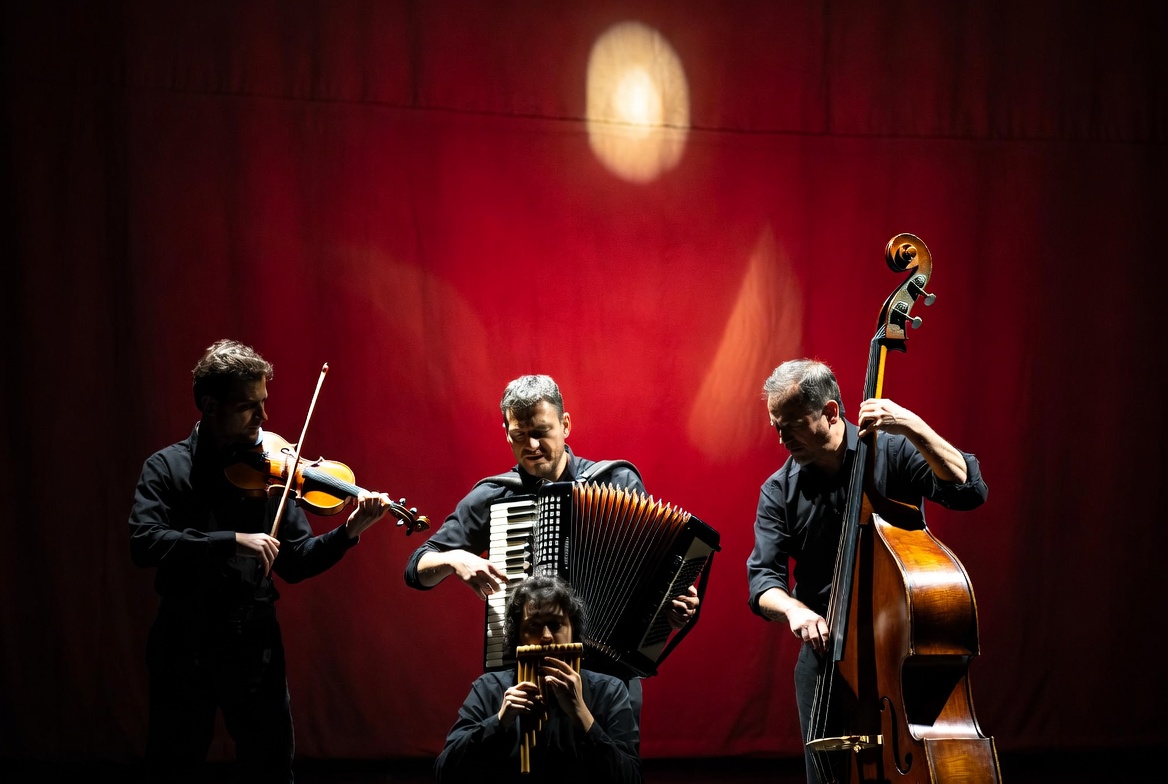
A virtuosic urban‑folk style performed by Romani musicians (lăutari) at weddings, christenings, and other life‑cycle events.
Characterized by fast tempos, improvisation, and a distinctive combination of instruments: violin, accordion, double bass, pan flute, and cimbalom.
The doina – a free‑form, often melancholic lament – is a cornerstone of this repertoire; it was the only musical genre present in many Romanian regions until around 1900.
The legendary Taraf de Haïdouks from the village of Clejani are the most famous ambassadors of this style, having toured worldwide.
4. Sârbă – The Fast and Fiery Dance
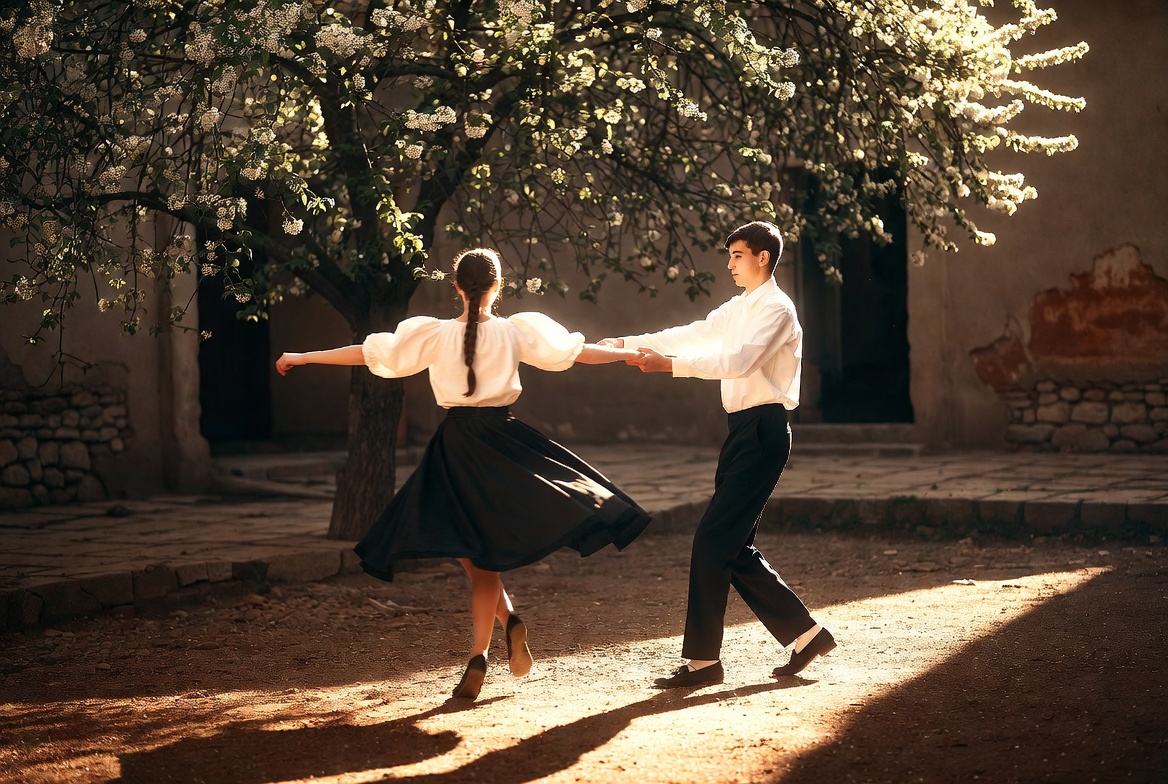
A dynamic couple or circle dance, named after its Serbian origin, but thoroughly adopted throughout Wallachia and Transylvania.
Played in 6/8 or 12/8 time, with a driving, syncopated rhythm that emphasizes fast turns and energetic footwork.
A indispensable part of wedding parties, where it is often danced as a showpiece for the newlyweds.
Its compact, traveling steps are quite challenging; audiences often clap along to the strong triplets of the melody.
5. Manele – The Urban Pop‑Folk Phenomenon
Romania’s most popular (and controversial) contemporary genre – a high‑energy fusion of traditional Balkan, Turkish, Arabic, Romani, and modern pop‑electronic elements.
Originated in the 1980s‑90s as an underground style in Bucharest’s Ferentari neighborhood, and exploded after the 1989 revolution.
Typically performed on synthesizers, drums, accordion, and electric guitar, with lyrics about love, partying, money, and struggle.
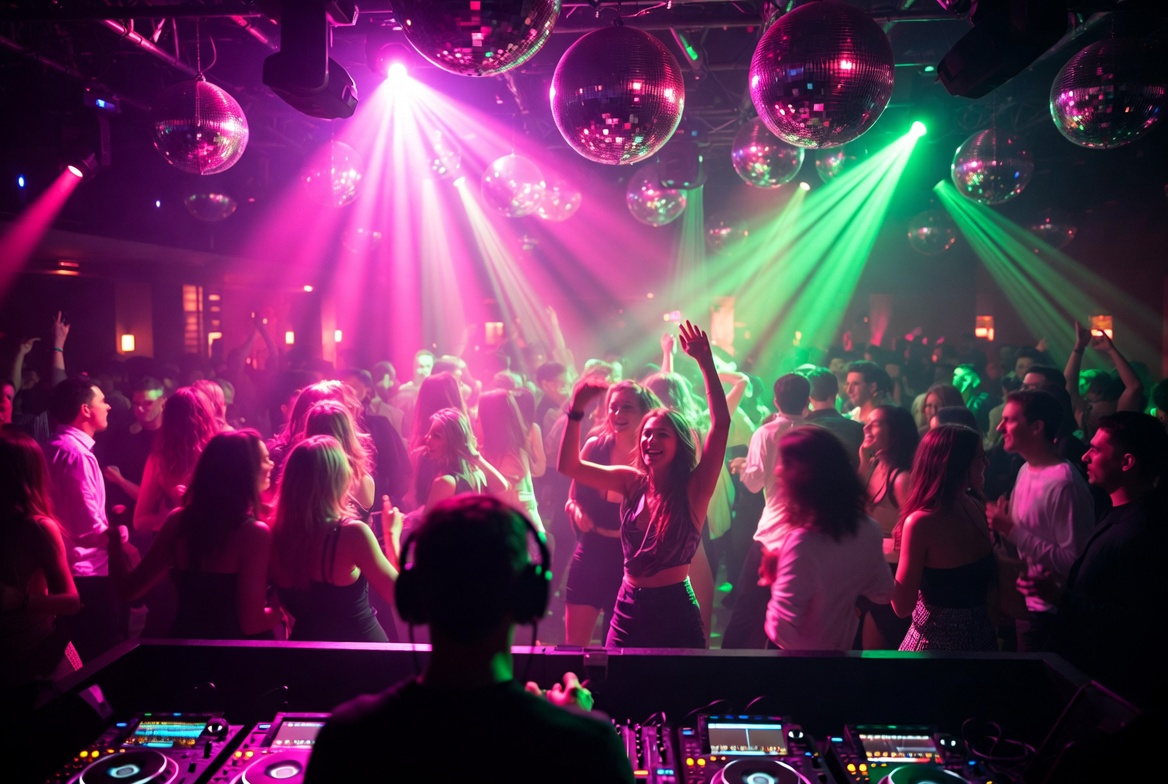
Played at weddings, clubs, and on Spotify chart‑topping hits; accompanied by a simple, catchy two‑step dance with improvised arm moves.