
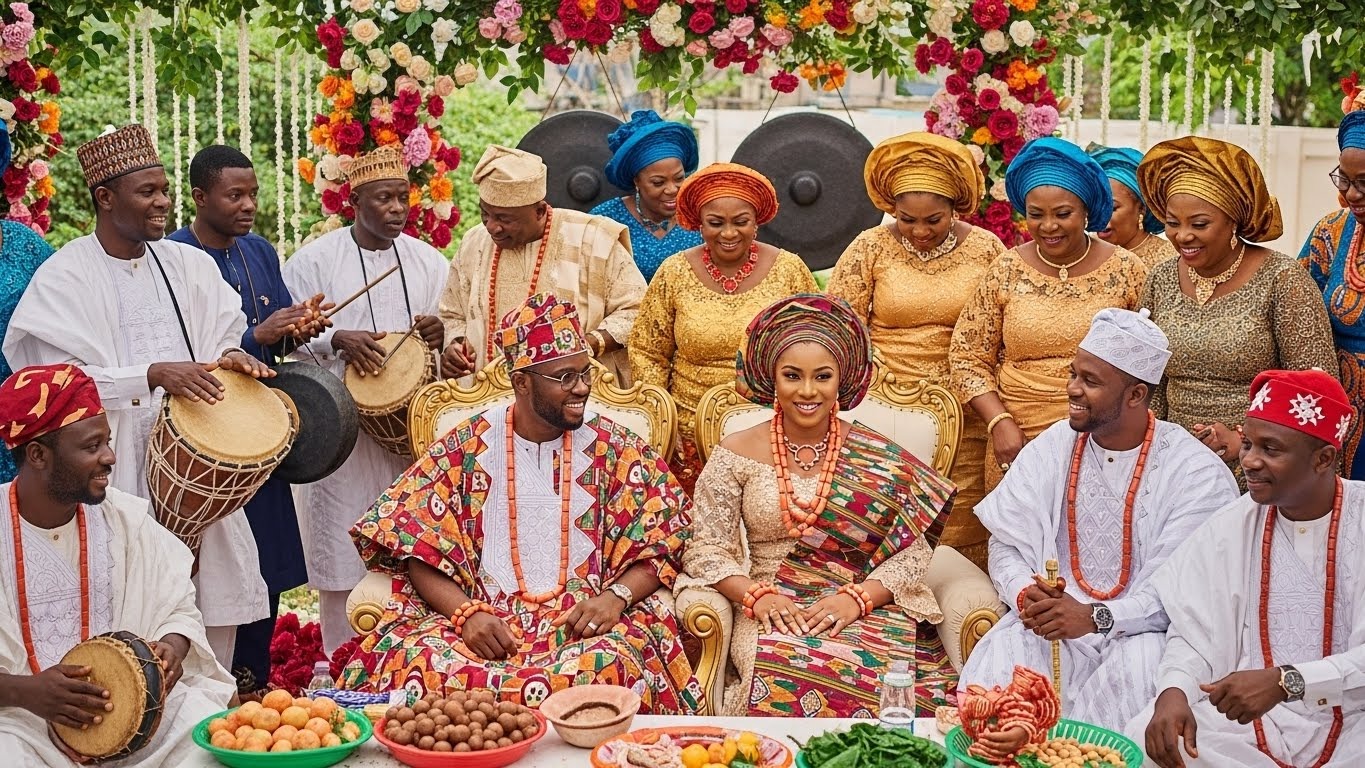
A Yoruba Wedding
The Yorùbá people of southwestern Nigeria (primarily in Oyo, Ogun, Osun, Ekiti, Ondo, and Lagos states) are known for one of the richest and most elaborate traditional wedding ceremonies in West Africa. A Yorùbá wedding is not merely the union of two individuals — it is a deep alliance between two families, filled with symbolism, respect, humor, poetry, music, and ancestral blessings.
1. Introduction Ceremony (Mo mi ni, mo e)
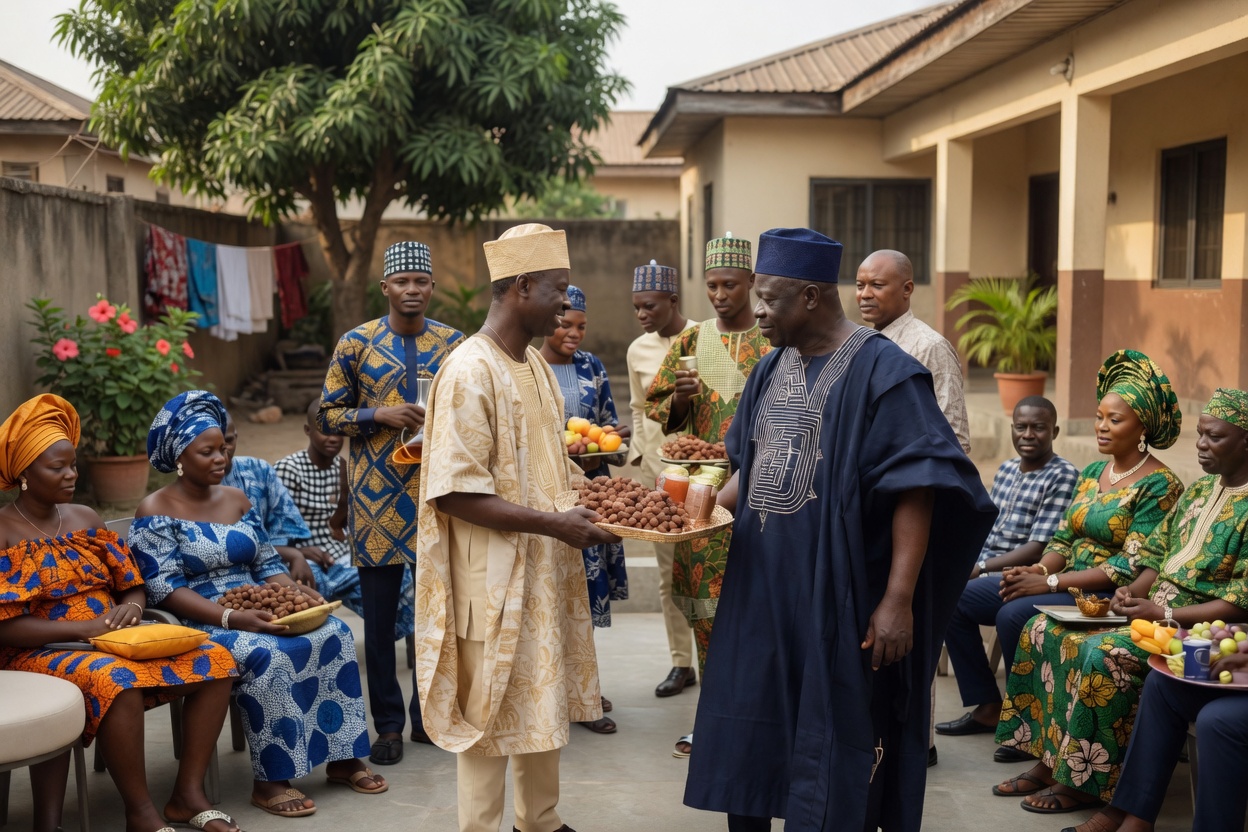
This is the very first formal step.
The groom’s family visits the bride’s family to officially introduce themselves.
The meeting is called “Mo mi ni, mo e” (“I know him/her”).
Its purpose is to seek approval and confirm that both families accept the relationship.
Gifts such as kola nuts, palm wine, and fruits are exchanged.
2. Engagement Ceremony (Ìdáná) – The Main Traditional Wedding
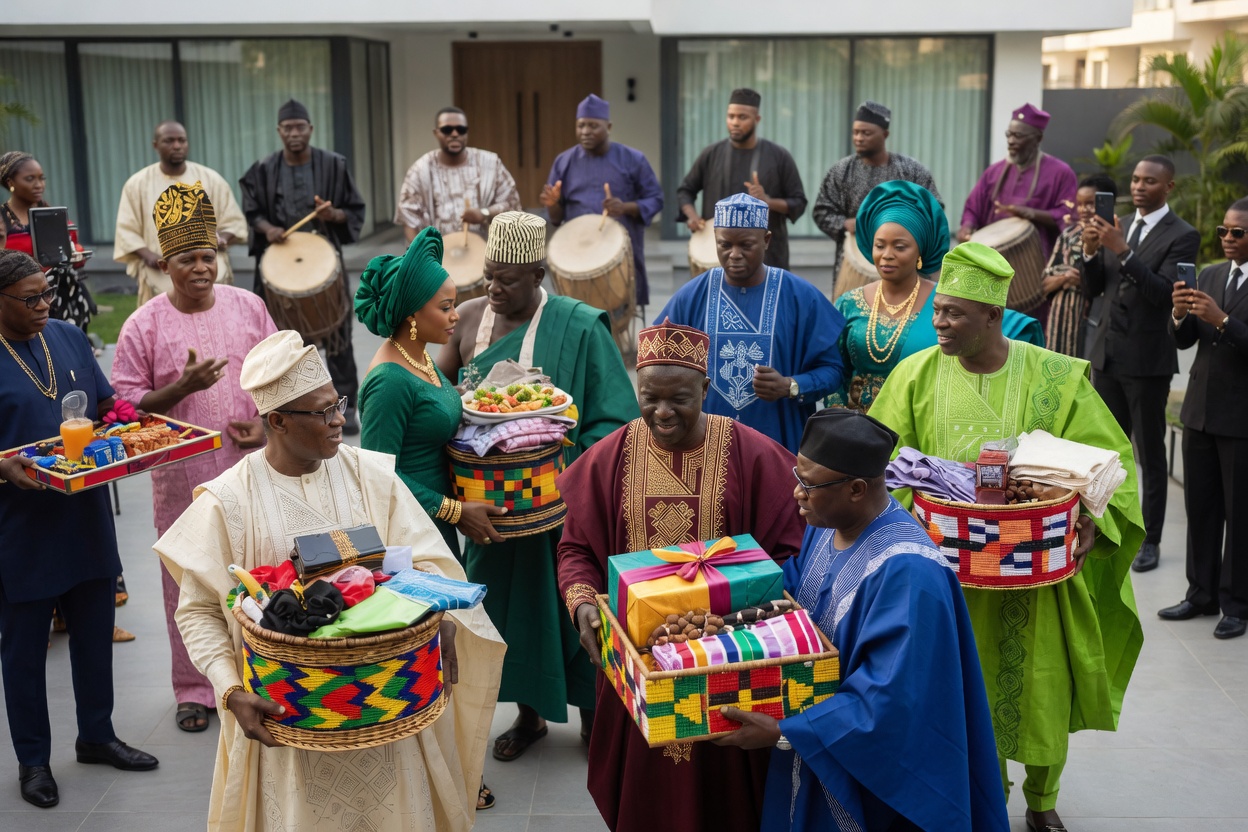
This is the heart of the Yorùbá traditional wedding — colorful, dramatic, joyful, and highly symbolic.
The groom’s family arrives in a procession, often with drummers and singers, carrying beautifully decorated gifts in baskets or boxes.
Two spokespersons lead the ceremony:
Alaga Iduro (from the groom’s side)
Alaga Ijoko (from the bride’s side)
They engage in a lively, poetic, and humorous exchange filled with proverbs and cultural wit.
Traditional Gifts Presented
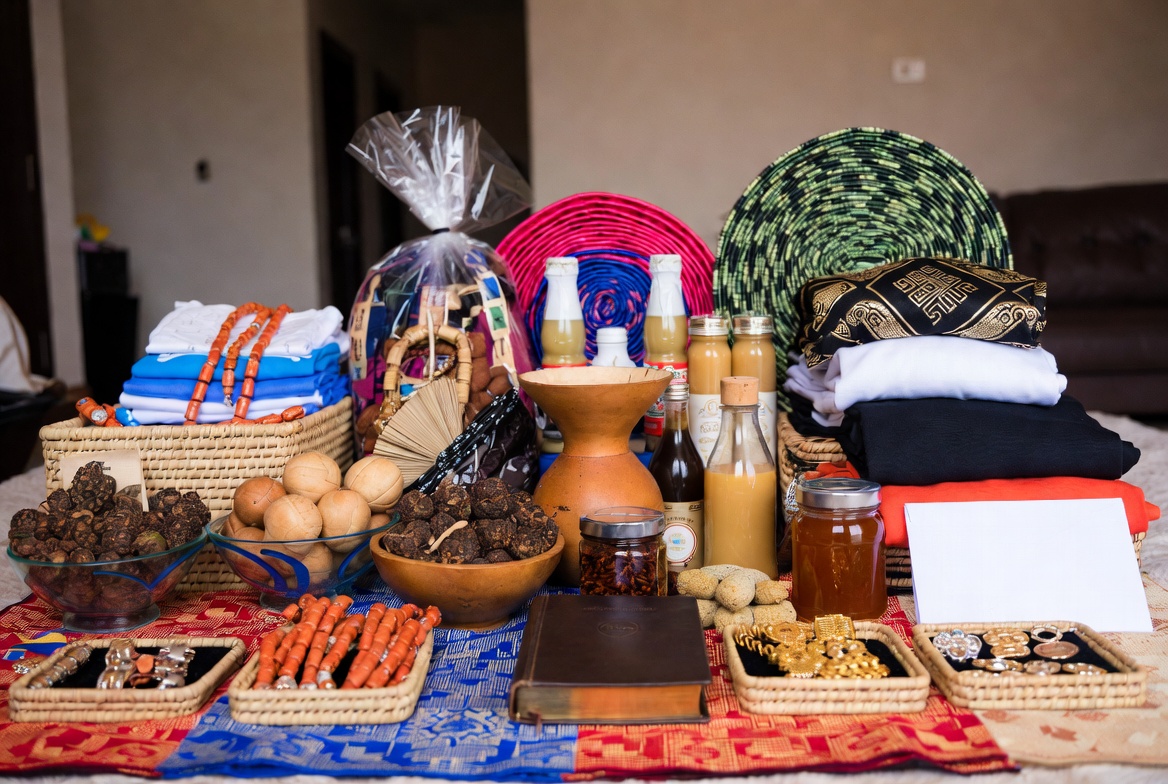
Kola nuts, palm wine, alligator pepper, bitter kola, and honey → symbols of sweetness, endurance, and fertility.
Clothing and jewelry for the bride.
Clothing for the bride’s mother.
Bride price (usually a symbolic amount in an envelope).
Bible or Qur’an (depending on the family’s faith).
3. Exchange of Rings and Blessings
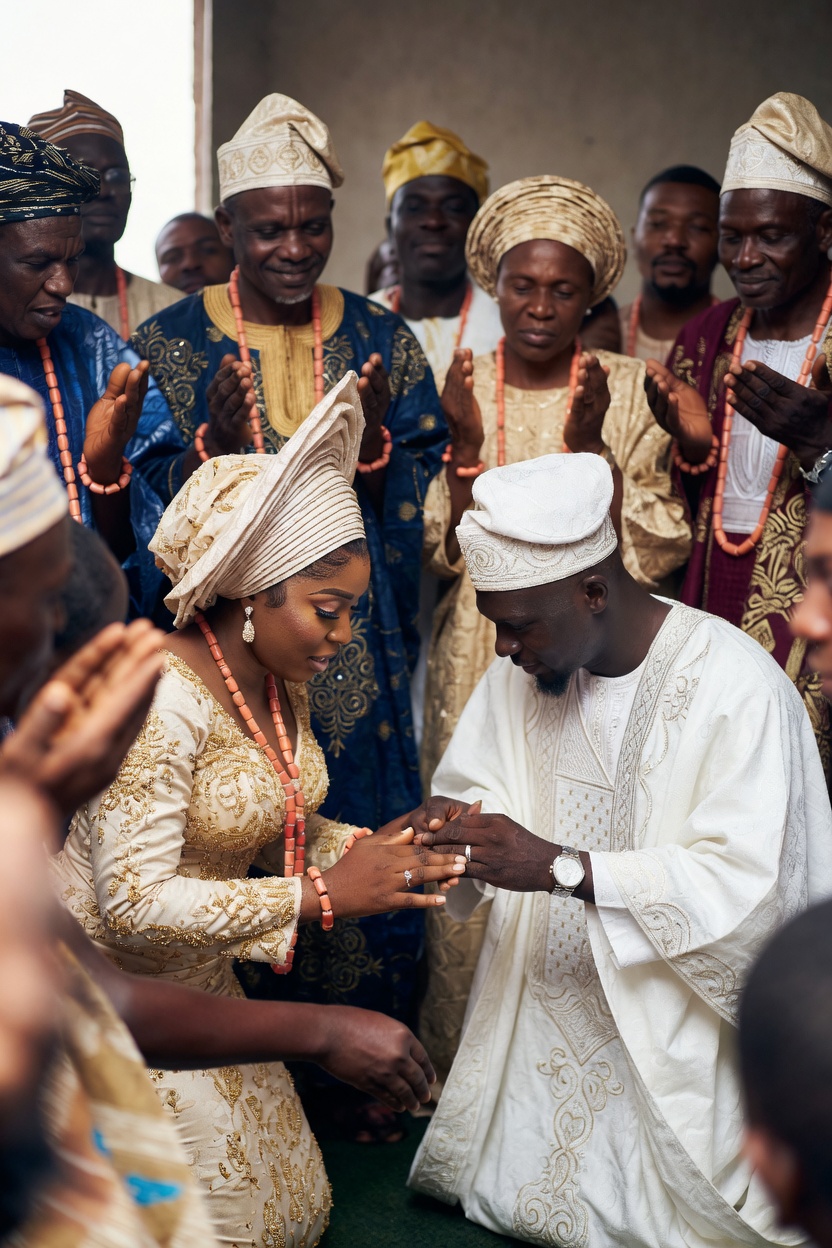
The couple exchanges rings or traditional beads.
Elders from both families offer prayers and blessings for:
Fruitfulness
Peace
Prosperity
Long life
4. Feasting and Celebration
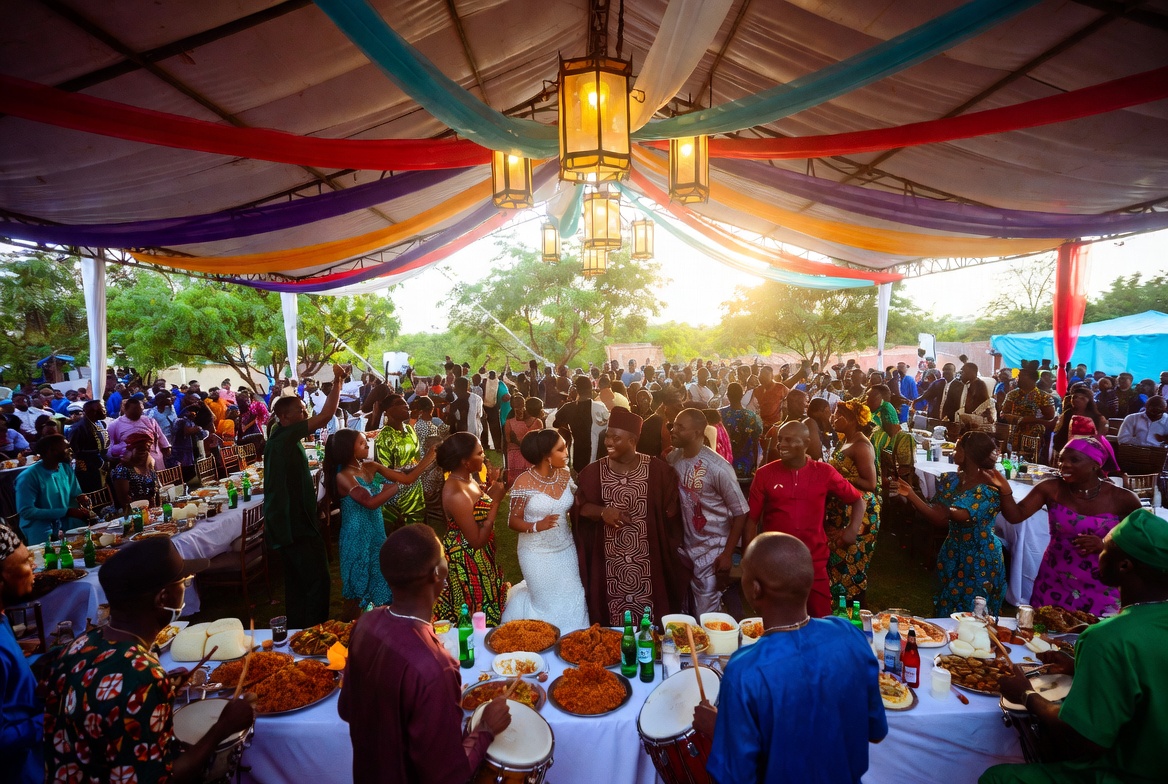
The ceremony ends with vibrant singing, dancing, and drumming.
Guests wear Aso Ebi (coordinated outfits) to show solidarity.
A grand feast is served with popular Yorùbá dishes such as:
Jollof rice
Efo riro (spinach stew)
Amala with ewedu
Asaro (yam porridge)
5. Post-Wedding Customs
The bride may perform the Ìlẹ̀kọ (official visit to her husband’s family home).
She is welcomed with gifts and blessings by her new family.
This marks her formal integration into her husband’s household.
Core Values and Symbolism
Yorùbá weddings deeply reflect the following values:
Ìyí (Respect) — shown through prostration, kneeling, and honoring elders.
Àjọṣe (Community) — two entire families are being joined, not just two people.
Ayò (Joy) — celebration is a form of thanksgiving.
Àdúrà (Faith & Blessing) — prayers to God and ancestors for a successful marriage.