

The Legend of the Golden Raft (La Leyenda de la Balsa de Oro)
Long before the Spanish arrived, the Muisca people lived in the highlands of what is now Boyacá and Cundinamarca. Every time a new ruler (the zipa) was chosen, the Muisca performed a sacred ceremony that would later inspire the famous myth of El Dorado.
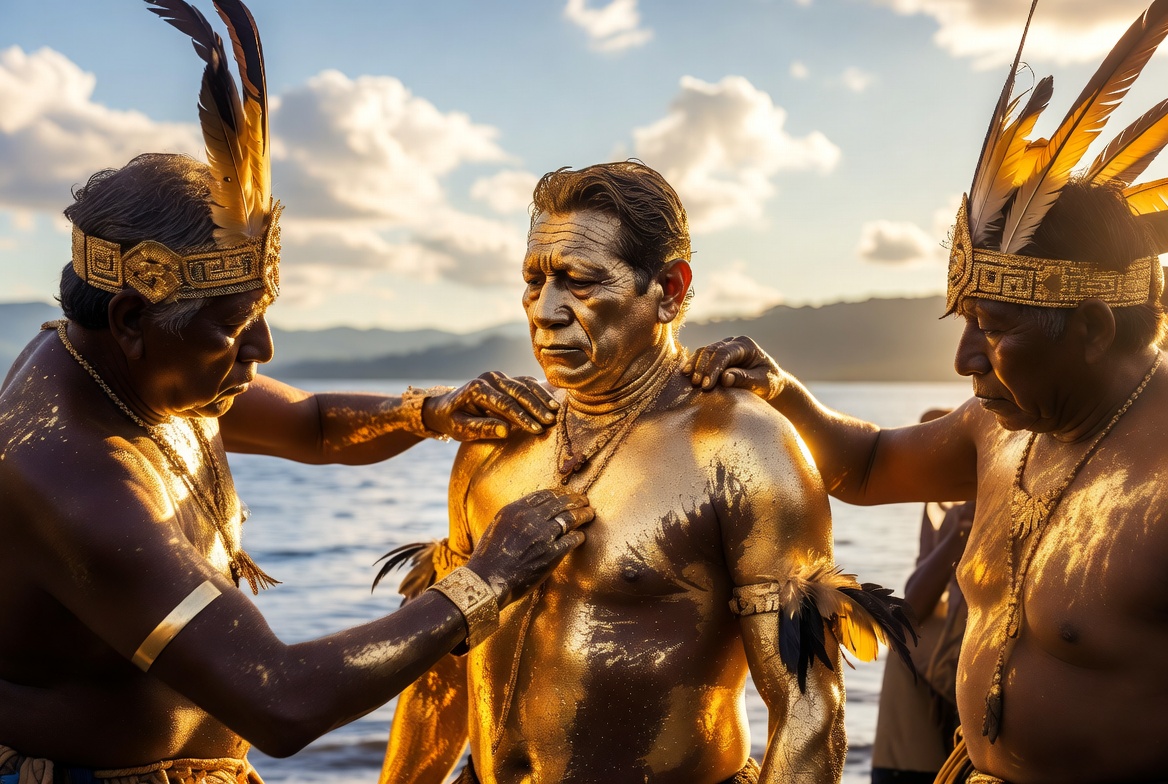
On the day of the ceremony, the new zipa would be taken to the shores of the sacred Lake Guatavita. His body was covered from head to toe in a sticky resin, and then he was dusted with pure gold dust until he shone like the sun itself.
The ruler would board a raft made of reeds, adorned with the most beautiful golden ornaments and emeralds. Accompanied by four chiefs, also covered in gold, the raft would slowly move toward the center of the lake. While musicians played flutes and drums, the new zipa and his chiefs would throw magnificent offerings of gold, emeralds, and precious objects into the deep waters as a gift to the gods — asking for protection, fertility, and prosperity for their people.
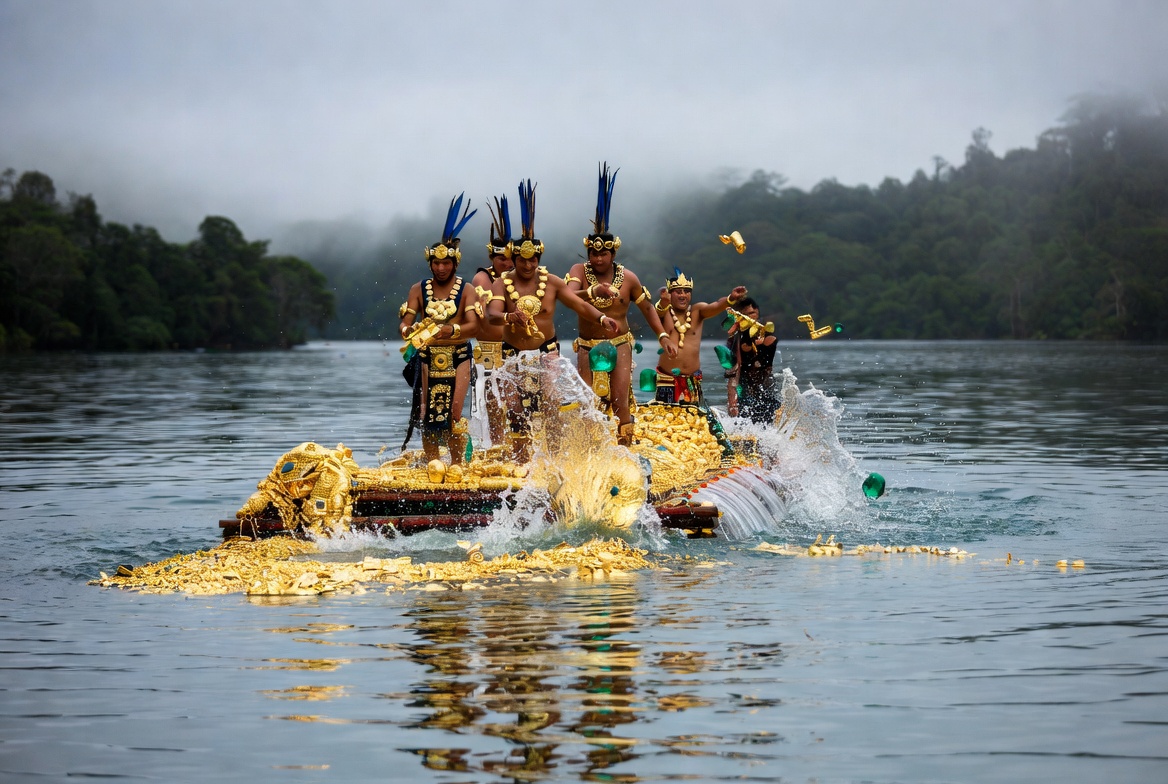
When the ceremony ended, the new ruler would wash off the gold in the lake and return to shore as the official zipa.
Significance:
This legend is the true origin of the El Dorado myth that drove many Spanish conquistadors to search for a city of gold. For the Muisca, it was never about a city made of gold — it was a sacred ritual of renewal, gratitude to the gods, and connection with nature.
Even today, Lake Guatavita remains a sacred and mysterious place, and many golden artifacts from this culture can be seen in Bogotá’s famous Gold Museum.
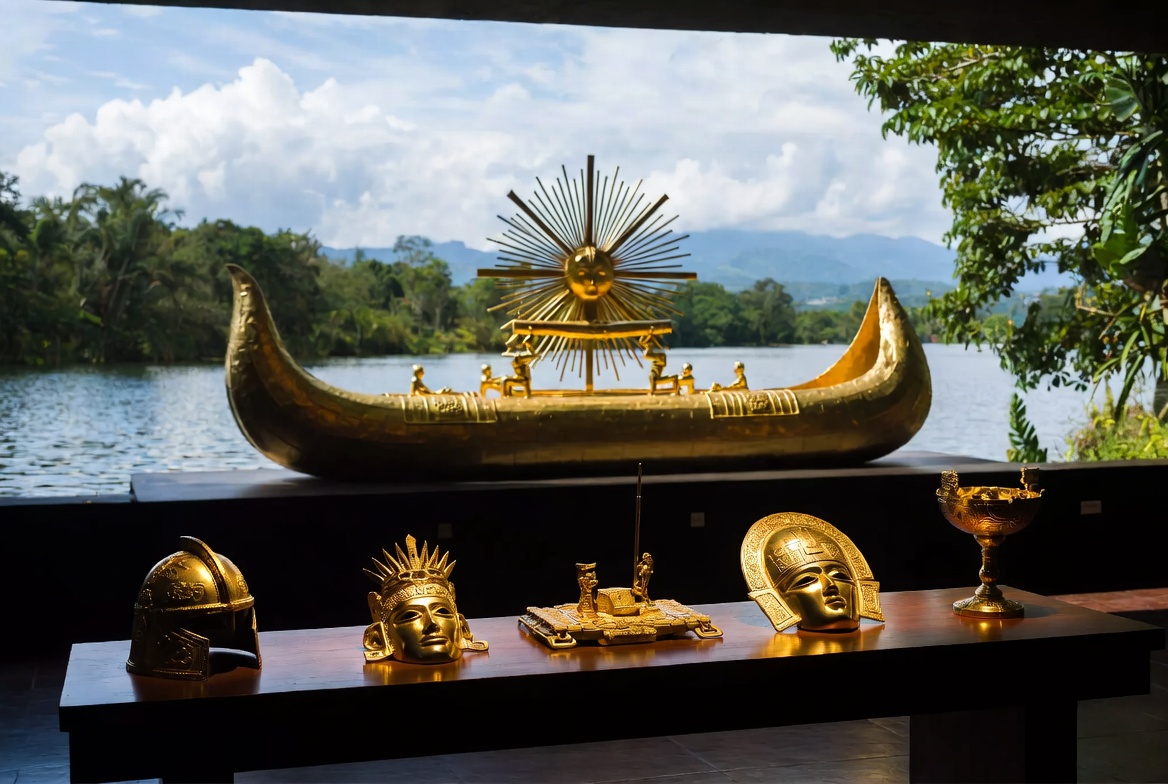
This story represents the richness of Colombia’s indigenous heritage, the spiritual value of gold (which was considered the “sweat of the sun”), and the deep respect our ancestors had for water and the natural world.