
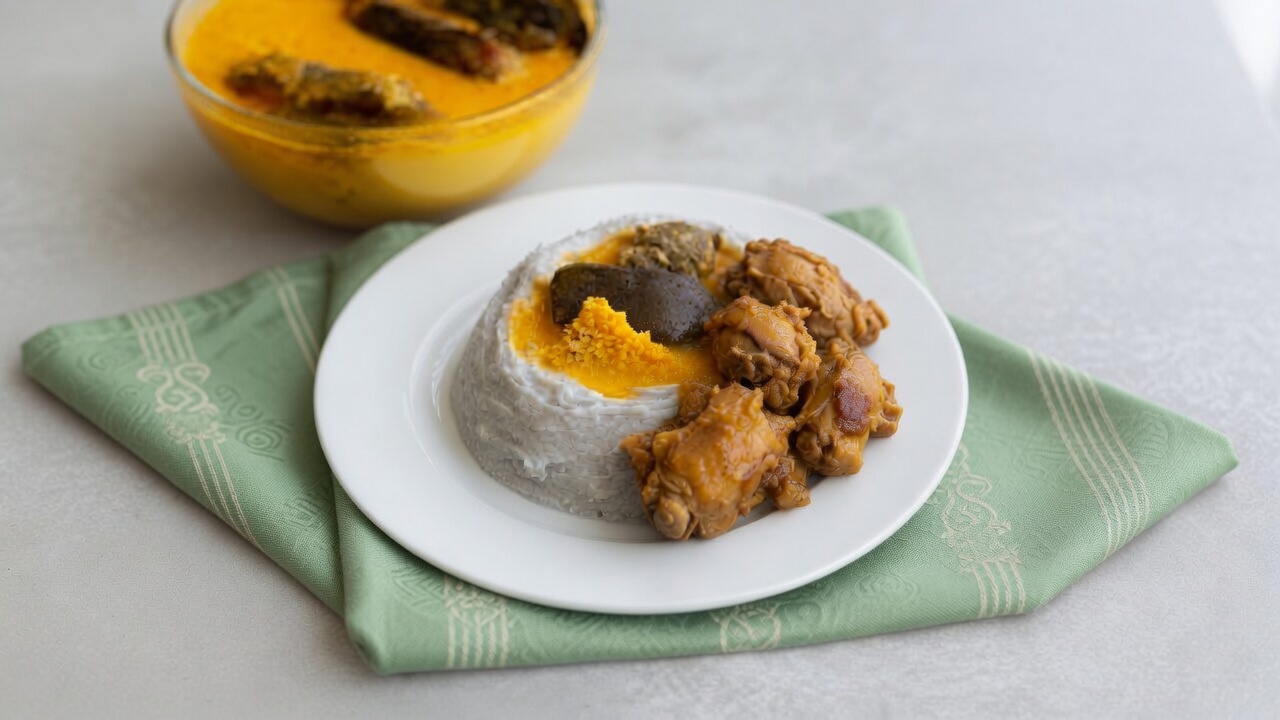
Achu (Delicious taro)
CameroonMankonMankon
Achu and Yellow Soup is one of the most respected traditional meals in the Grassfields region of Cameroon. Popular among communities such as the Nso, Kom, and Bamenda people, the dish symbolizes hospitality, prestige, and cultural pride. It is commonly prepared during family gatherings, ceremonies, and special celebrations.
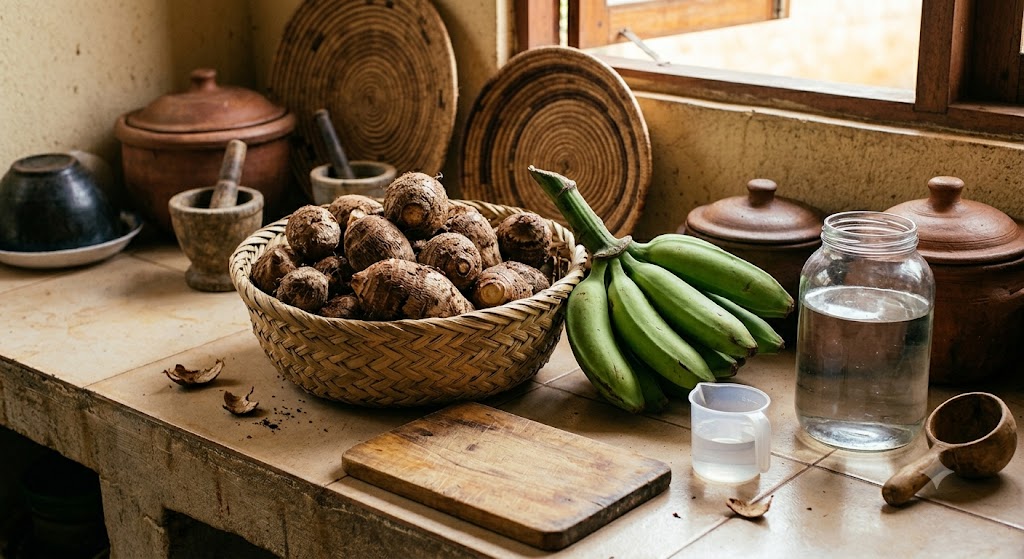
Ingredients for the Achu (Fufu Base):
- Cocoyams (taro / “macabo”)
- Green or unripe bananas
- Water
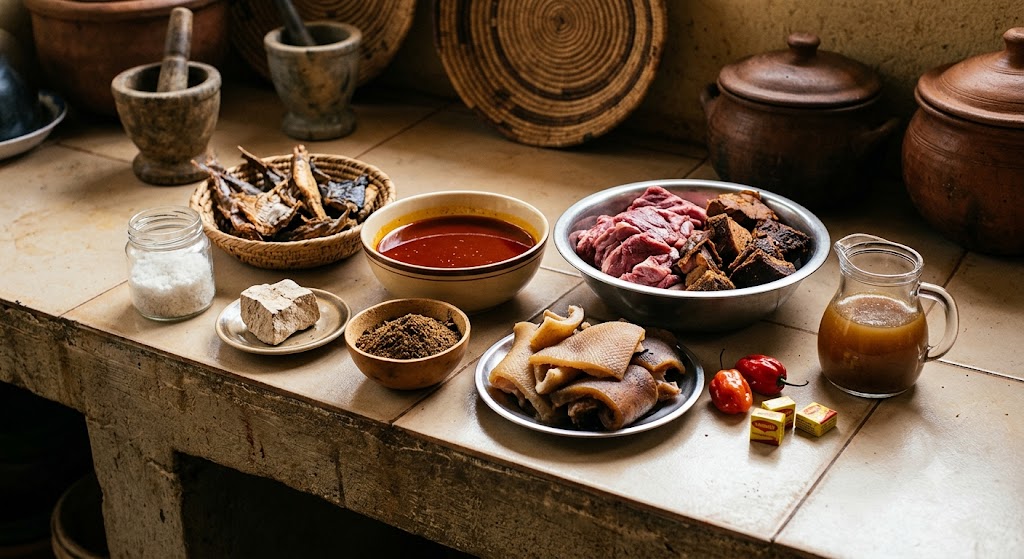
Ingredients for the Yellow Soup:
- Palm oil
- Beef or smoked meat
- Cow skin (canda / nkanda)
- Optional: Smoked or dried fish
- Limestone (canwa/kangwa) or food-grade alkaline substitute
- Traditional Achu spice mix
- Salt, Maggi, hot pepper
- Meat stock
Utensils Needed:
- Large pot
- Mortar and pestle or food processor
- Stirring utensils
- Strainer
- Serving bowls or banana leaves
Preparing the Cocoyams (Achu Fufu):
- Wash the cocoyams thoroughly without peeling them. Boil until soft. Optionally boil unripe bananas separately or together with the cocoyams. Peel while still warm and pound in a mortar until smooth, stretchy, and lump-free. If using a food processor, knead manually afterward. Mold into balls or a mound and keep warm.
Preparing the Meat and Stock:
- Wash the meat, cow skin, and fish if included. Season with salt, pepper, and Maggi, then boil until tender. Reserve the flavorful stock for preparing the yellow soup.
Preparing the Limestone Solution:
- Dissolve the limestone (canwa) in water, stir well, and allow the sediment to settle. Carefully strain the clear alkaline liquid used for emulsifying the soup.
Making the Yellow Soup:
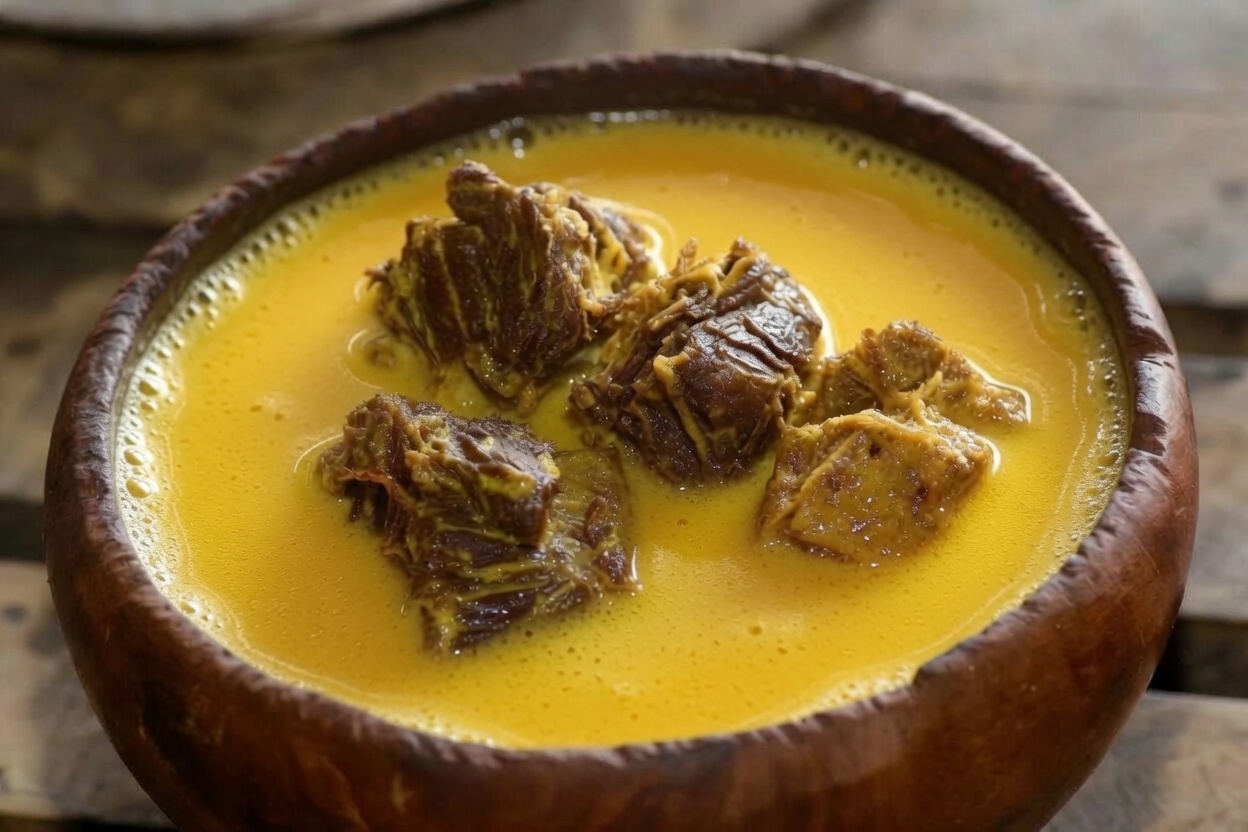
- Place palm oil in a bowl or lightly warm it. Gradually add the strained limestone solution while stirring continuously until it forms a bright yellow emulsion. Slowly mix in the meat stock, then add Achu spices, salt, pepper, and Maggi. Add the cooked meat, cow skin, and fish. Traditionally, the soup is mixed by pouring it back and forth between two pots until smooth and creamy.
Serving the Achu:
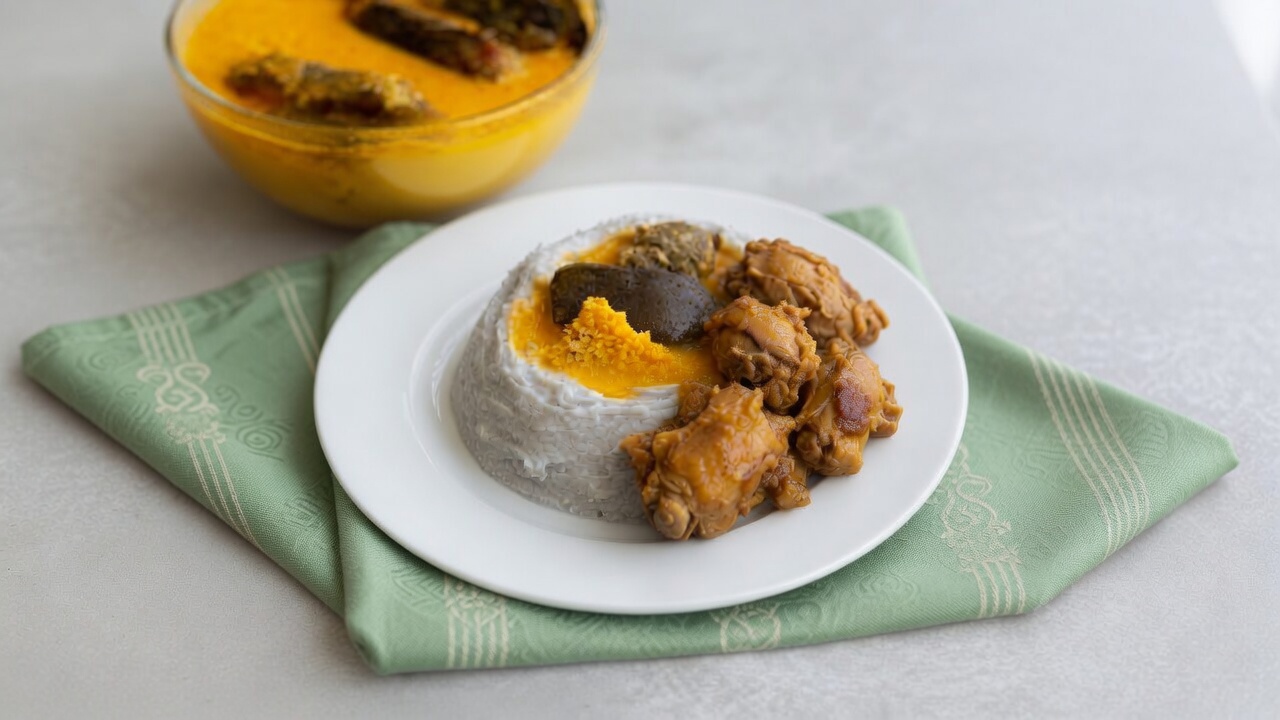
- Place the Achu paste on a plate or banana leaf and create a shallow opening in the center. Pour in the yellow soup and top with meat and cow skin. Traditionally, Achu is eaten with the right forefinger only, without spoons or forks, especially during cultural gatherings.
Cultural Meaning:
- Achu is more than food—it is a symbol of unity, respect, and cultural identity. Sharing Achu during gatherings strengthens social bonds and preserves Grassfields traditions across generations.