Ethiopian coffee ceremony
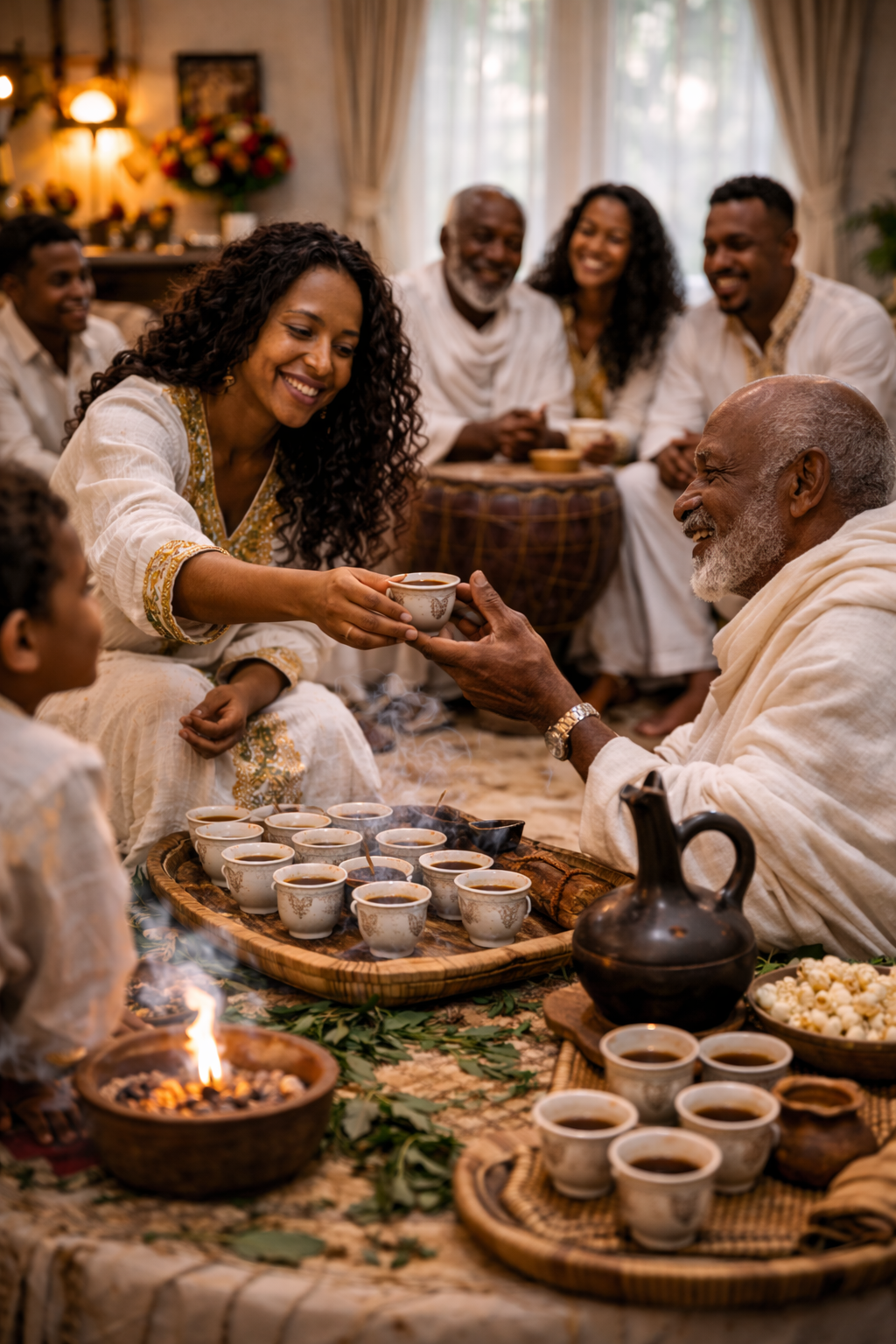
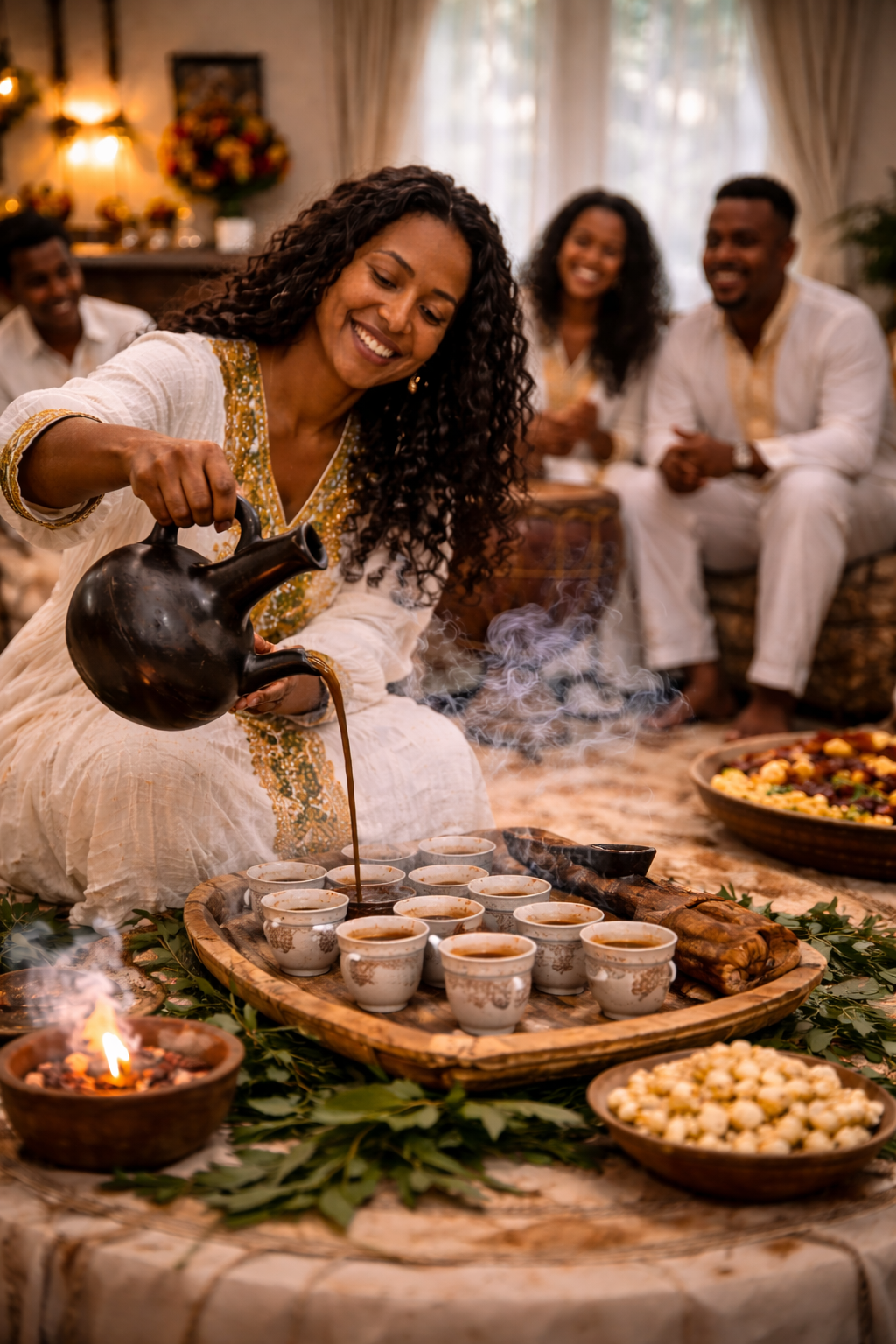
One deeply meaningful cultural practice cherished by the Amhara people of Ethiopia is the traditional Ethiopian coffee ceremony, known locally as Buna. More than simply preparing coffee, this ritual is a sacred social gathering that symbolizes hospitality, respect, and community bonding. The ceremony involves roasting fresh green coffee beans over charcoal, grinding them by hand, and brewing the coffee in a traditional clay pot called a jebena. It is performed slowly and intentionally, often accompanied by incense, popcorn, and conversation. Guests are served three rounds of coffee—Abol, Tona, and Baraka—each believed to carry increasing blessings.
This practice is important because it reinforces unity and intergenerational connection. Families gather to discuss community matters, resolve conflicts, share wisdom, and strengthen relationships. Elders use this moment to pass down proverbs, stories, and moral teachings to younger generations. In Amharic culture, refusing coffee can be seen as distancing oneself from community life, because the ceremony is a space of reconciliation and shared humanity. The coffee ceremony therefore represents more than a beverage—it embodies identity, continuity, and the deeply rooted value that togetherness sustains society.
画廊