
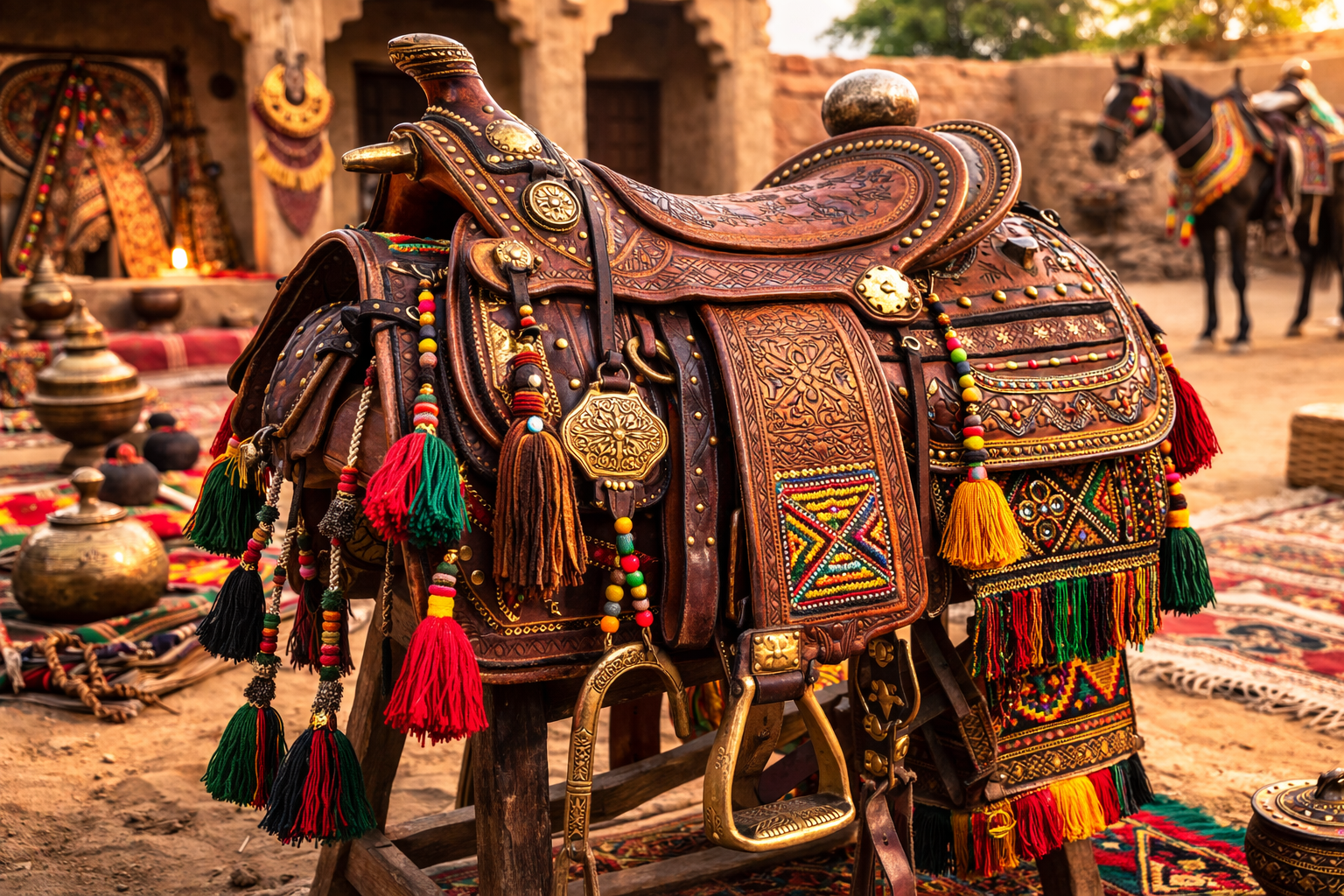
Hausa Decorated Leather Saddle
Hausa Decorated Leather Saddle
For centuries, Hausa artisans—especially in cities like Kano, Katsina, and Zaria—have been known for their exceptional leather craftsmanship. The leather is carefully tanned using traditional methods, dyed in deep browns and reds, and then decorated with intricate geometric patterns, brass studs, embroidery, and colorful tassels.
These saddles are not just tools for riding horses—they are symbols of identity and status.
🌍 Cultural Significance
1️⃣ Symbol of Royalty and Nobility
In traditional Hausa society, horses represent power, dignity, and leadership. Emirs, district heads, and warriors ride horses during ceremonies like the Durbar Festival. The more elaborate the saddle and decorations, the higher the status of the rider.
2️⃣ Mastery of Craftsmanship
Hausa leatherworkers are highly respected. The craft is passed down from father to son, preserving skills such as:
Traditional tanning methods
Hand-stitching techniques
Embossed pattern making
Decorative metalwork integration
3️⃣ Economic Importance
Leatherwork has historically been one of the major trade industries of Northern Nigeria. Hausa leather goods were traded across West Africa and even North Africa through trans-Saharan trade routes.
4️⃣ Identity and Pride
Even today, during major festivals like Durbar, the decorated saddle is a proud display of Hausa heritage. It connects modern celebrations to centuries-old traditions of cavalry and royal processions.