
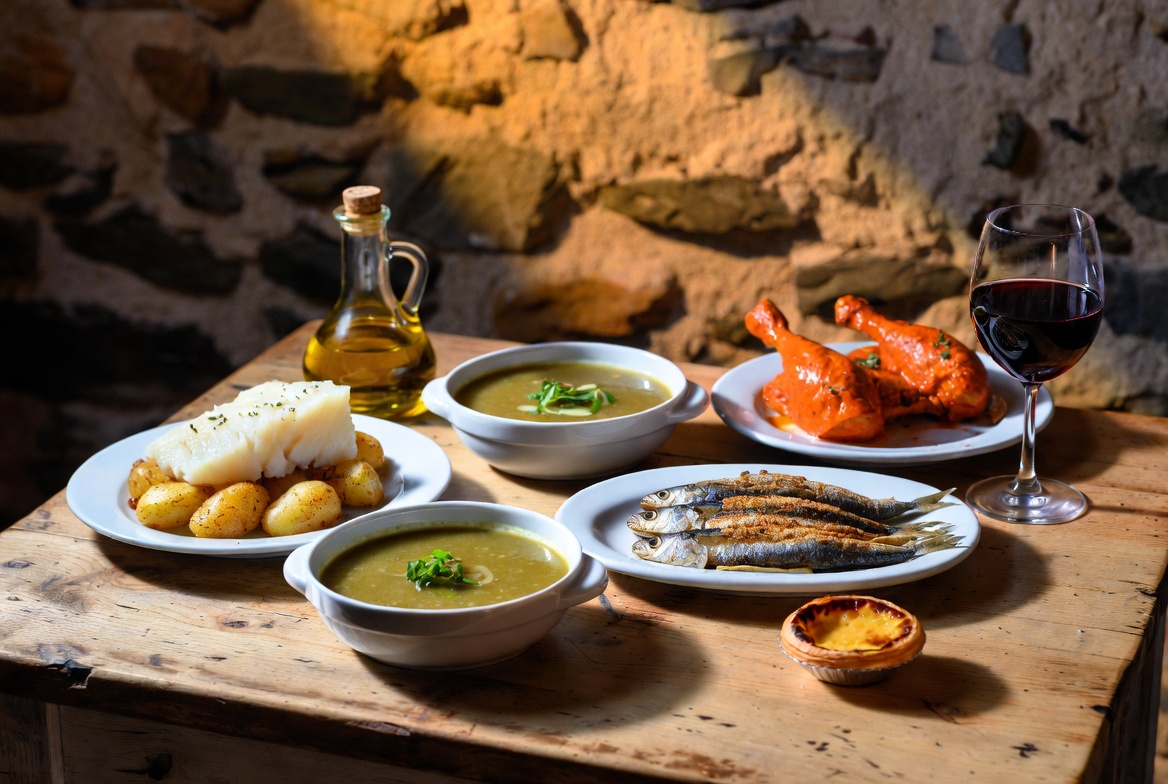
Most Common Meals in Portuguese Communities
Portuguese meals are simple, honest, and built on the sea, the land, and generations of family recipes.
1. Bacalhau (Salted Codfish)
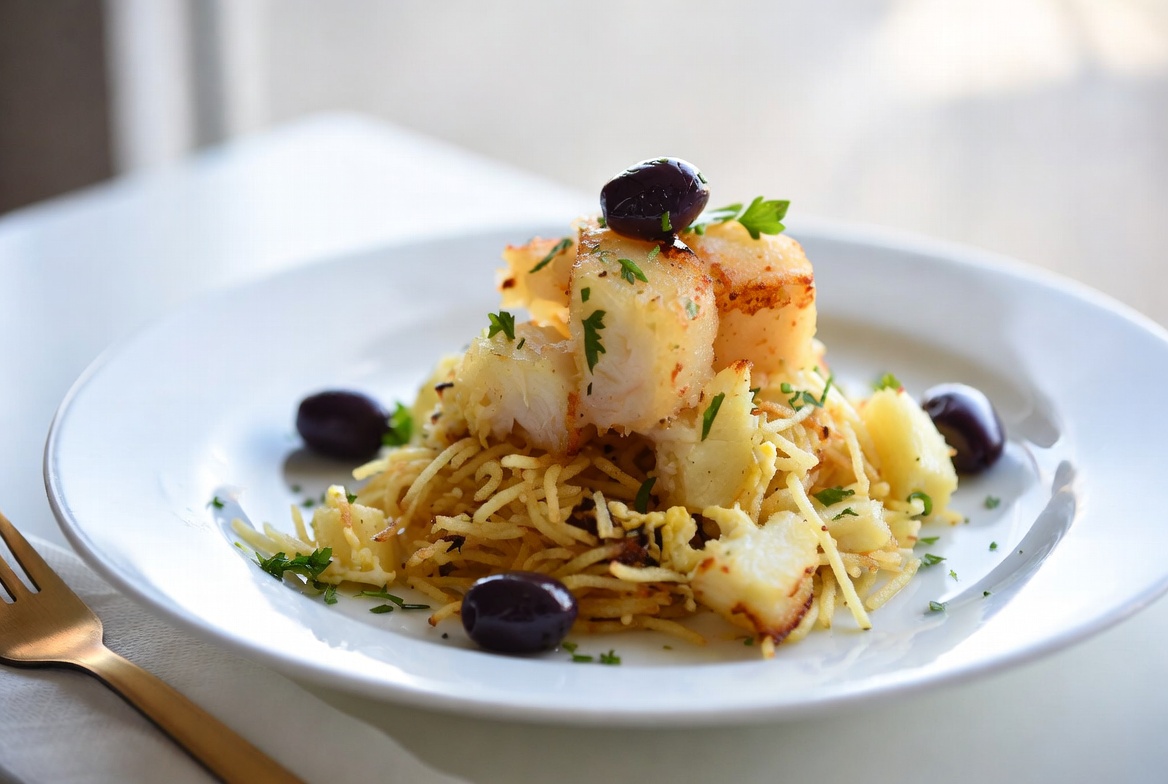
Portugal's national dish. There are 365 ways to cook it (one for each day of the year). The most common is Bacalhau à Brás (shredded cod with eggs, onions, and thin fries).
Salted cod must be soaked in water for 24-48 hours before cooking
Represents Portuguese exploration and fishing history
Every family has their secret recipe
Eaten on Christmas Eve and many Fridays
Never served with cheese (deeply offensive)
2. Caldo Verde (Green Soup)
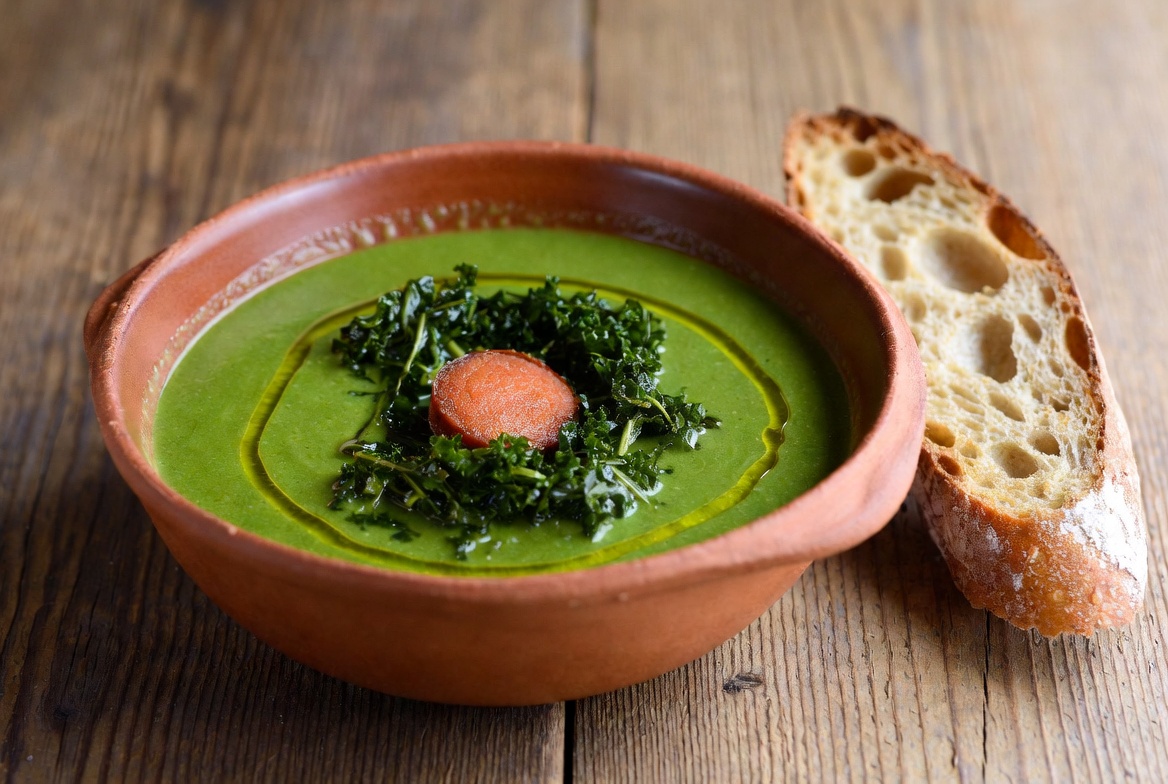
A simple soup made with potatoes, shredded kale, olive oil, and slices of chorizo sausage. Served as a starter for almost every Portuguese meal.
Originated in northern Portugal (Minho region)
Must be served very hot
The kale must be cut paper-thin by hand
Chorizo slice floats on top (never mixed in)
Eaten before the main meal, not as the meal itself
3. Sardinhas Assadas (Grilled Sardines)
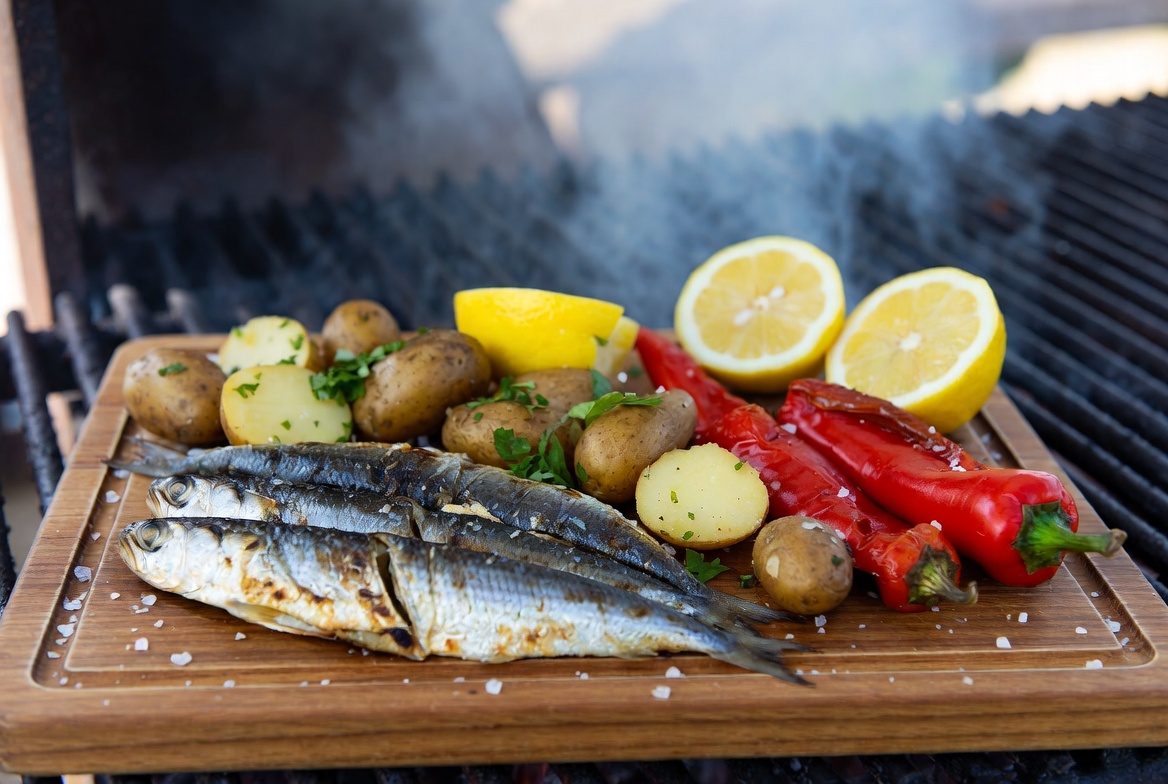
Fresh sardines grilled whole over hot coals. Seasoned only with coarse salt. Served with boiled potatoes and roasted peppers. Most common during summer festivals (Santos Populares in June).
Best eaten with hands, not fork and knife
The smell of grilling sardines means summer in Portugal
Served on bread that soaks up the fish oil
Heads and tails are left on (eat around them)
Accompanied by grilled peppers and boiled potatoes
4. Frango Piri-Piri (Piri-Piri Chicken)
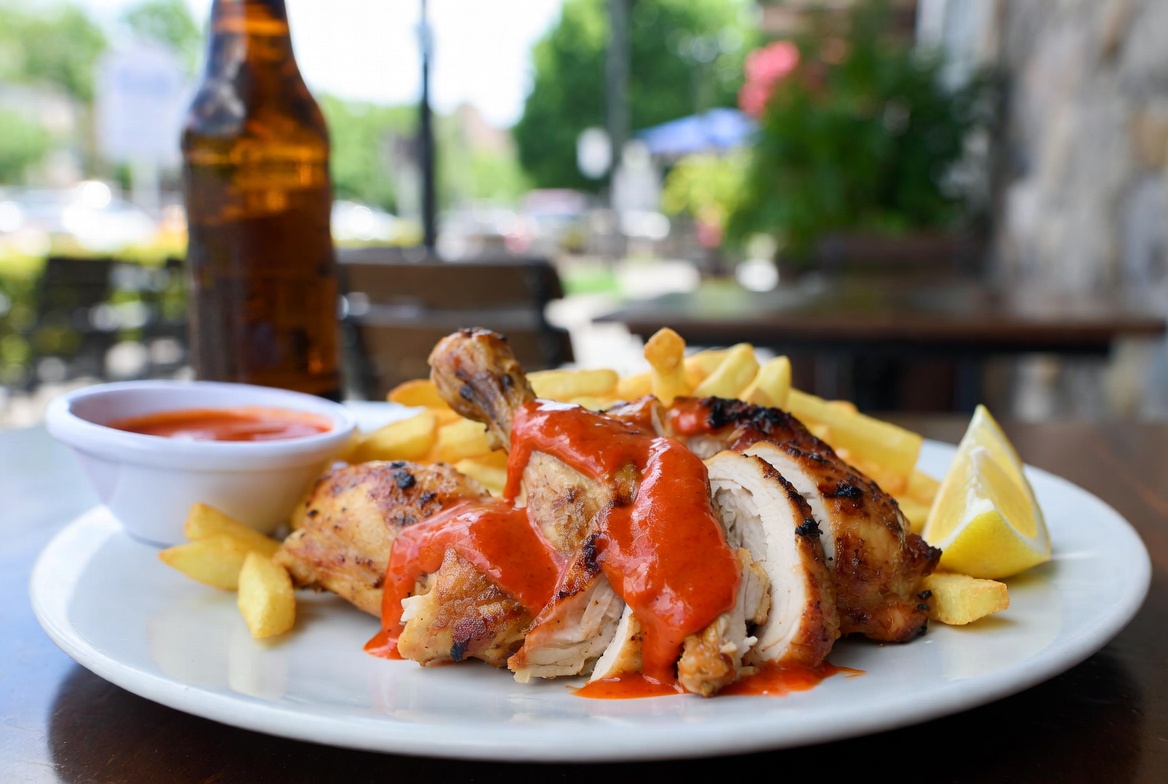
Grilled chicken marinated in piri-piri sauce (made from African bird's eye chili peppers, garlic, lemon, and oil). Very spicy. Served with fries or rice.
Originated in Portuguese African colonies (Angola, Mozambique)
Piri-piri means "pepper-pepper" in Swahili
Spice level varies from mild to tear-inducing
Eaten with hands and plenty of napkins
Always served with a cold beer
5. Pastel de Nata (Custard Tart)
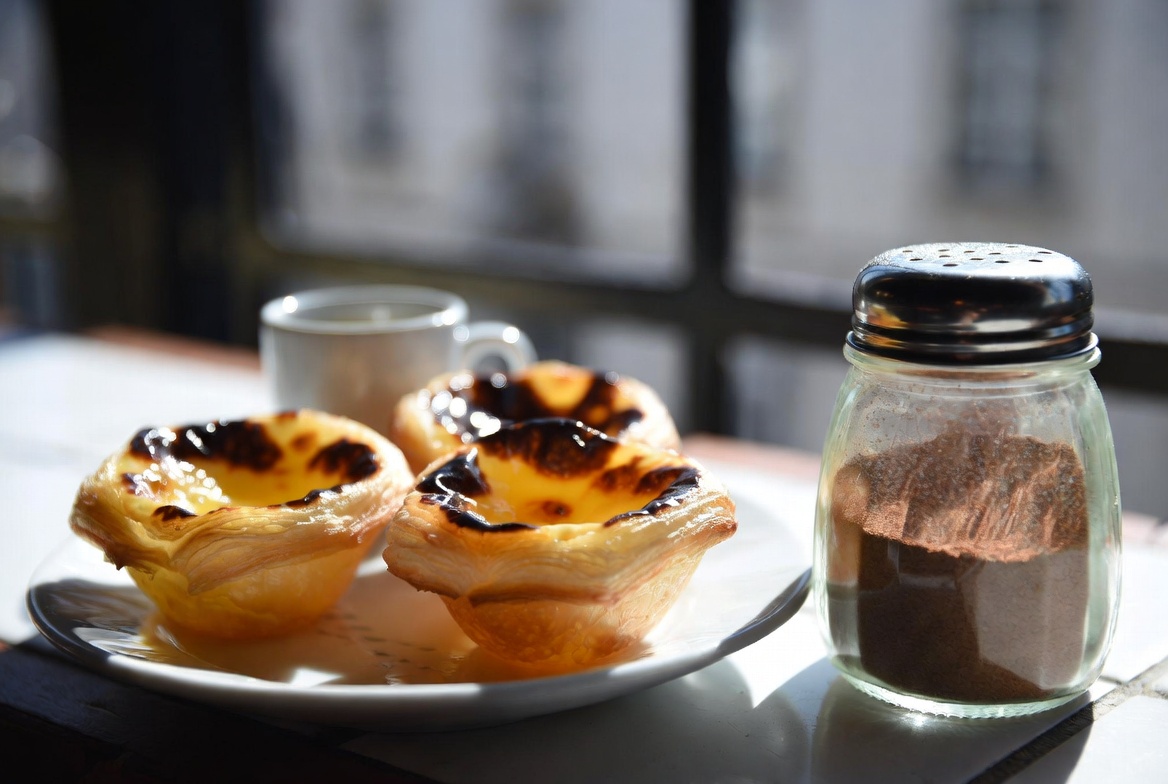
A small egg custard tart with a crispy, flaky shell. Topped with cinnamon and powdered sugar. Eaten any time of day: breakfast, snack, or after dinner.
Originated in Lisbon (Belém neighborhood)
Original recipe is a secret guarded by monks
Best eaten warm, straight from the oven
Never refrigerate (ruins the texture)
Each person eats 1-3 tarts in one sitting