
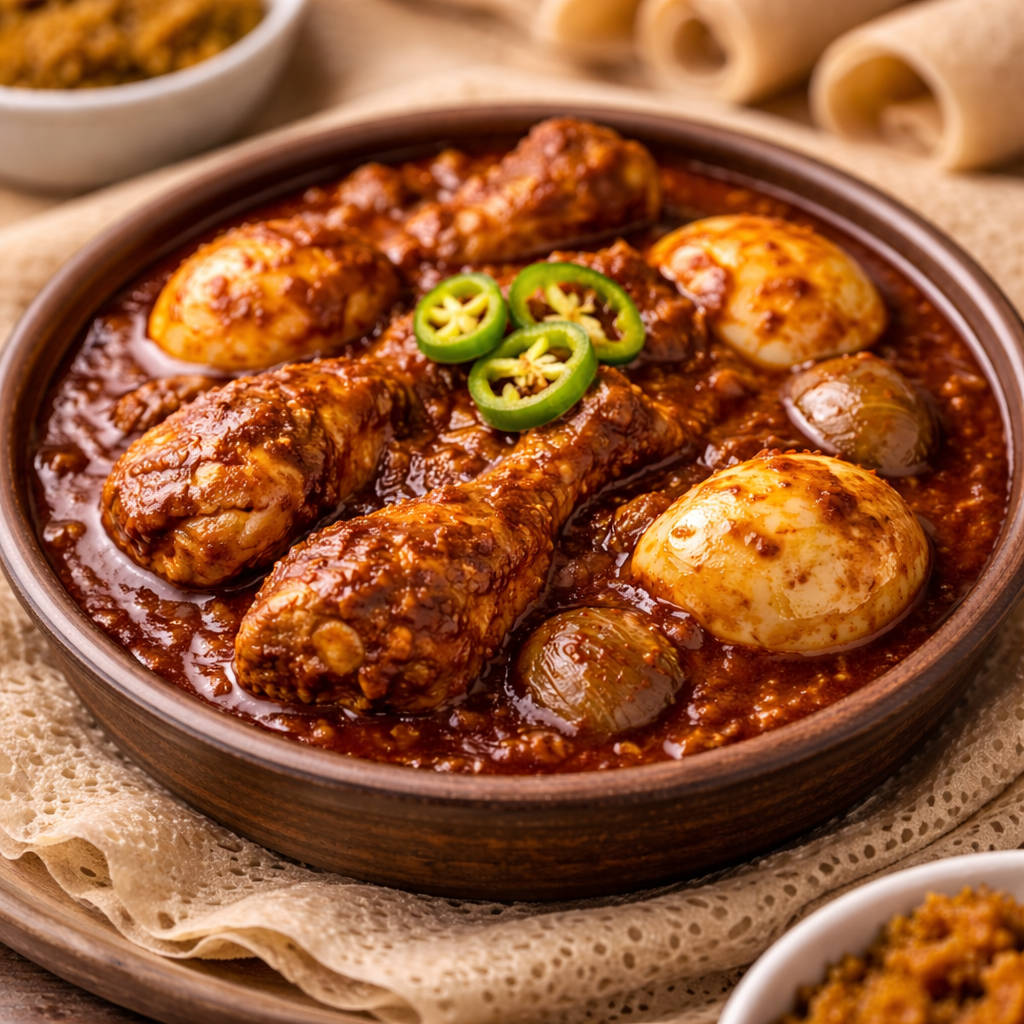
Traditional recipe for "doro wat " and how to make it
Doro Wat is one of the most iconic dishes among the Amhara people of Ethiopia. It is traditionally prepared for holidays, weddings, and especially during celebrations like Genna (Ethiopian Christmas). The dish is known for its deep red color, rich spice blend (berbere), and slow-cooked caramelized onion base.
Traditional Doro Wat Recipe
Ingredients (Serves 4–6)
1 whole chicken, cut into 8–10 pieces (skin removed)
2–3 tablespoons lemon juice (for cleaning chicken)
5–6 large red onions (very finely chopped or blended)
3–4 tablespoons berbere spice
3–4 tablespoons niter kibbeh (Ethiopian spiced clarified butter)
3 cloves garlic (minced)
1 tablespoon fresh ginger (minced)
2 tablespoons tomato paste (optional but common today)
4–6 boiled eggs (peeled)
Salt to taste
½ cup water or chicken stock
Clean the Chicken
Wash the chicken pieces with lemon juice and water. This is a traditional cleansing step. Rinse and set aside.
Slow-Cook the Onions (Very Important Step)
Place the chopped onions in a large pot over medium heat without oil.
Cook slowly for 20–30 minutes, stirring constantly.
The onions should reduce and become soft and slightly golden.
This dry-cooking process is what gives Doro Wat its deep flavor.
Add Niter Kibbeh & Spices
Add the niter kibbeh and cook for 2–3 minutes.
Stir in garlic and ginger.
Add berbere spice and cook gently for another 2–3 minutes until fragrant.
If too thick, add a small amount of water.
Add Chicken
Add the cleaned chicken pieces.
Coat them thoroughly in the sauce.
Cover and simmer on low heat for 30–40 minutes.
Stir occasionally so it does not burn.
Add small amounts of water if needed.
The sauce should become thick, deep red, and slightly oily on top.
Add Boiled Eggs
Pierce the boiled eggs slightly with a fork (so they absorb flavor).
Add them to the stew and simmer for another 10–15 minutes.
Doro Wat is served on a large platter lined with injera (Ethiopian sourdough flatbread). Extra injera is served on the side for scooping.
In Amharic culture, the bride or elder may perform gursha (feeding someone by hand) as a sign of love and respect.