
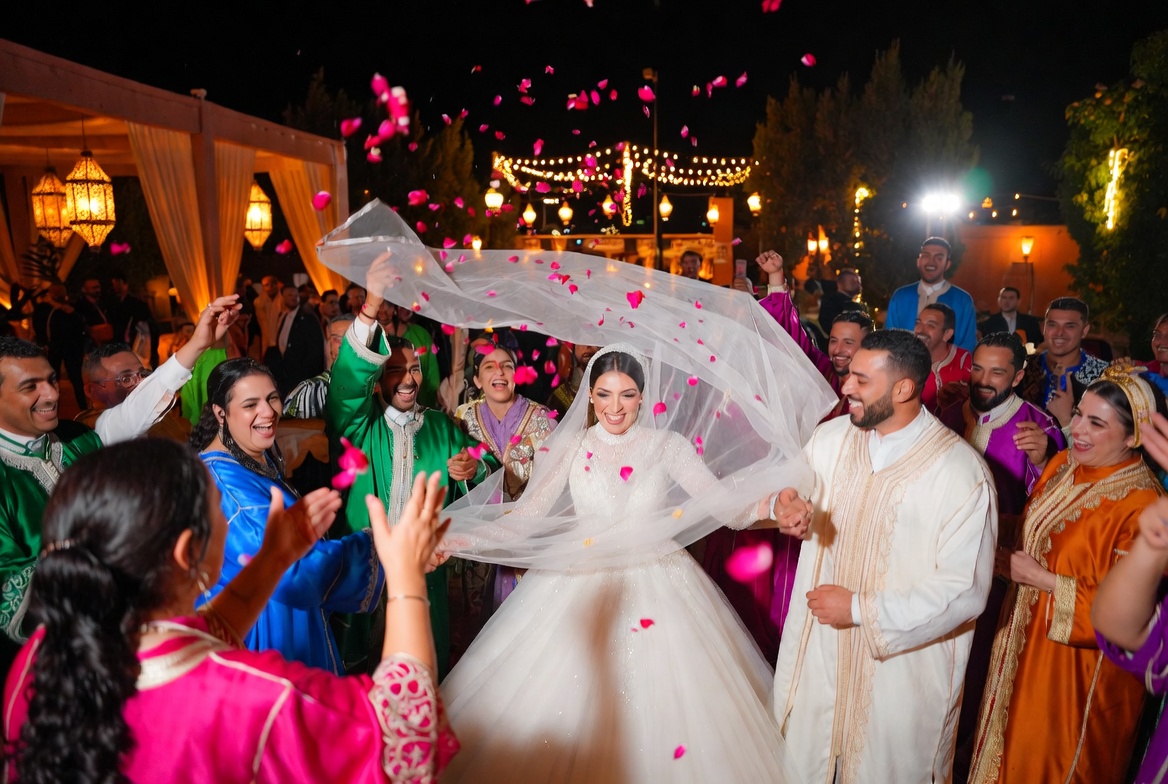
Traditional Wedding Customs in Morocco
Moroccan weddings are among the most elaborate and joyous in the Arab world. They are multi-day celebrations (often 3–7 days) that strongly reflect Islamic values, Arab hospitality, and Berber/Amazigh cultural roots. Family and community participation is central.
Key Traditional Customs:
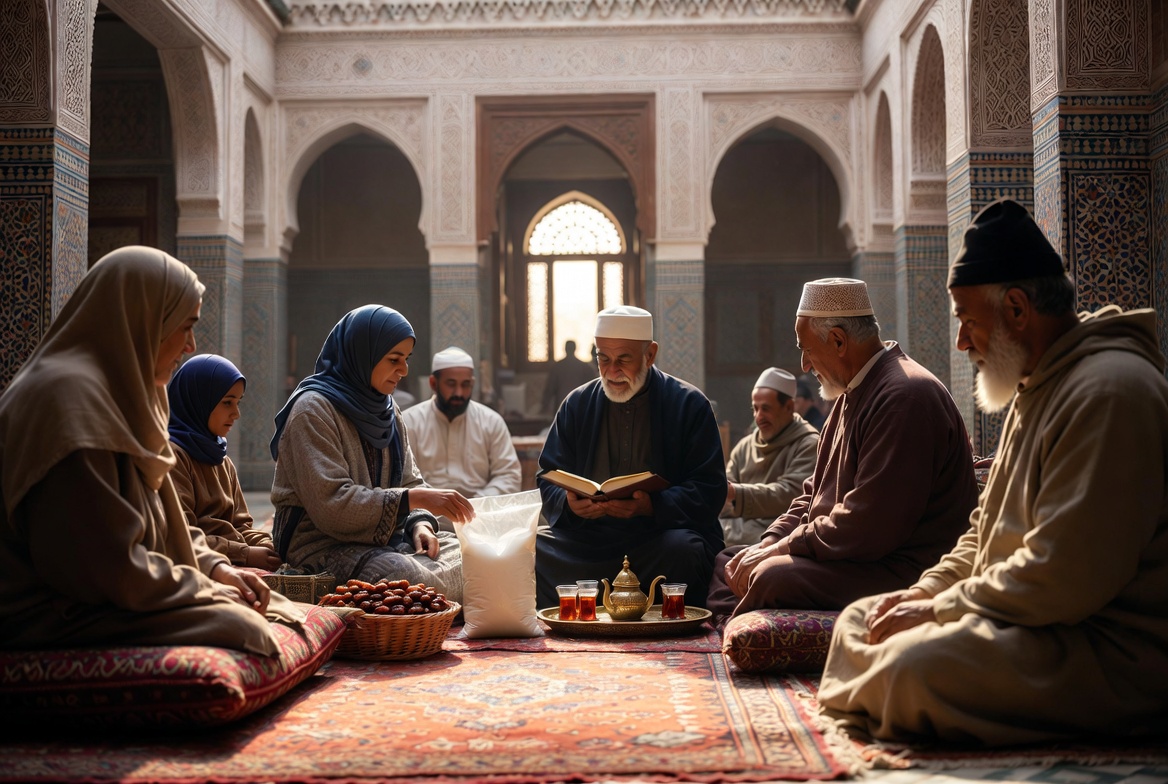
Engagement (Khutba or Al-Khitba): The groom’s family formally visits the bride’s family with gifts (sugar, tea, dates, henna, and money). Elders negotiate and read the Fatiha (opening chapter of the Quran) to bless the union. This officially announces the engagement.
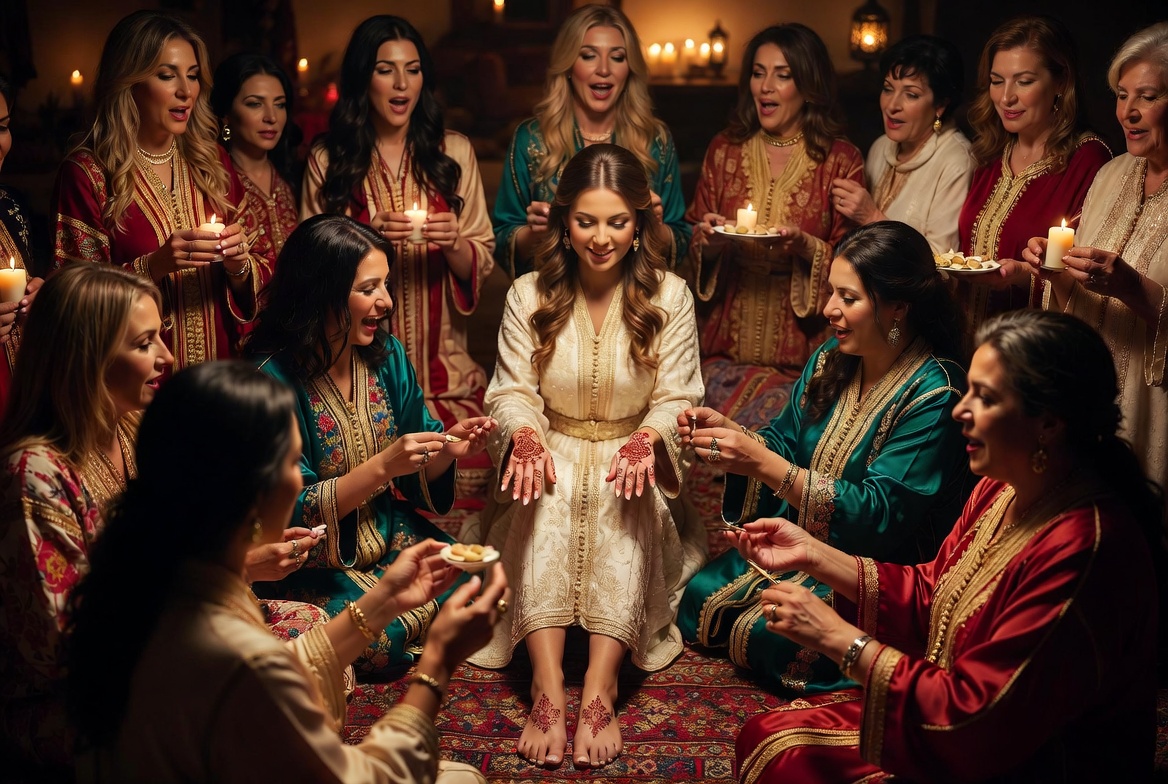
 Henna Night (Laylat al-Henna): A women-only celebration the night before the main wedding. The bride’s hands and feet are adorned with intricate henna designs. Women sing traditional songs (especially Haïdou or Aita), dance, and enjoy sweets and tea. It symbolizes beauty, blessing, and protection from the evil eye.
 Hammam & Purification Rituals
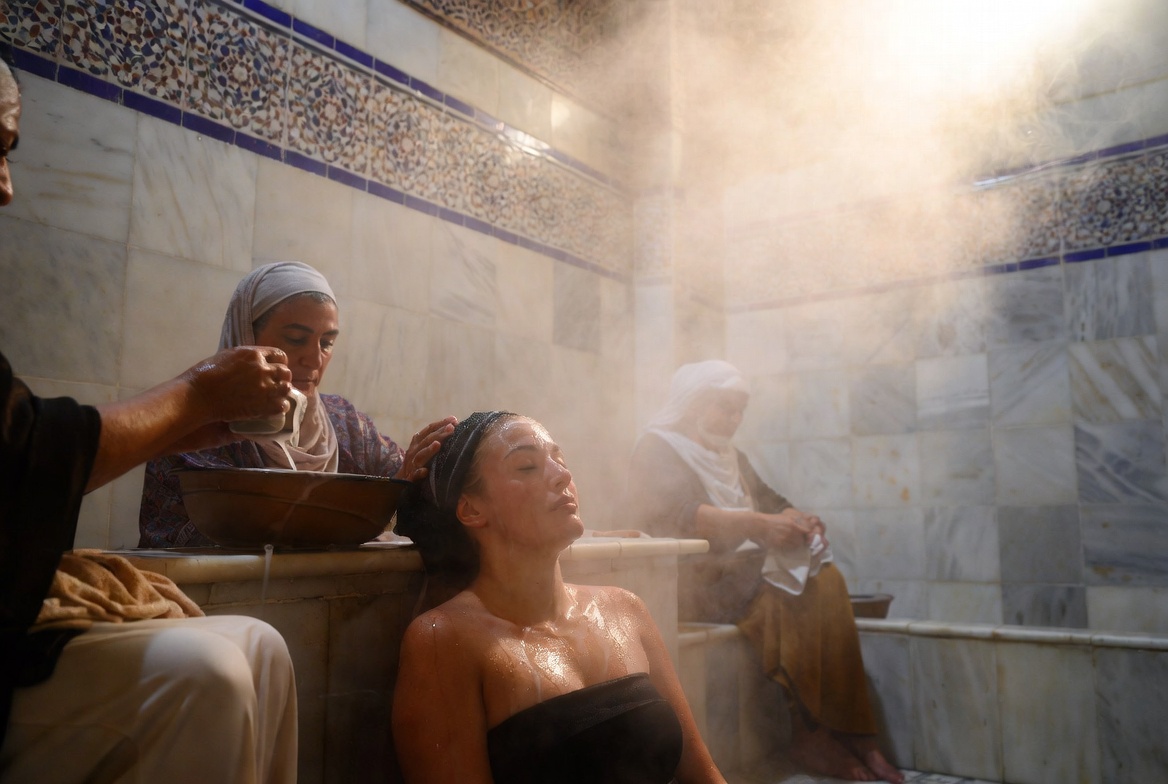 The bride (and sometimes the groom) visits a traditional hammam for a deep cleansing ritual. This is followed by a milk, rosewater, or orange blossom bath for spiritual and physical purification.
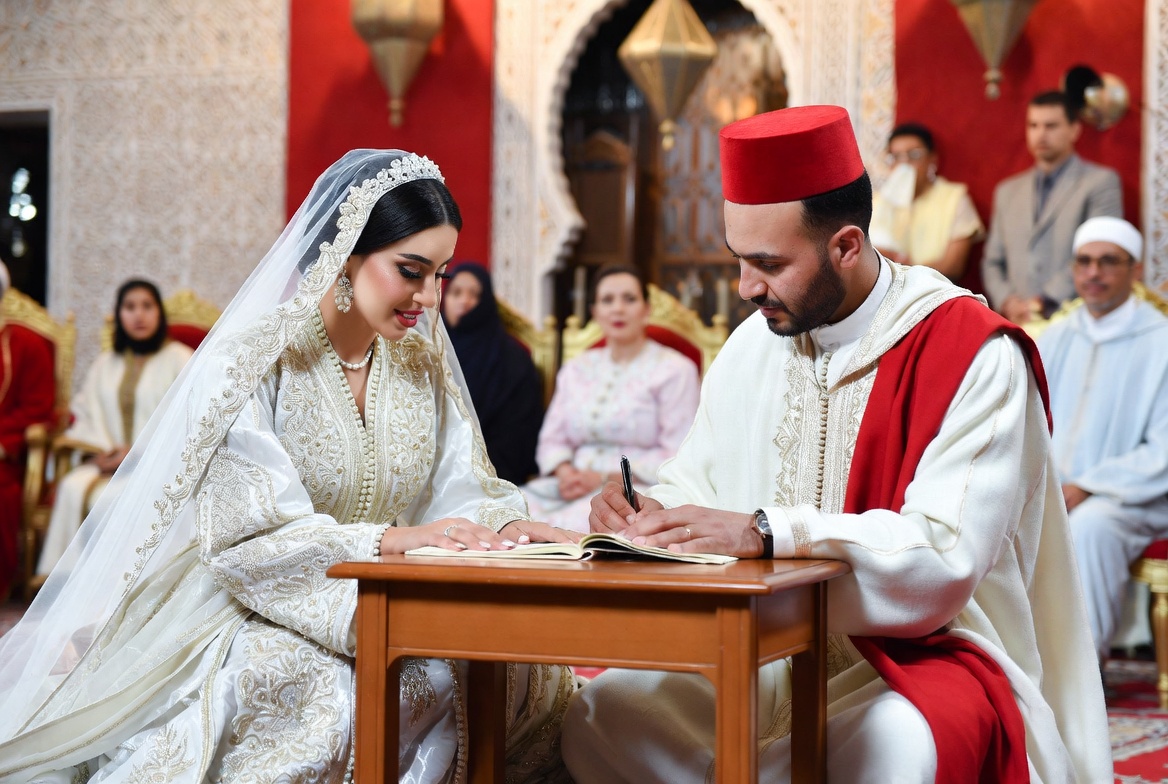
Religious Marriage Contract (Nikah): Performed by an imam or adoul (notary). The bride and groom (or her representative) consent, the mahr (bride price/dowry) is agreed upon, and the contract is signed in the presence of witnesses and family. Quranic verses are recited.
 The Grand Procession (Zeffa): The highlight of the wedding. The bride is carried on a decorated litter (Amaria) or throne, accompanied by musicians, drummers, singers, and dancers. The groom may arrive on horseback. Lanterns, incense, and youyous (ululations) fill the air.
Traditional Attire & Changes
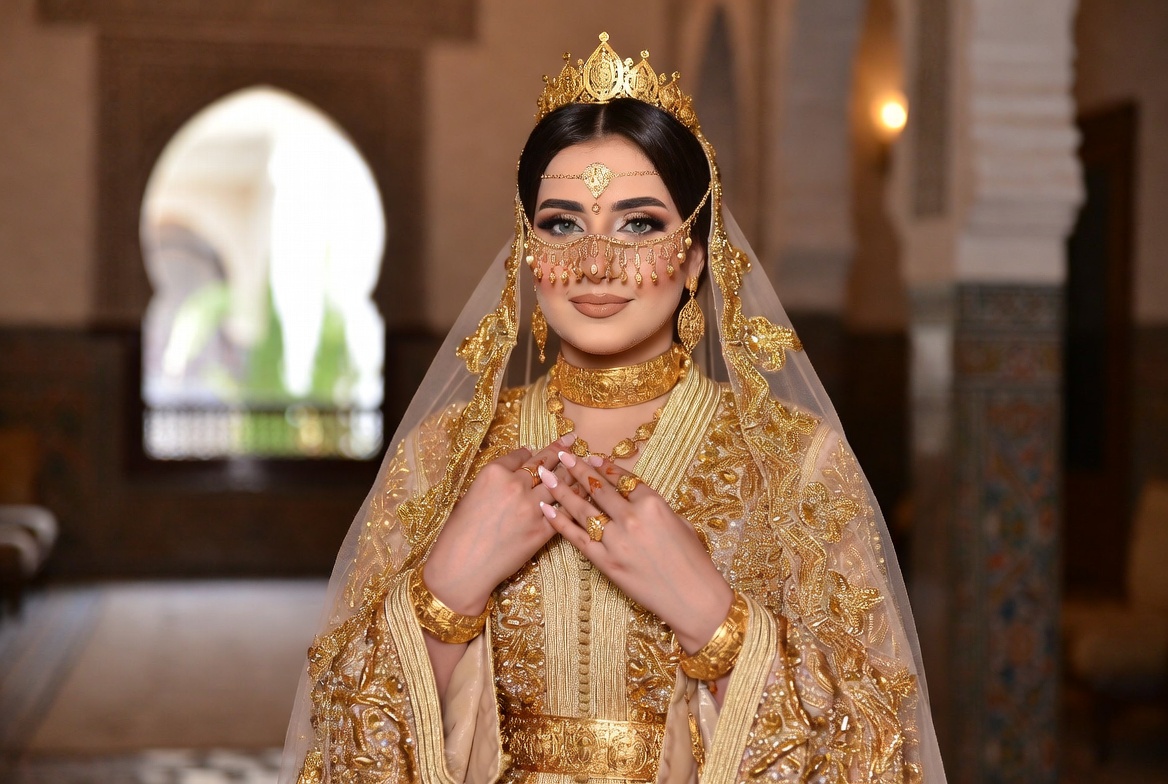 The bride typically changes into 7 different kaftans or takchitas throughout the night — each more elaborate than the last, with heavy gold embroidery, belts (mdamma), and extensive gold jewelry (sfifa, kholkhal). The groom wears a traditional white or cream djellaba, burnous (cloak), and sometimes a turban or fez.
The Wedding Feast (Walima)
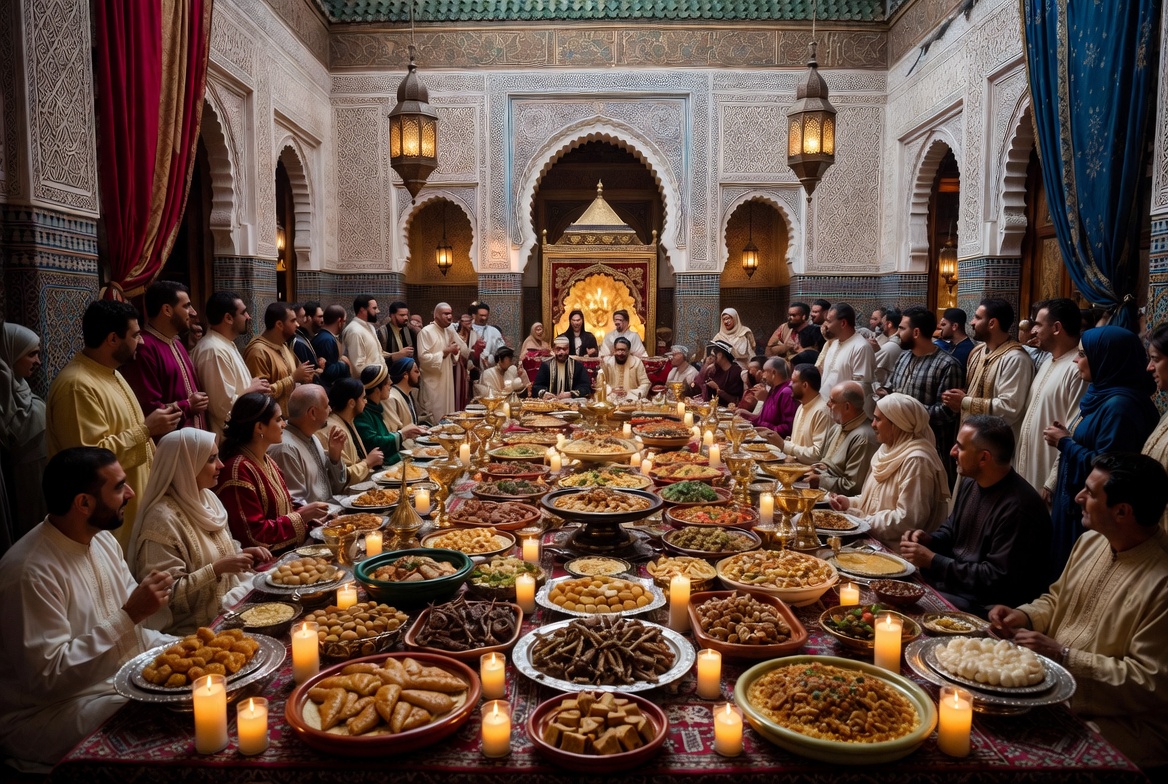 A lavish banquet featuring:
- Pastilla (sweet-savory pigeon or chicken pie)
- Lamb Mechoui (spit-roasted)
- Tagines with prunes and almonds
- Couscous with seven vegetables
- Moroccan sweets and mint tea The couple sits on a raised decorated sofa (Dais) to be admired by guests.
Symbolic Rituals & Blessings
- Sprinkling of orange blossom water and rose petals.
- Passing of milk and dates (symbolizing a sweet and pure life).
- The bride stepping over a threshold with the right foot first.
- Late-night dancing, youyous, and fireworks.
These weddings emphasize family alliance, generosity, blessings, and community joy. In more conservative or rural areas, traditions are even more rooted in Islamic and Amazigh heritage with less external influence.