
Warli Paintings
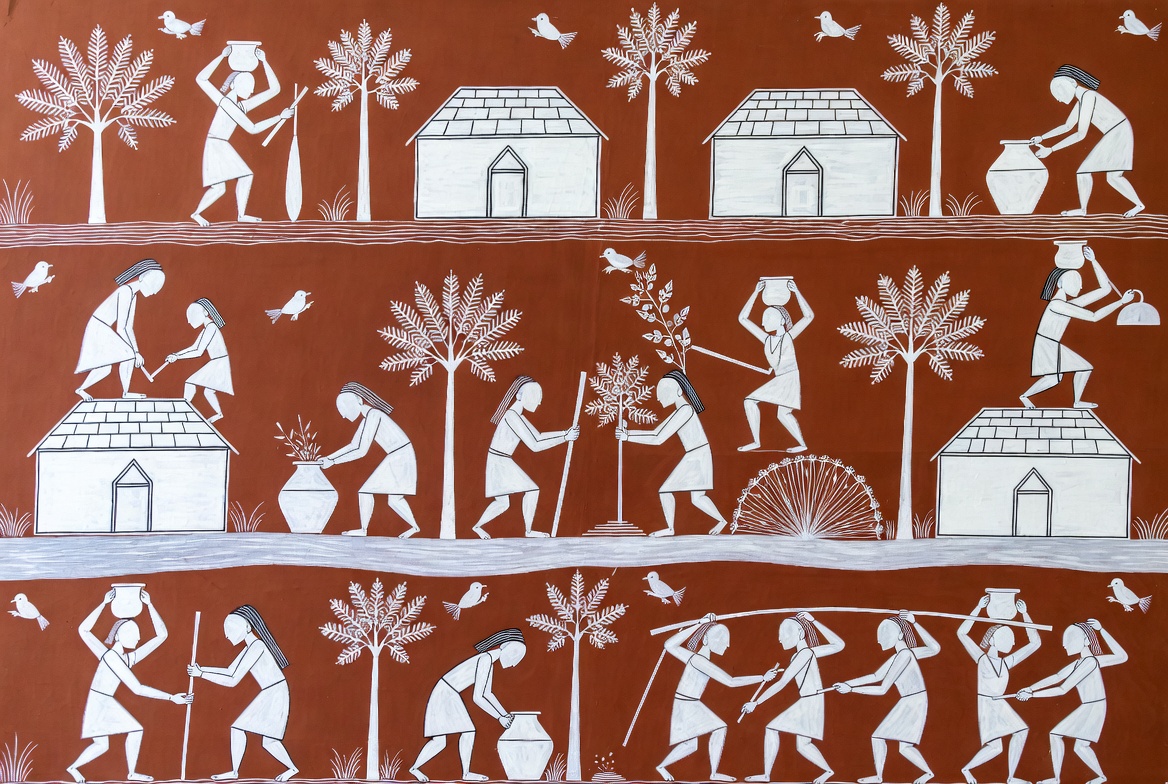
In a typical Marathi community, one of the most beautiful and ancient traditional art forms is Warli painting (also called Warli art). This is a classic example — a traditional piece painted in the authentic style on a mud-like reddish-brown background, just as our ancestors did for generations.
Significance of Warli Paintings
Warli art comes from the Warli (or Warli) tribal communities living in the northern Western Ghats of Maharashtra, especially in areas like Thane, Palghar, and Nashik districts. It is considered one of the oldest continuous art traditions in India, dating back over 2,500–3,000 years.
Key features and meaning:
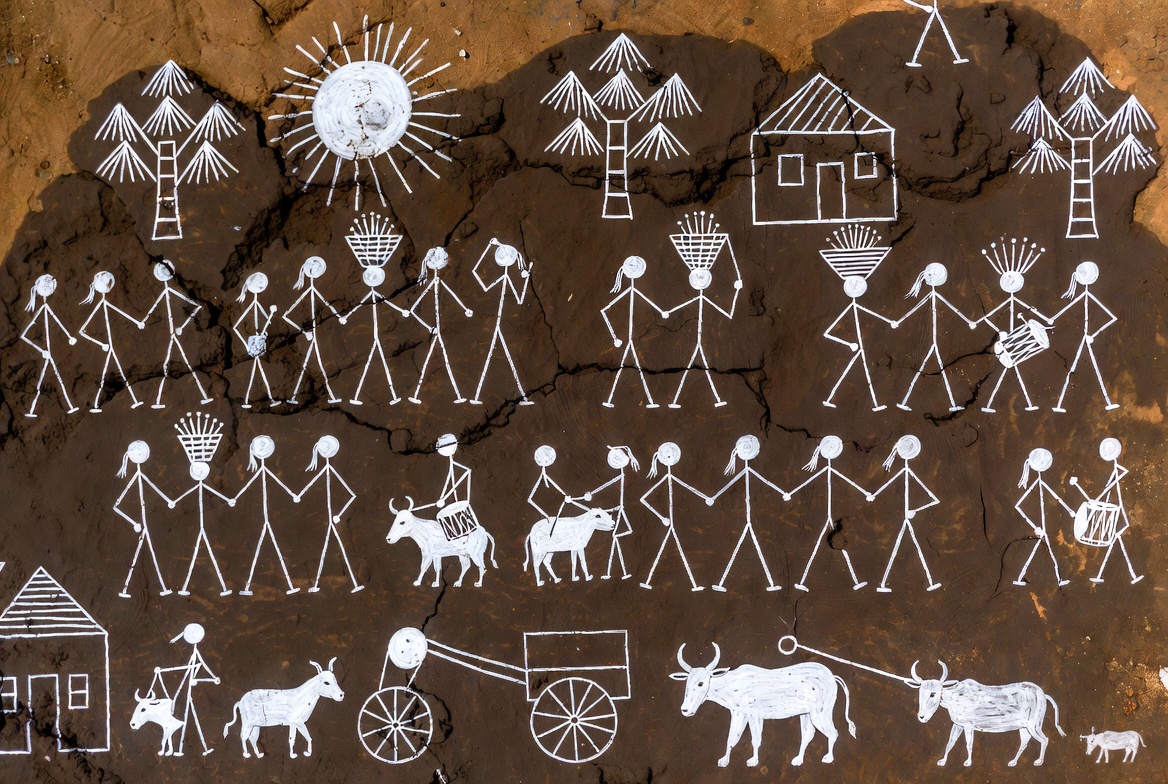
Simple yet powerful geometry: Everything is made from basic shapes — circles (sun, moon, or the community gathering), triangles (mountains, trees, or human figures), squares (fields or houses), and lines. No complex shading or perspective.
Themes of life and harmony: These paintings almost never show gods or religious figures. Instead, they celebrate everyday rural life — farming, harvesting, dancing, fishing, animals, birds, trees, and community festivals. The famous circular “Tarpa dance” (shown in the centre of this piece) represents the joy of togetherness and the cycle of life.
Traditional technique: Women traditionally painted these on the inner mud walls of their homes using a paste made from rice flour and water, applied with a bamboo stick or twig. The background was coated with red ochre earth. It was done during weddings, harvests, or festivals as a way to invite prosperity and celebrate nature.
Cultural importance: Warli art symbolises our deep connection with nature, community living, and simplicity. It teaches respect for the environment and the rhythm of seasons. For us Marathis, it’s a living link to our tribal roots and a reminder that true beauty lies in harmony — not complexity.
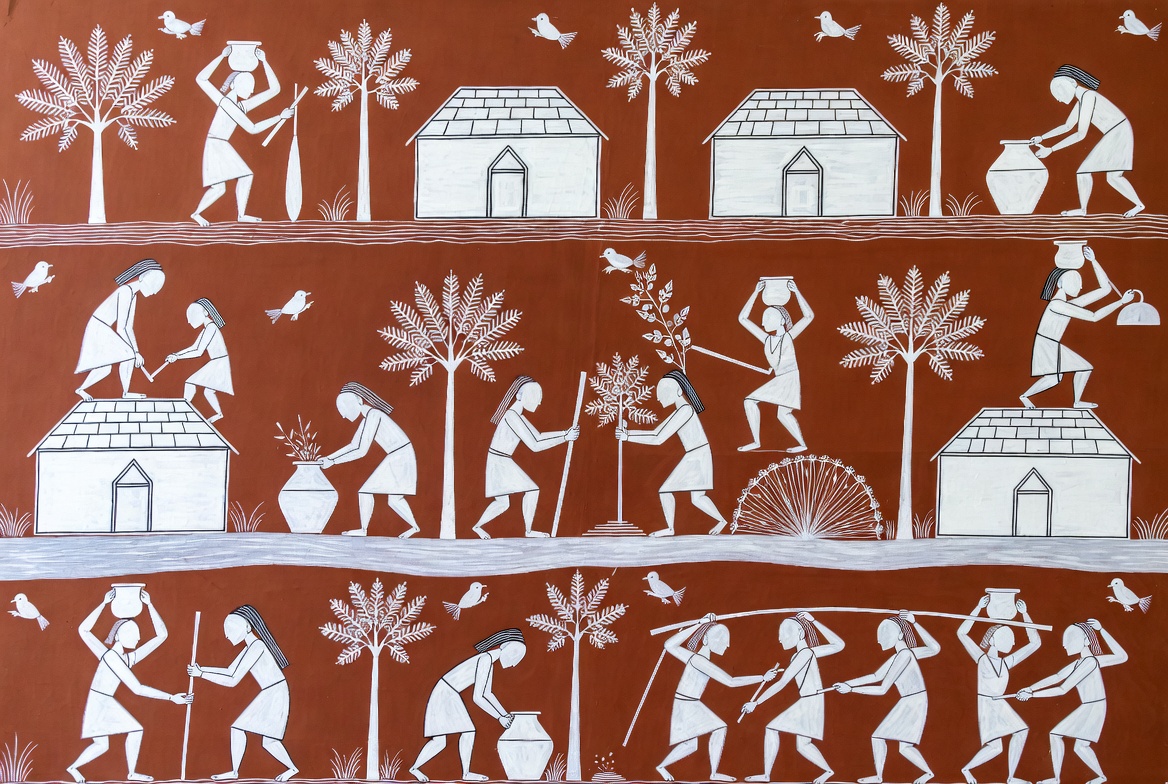
Today, while you’ll see Warli paintings on canvas, paper, or even modern home décor, the original spirit remains the same: a celebration of life in Maharashtra’s villages.
This art form was once almost forgotten but has now become a proud symbol of Maharashtra’s cultural heritage, recognised across India and the world. Whenever I see one, it instantly takes me back to the simplicity and warmth of our rural roots.