
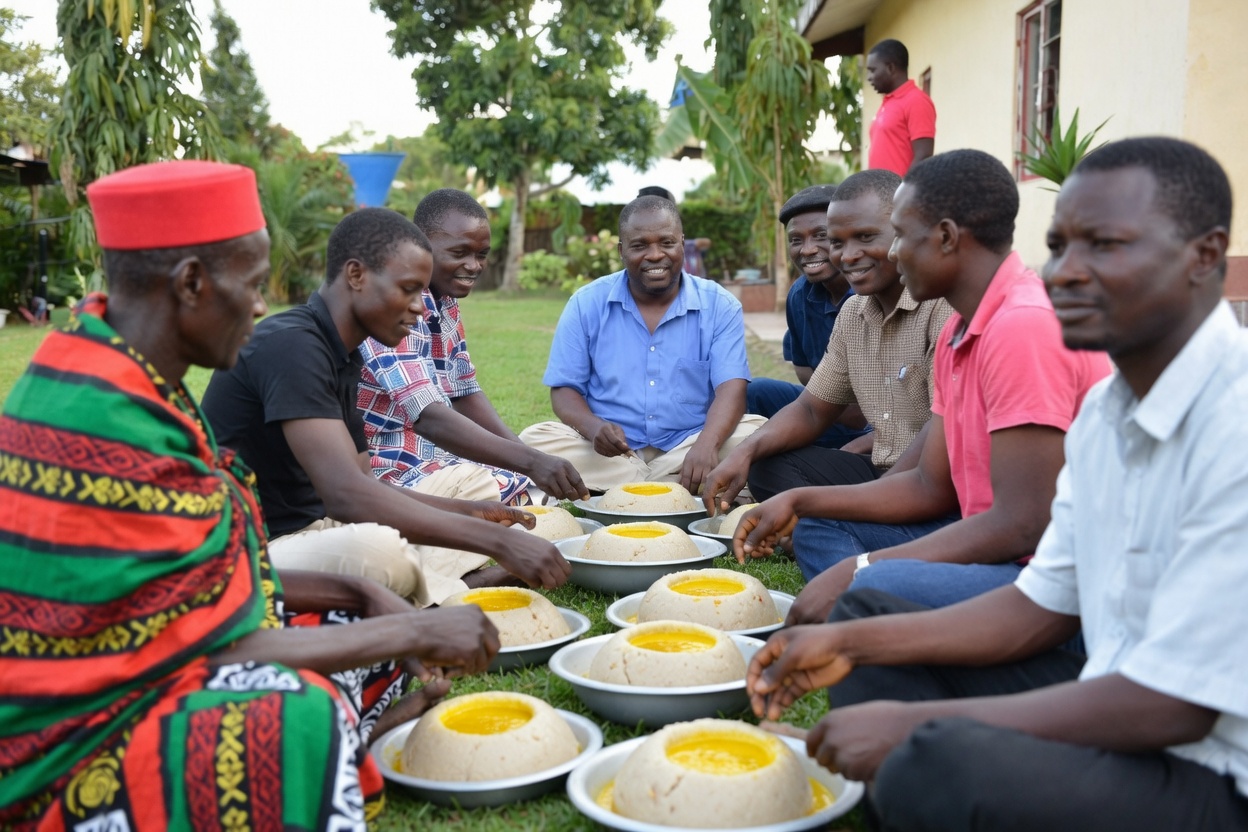
A Story of Love, Loss, and Unity
In Mankon, we say that Achu and Yellow Soup is not just food — it is the dish of life itself. It brings people together during our greatest joys and our deepest sorrows.
I remember the funeral of my grandmother, Mama Ngen, like it was yesterday. She was a respected elder who had raised many children in the compound. When she passed, the entire quarter of Mankon came to mourn.
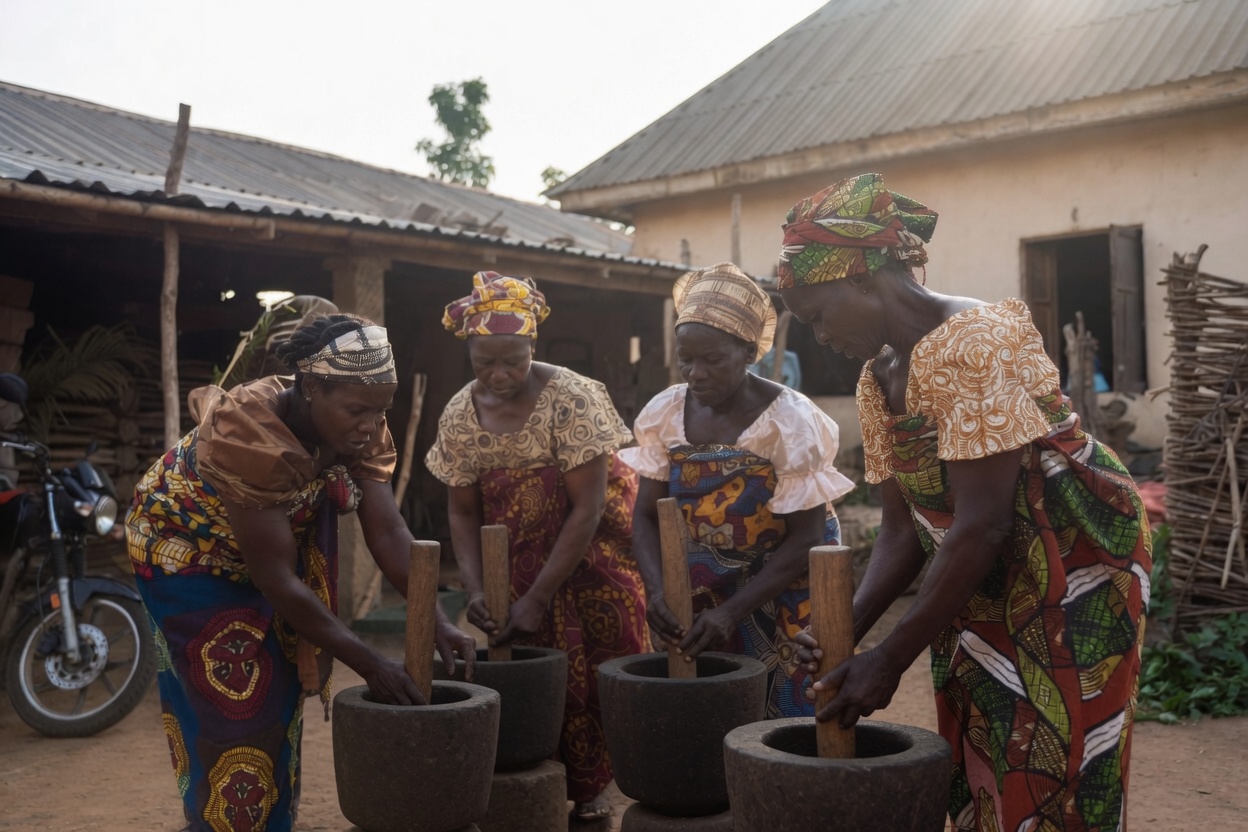
On the morning of the burial, the women of the family woke up very early. From 5 a.m., you could hear the steady rhythm of mortars and pestles pounding cocoyams. The sound traveled across the compound — tuk-tuk-tuk-tuk — like a heartbeat.
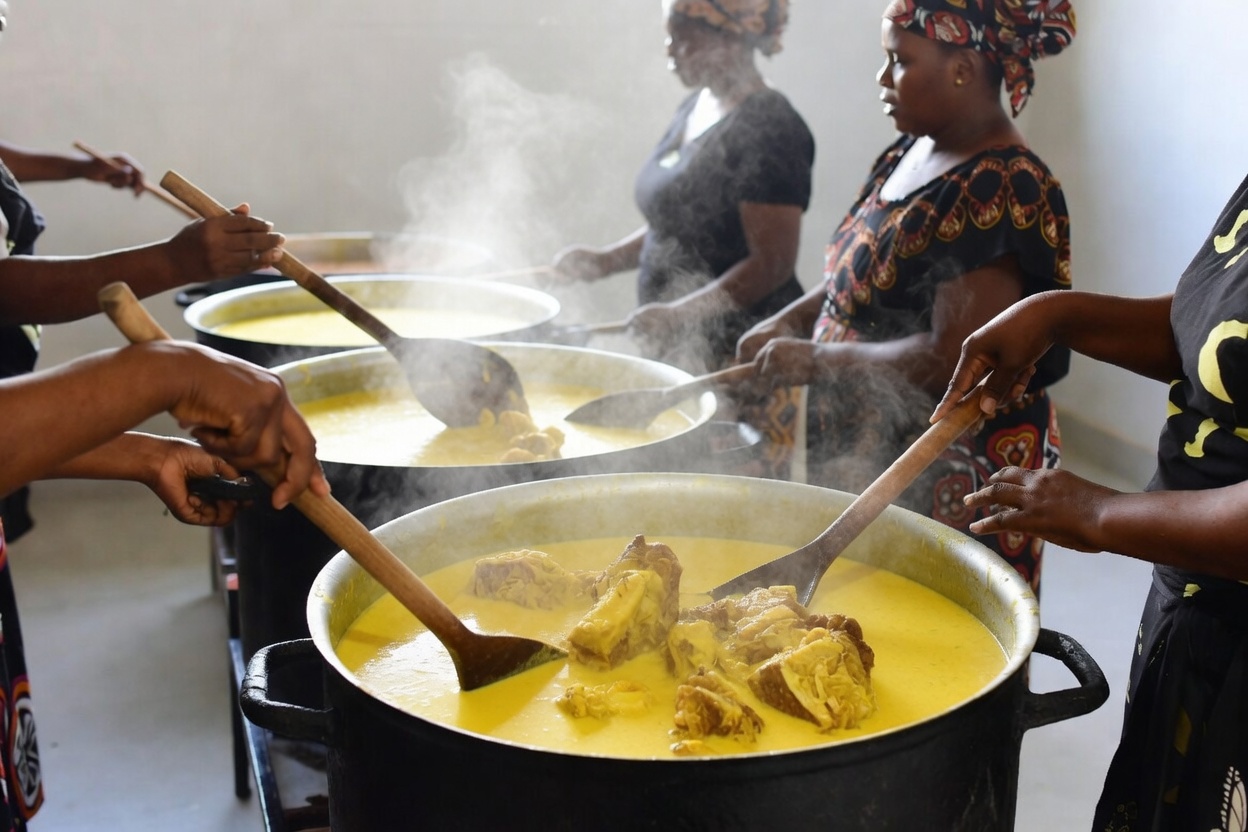
By midday, several large pots of bright yellow soup were ready, filled with beef, kanda (cow skin), tripe, and the perfect blend of spices and limestone (canwa).
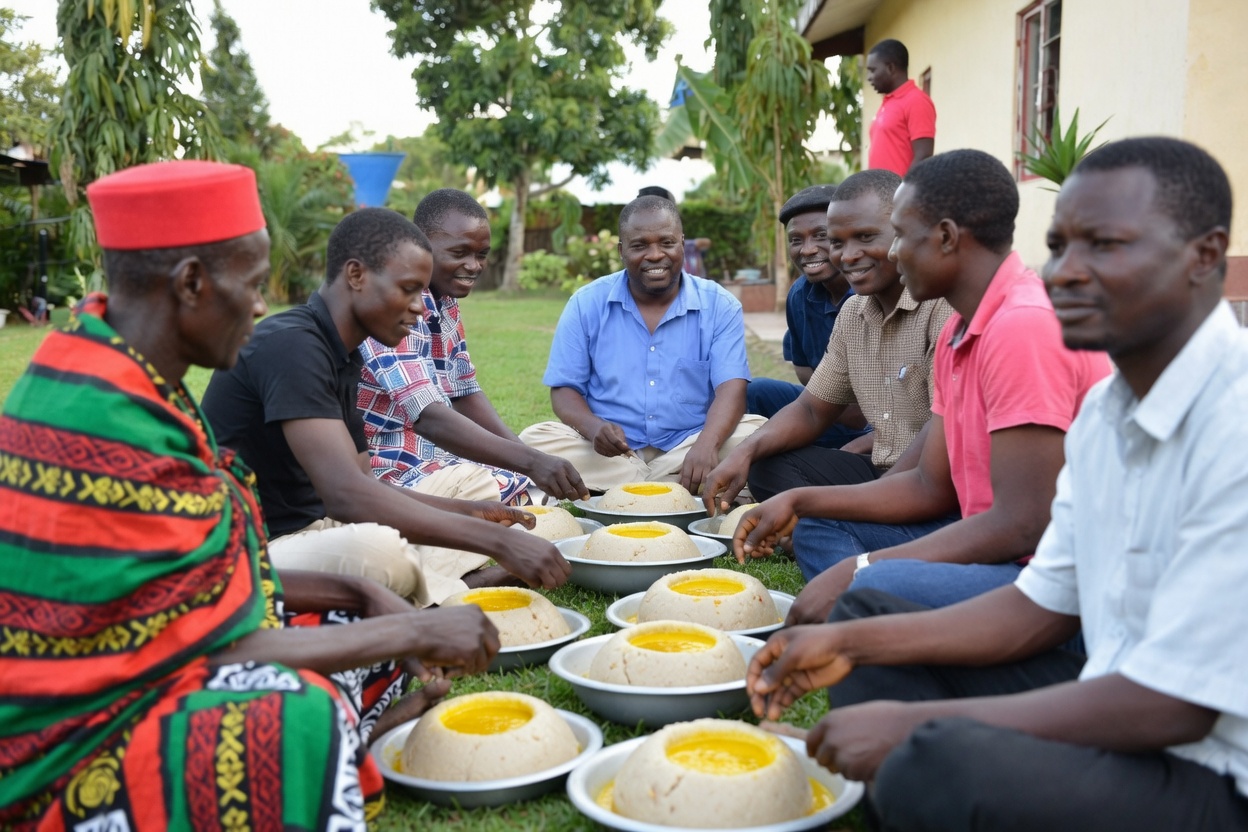
When the mourners arrived, there was deep sorrow in the air. But when the Achu was served, something shifted. People sat in circles on low stools and banana leaves. Young and old, rich and poor — everyone ate from the same plates using their right hand. As they dipped the soft Achu into the warm yellow soup, conversations began flowing. Stories about my grandmother’s life, her wisdom, her strict but loving ways, and her famous Achu were shared with laughter through tears.
One elder stood up and said:
“Today we are crying, but Achu reminds us that life continues. Just as we pound the cocoyam until it becomes one, so death cannot break our family. We remain united.”
That evening, even distant relatives who had traveled from Yaoundé, Douala, and Bamenda sat together eating Achu. The sharing of that single dish healed many hearts. It turned a house of mourning into a house of remembrance and love.
In Mankon culture, we serve Achu at:
- Weddings (to bless the new union)
- Funerals (to comfort the living)
- Births and naming ceremonies (to welcome new life)
- When welcoming important guests
We believe that when you eat Achu together, you are no longer strangers — you become family.
Even now, whenever I pound cocoyams or smell palm oil and canwa cooking, I think of Mama Ngen and that powerful day. Achu taught me that in Mankon, food is more than nourishment — it is how we show love, how we heal, and how we remember who we are.