
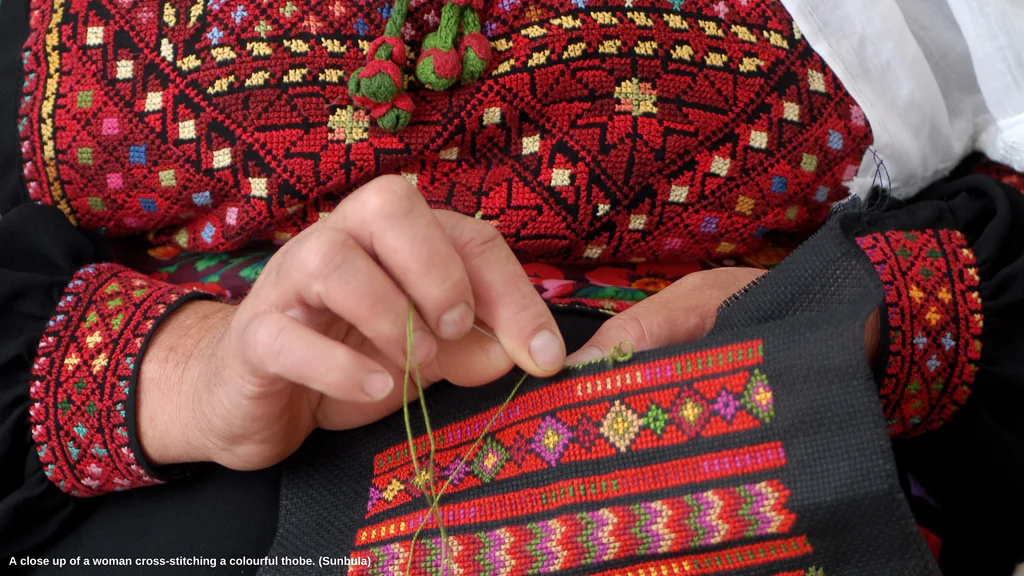
A traditional art piece and its significance
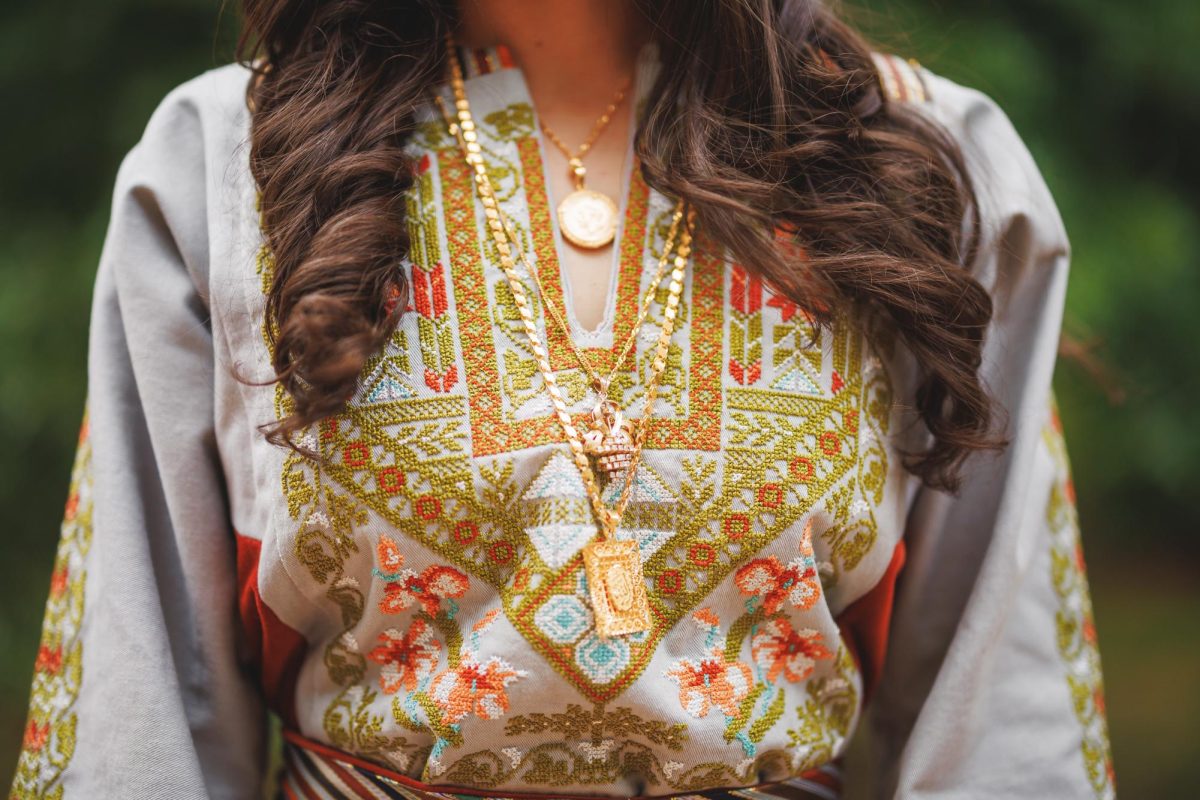
A beautiful and deeply meaningful traditional art form from my Palestinian community is Tatreez — the intricate cross-stitch embroidery that adorns the iconic Palestinian thobe (traditional dress).

 What Tatreez Represents
Tatreez is not just decoration — it is a visual language and living history:
- Regional Identity: Each village and region has its own unique patterns and color combinations. For example, the colors and motifs in a Ramallah thobe differ from those in Bethlehem or Gaza. A woman’s dress could tell you where she (or her family) came from.
- Connection to the Land: Many designs feature cypress trees, flowers, birds, moons, and geometric patterns inspired by nature and Palestinian landscapes.
- Resilience and Resistance: In modern times, Tatreez has become a powerful symbol of cultural preservation and sumoud (steadfastness). Even when people were displaced, women continued embroidering to keep their heritage alive. Today, many thobes incorporate Palestinian flag colors or map motifs as quiet acts of cultural affirmation.
- Women’s Art and Storytelling: It was traditionally passed from mothers to daughters. The time-consuming handwork (sometimes taking months for one dress) reflects patience, creativity, and love.

 Why It Is So Significant
A thobe is worn with pride at weddings, Eid celebrations, olive harvest gatherings, and important occasions. When a woman wears a beautifully embroidered thobe, she carries her ancestors’ stories, her village’s identity, and her people’s resilience on her body. It transforms everyday clothing into wearable heritage.
Even in the diaspora, young Palestinian women proudly wear modern Tatreez pieces to affirm their roots. It has become a global symbol of Palestinian culture and beauty.
This craft is one I hope to see passed down through generations — whether through actual embroidery, supporting artisans, or wearing it with pride. It reminds us that beauty and identity can endure through the smallest, most patient stitches.