
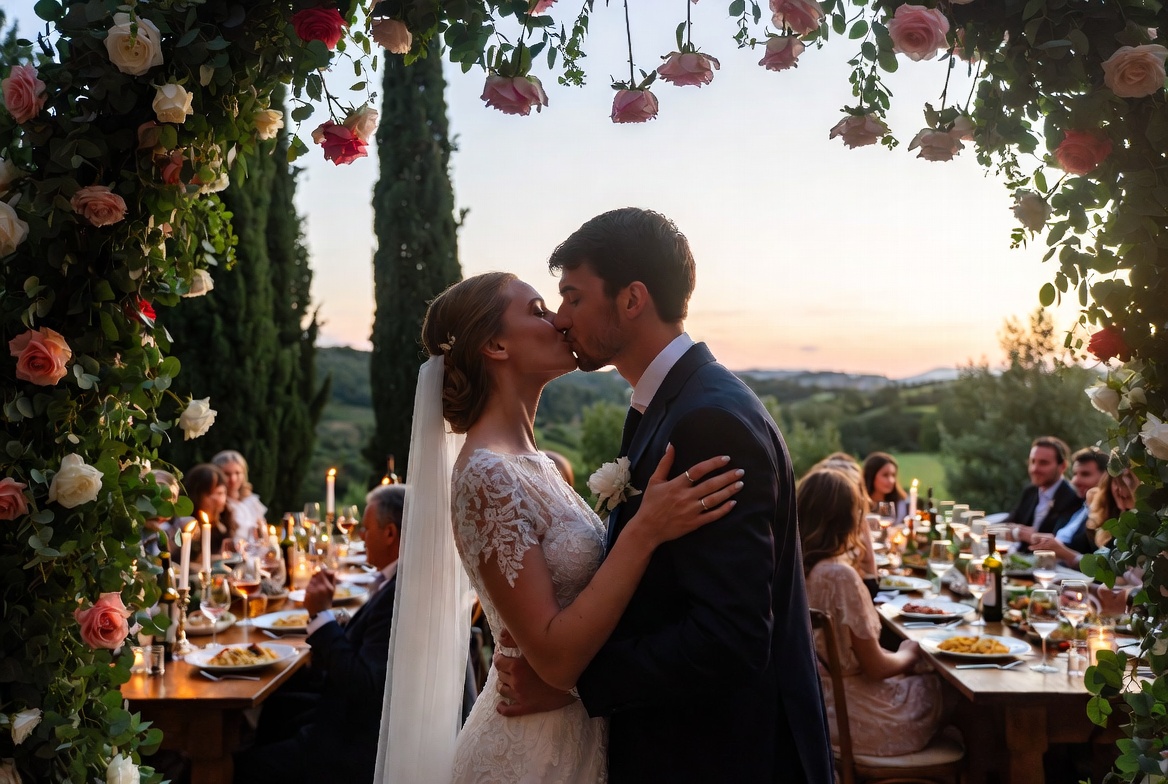
Italian Weddings: Passion, Tradition, and La Dolce Celebration
Italian weddings combine deep-rooted tradition, family passion, and a festive spirit that lasts for days.
1. The Ceremony Must Be in Church (or Town Hall)
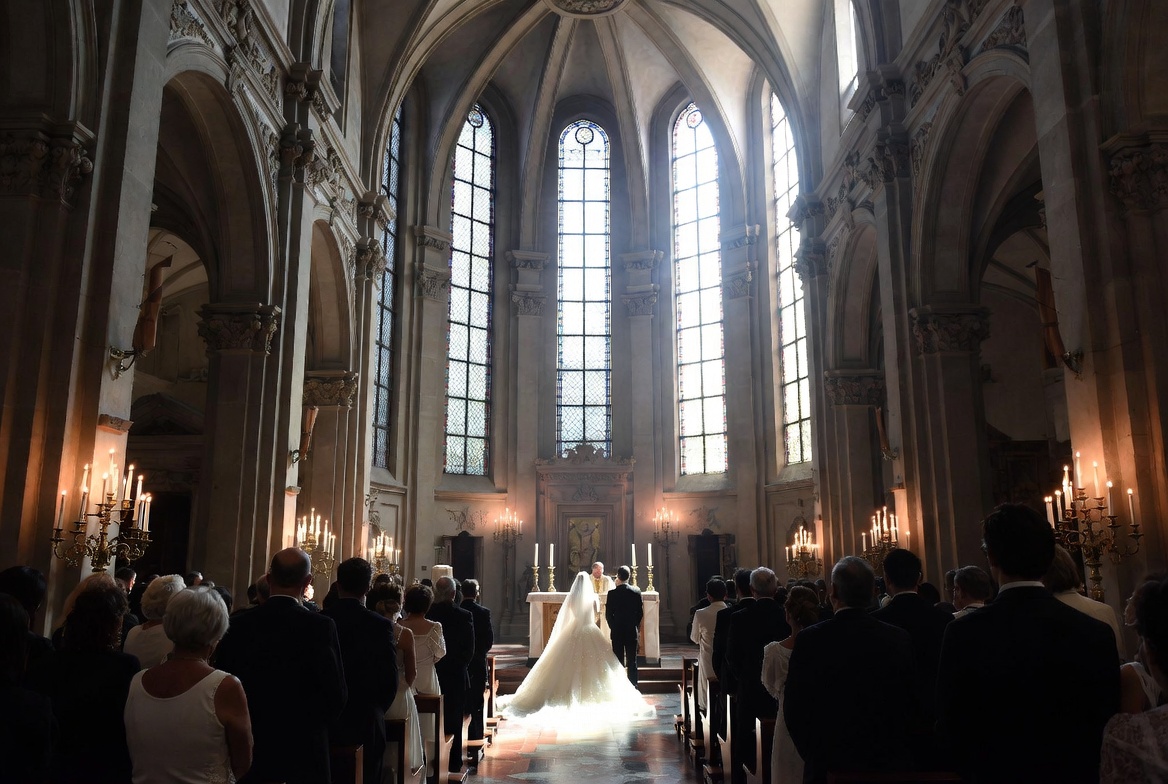
Legal weddings happen at the town hall (Municipio)
Most traditional couples choose a Catholic church ceremony
The priest reads the "Rito del Matrimonio" (wedding rite)
2. The Bride Avoids Seeing the Groom Before the Ceremony
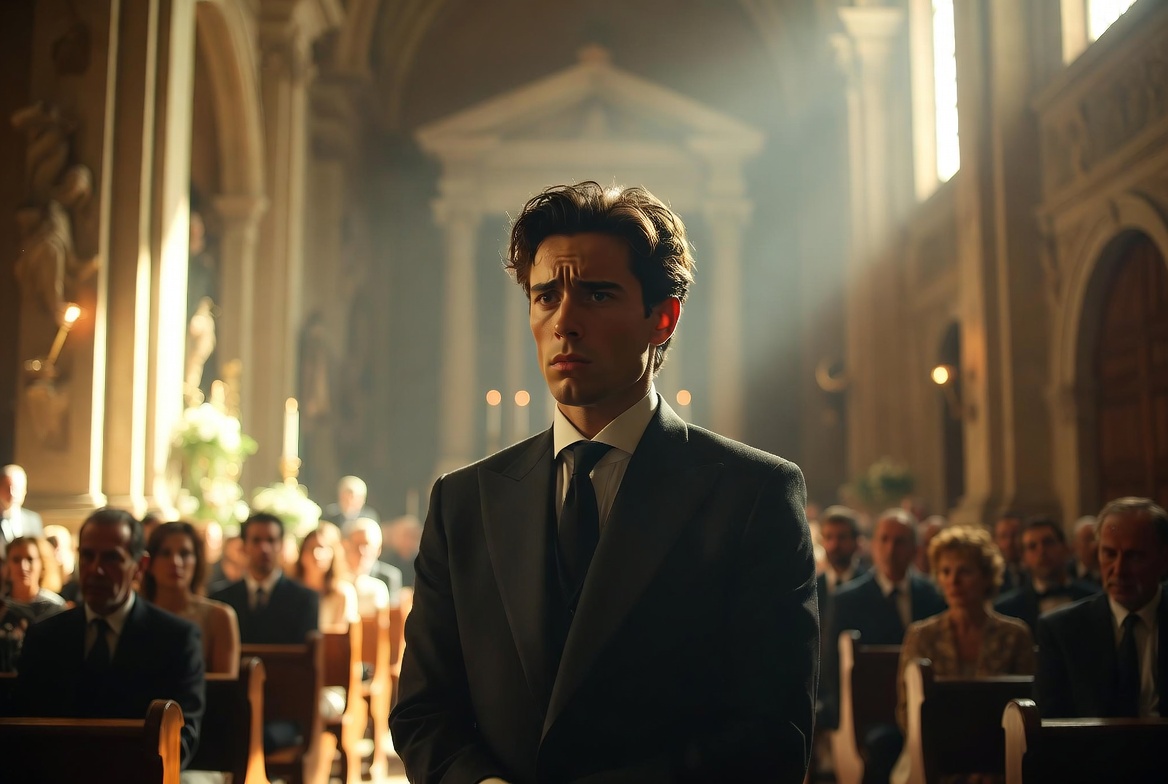
It is bad luck for the couple to see each other the night before or the morning of the wedding
The groom waits at the altar without seeing the bride beforehand
The bride arrives separately with her father for the ceremony
3. The Groom Wears Something Blue (Qualcosa di Blu)
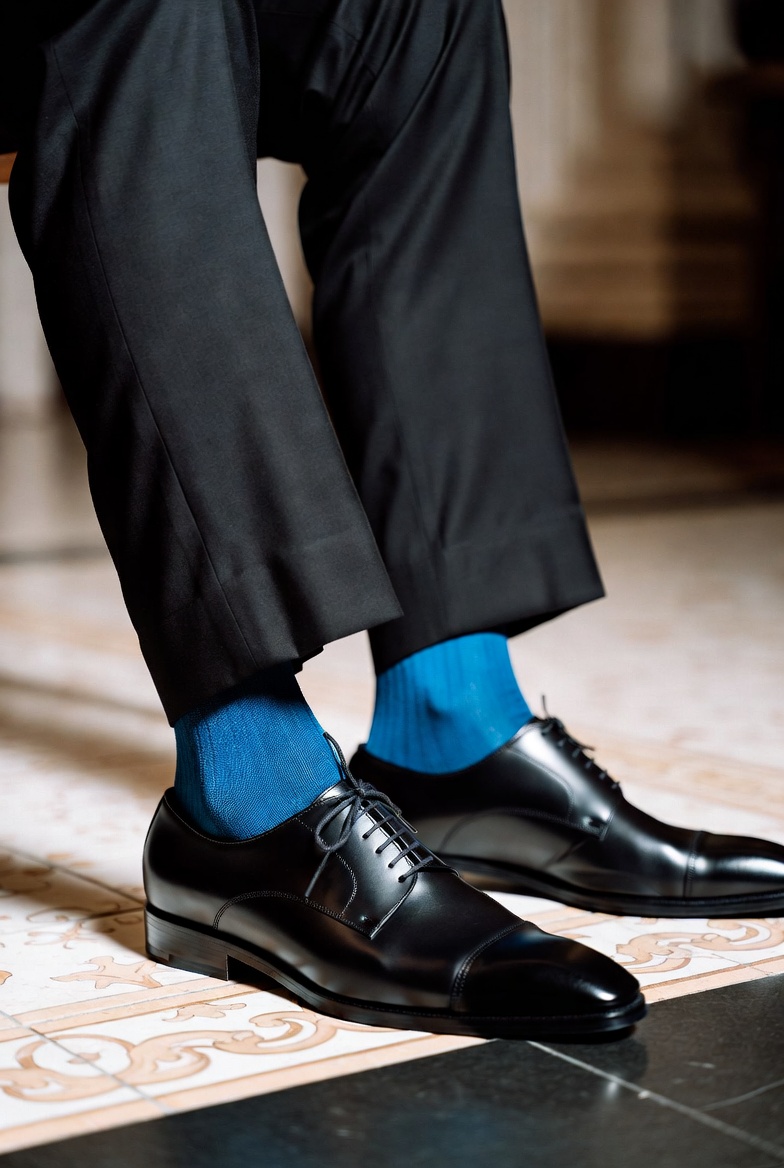
In Italy, the "something blue" tradition belongs to the groom, not the bride.
"Something blue" is traditionally for the groom, not the bride
He wears blue socks, a blue tie, or blue cufflinks
Symbolizes fidelity and good luck
4. La Serenata (The Pre-Wedding Serenade)
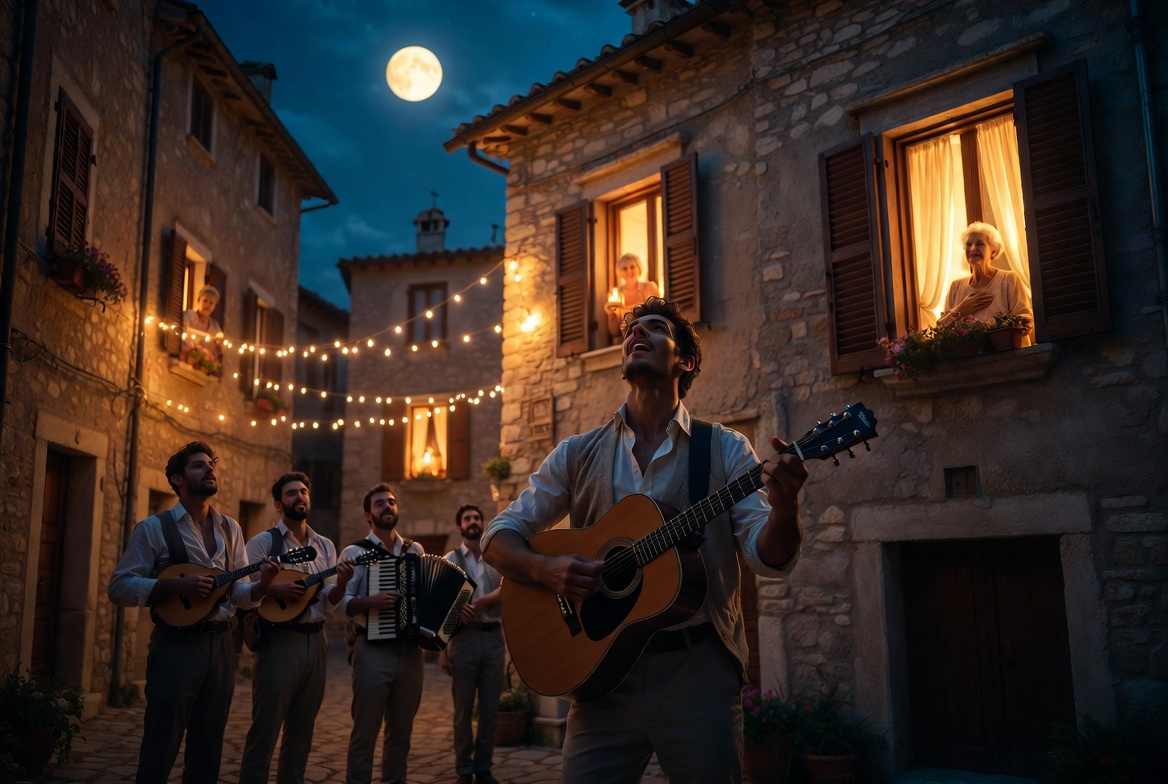
This romantic tradition happens the night before the wedding.
The groom sings romantic songs under the bride's window the night before the wedding
He is accompanied by friends with guitars, mandolins, or accordions
The serenade is a surprise for the bride, often lasting 30 minutes or more
Neighbors often lean out of their windows to watch and applaud
The tradition shows the groom's devotion and earns the blessing of the community
5. Confetti & Bomboniere (Wedding Favors)
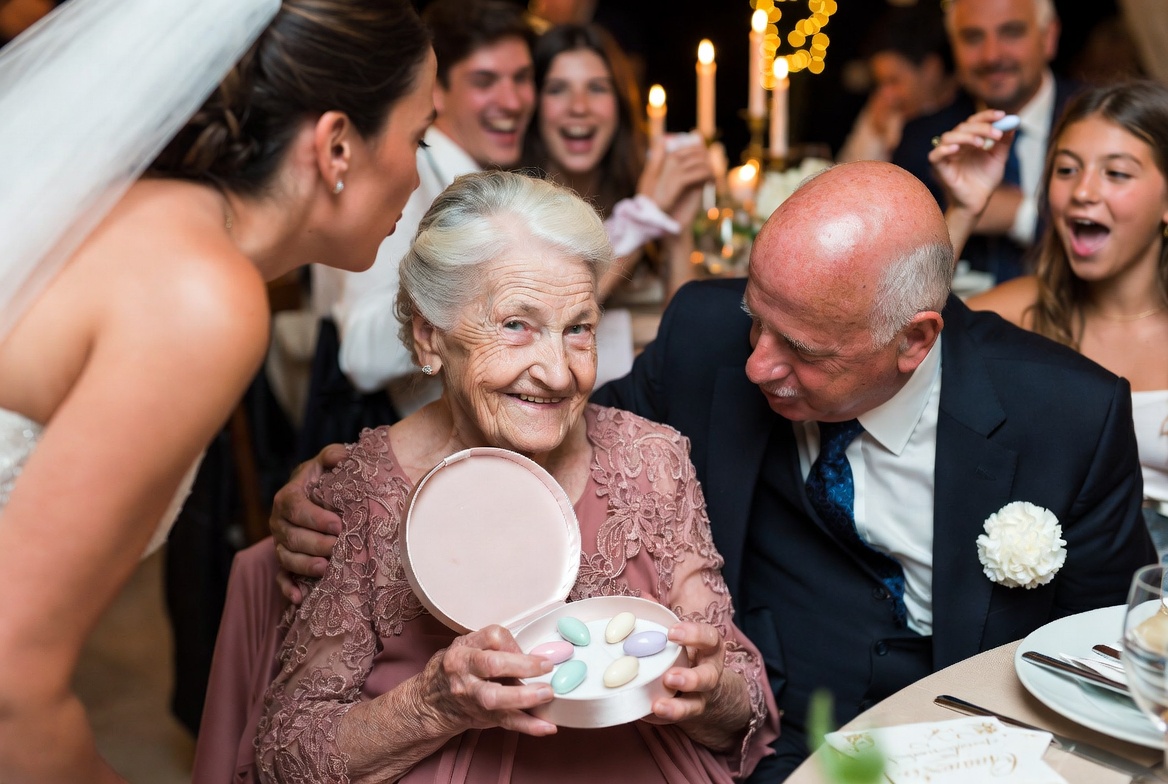
Confetti means sugar-coated almonds, not paper confetti
The almonds are given in groups of five, each representing: health, wealth, happiness, fertility, and long life
The sugar coating represents the sweet life, while the bitter almond inside represents life's challenges
Bomboniere are the elegant favor boxes or bags containing the confetti
Favors are given to every guest as a thank-you for attending
6. The Wedding Procession on Foot (Il Cortege)
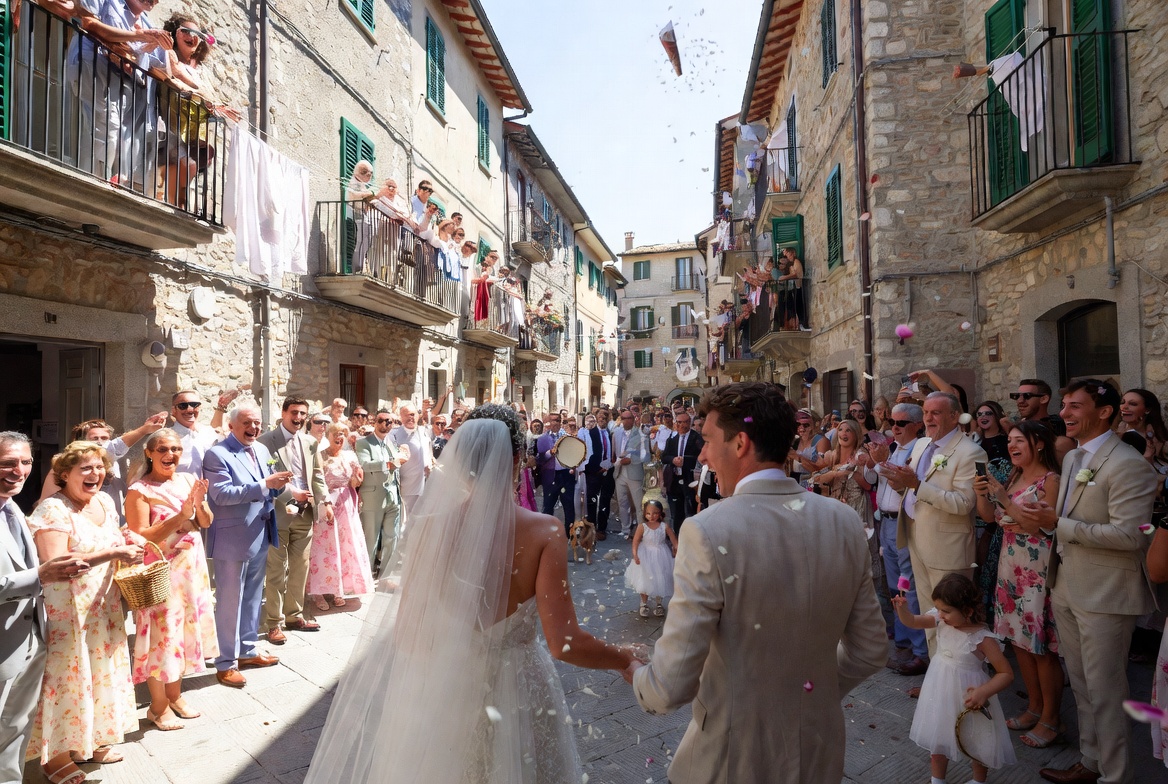
After the church ceremony, the celebration moves to the reception on foot.
Guests walk together from the church to the reception venue as one joyful group
The procession often goes through narrow village streets and piazzas
The bride and groom lead the way, followed by all guests
Locals and crowds cheer, clap, and shout "Auguri!" (best wishes)
Rice, flower petals, or confetti are thrown at the couple for fertility and good luck
7. Il Taglio della Cravatta (The Tie Cutting)
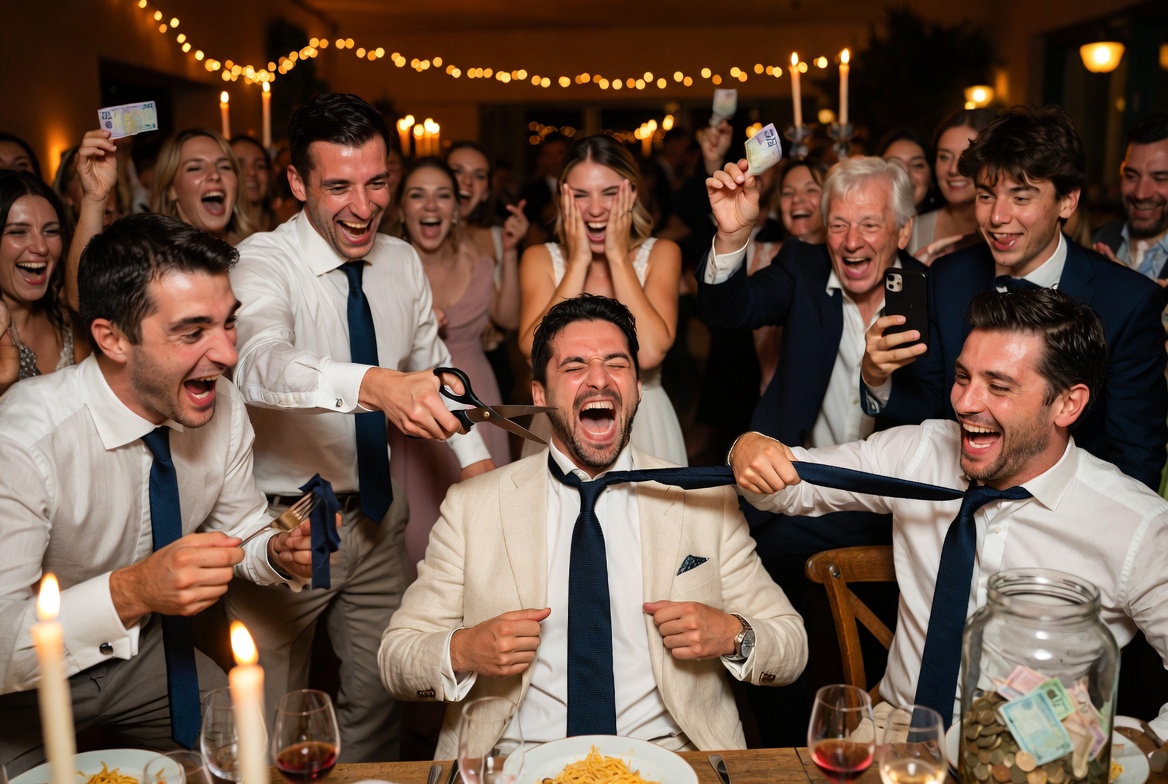
This is one of Italy's most playful wedding games.
The groom's tie is cut into small pieces by the guests
Each piece is sold back to guests for a small donation to the couple
This fun tradition is slightly mischievous and very social
8. The Wedding Feast (Pranzo Nuziale)
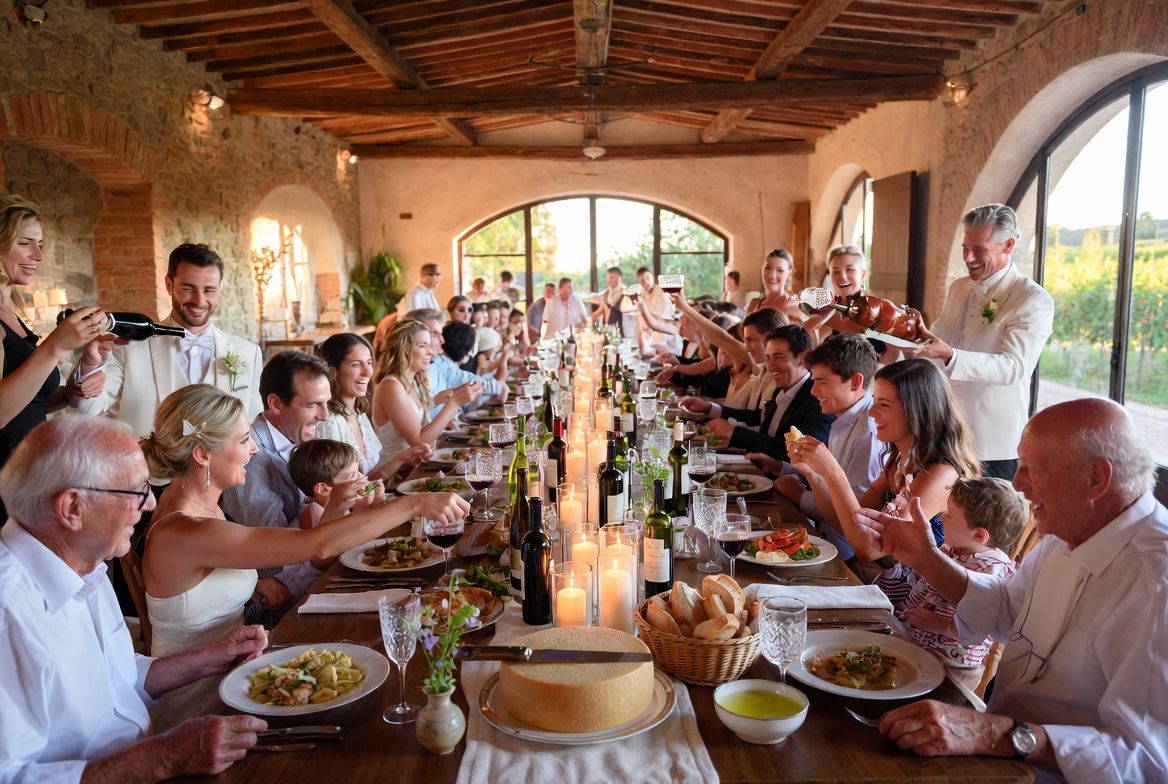
Italian weddings are known for long, luxurious meals:
Minimum five courses: antipasti → primi (pasta) → secondi (meat) → formaggi (cheese) → dolce (dessert)
The meal lasts four to six hours minimum
Fine wine is served throughout
Food is central to the celebration.
9. La Tarantella (Traditional Dance)
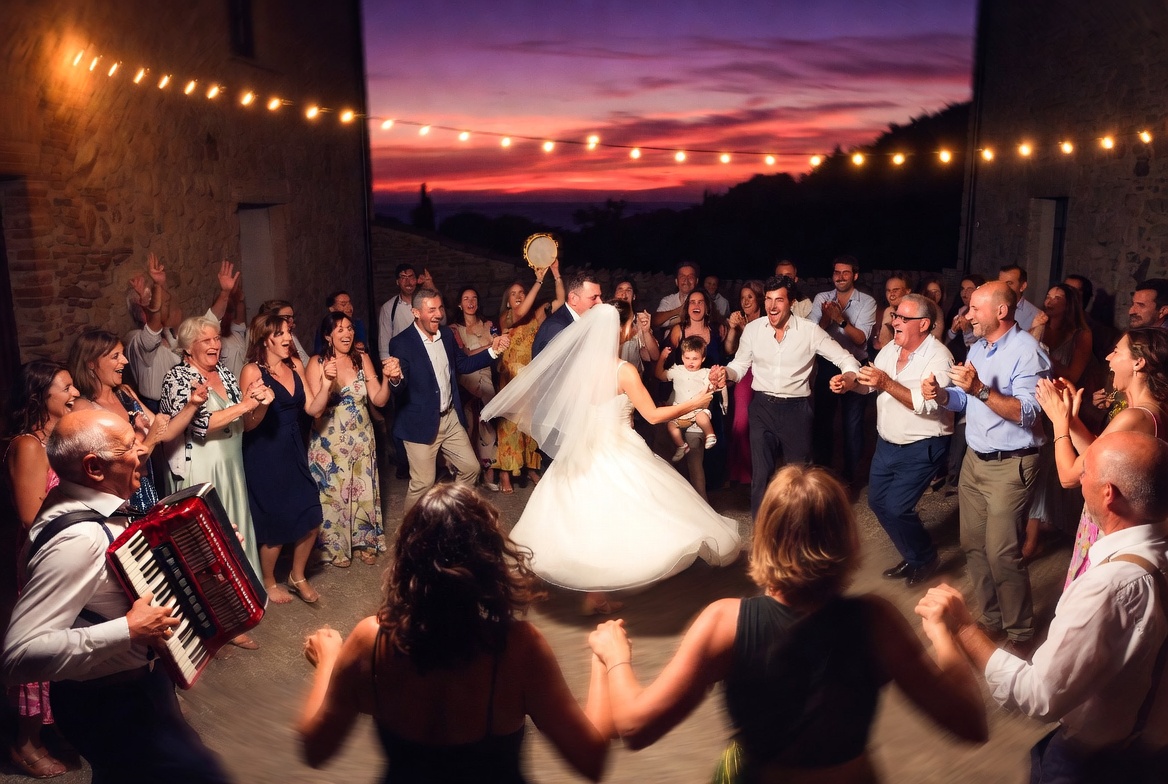
This is the most famous Italian wedding dance, and no wedding is complete without it.
A fast, joyful circle dance that everyone joins
The music speeds up until dancers collapse laughing
Guaranteed to wake up shy guests and energize the party
10. Millefoglie (Traditional Wedding Cake)
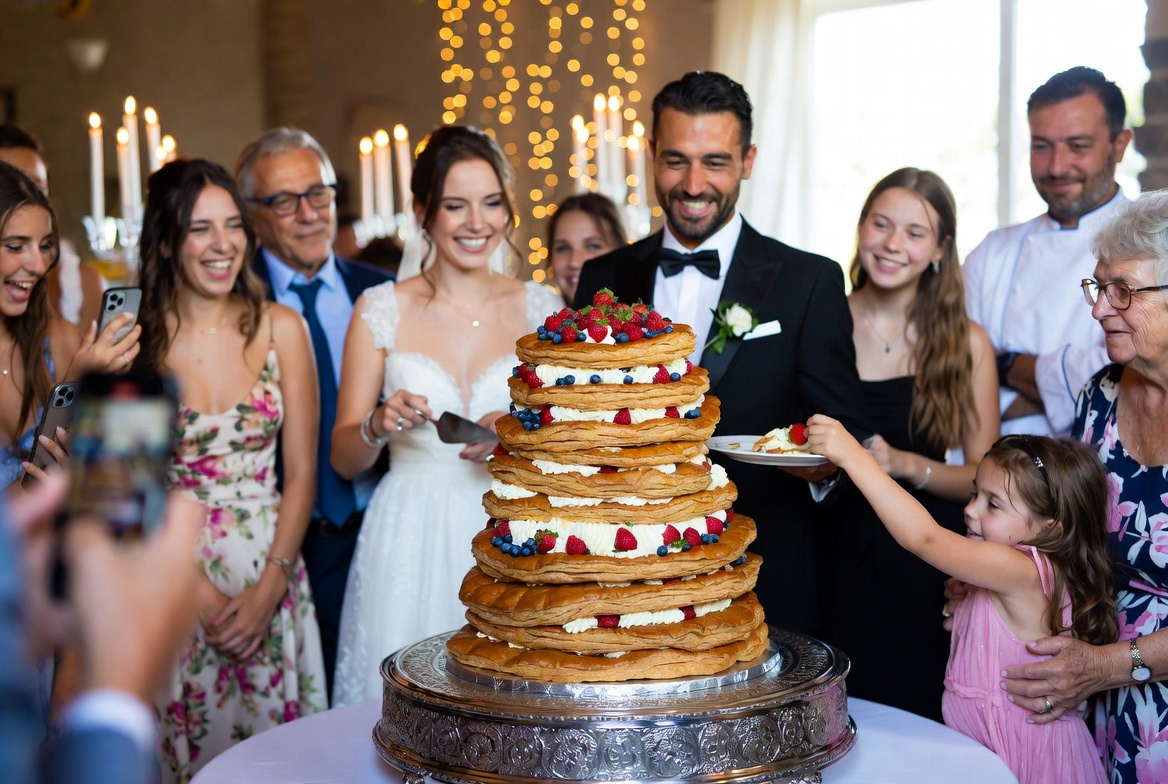
Italy doesn't typically use tiered buttercream cakes. Instead, the traditional wedding cake is Millefoglie.
Millefoglie means "thousand leaves" or "thousand layers" in Italian
The cake is made of multiple thin, flaky layers of puff pastry
Between each layer is rich vanilla pastry cream or Chantilly cream
Fresh berries (strawberries, raspberries, or blueberries) are layered between and on top
The top is dusted generously with powdered sugar, sometimes in decorative patterns
It is often presented as a tall rectangular or round tower, then sliced like a stack
11. La Bomba (Fireworks at Midnight)
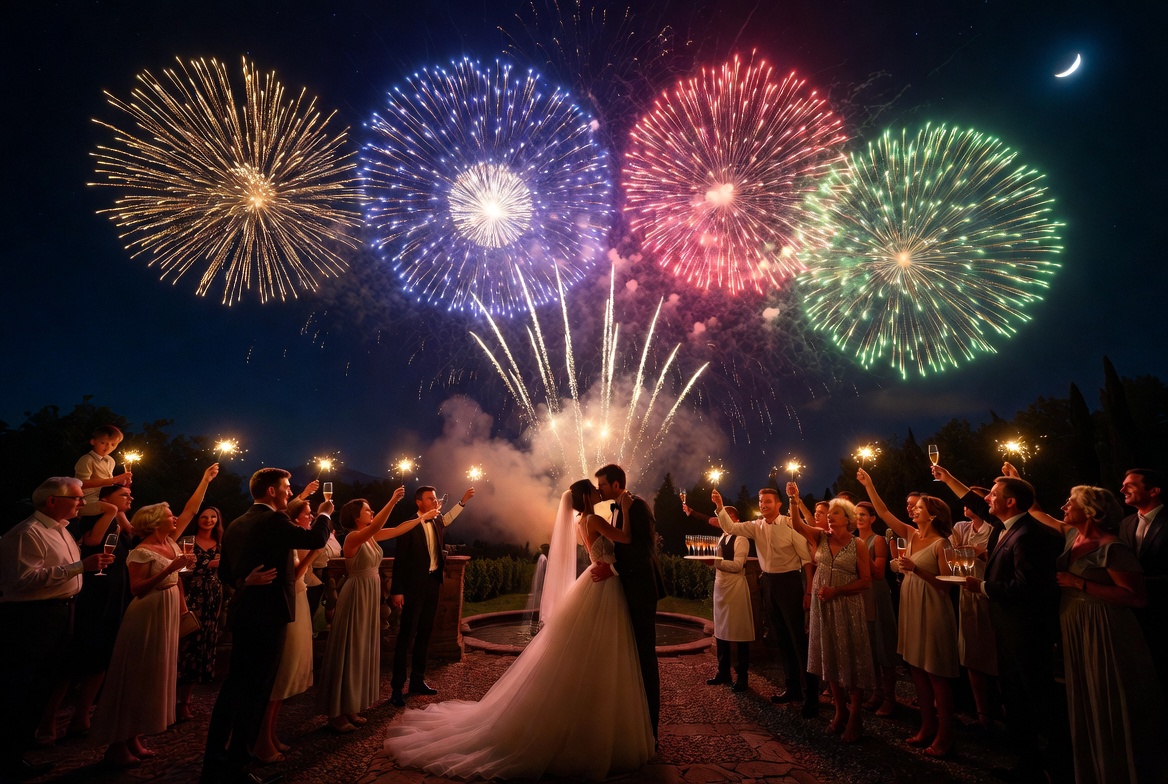
Italian weddings end with spectacular midnight fireworks.
Fireworks are launched exactly at midnight
Signals that the longest part of the celebration is over
The couple shares a romantic kiss under the exploding sparks
12. Family & Community Focus
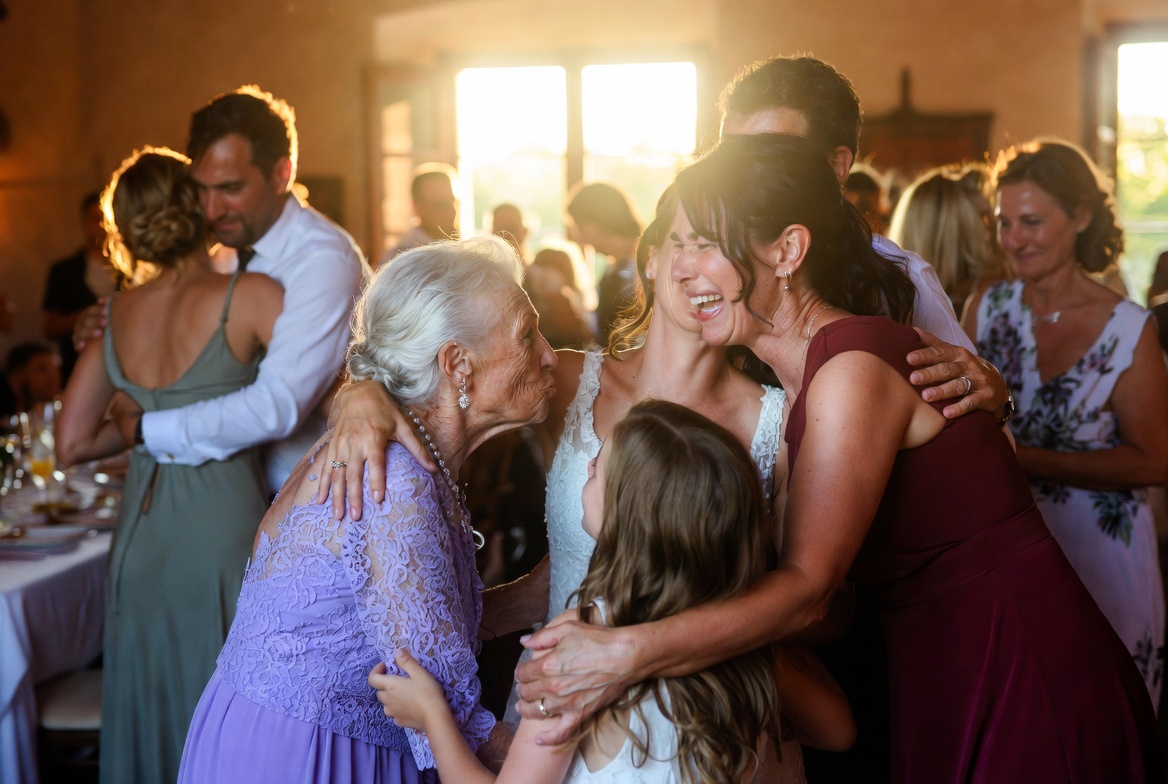
Strong emphasis on:
Family unity
Close friendships
Shared celebration
Weddings are not just about the couple, but about la famiglia and the entire community.