
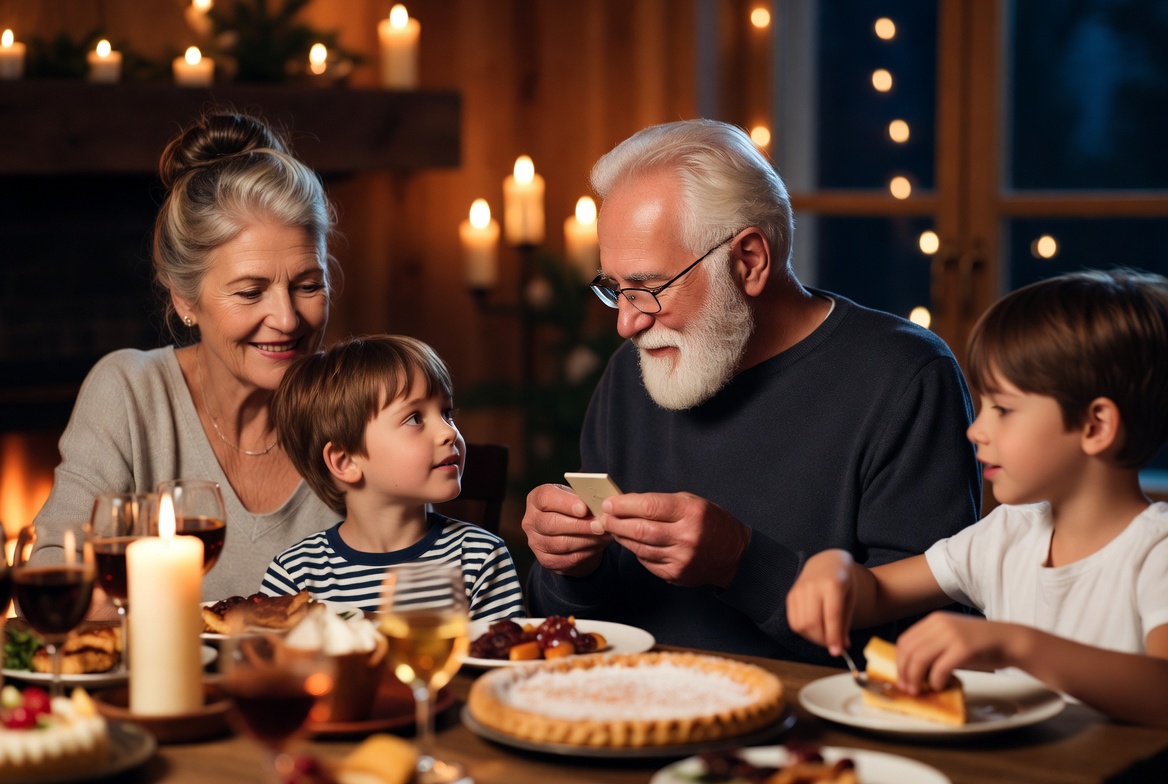
The Réveillon de Noël
One of the most cherished traditions in French-Canadian (Québécois) families is the Réveillon — the magical midnight feast on Christmas Eve.
When I was a child, Christmas Eve was the highlight of the year. After attending Midnight Mass (or the “Messe de Minuit”), the whole extended family would return home around 1 a.m., cheeks red from the cold Quebec winter. The house was already filled with the warm scent of pine, wood smoke, and spices.
My grandmother would have spent days preparing. The long table was covered with a white cloth and set with the best dishes.
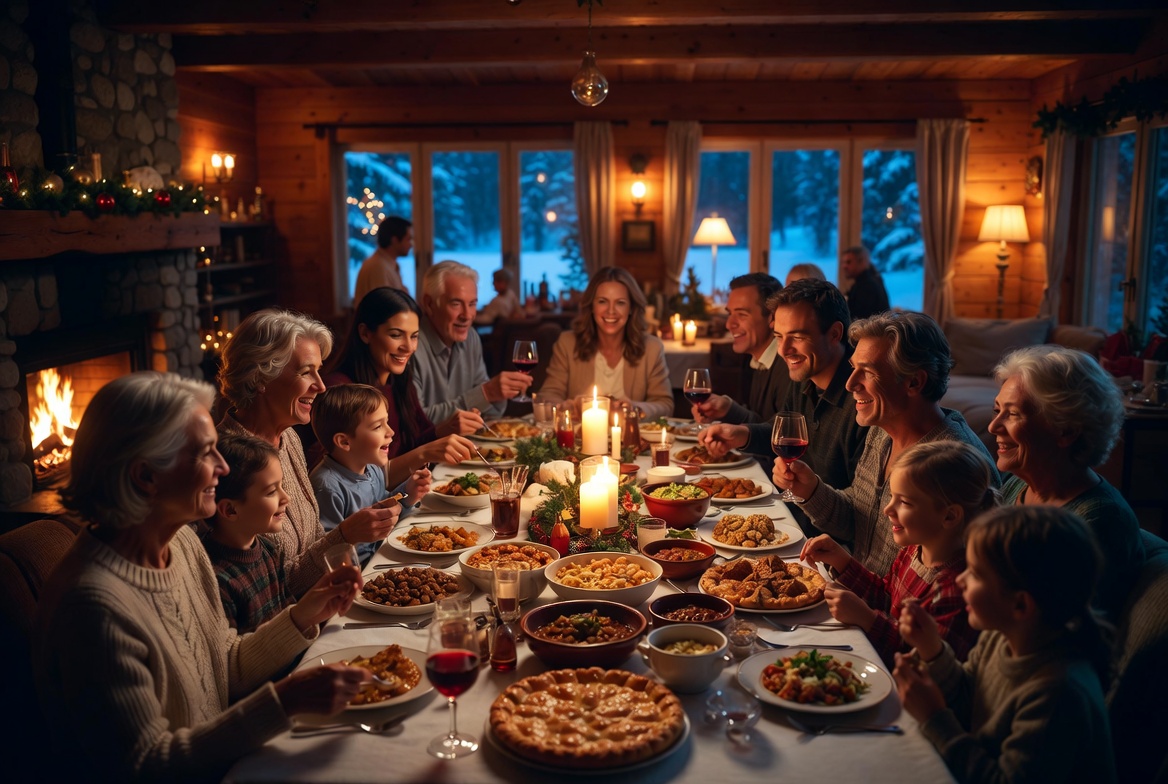
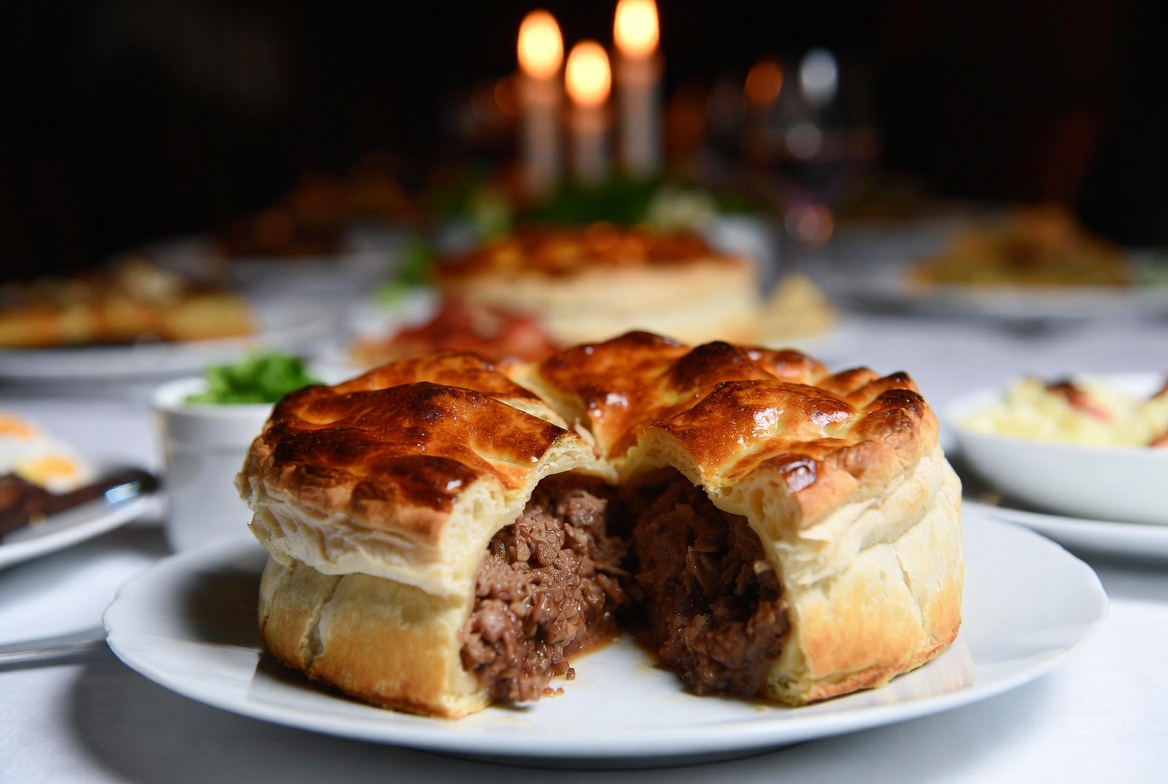
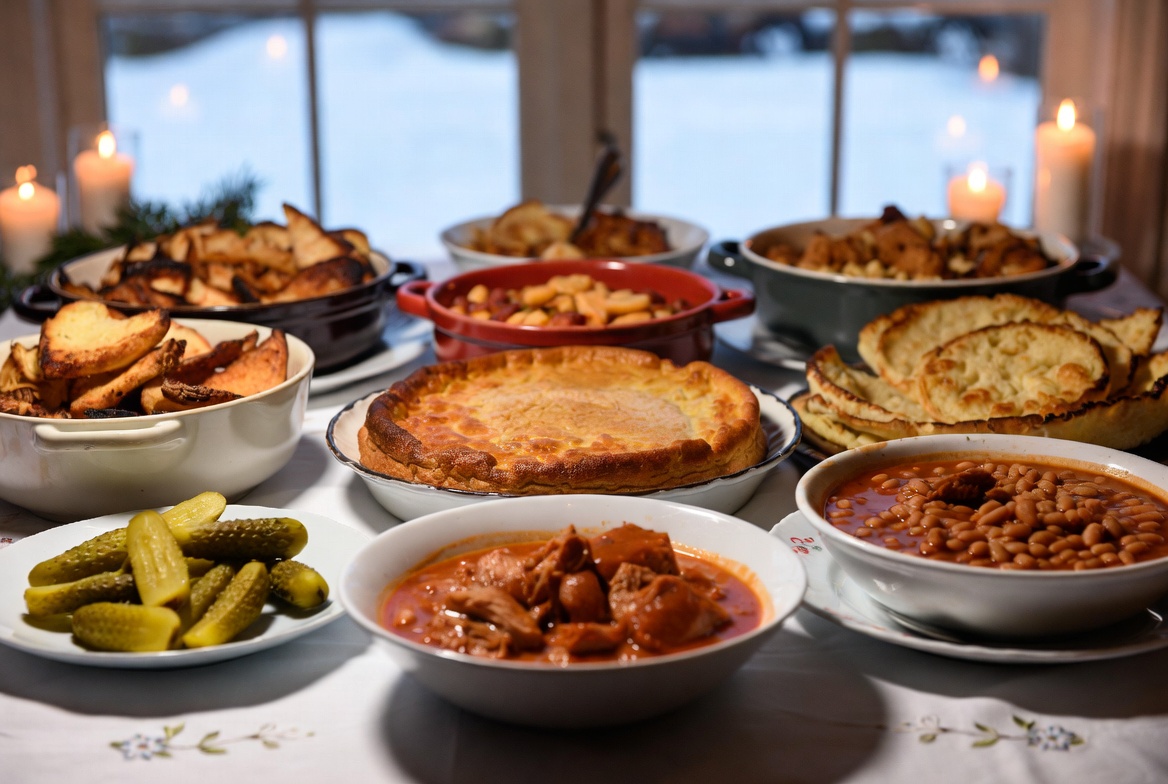
In the center sat the golden Tourtière, still warm from the oven, alongside a huge pot of ragoût de pattes de cochon (pork hock stew), fèves au lard, homemade pickles, and cranberry ketchup. There were also platters of smoked salmon, cretons on toast, and cheese.
As soon as everyone sat down, my grandfather would raise a glass of homemade caribou (a strong festive drink made with red wine and spirits) and say:
“À la famille et à la santé!” (To the family and to health!)
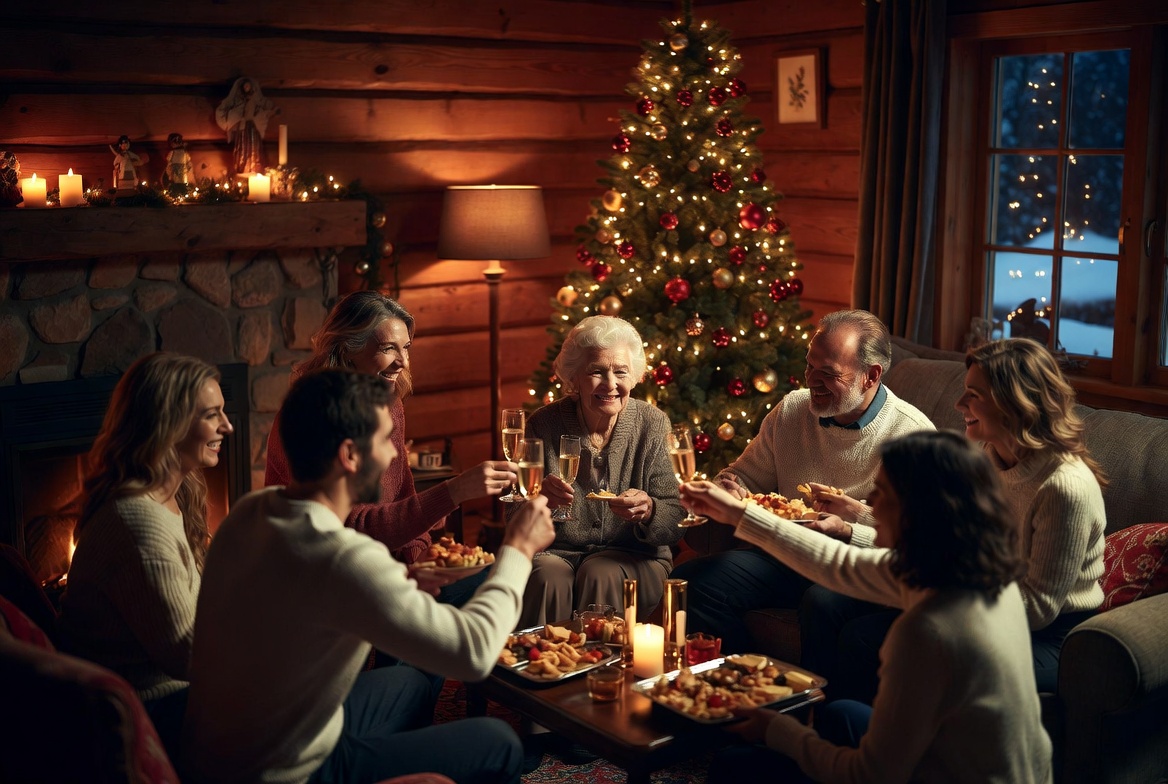
We would eat, laugh, and tell stories until the early hours of Christmas morning. The children were allowed to stay up late, and someone would eventually sneak away to put gifts under the tree. Before going to bed, we always left a slice of Tourtière and a glass of milk for Père Noël.
Why It Matters
The Réveillon is more than just a big meal — it is the heart of French-Canadian Christmas. It represents family unity, generosity, and the blending of Catholic faith with old rural French traditions brought from the 17th century. Even today, many families in Quebec and across Canada still hold a Réveillon, though sometimes earlier in the evening.
It’s a time when the cold winter outside feels far away, and the warmth of food, music (often with a fiddler playing jigs), and loved ones fills the house.
This tradition continues to strengthen our sense of identity as French-Canadians in North America.