
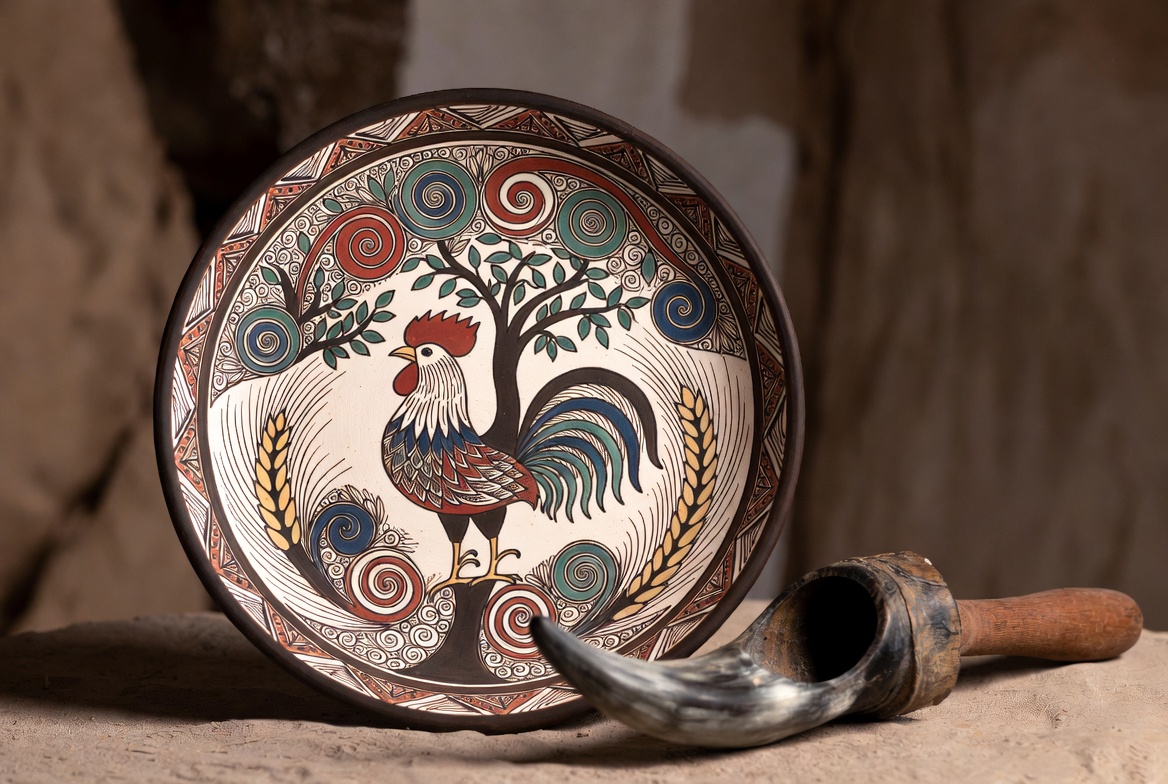
The Rooster of Hurez art: The Story Behind Horezu Pottery
Horezu ceramics, a traditional craft from Romania, are so revered that UNESCO included them on its list of intangible cultural heritage in 2012. Handmade using methods passed down for generations, each piece is a canvas for ancient symbols that tell stories of life, nature, and spirituality.
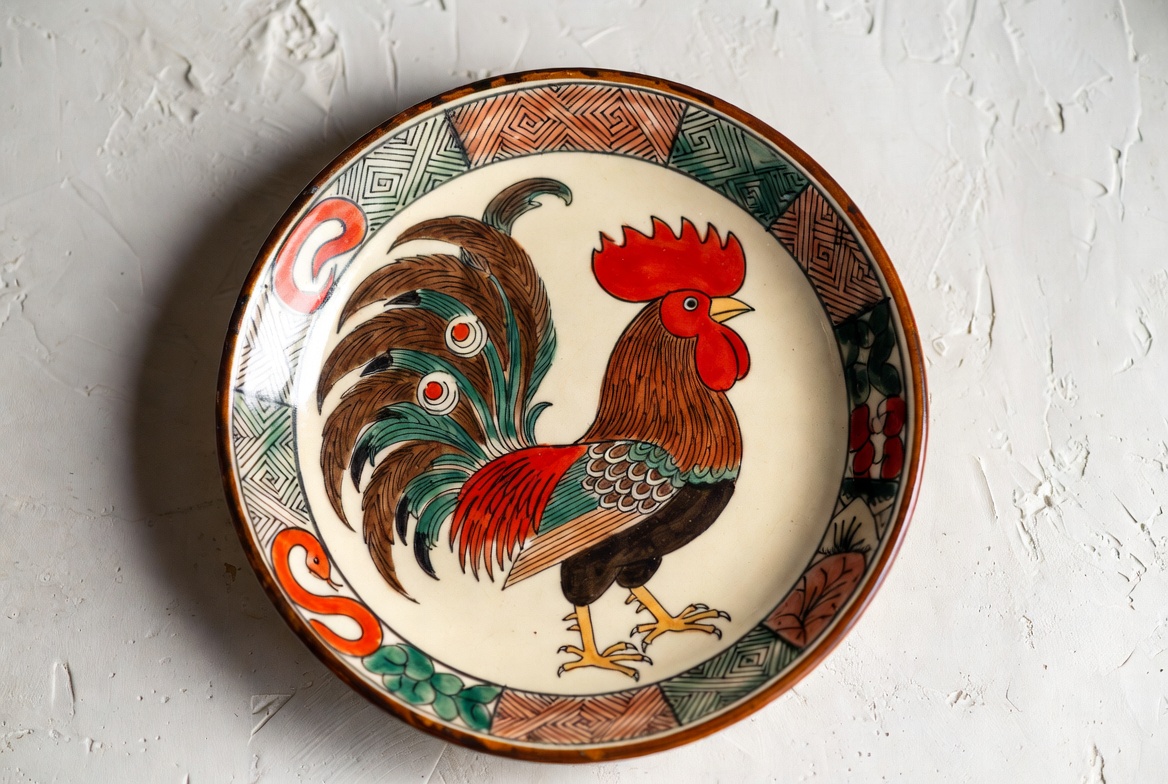
The rooster is the undisputed king of Horezu decorations. It symbolizes the victory of light over darkness and is considered the emblem of the region. Old potters even say one must be as quick as a rooster to master the craft.
Other important motifs include:
- The Tree of Life: A powerful symbol of creation, fertility, and the cycle of life, connecting the underworld, the living, and the divine.
- The Spiral of Life/Vortex: This ancient geometric shape represents the cosmos, evolution, and the eternal cycle of nature
- The Sun: A protective solar symbol representing the source of life, associated with pre-Christian beliefs.
- Fish, Snake, and Peacock Tail: The fish and snake represent patience and adroitness, while the peacock tail adds a motif of beauty and pride.
- Geometric Motifs: Dots, zig-zags, and undulating lines create unique rhythms and convey feelings of balance, order, and harmony through "sacred geometry".
 The Making of a Masterpiece
Creating Horezu ceramics is a ritual in itself.
Men traditionally handle the heavy work: extracting the earth from the hills and mixing it by hand, a process that includes trampling it with their feet. The pot is then shaped on a traditional wheel using a special finger technique that requires strength and agility.
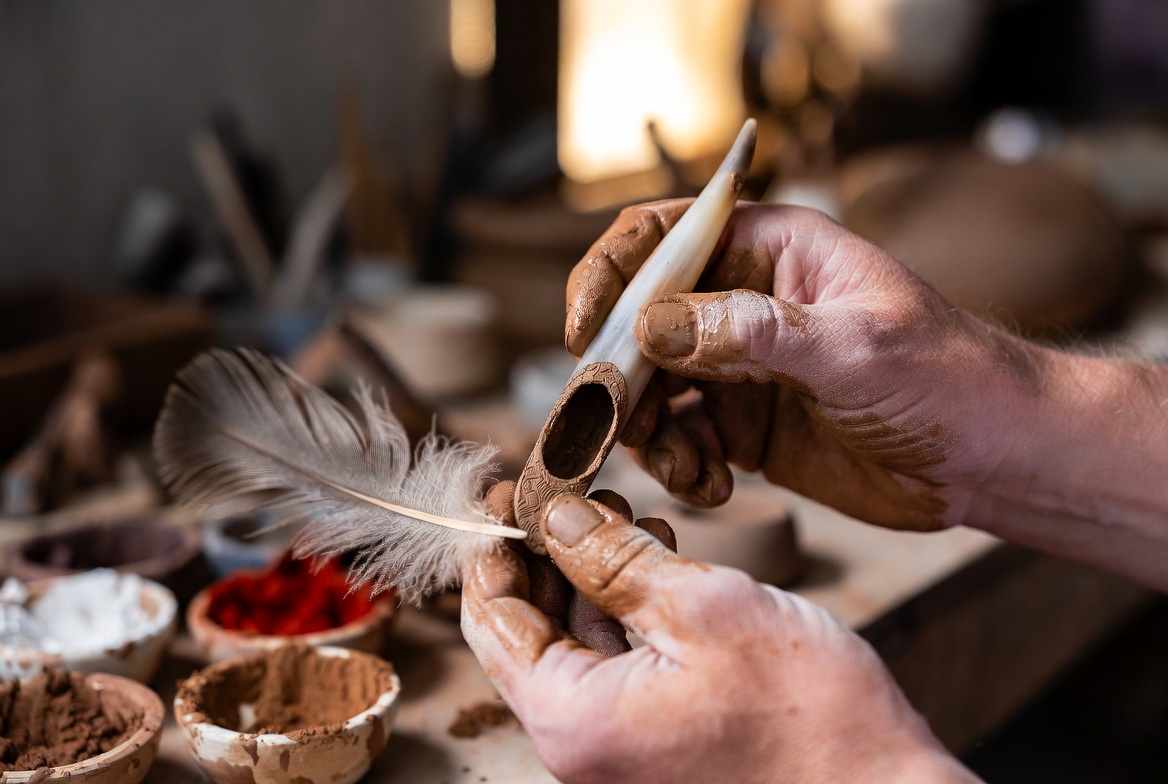
Women then take over, leading the "most spectacular phase": decoration. Using extraordinary tools—a hollowed bull's horn and a goose feather—they paint the natural dyes onto the unfired clay so the colors "merge into" the surface. Finally, the piece is fired twice in a wood-burning oven to achieve its vibrant, durable finish.
 Why Horezu Pottery Matters to Romanian People
Horezu ceramics are a source of immense national pride, acting as a "symbolic marker of identity". They represent far more than decorative items:
- Living Heritage: The craft is a direct link to the past, with knowledge transmitted from "father to son" and master to apprentice for centuries.
- Community Spirit: UNESCO notes the craft gives the community a "sense of identity, while maintaining a social function in everyday existence.
- Spiritual Protection: The symbols were not just for beauty; they served as a "sacred language," guarding the home from misfortune and bringing blessings
- Artistic Tradition: The "Horezu ivory" color, created by firing with a special clay, and the distinct geometric and zoomorphic styles are so unique that they allow a skilled person to identify the pottery's origin immediately.