
Traditional Bengali Indian Wedding Customs
In our Bengali community, weddings are vibrant, emotional, and full of beautiful rituals that blend joy, family bonding, and tradition.
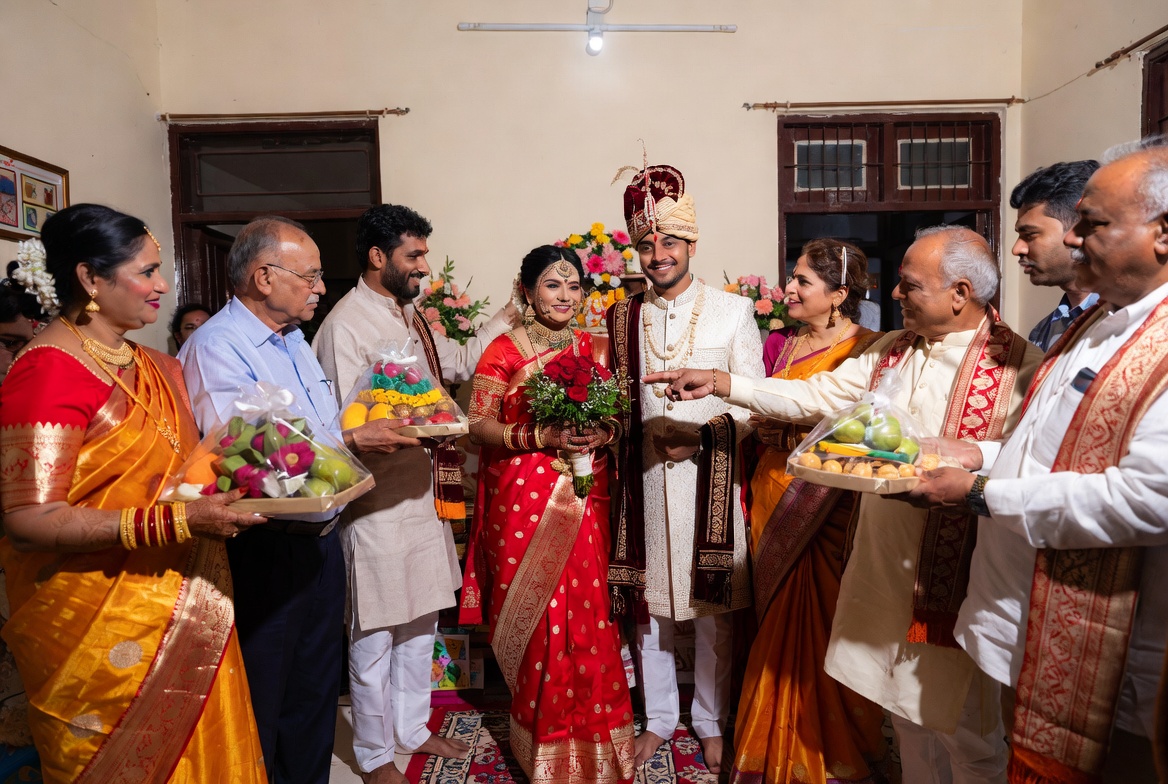
- Aashirwaad / Adan Pradan (Engagement & Blessings): Families exchange gifts and formally bless the couple. The bride and groom receive blessings from elders, and the wedding date is fixed.
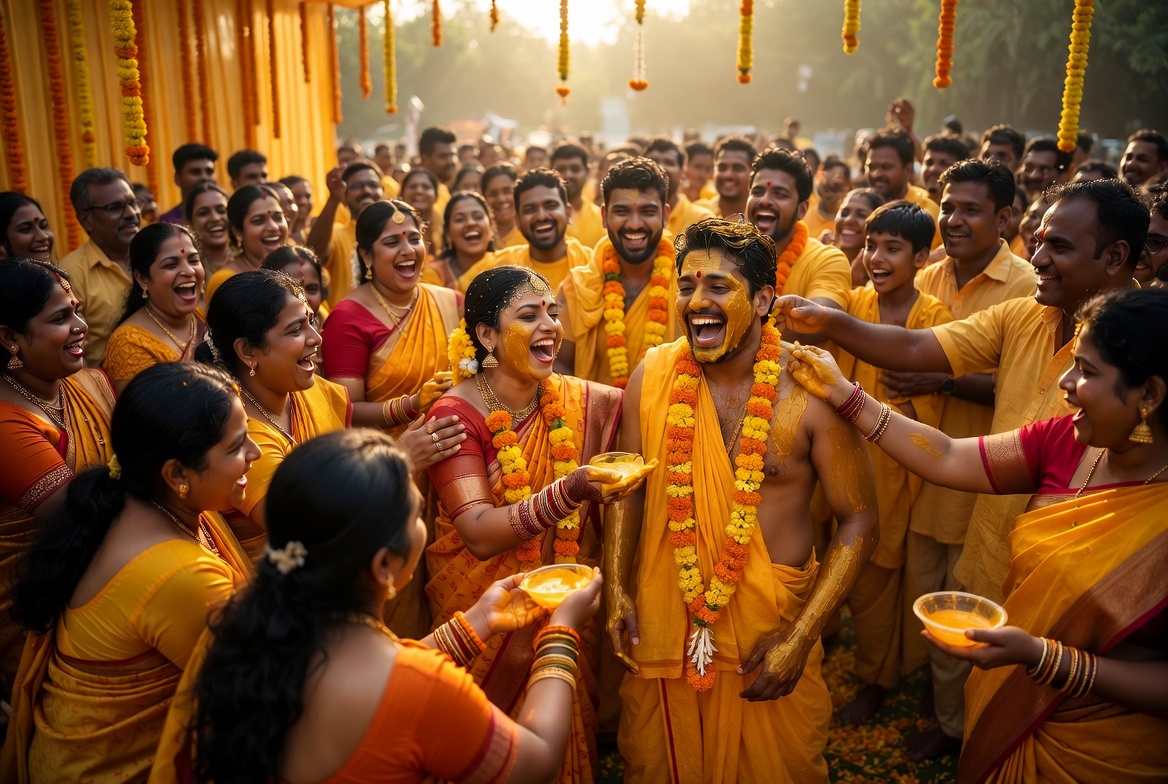
2. Gaye Holud (Turmeric Ceremony): One of the most joyful pre-wedding rituals. Family members apply turmeric paste mixed with mustard oil on the bride and groom for purification and glowing skin. There is lots of singing, dancing, and yellow clothes.
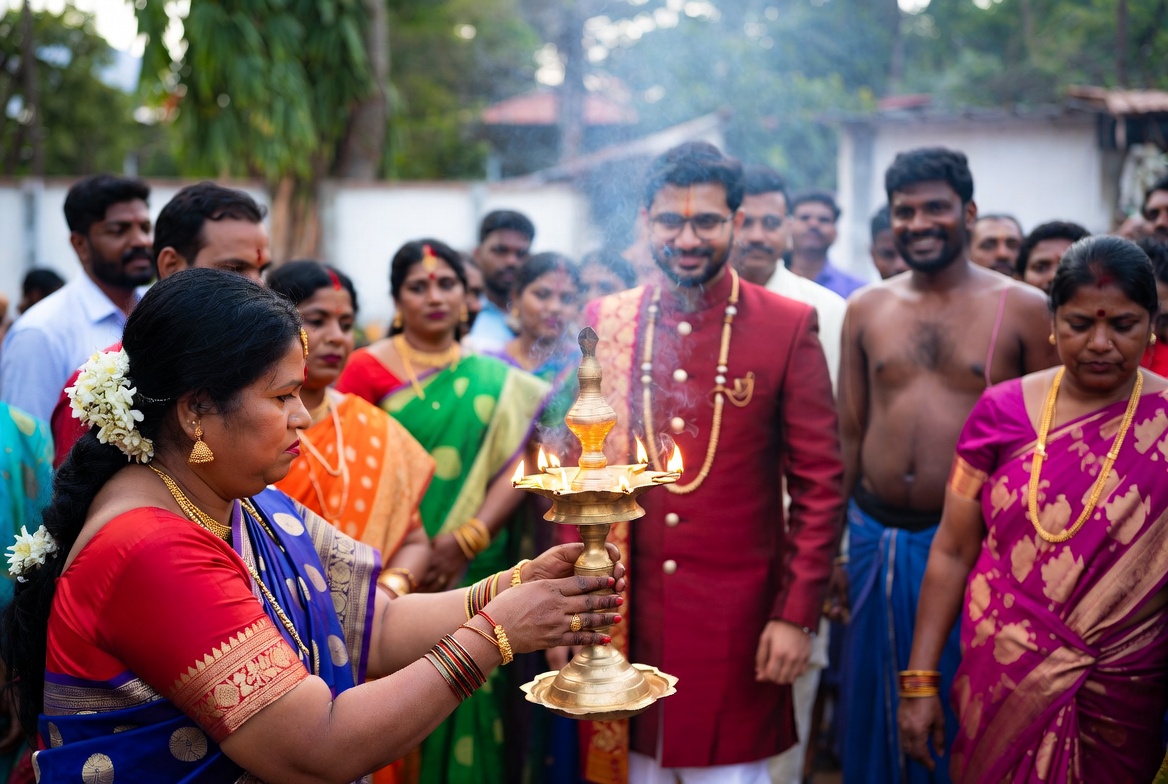
3. Bor Jatri & Bor Boron (Groom’s Arrival): The groom arrives with his procession (bor jatri). The bride’s mother welcomes him with a traditional aarti (bor boron) using a lamp, betel leaves, and sweets.
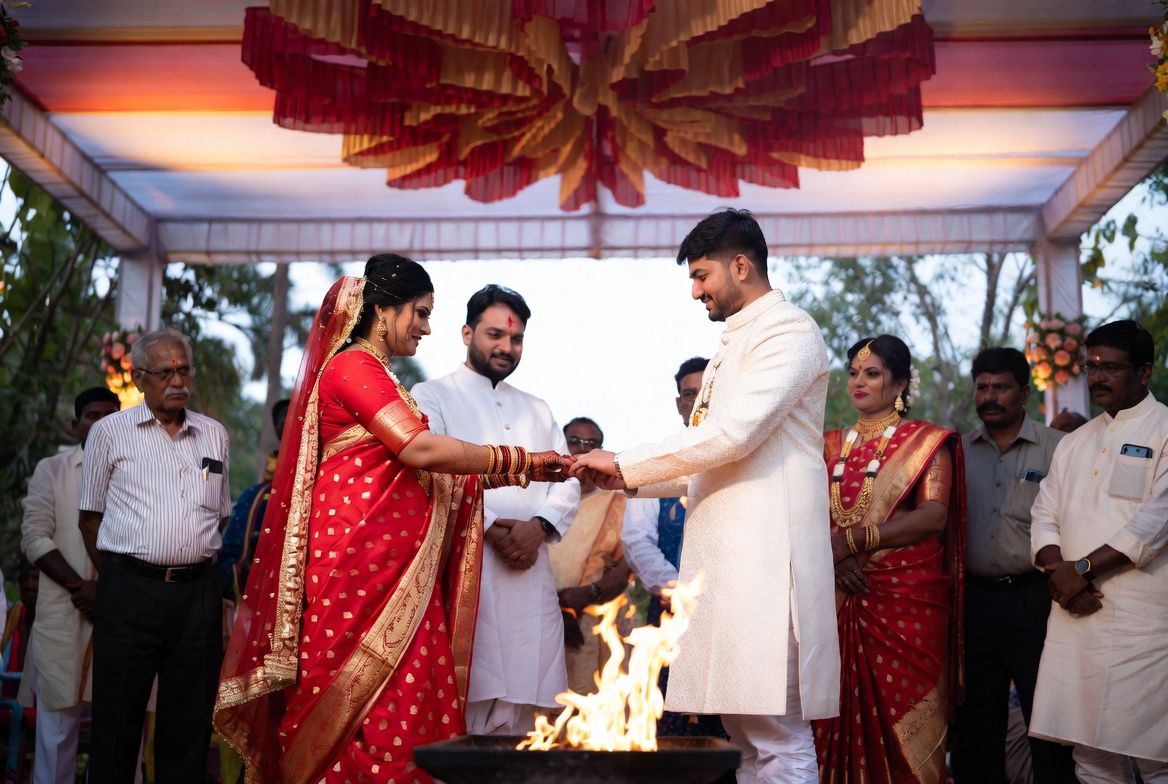
4. Sampradan & Saat Paak (Giving Away & Circling): The bride’s father gives her hand to the groom (sampradan). The couple then circles the sacred fire seven times (saat paak / phere) while taking vows.
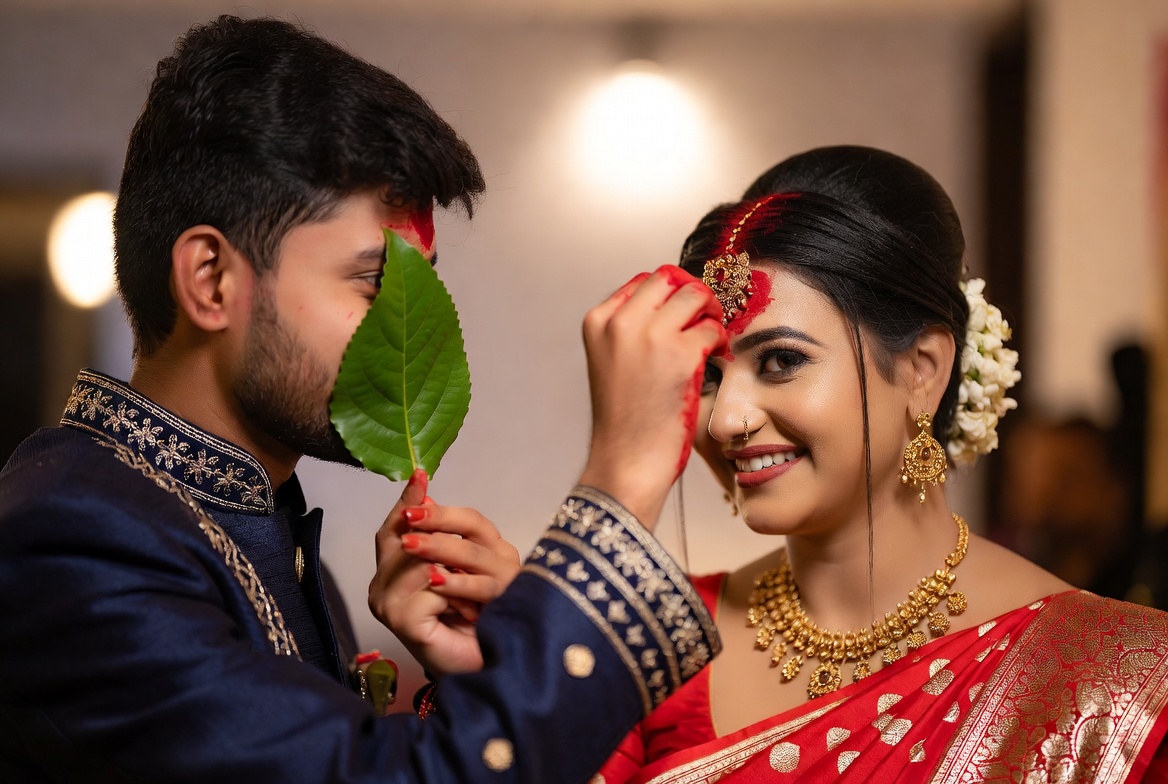
5. Sindoor Daan & Subho Drishti: The groom applies sindoor (vermilion) on the bride’s hairline and and covers her head with a new saree. They then look at each other for the first time through a betel leaf (subho drishti).
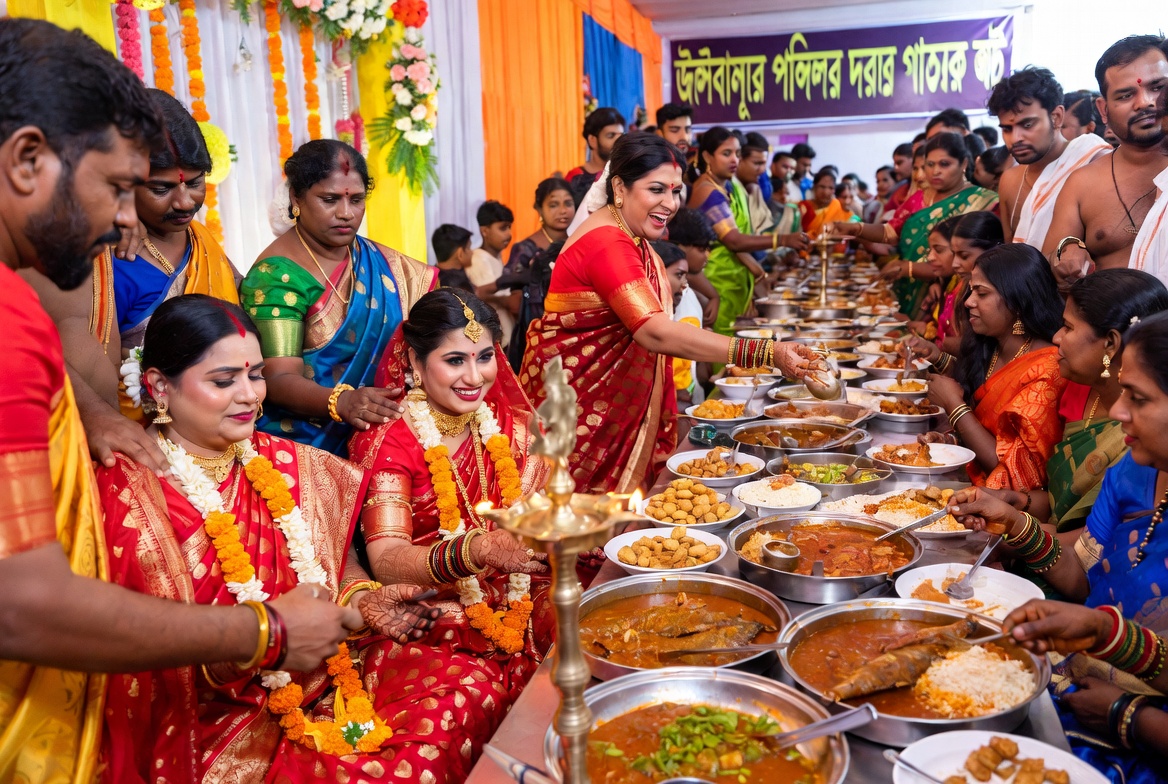
6. Bou Boron & Bou Bhaat (Welcoming the Bride & Reception): The bride is welcomed into her new home with rituals. Later, a grand reception (bou bhaat) is held where the bride cooks and serves her first meal as a married woman, and guests celebrate with feast and music.
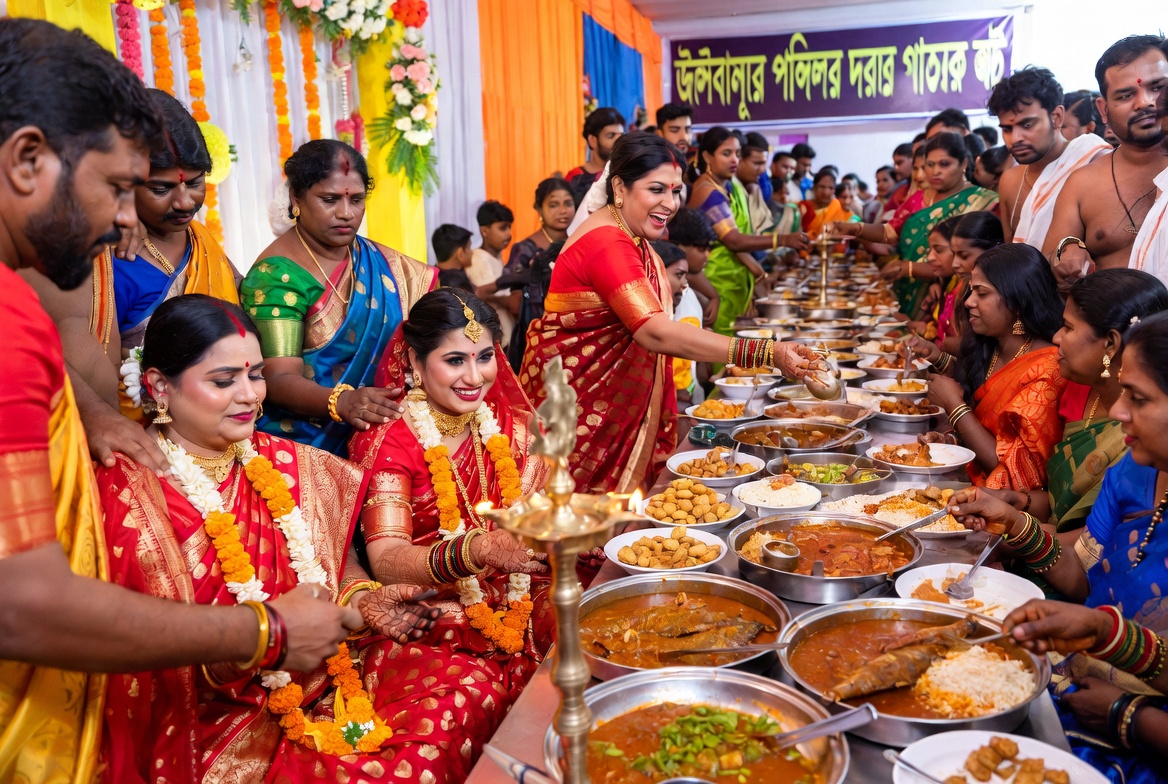
Bengali weddings are known for their emotional depth, beautiful alpona (rangoli), conch shell sounds, and delicious food.