
Traditional Korean Wedding Customs:
Pre-wedding arrangements: Historically arranged via matchmaking (euihon). Families exchange the groom's saju (birth details) and set an auspicious date.
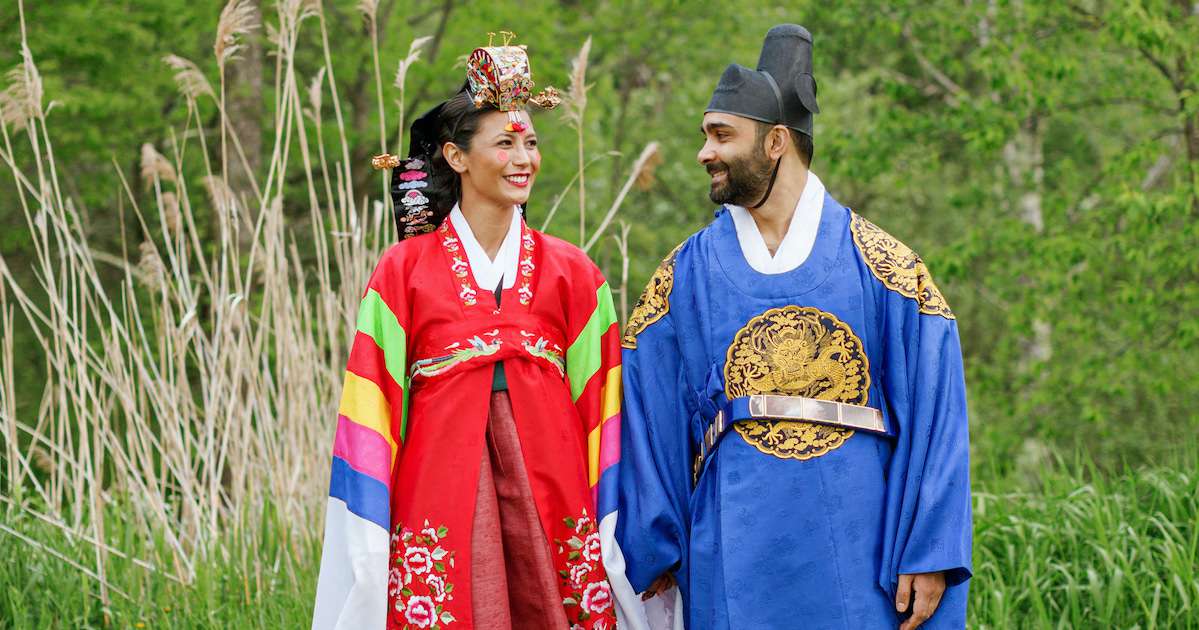
Attire: The bride and groom wear colorful hanbok (traditional silk clothing). Bride often in red/green chima-jeogori or wonsam; groom in samogwandae or simpler jeogori-baji.
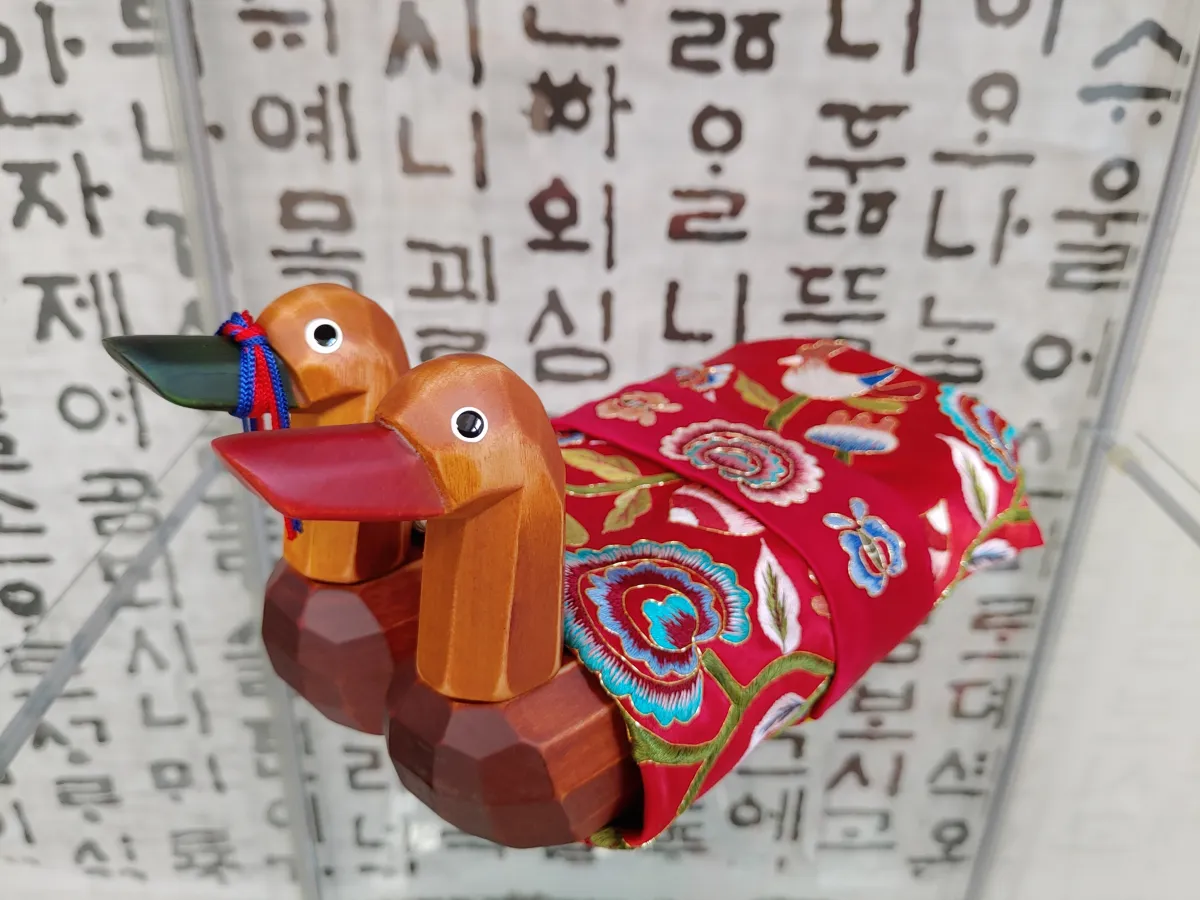
Jeonanrye (Presentation of the goose): Groom presents a wooden goose (symbol of lifelong fidelity) to the bride's mother.
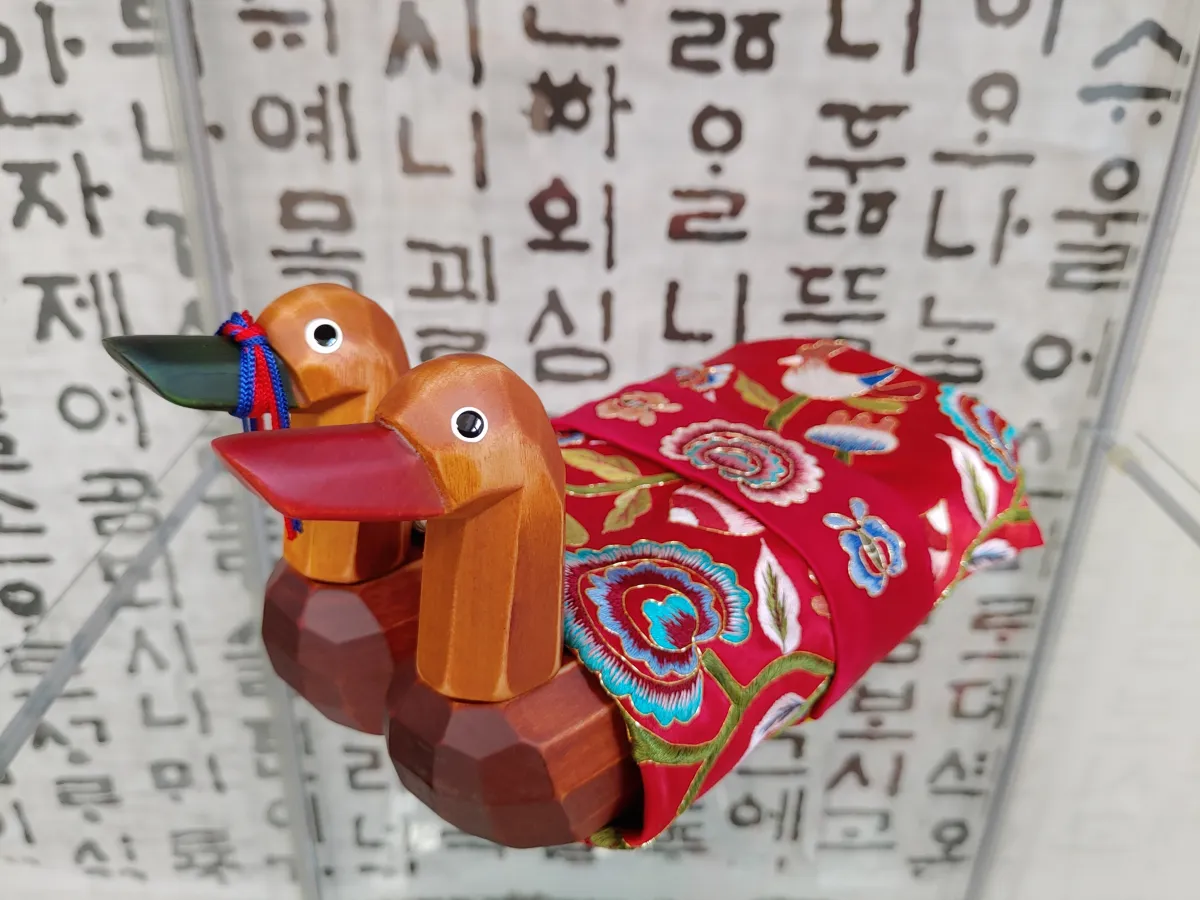
Main ceremony (Kunbere/Gyobaerye): Bride and groom bow to each other (bride bows twice, groom once), exchange vows, and share wine from a gourd. Held at the bride's home historically; now often in wedding halls with processional and parental candle lighting.
Pyebaek (Paebaek) ceremony: Post-wedding family ritual. The couple bows deeply to the groom's parents, offers tea, and catches thrown dates/chestnuts (symbolizing children and fertility). Emphasizes joining the new family.
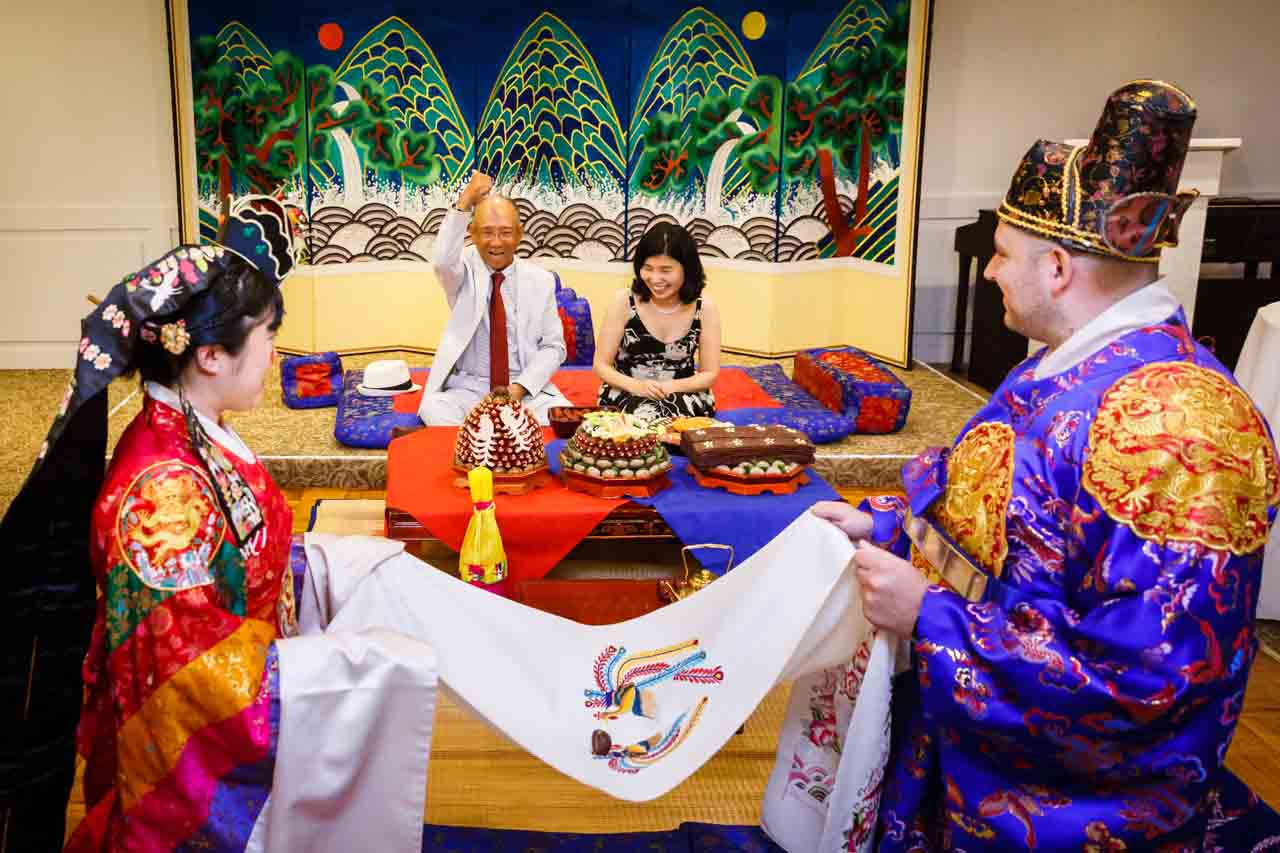
Post-ceremony: The bride traditionally stays with the groom's family. Modern weddings blend with Western elements like rings and receptions, but retain bows, hanbok, and family focus.
These customs highlight respect for family, loyalty, and harmony in Korean culture.