A Hausa Wedding
Traditional Hausa weddings are rich, structured, and deeply rooted in Islamic and cultural values. They are usually multi-day celebrations filled with prayer, music, henna, and vibrant attire.
Here’s a clear breakdown of the major customs:
💍 1. Neman Aure (Marriage Proposal)
This is the formal introduction.
The groom’s family visits the bride’s family.
Elders speak on behalf of both sides.
The groom does not speak directly.
Discussions about intentions and compatibility begin.
Respect and modesty are very important at this stage.
📜 2. Sadaki (Bride Price / Dowry)
In Hausa culture (influenced by Islam):
The Sadaki is mandatory.
It is given directly to the bride (not her family).
It can be money, gold, or agreed valuables.
It symbolizes responsibility and commitment.
The amount is usually modest, as Islam encourages simplicity.
🌿 3. Kayan Lefe (Gifts from Groom to Bride)
The groom presents beautifully arranged gifts, including:
Clothes (lace, Ankara, wrappers)
Shoes and handbags
Jewelry
Perfumes
Makeup
Qur’an and prayer items
Food items (sometimes)
These are displayed publicly in decorated trays.
🌙 4. Kamu (Bride’s Seclusion & Henna Night)
Before the wedding:
The bride stays indoors.
She receives beauty treatments.
Her hands and feet are decorated with henna (lalle).
Female friends and relatives gather to celebrate her.
There is music, drumming, and women-only dancing.
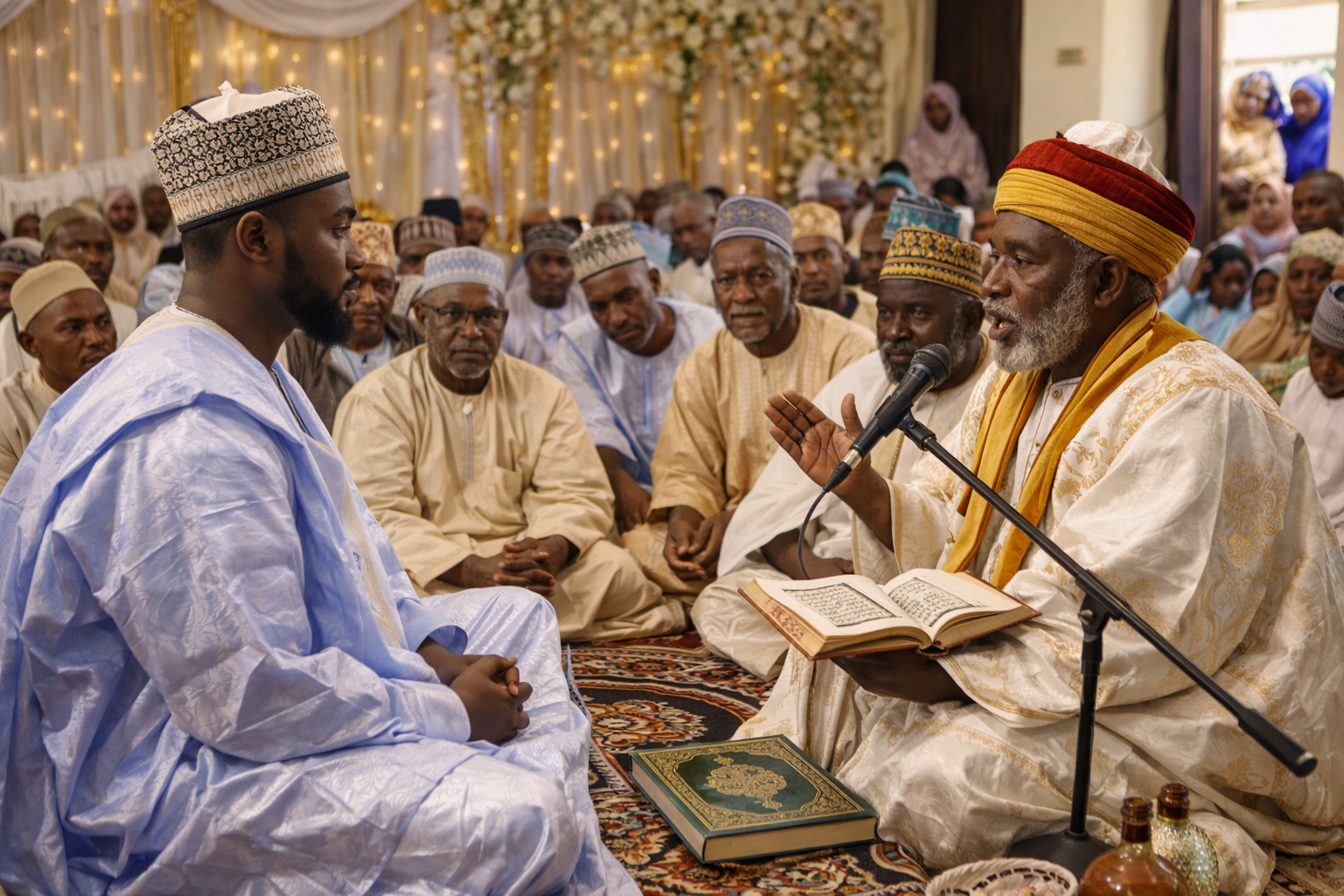
🕌 5. Daura (The Wedding Contract Ceremony)
This is the most important part.
Conducted in the mosque or bride’s family home.
The groom may be present, but the bride usually stays inside.
The Imam officiates.
Consent is confirmed.
Witnesses are present.
Prayers are offered.
This completes the Islamic marriage contract.
🎉 6. Walima (Wedding Feast)
After Daura:
A large celebration follows.
Guests are served traditional Hausa meals.
Music and cultural performances may occur.
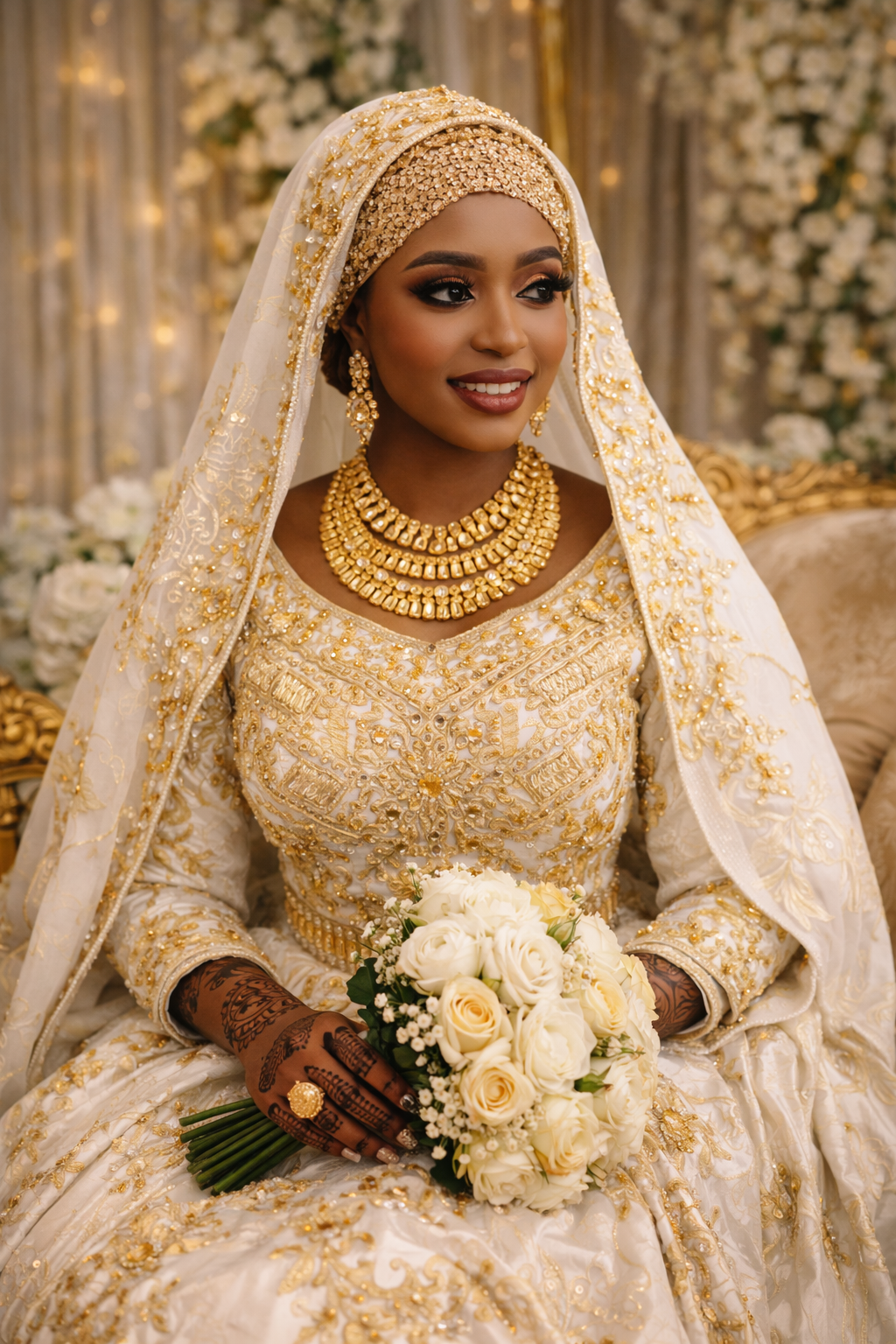
👰 Hausa Wedding Attire
Bride:
Wears elaborate lace or richly embroidered gowns.
Heavy gold jewelry.
Veil covering hair.
Detailed henna designs.
Groom:
Traditional Babban Riga (flowing gown).
Cap (Fula or embroidered cap).
Sometimes carries prayer beads.
🍲 Traditional Wedding Foods
Tuwo Shinkafa (Rice meal)
Miyan Kuka (Baobab soup)
Suya
Jollof rice
Zobo drink
Fura da Nono
❤️ Cultural Values Reflected
Hausa weddings emphasize:
Modesty
Family approval
Religious commitment
Respect for elders
Community involvement
Unlike some other cultures, Hausa weddings are more restrained in physical interaction between bride and groom — especially publicly — due to Islamic influence.
Galerie