
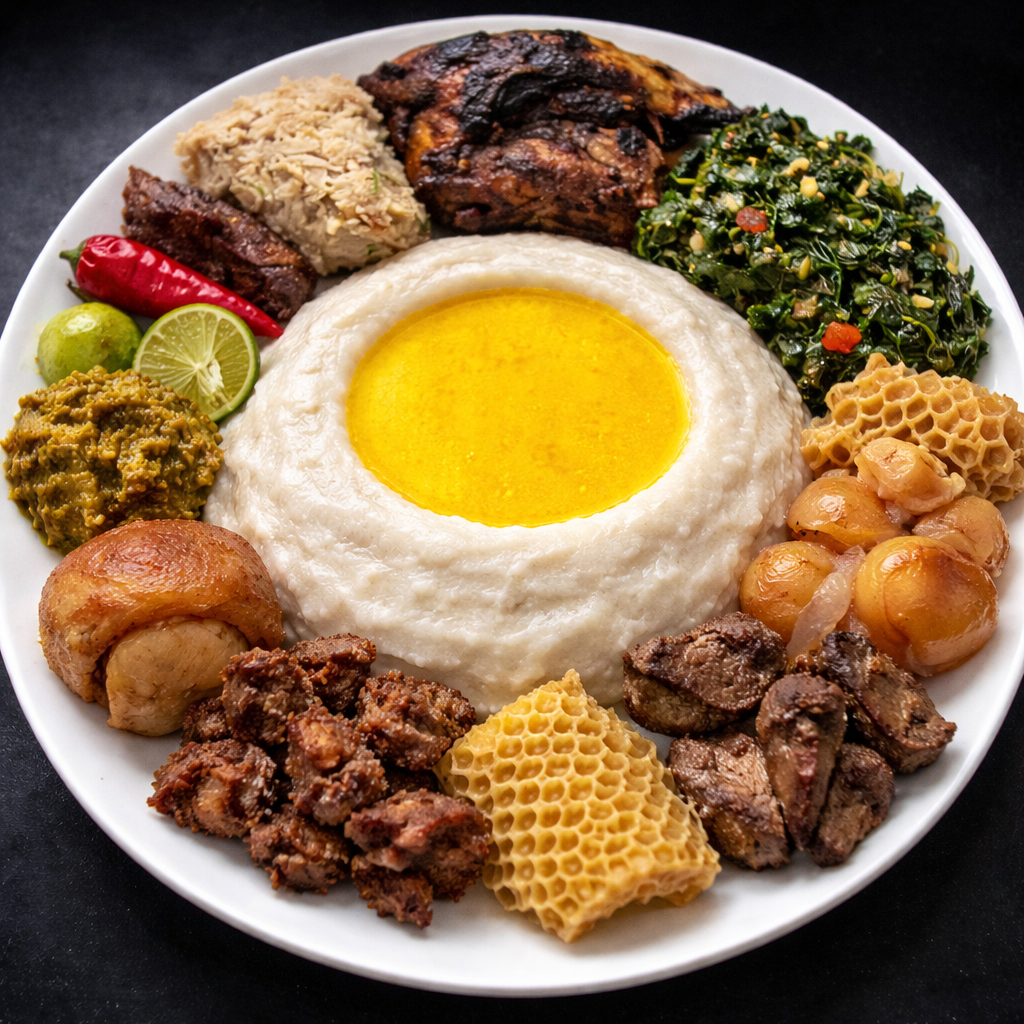
Achu and Yellow Soup (Achu & Nkah)
It’s not just food — it’s culture, identity, and celebration on a plate.
🥣 Why I Love Achu
Achu is special because:
It is served at traditional weddings, family gatherings, and palace events
It represents unity and sharing
It is often eaten communally from one large wooden bowl
The preparation itself is a cultural experience
In Bafut, Achu is more than a meal — it’s a ceremony.
🥔 How Achu is Made
1️⃣ Preparing the Achu (Cocoyam Fufu)
Ingredients:
Old cocoyams (taro)
Water
Method:
Peel and wash the cocoyams.
Boil until very soft.
Pound in a mortar while hot until smooth and stretchy.
Shape into smooth balls and keep warm.
Good Achu should be:
Slightly elastic
Smooth
Light brown or cream in color
Soft but firm enough to hold shape
🟡 Preparing the Yellow Soup (Nkah)
This is the heart of the dish.
Ingredients:
Palm oil
Limestone (kanwa) or potash
Water
Ground spices (country onions, pepper)
Salt
Meat (beef, cow skin/kanda, tripe)
Smoked fish (optional)
Method:
Heat palm oil slightly (do not overheat).
Mix potash with warm water and strain.
Slowly stir the potash water into the palm oil while whisking vigorously.
The oil changes from red to bright yellow and thickens.
Add spices, pepper, and salt.
Add cooked meat and fish.
The result is a thick, bright yellow sauce that coats the Achu beautifully.
🍽 How It Is Served in Bafut
Achu is placed in a large wooden bowl.
Yellow soup is poured in the center.
Meat is arranged inside.
It is eaten with the fingers (right hand).
Sometimes served with:
Garden eggs
Bitterleaf
Njama njama (greens)
💛 Why It Matters Culturally
In Bafut tradition:
Achu represents hospitality.
Serving someone Achu shows respect.
It is often prepared by women but shared by everyone.
It is central during traditional title ceremonies and marriage rites.
If you attend a major traditional ceremony in Bafut and Achu is not served, something feels incomplete.