
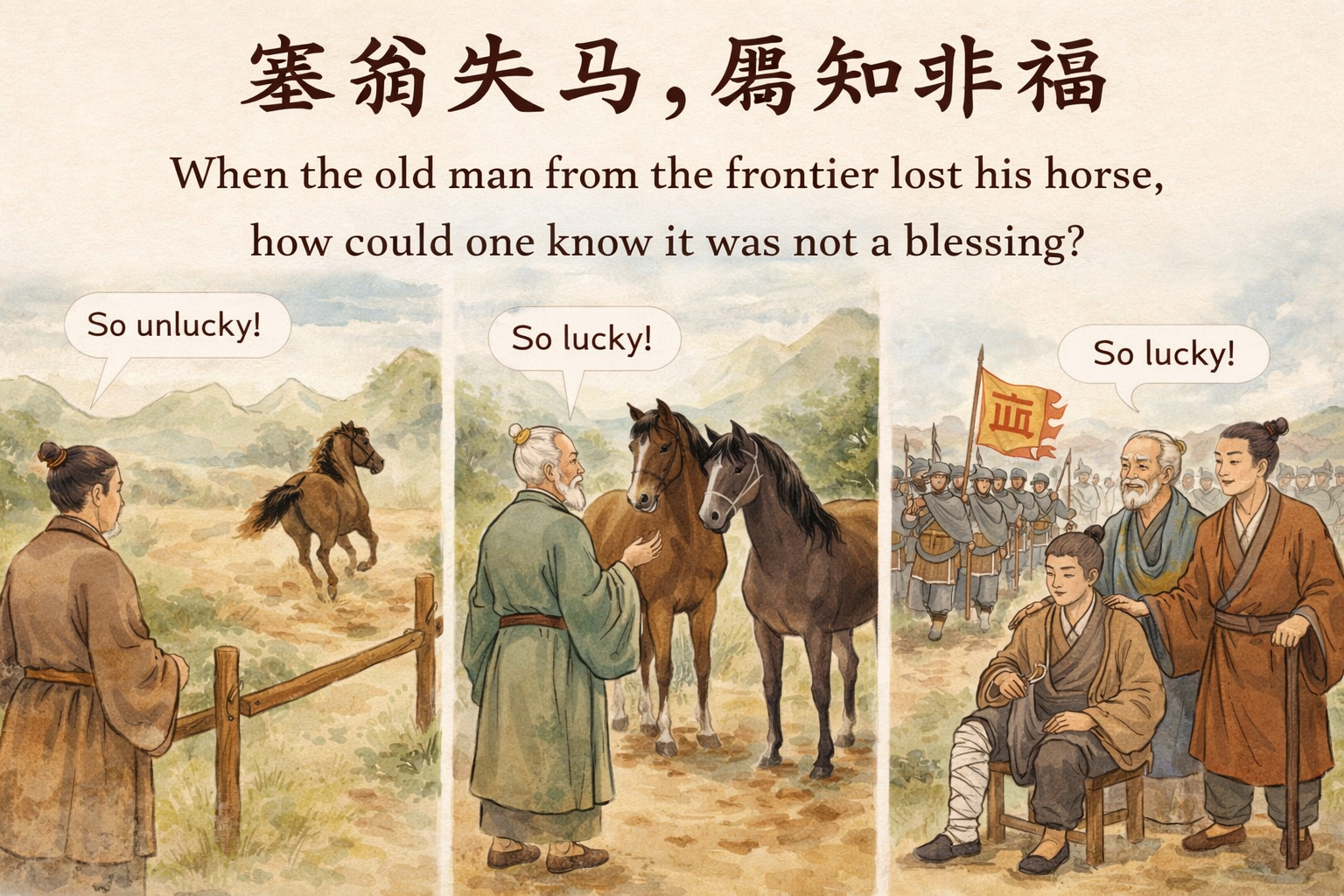
塞翁失马,焉知非福 (Sài Wēng shī mǎ, yān zhī fēi fú)
Literal meaning:
“When the old man from the frontier lost his horse, how could one know it was not a blessing?”
Actual meaning:
👉 A bad situation may turn out to be a good thing later.
👉 Misfortune can bring unexpected benefits.
The Story Behind It
This proverb comes from an ancient Chinese story:
An old man living near the border lost his horse. People came to comfort him, but he said, “Who knows if this is not a blessing?”
Later, the horse returned — bringing another fine horse with it. This seemed lucky.
But then his son broke his leg while riding the new horse. This seemed unlucky again.
Soon after, war broke out and all the young men were taken to fight — except his son because of the injury.
So what seemed bad actually saved his life.
How Chinese People Use It
People use this proverb when:
Someone fails an exam but later finds a better opportunity
Someone loses a job but starts a successful business
Something disappointing happens but later leads to growth
It teaches patience, optimism, and wisdom about life’s uncertainty