
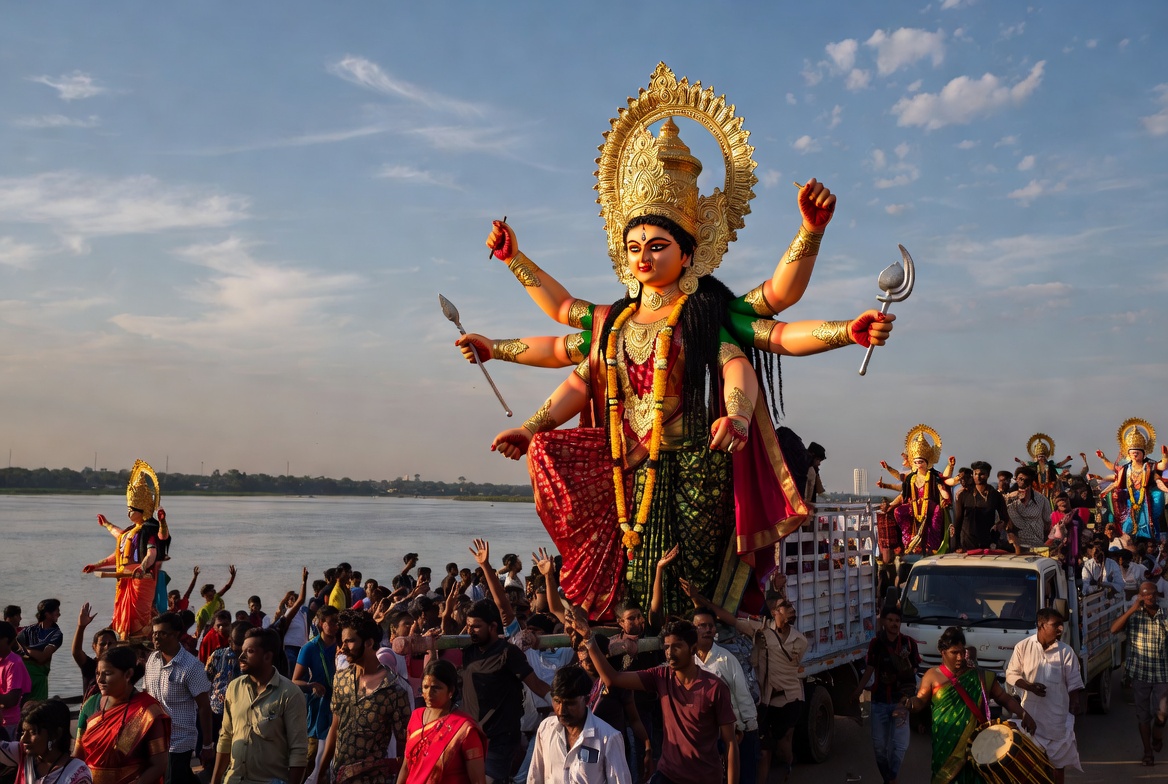
Durga Puja
The most significant and beloved cultural festival in our Bengali community is Durga Puja — the grand celebration of Goddess Durga’s victory over the demon Mahishasura.
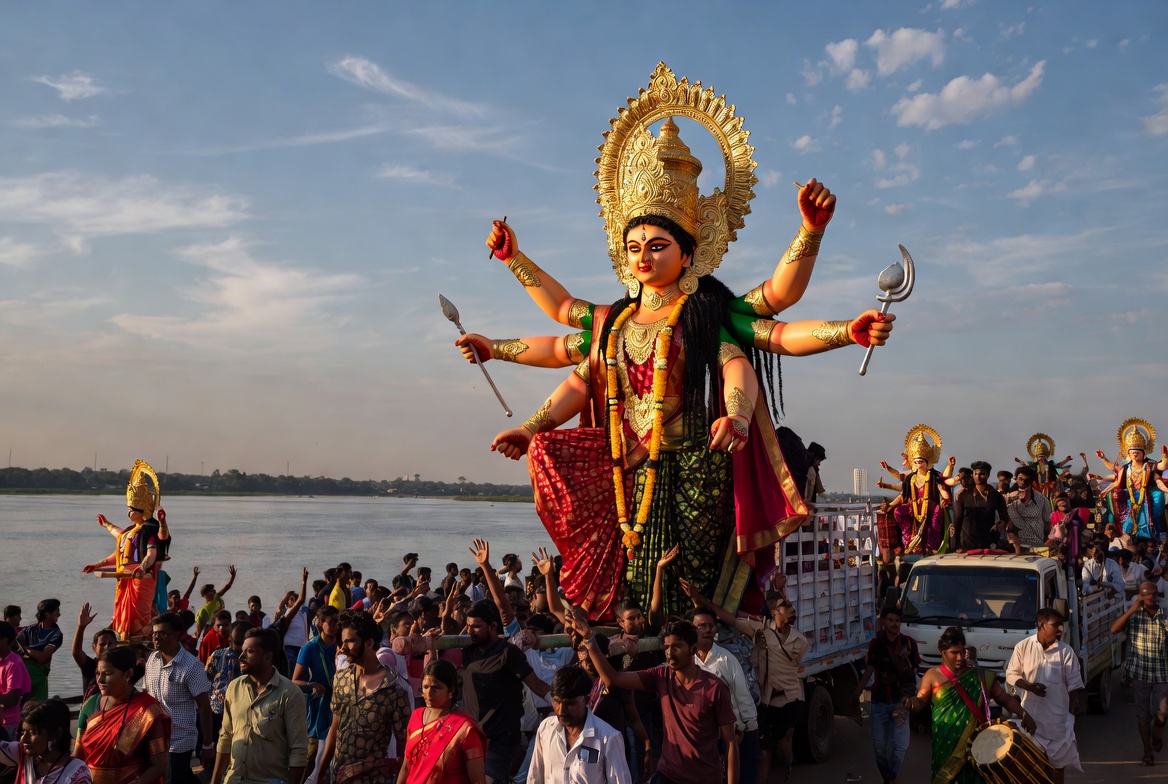
Every autumn, when the weather turns pleasant, our entire community transforms. For months, artisans (especially in Kumartuli, Kolkata) carefully sculpt beautiful clay idols of Goddess Durga with her four children — Lakshmi, Saraswati, Kartik, and Ganesha — and the defeated Mahishasura at her feet.
The festival lasts for five main days (Shashthi to Dashami), but the excitement builds much earlier. On Mahalaya, we wake up before dawn to listen to the iconic radio chanting of “Mahishasuramardini.” Then the pandals (temporary beautiful structures) open — each one uniquely themed, decorated like palaces, temples, or modern art installations.
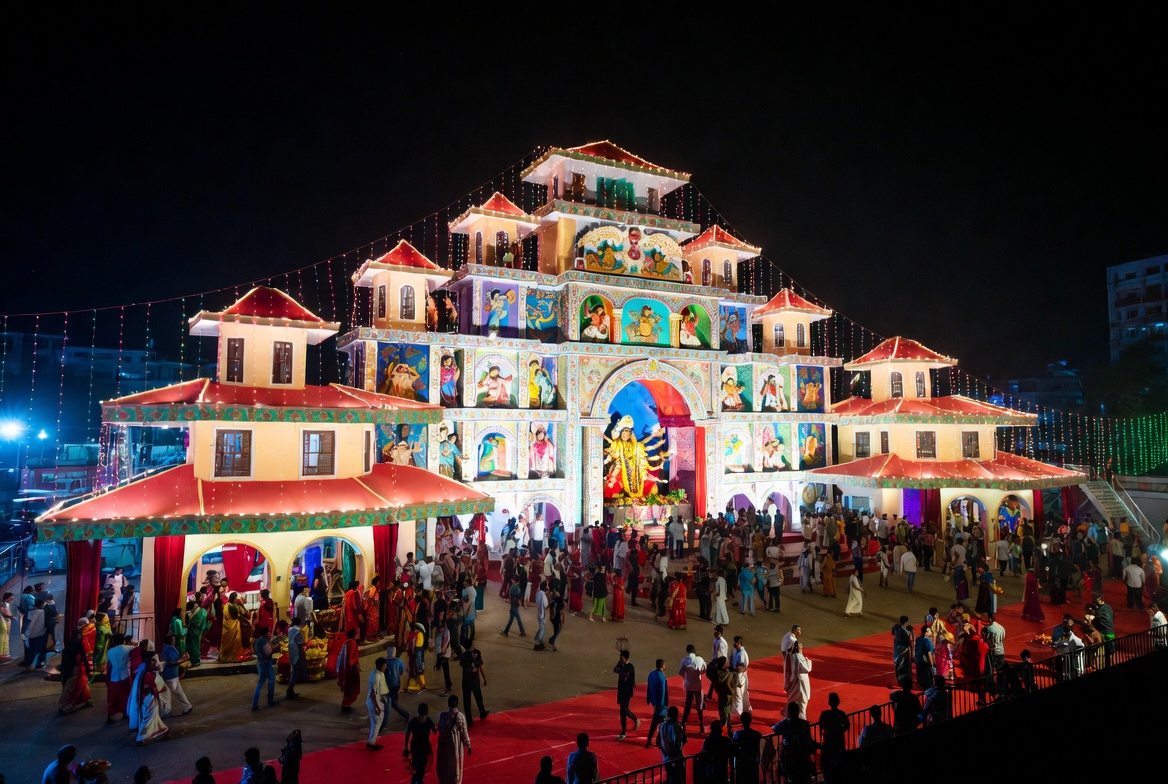
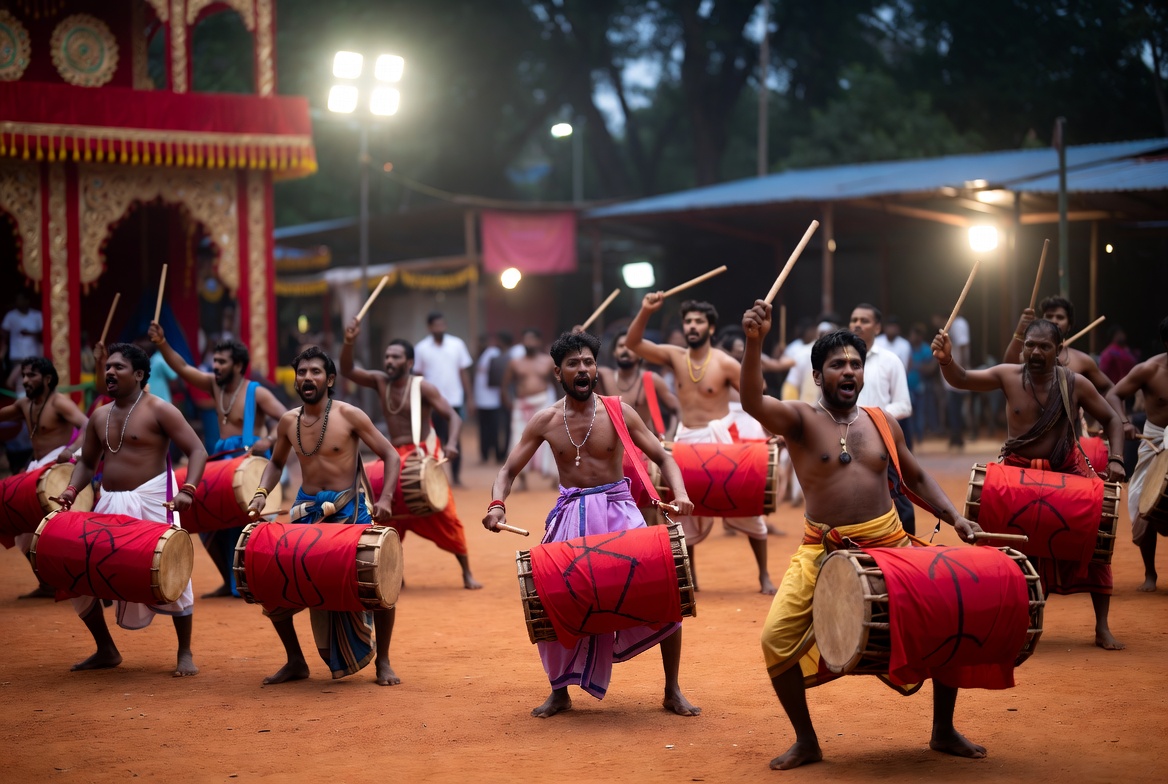
During the days of the Puja, families wear new clothes (especially the women in stunning white-red bordered sarees or vibrant colours), visit dozens of pandals, offer pushpanjali (flower offerings), enjoy cultural programmes, and eat delicious bhog (khichuri, labra, payesh). The air is filled with the sound of dhaak (traditional drums), conch shells, and laughter.
On Dashami (the final day), after the emotional sindoor khela (married women smearing vermilion on each other and the goddess), we bid a tearful goodbye as the idols are taken in grand processions and immersed in the river. We say “Aschhe bochor aabar hobe” — “It will happen again next year.”
Durga Puja is not just a religious festival. It is a celebration of good over evil, the power of the feminine (Shakti), homecoming, art, community bonding, and the cultural soul of every Bengali. It is the time when the whole world feels a little more Bengali.