
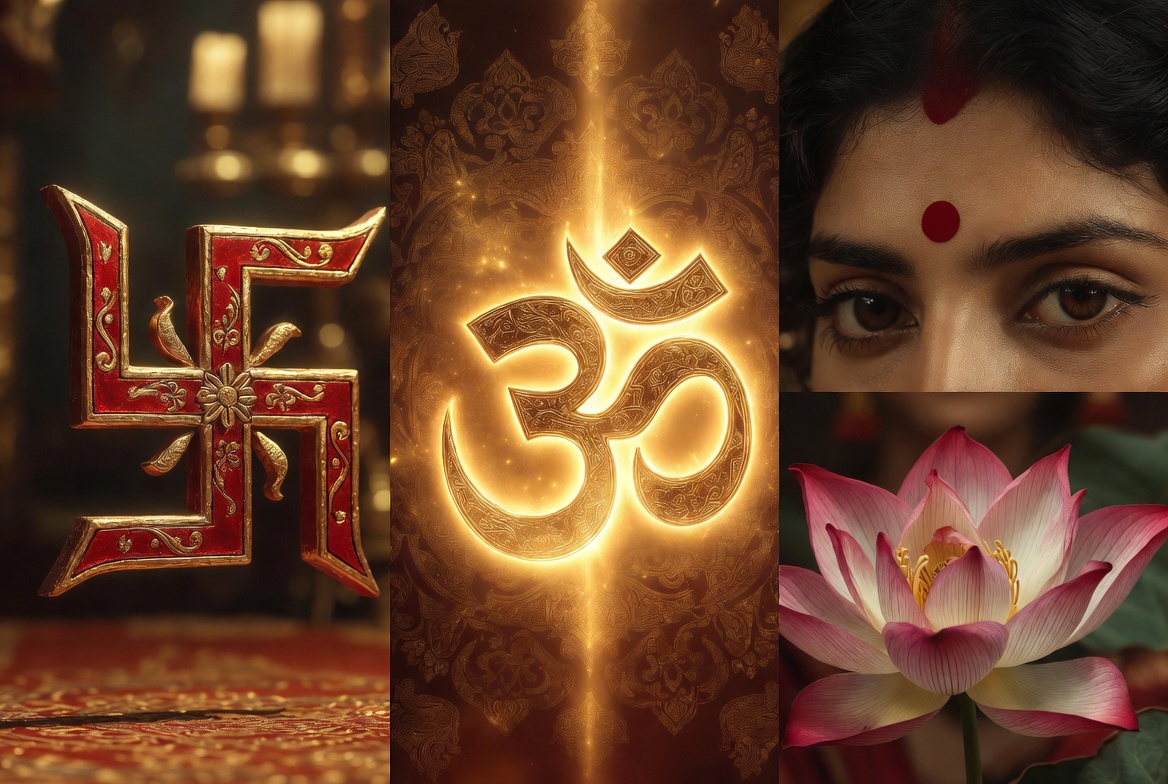
Indian Cultural Symbols & Meanings: A Tourist's Guide
India has ancient symbols on foreheads, walls, and jewelry. Knowing them helps tourists understand Indian pride and avoid accidental disrespect.
1. Om (Aum)
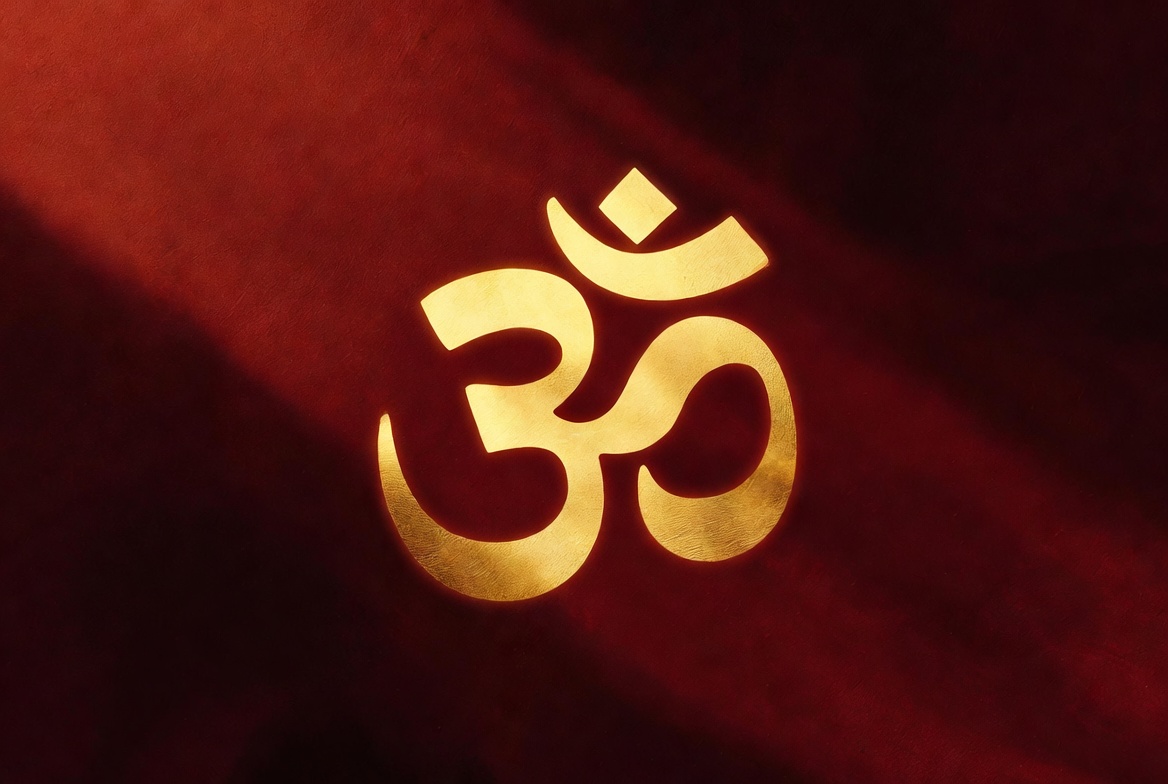
Most sacred sound and symbol in Hinduism
Represents the universe and ultimate reality (Brahman)
Three curves represent waking, dreaming, and deep sleep
The dot represents absolute consciousness
Found at temple entrances, holy books, and jewelry
Chanted before every Hindu prayer
2. Swastika
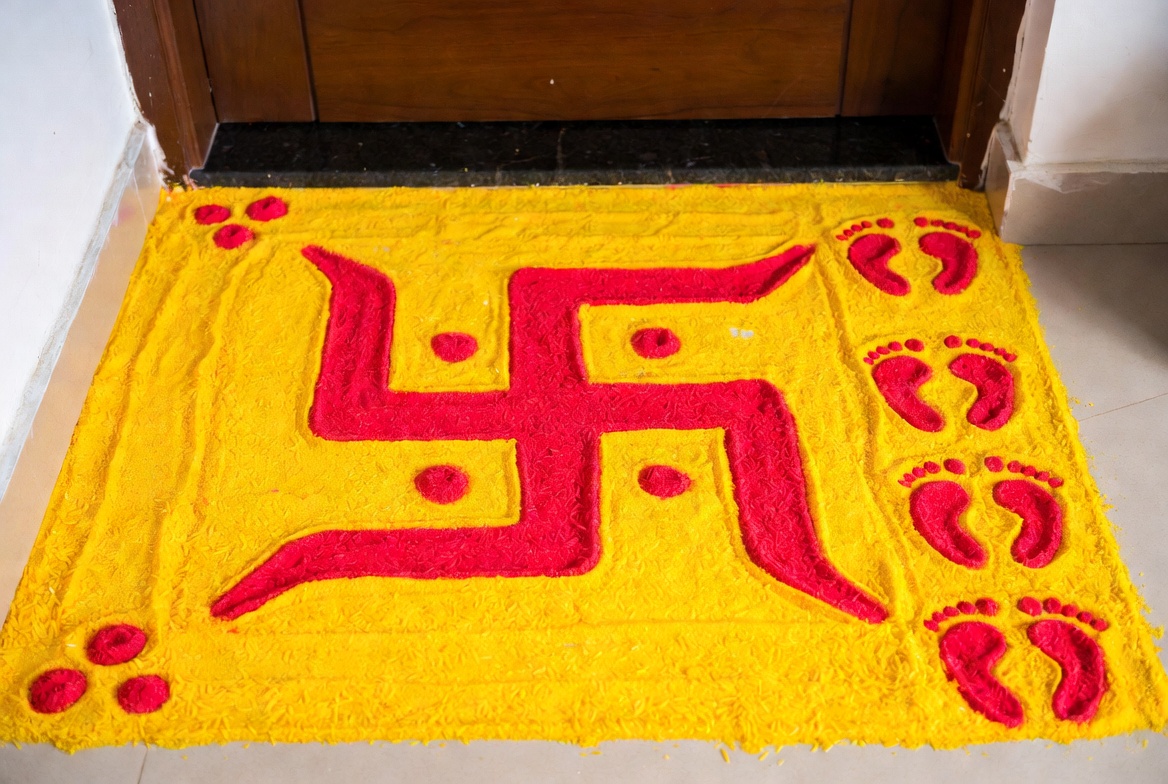
years old symbol of good luck, prosperity, and well-being
Four arms represent four directions, four Vedas (holy books)
Always drawn with dots in each corner
Used in Hindu, Buddhist, and Jain traditions
Found at entrances, on wedding cards, and during Diwali
Completely different meaning from Nazi symbol
3. Bindi (Forehead Mark)
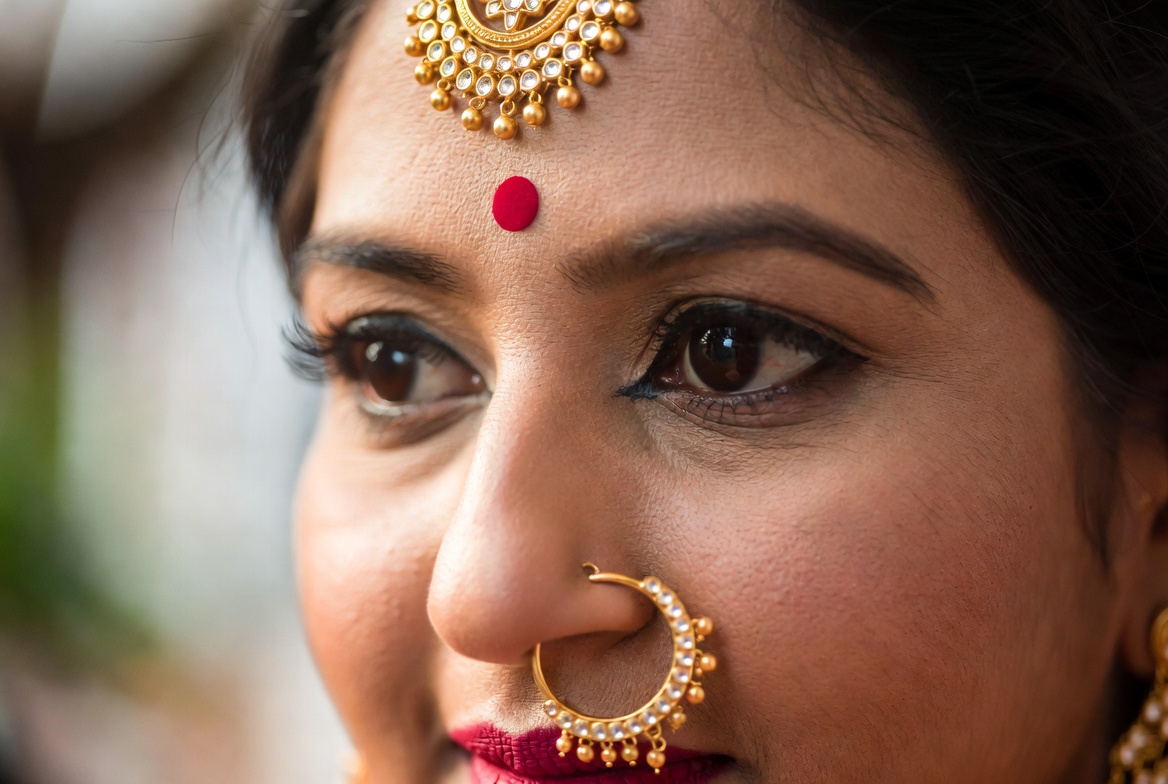
Red dot worn by married Hindu women on forehead
Represents third eye (wisdom and spiritual sight)
Also symbol of marriage (like a wedding ring)
Location: between eyebrows (ajna chakra)
Now also worn as fashion (colored and stick-on)
Widows do not wear red bindi
4. Lotus (Padma)
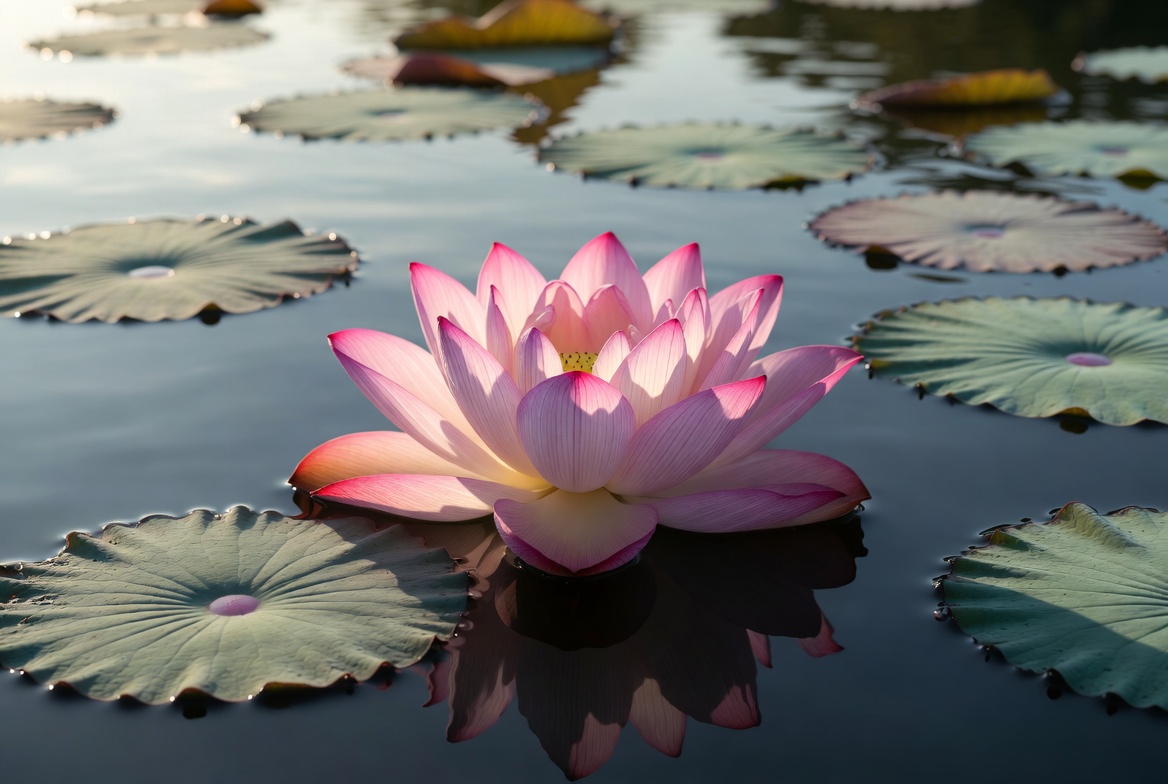
National flower of India
Symbol of purity, beauty, and spiritual awakening
Grows in muddy water but blooms unstained
Goddess Lakshmi (wealth) and Saraswati (knowledge) sit on lotus
Used in temples, art, and architecture
Every part of lotus is used (no waste)
5. Cow (Gau Mata)
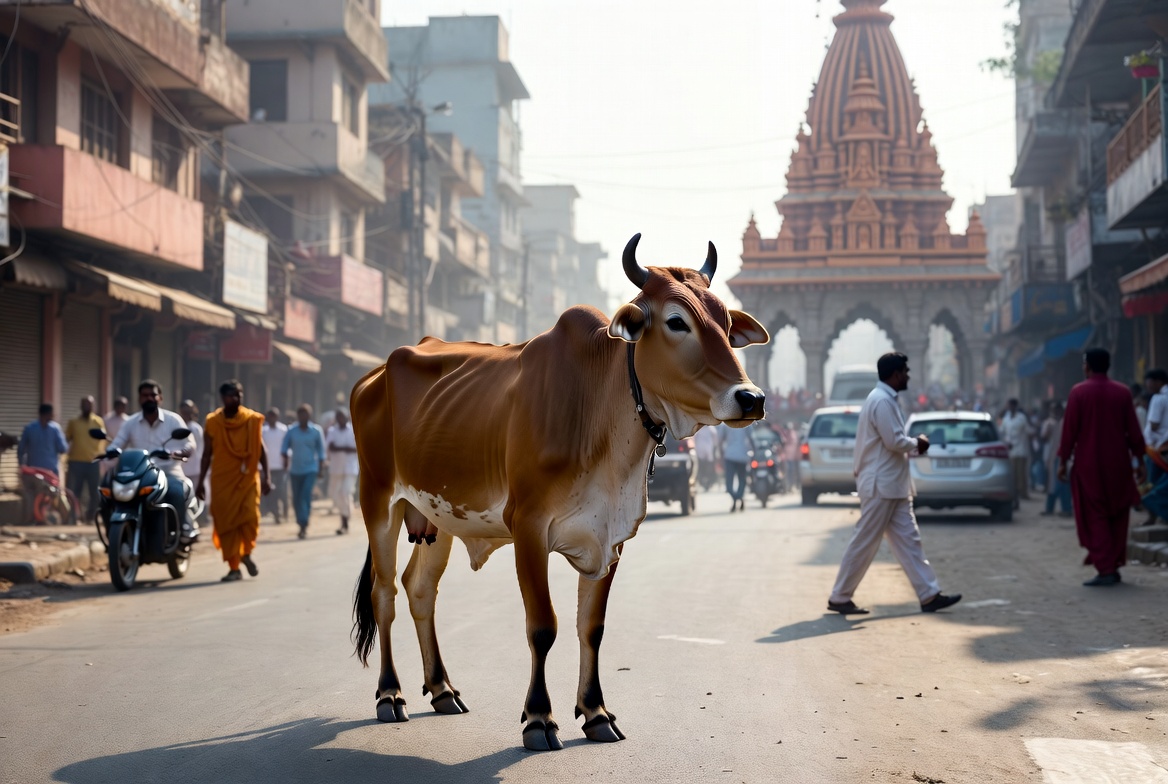
Cow is sacred in Hinduism (symbol of selfless giving)
Provides milk, ghee, yogurt, dung (fuel), and urine (medicine)
Krishna is associated with cows (Gopala means protector of cows)
Never harm or kill a cow in India
Feeding a cow is good karma
Cows wander freely even on city streets
6. Tilak (Forehead Mark for Men)
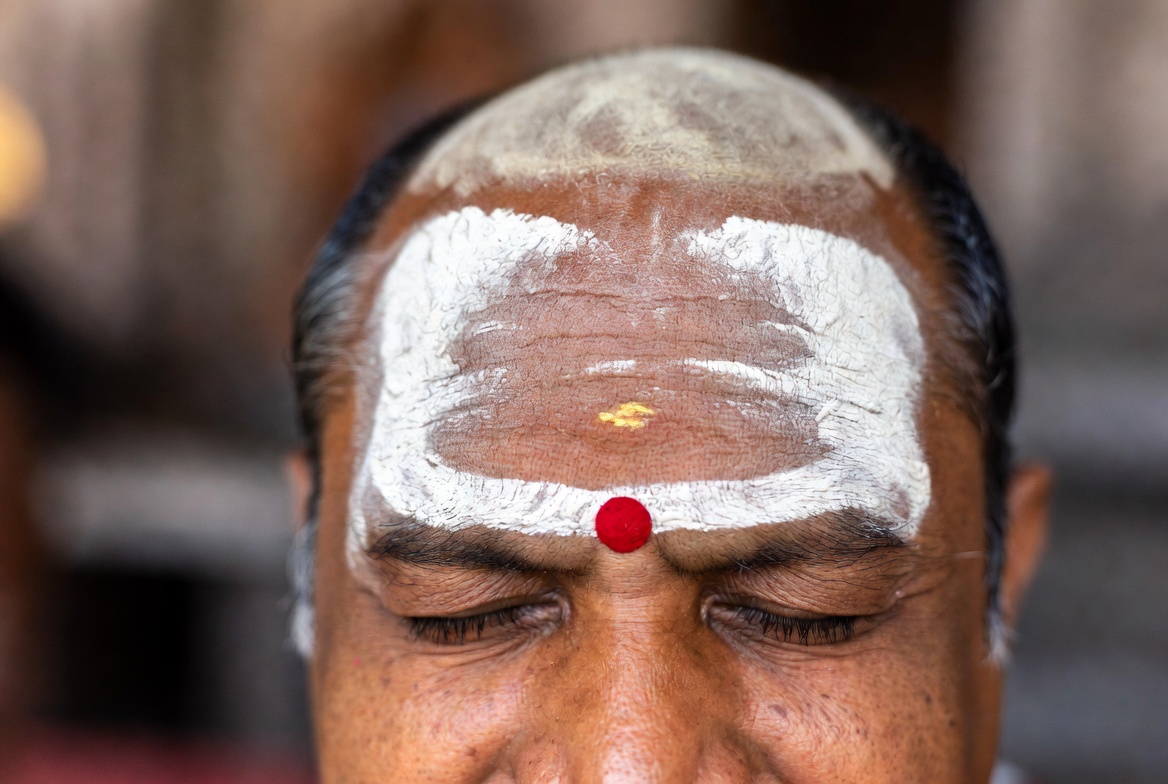
Mark made with sandalwood paste, ash, or kumkum
Worn by Hindu men on forehead
Different shapes for different gods (three lines for Shiva, V for Vishnu)
Represents religious devotion
Applied before entering temple or during prayer
Priests apply for visitors as blessing
7. Conch Shell (Shankha)
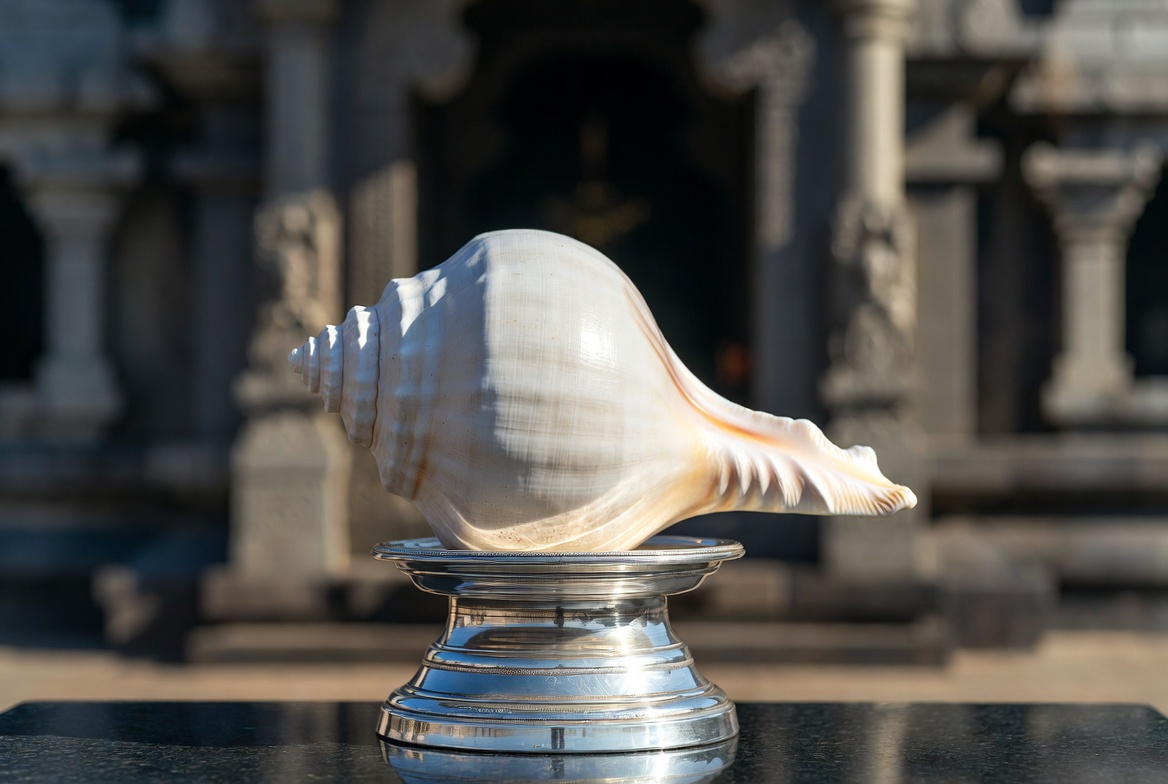
Blown before prayers in Hindu temples
Symbol of sacred sound Om (first sound of creation)
Associated with Lord Vishnu and Goddess Lakshmi
Heard at beginning of religious ceremonies
Right-handed conch (dakshinavarti) is very rare and sacred
Also used as musical instrument (classical music)