
Music & Dance Styles in French-Canada
French-Canadian music and dance are full of energy, storytelling, and joie de vivre. They blend French roots, Celtic influences, Indigenous rhythms, and local creativity.
1. Traditional Québécois Folk Music
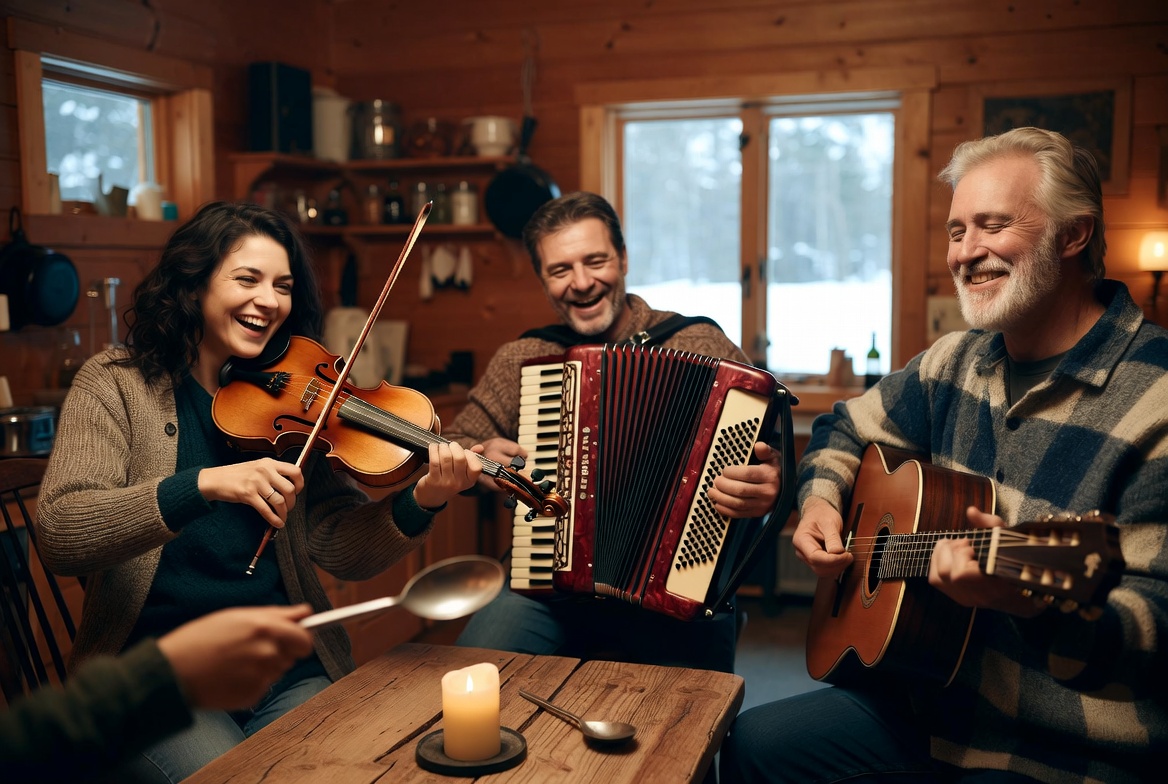
Core Instruments: Fiddle (violon), accordion, piano, guitar, spoons (cuillères), and jaw harp (ruine-babines).
Signature Sound: Fast, lively reels and jigs. Songs often tell stories of daily life, love, and the land.
Famous Groups: La Bottine Souriante, Le Rêve du Diable.
2. Gigue & Step Dancing
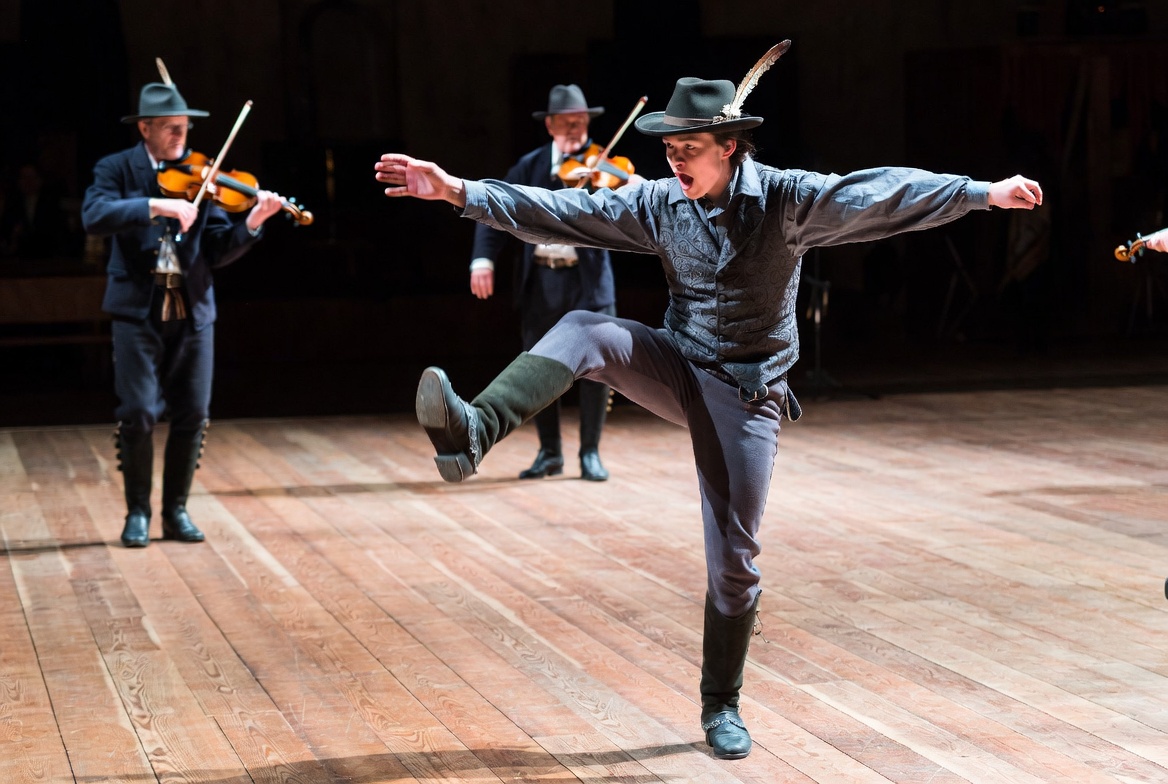
The iconic gigue (jig) is a fast, rhythmic solo or group dance with intricate footwork.
Often performed in kitchens or at house parties — very energetic and competitive.
3. Quadrille & Square Dancing
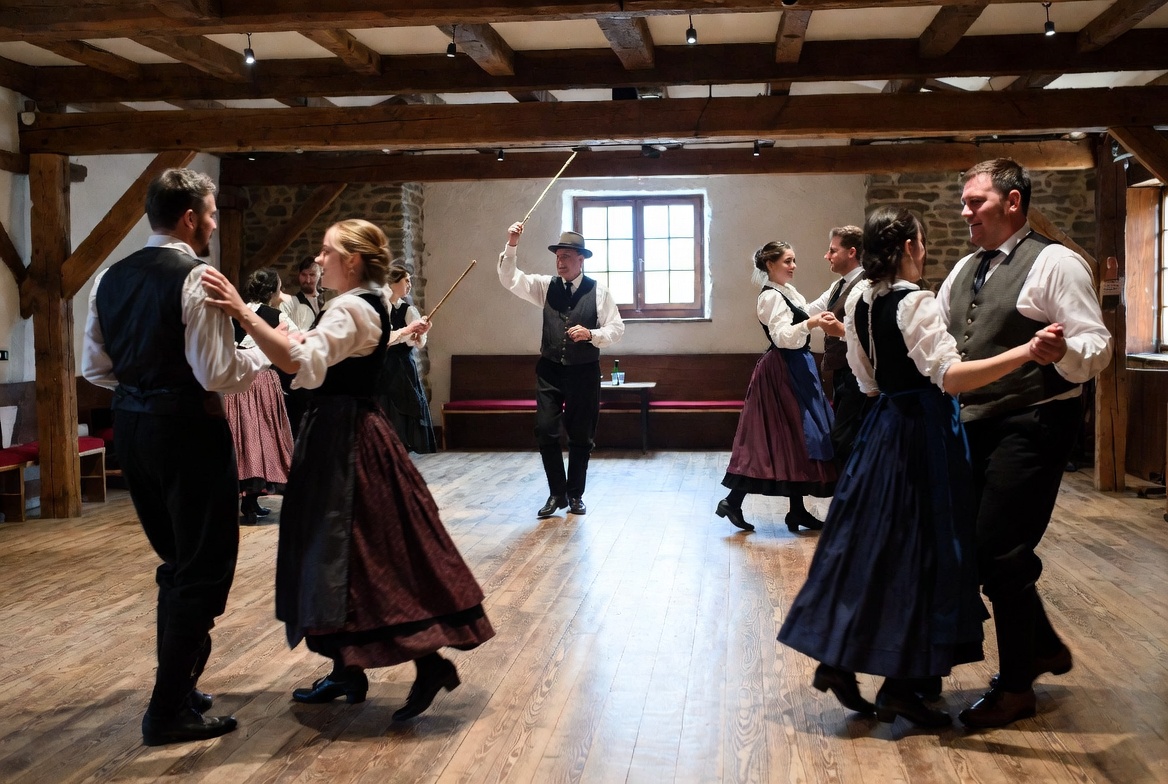
Group dances with 4 couples forming a square.
A “caller” shouts instructions. Very social and common at weddings and festivals.
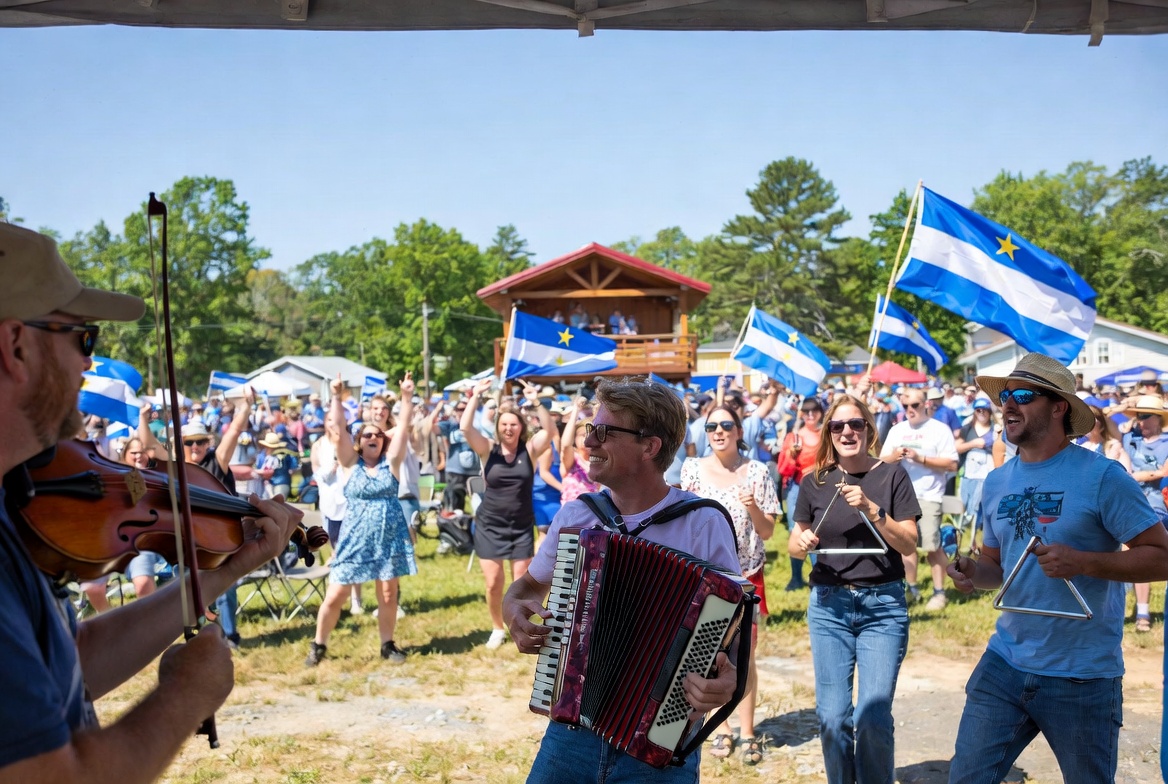
4. Cajun & Acadian Music (Eastern Canada)
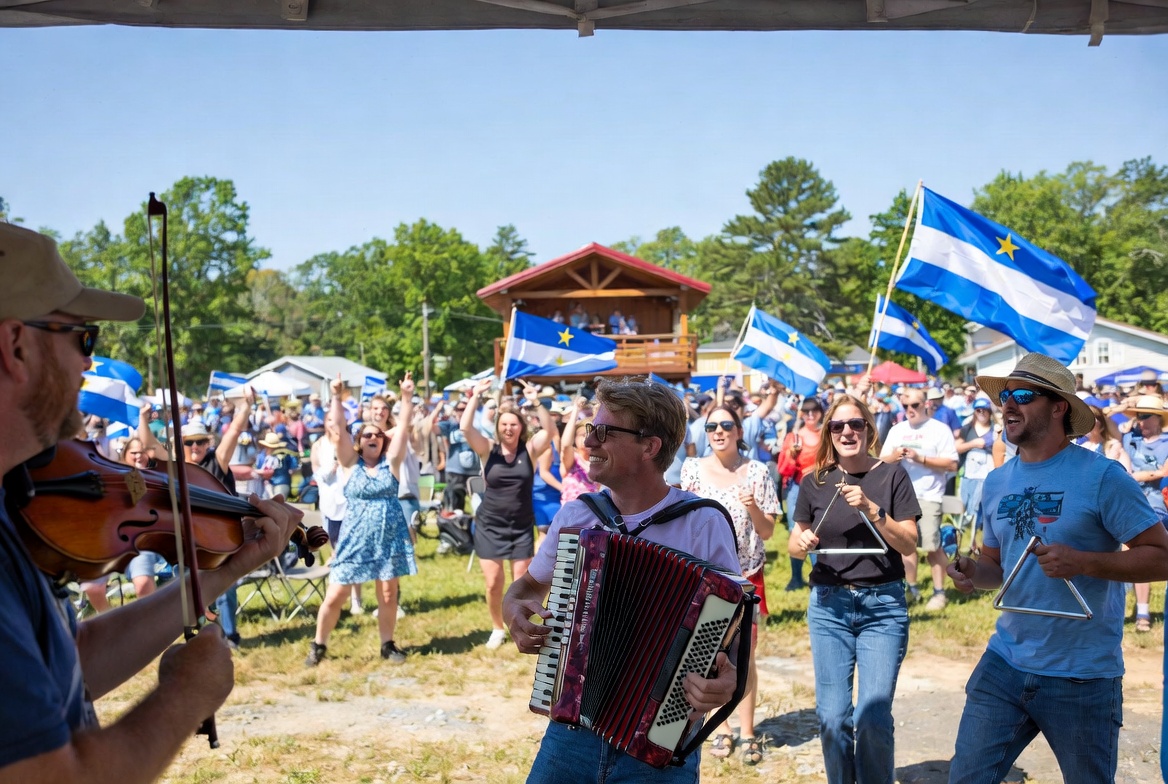
Found especially in New Brunswick, Nova Scotia, and Prince Edward Island.
Features fiddle, accordion, and triangle. Songs mix French and English with a Louisiana Cajun flavor.
5. Modern Québécois Folk-Rock & Fusion
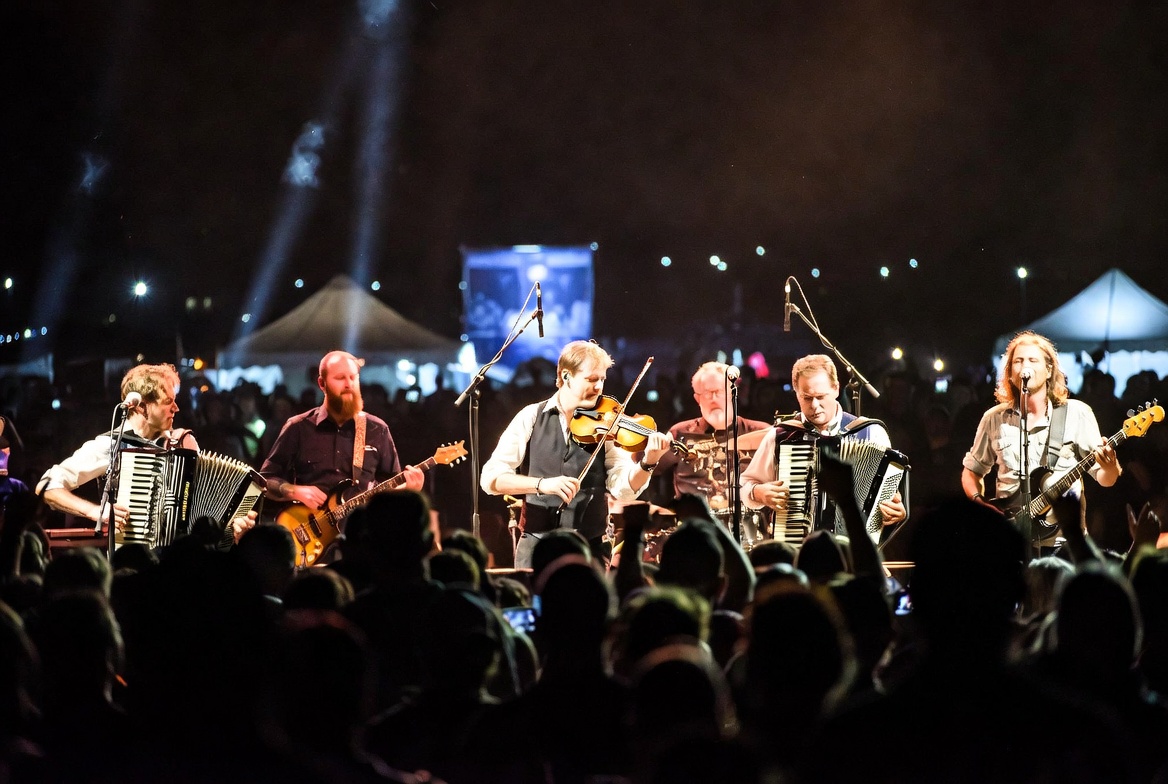
Bands blend traditional instruments with rock, punk, and world music.
Popular artists: Les Cowboys Fringants, Cœur de Pirate, Richard Desjardins, and the electro-folk group “Sales de bains”.
6. Contemporary Popular Music
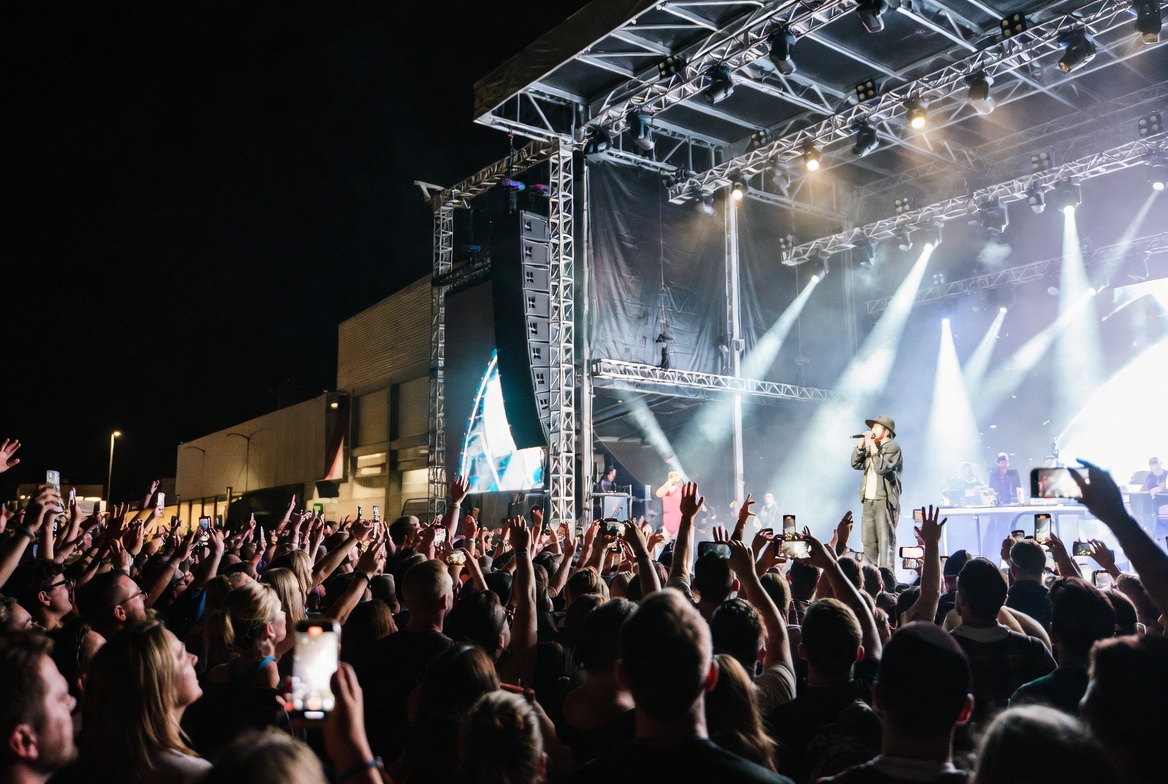
Québec has a thriving French-language pop, rock, hip-hop, and indie scene (e.g., Garou, Arcade Fire’s early influences, and modern stars like Charlotte Cardin).
7. Festive & Seasonal Dancing
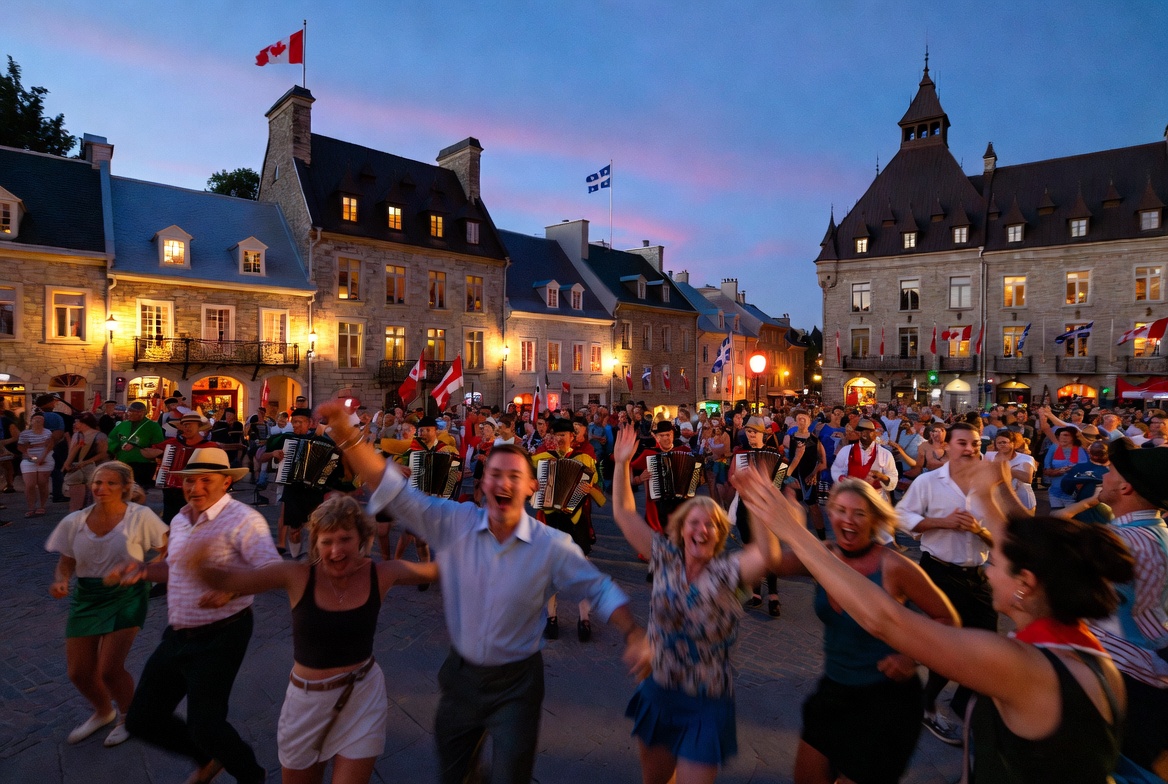
At Carnaval de Québec and Saint-Jean-Baptiste, you’ll see spontaneous dancing in the streets.
Ceilidh-style kitchen parties are common in rural areas — everyone joins in.
These styles emphasize community participation — music is rarely just for listening; it’s for dancing, singing along, and bringing people together.