
The Durbar Festival – A Celebration of Royalty and Faith
I remember the first time I witnessed Durbar in Kano. It was just after Eid al-Fitr. The early morning air was calm, but the city was buzzing with anticipation. Streets were filled with people wearing vibrant baban riga, embroidered caps, and colorful veils.
After Eid prayers, something majestic happened.
From different districts, horsemen began to arrive.
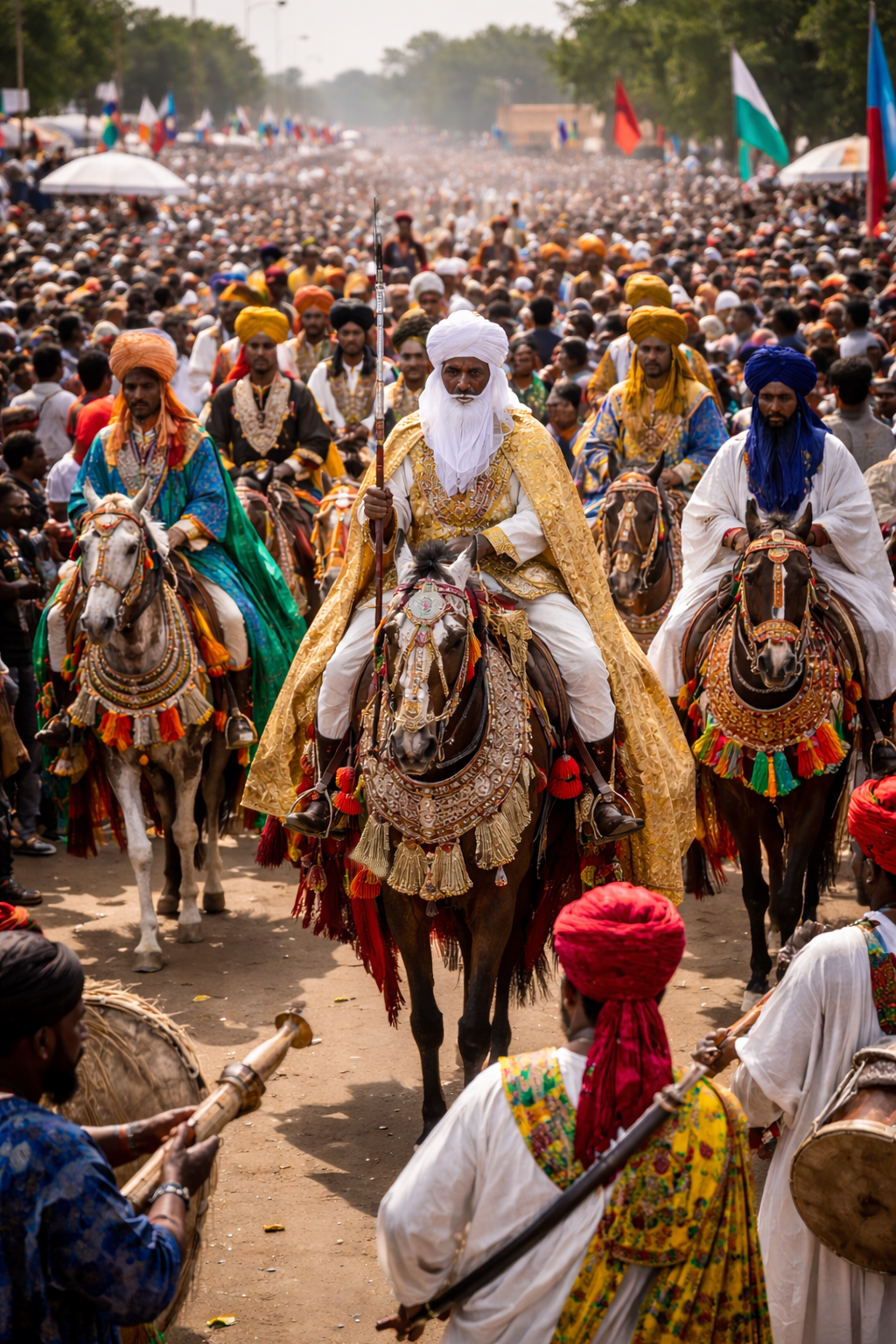
They rode tall, beautifully decorated horses — covered in embroidered fabrics, beads, brass ornaments, and leather saddles. The riders themselves wore richly layered gowns, turbans wrapped high, some carrying spears or ceremonial swords.
They were district heads, traditional title holders, and warriors representing their communities.
👑 The Emir’s Procession
Then came the most awaited moment — the Emir’s arrival.
The crowd parted as royal guards in uniform surrounded him. His horse was the most magnificent of all — adorned with gold-threaded fabric and colorful tassels. Drummers beat traditional kalangu (talking drums), trumpeters blew long metal horns, and praise singers recited poetry honoring the Emir and the history of the Hausa people.
The sound was powerful. The ground almost vibrated beneath the horses.
🐎 The Horse Parade (Hawan Dawaki)
The riders formed long lines and galloped toward the Emir in a dramatic display of loyalty and strength. Just before reaching him, they stopped suddenly — a breathtaking show of control and horsemanship.
The crowd cheered.
Dust rose into the air, sunlight reflecting off vibrant fabrics and decorated bridles. It felt like stepping into history — a tradition preserved for centuries.
🌍 Why It Matters
Durbar is more than a festival. It represents:
Loyalty to traditional leadership
Unity among districts
Celebration of Islamic faith after Ramadan or Eid al-Adha
Preservation of Hausa identity and heritage
It connects the present generation to the era of ancient Hausa kingdoms.
❤️ Personal Meaning
For many Hausa people, Durbar is pride. It reminds us that culture is not forgotten. It shows that tradition and modern life can coexist.
When you see the Emir ride, surrounded by his people, you understand something powerful:
Culture is not just remembered — it is performed, lived, and passed down.