
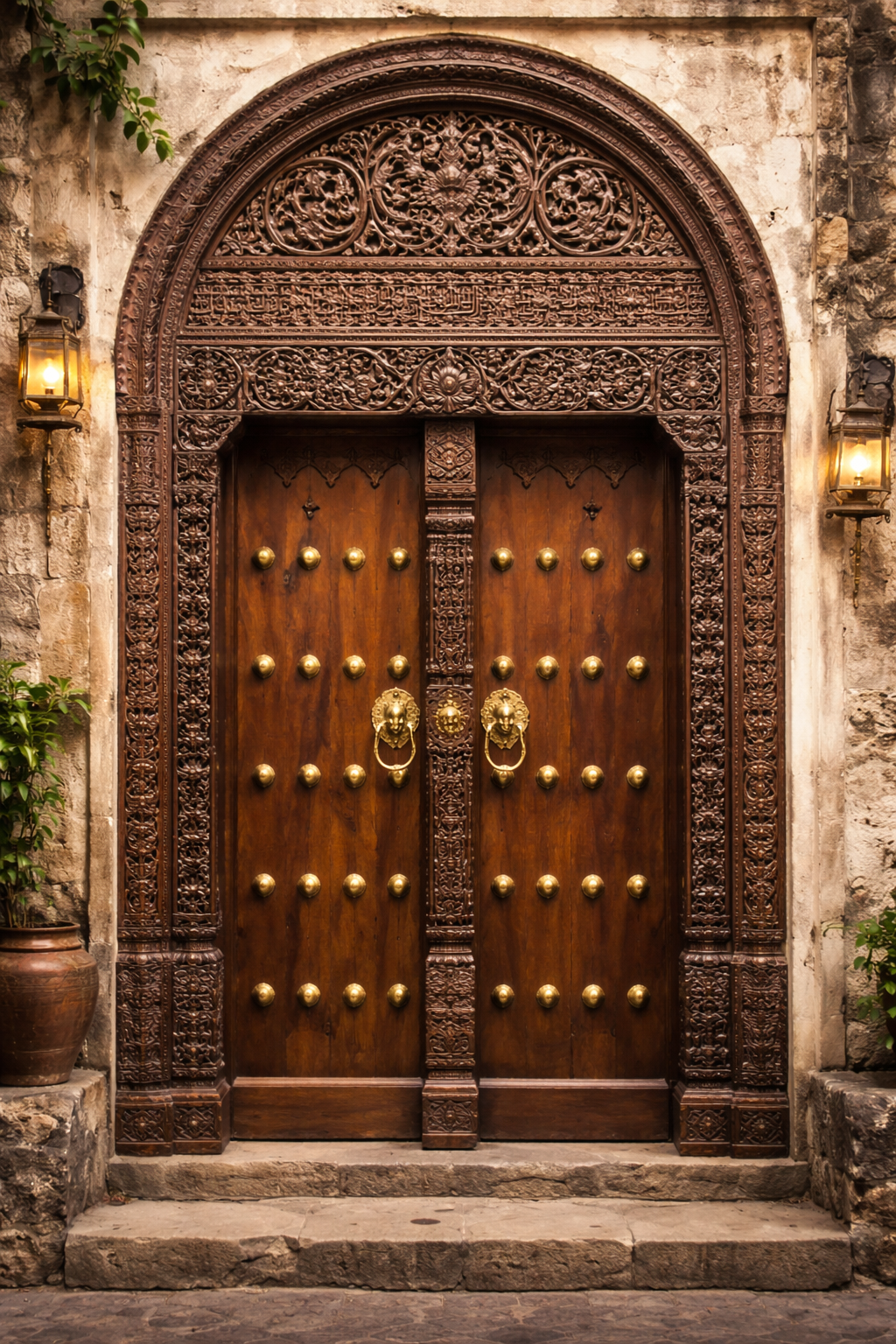
Traditional Swahili Craft: The Zanzibar Carved Door
One of the most iconic traditional art pieces in the Swahili community is the hand-carved wooden door, especially found in places like Zanzibar, Lamu, and Mombasa Old Town.
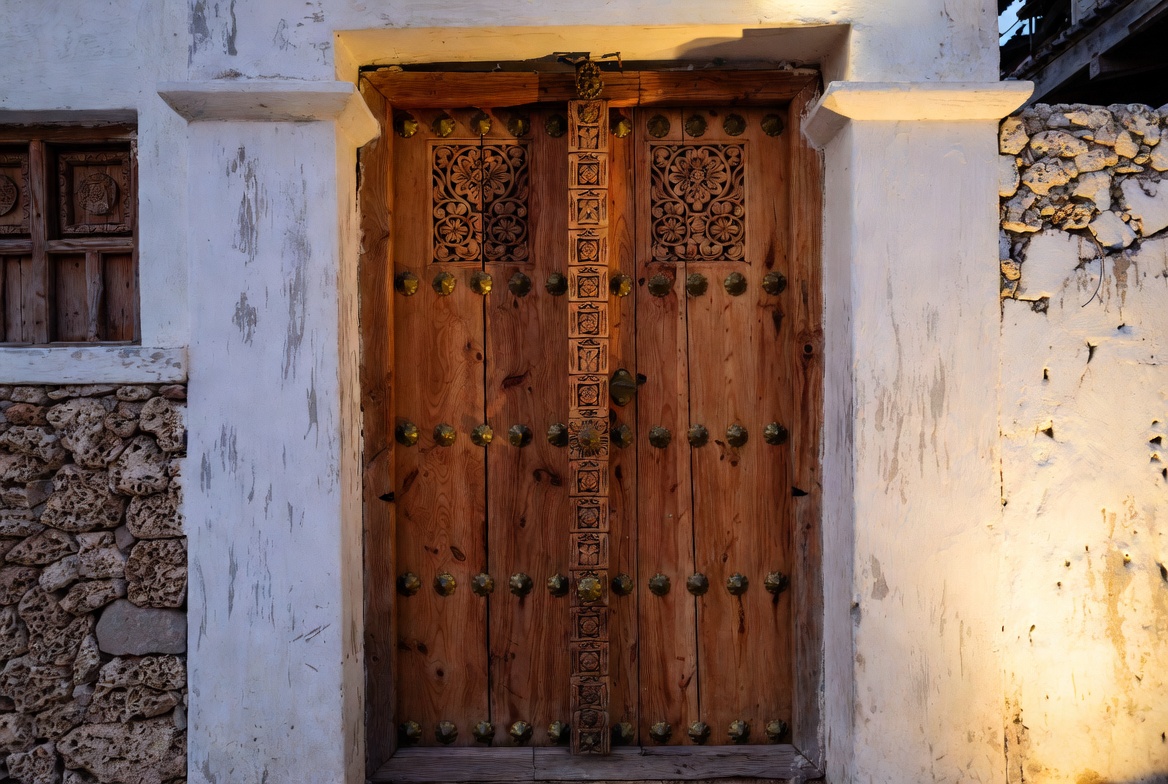
What Makes It Special?
These doors are not ordinary entrances — they are works of art and symbols of identity.
Intricate Carvings
The doors are carved from heavy hardwood and decorated with:
Floral patterns (often influenced by Indian designs)
Geometric Islamic motifs
Arabic inscriptions or calligraphy
Chain and rope patterns symbolizing strength
Each carving tells a story about faith, trade, and heritage.
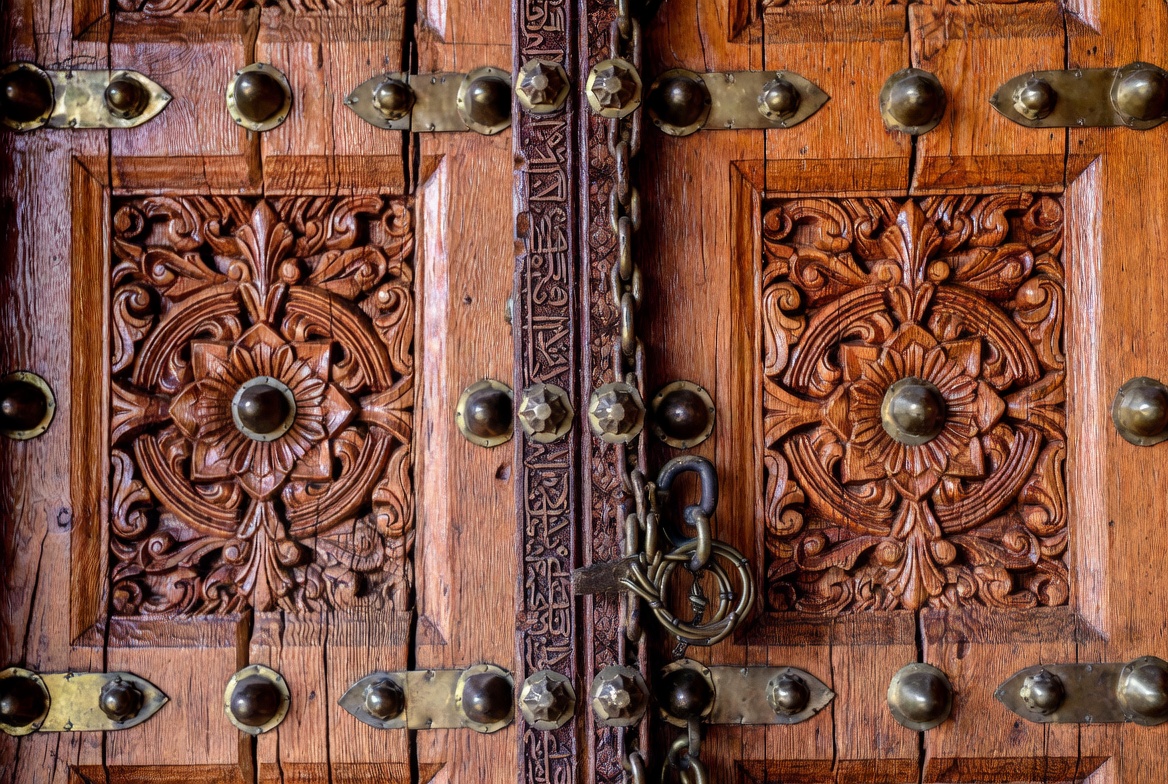
Brass Studs
Some older doors have large brass studs.
Historically, these symbolized wealth.
They also reflected trade connections with India and Arabia.
The number and size of studs indicated social status.
Symbol of Prosperity & Hospitality
In Swahili culture:
The door represents protection of the household.
It shows the family’s dignity and reputation.
A beautifully carved door signals generosity and stability.
People say, “You can tell the story of a Swahili town by looking at its doors.”
Cultural Significance
These doors reflect centuries of Swahili maritime trade.
They blend African craftsmanship with Arab and Indian influence.
They are architectural poetry — preserving history in wood.
Even today, carved doors are treasured heirlooms, sometimes passed down through generations.