Eid al-Adha (Eid al-Kabir)
One of the most significant and cherished celebrations in our Moroccan community is Eid al-Adha, also known as the Feast of Sacrifice. It commemorates Prophet Ibrahim’s (Abraham’s) willingness to sacrifice his son in obedience to God, and God’s mercy in providing a ram instead.
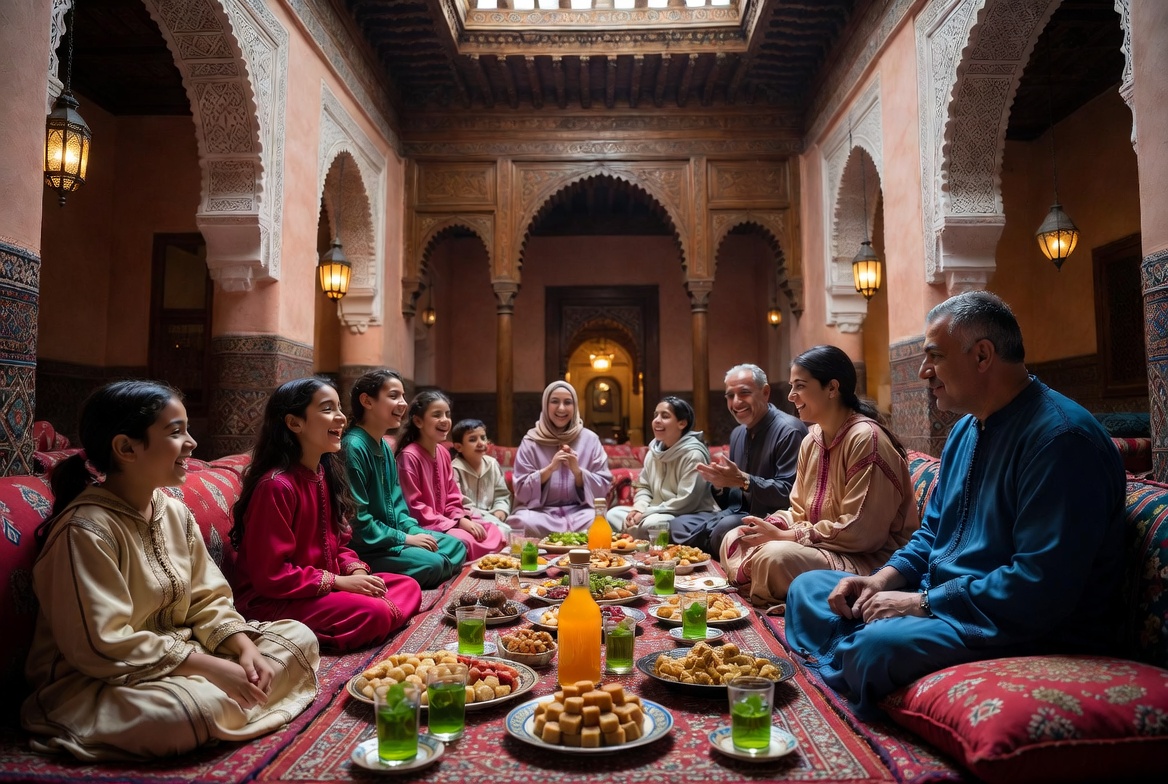
I remember one particular Eid when I was a teenager in Fez. The night before, the whole family gathered at my grandparents’ house. The air was filled with the scent of orange blossom water and fresh mint tea. My grandmother and aunts spent the whole day preparing — cleaning the house from top to bottom, as is tradition.
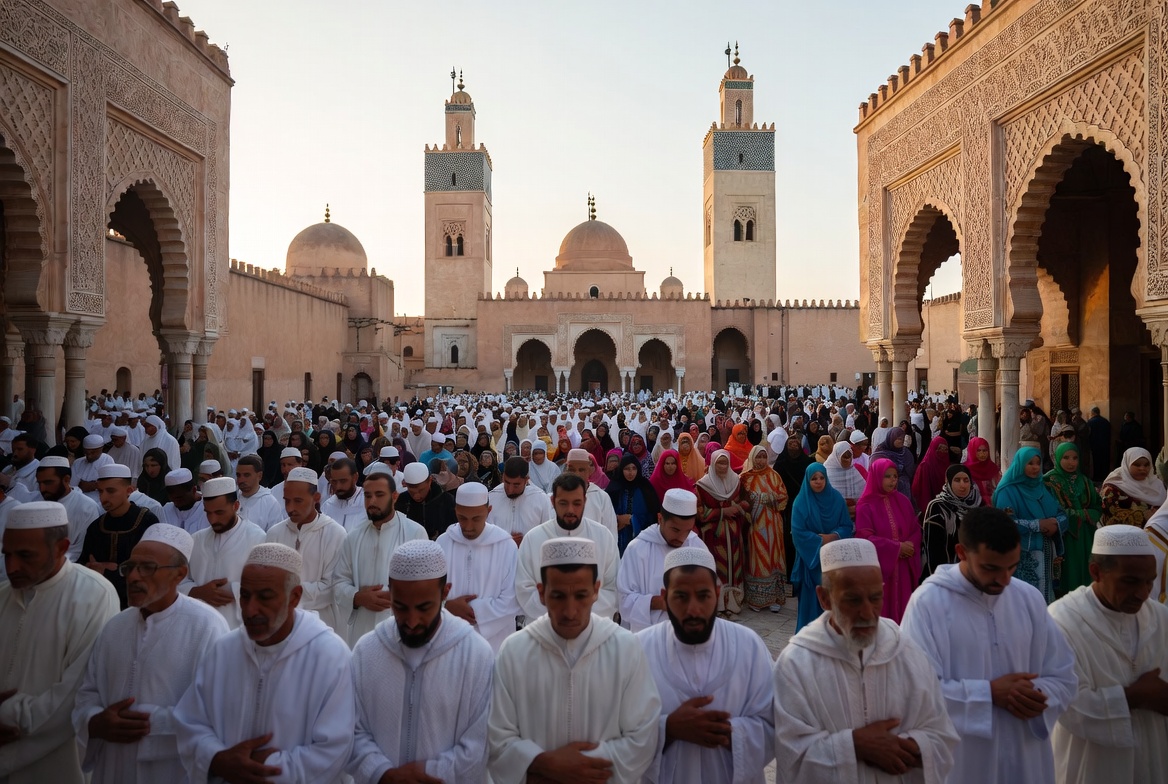
On the morning of Eid, we woke up early for the special Eid prayer at the mosque. Men and boys wore beautiful white djellabas, while the women and girls wore elegant kaftans in bright colors — deep reds, golds, and emerald greens.
After prayers, we returned home where my father and uncles performed the sacrifice of a sheep in the courtyard, following all the Islamic rules of compassion and cleanliness. The meat was divided into three parts: one for the family, one for relatives and neighbors, and one given to the poor — a beautiful act of sharing and solidarity.
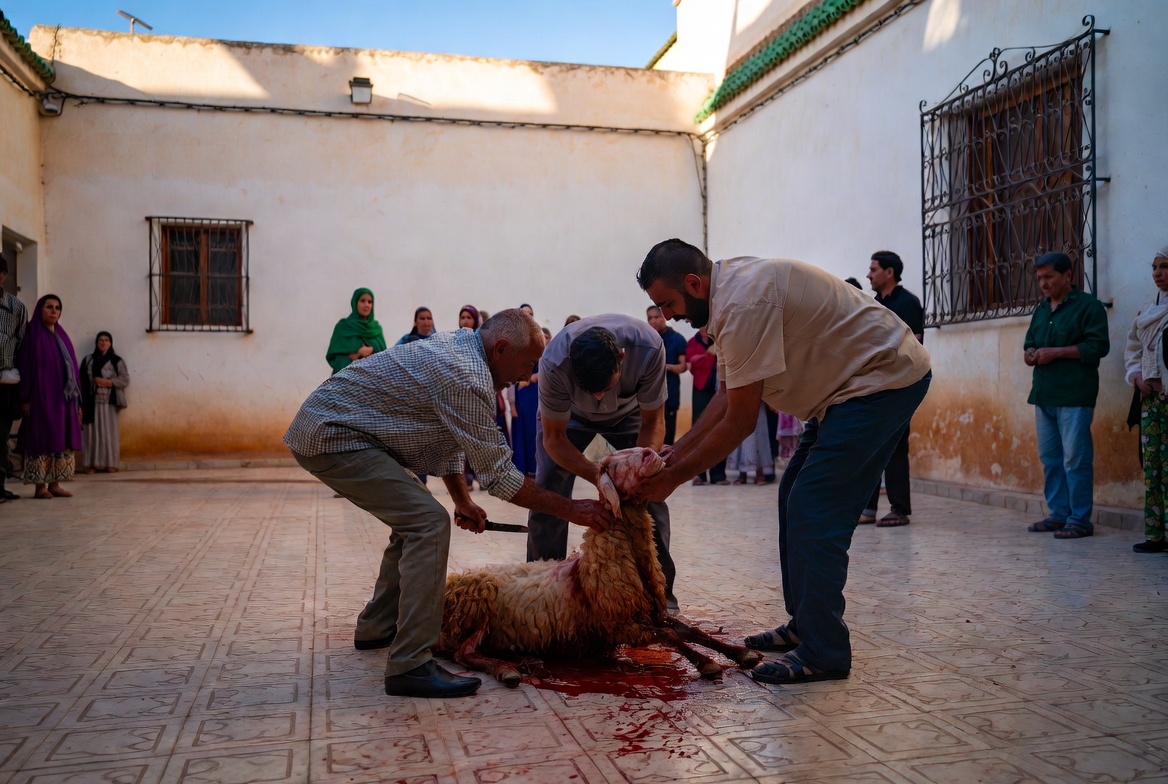
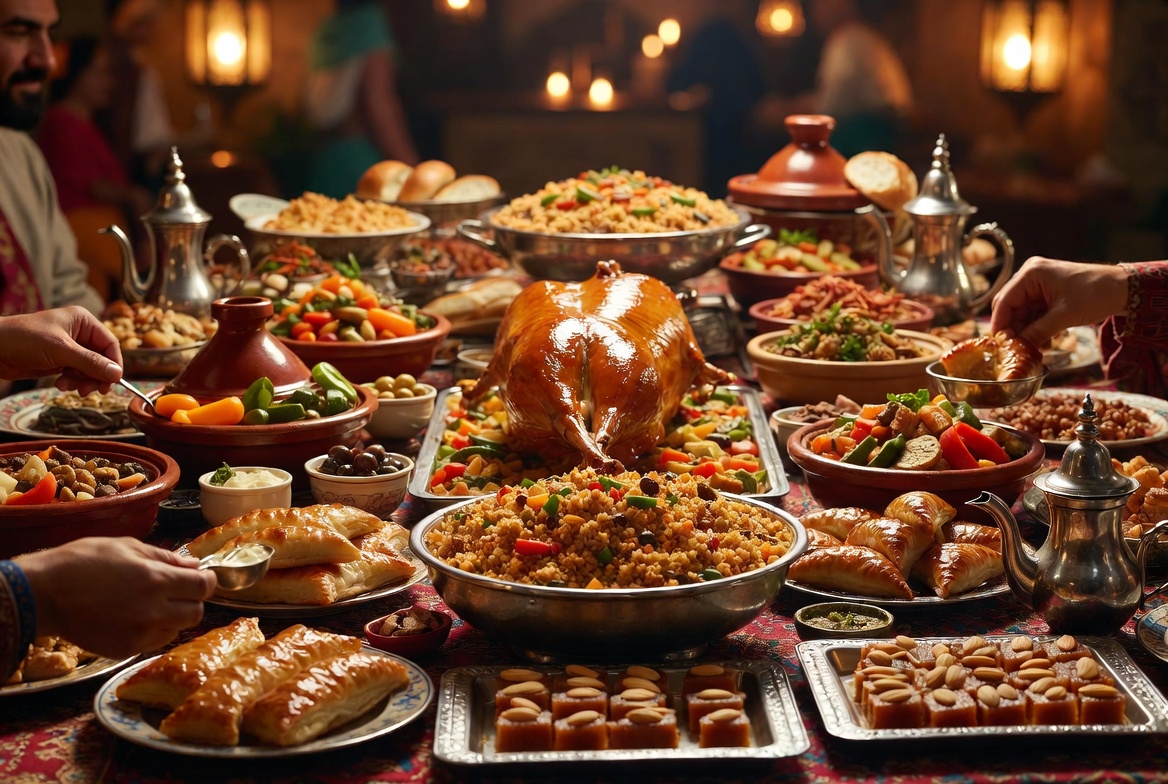
The real joy began in the kitchen. My mother and aunts cooked a magnificent Mechoui (slow-roasted lamb) in a special outdoor oven, along with tagines, couscous with seven vegetables, and endless plates of sweets — chebakia, almond pastries, and kaab el ghazal. The house was filled with laughter, children running around in their new clothes, and the sound of traditional Andalusian music playing softly.
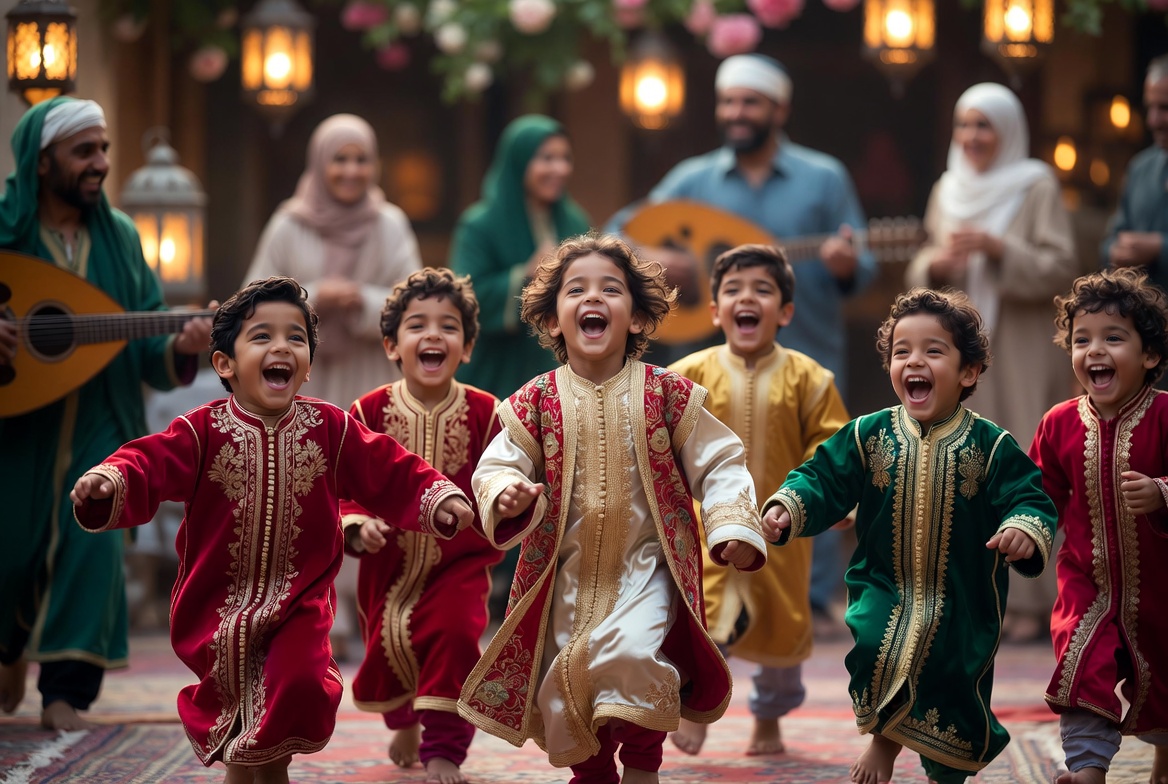
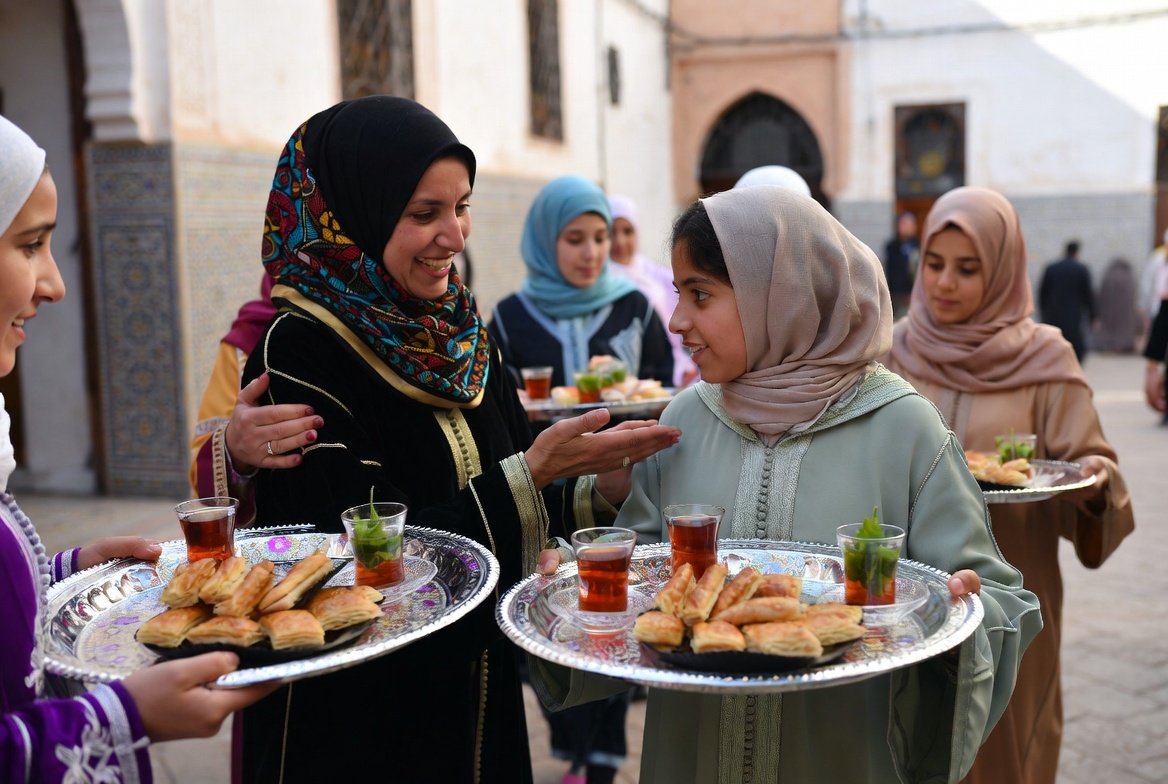
In the afternoon, relatives and neighbors visited each other. We carried trays of sweets and tea from house to house, exchanging warm embraces and blessings: “Eid Mubarak! May God accept our prayers and sacrifices.” Even families who had differences during the year would reconcile during Eid.
For me, Eid al-Adha is not just about the feast or new clothes — it is about sacrifice, generosity, family unity, and remembering those less fortunate. It strengthens the bonds of our community and reminds us of the values of compassion and gratitude that lie at the heart of Moroccan culture.