
Languages in Africa
Learn Amharic Online: The Complete 2026 Guide
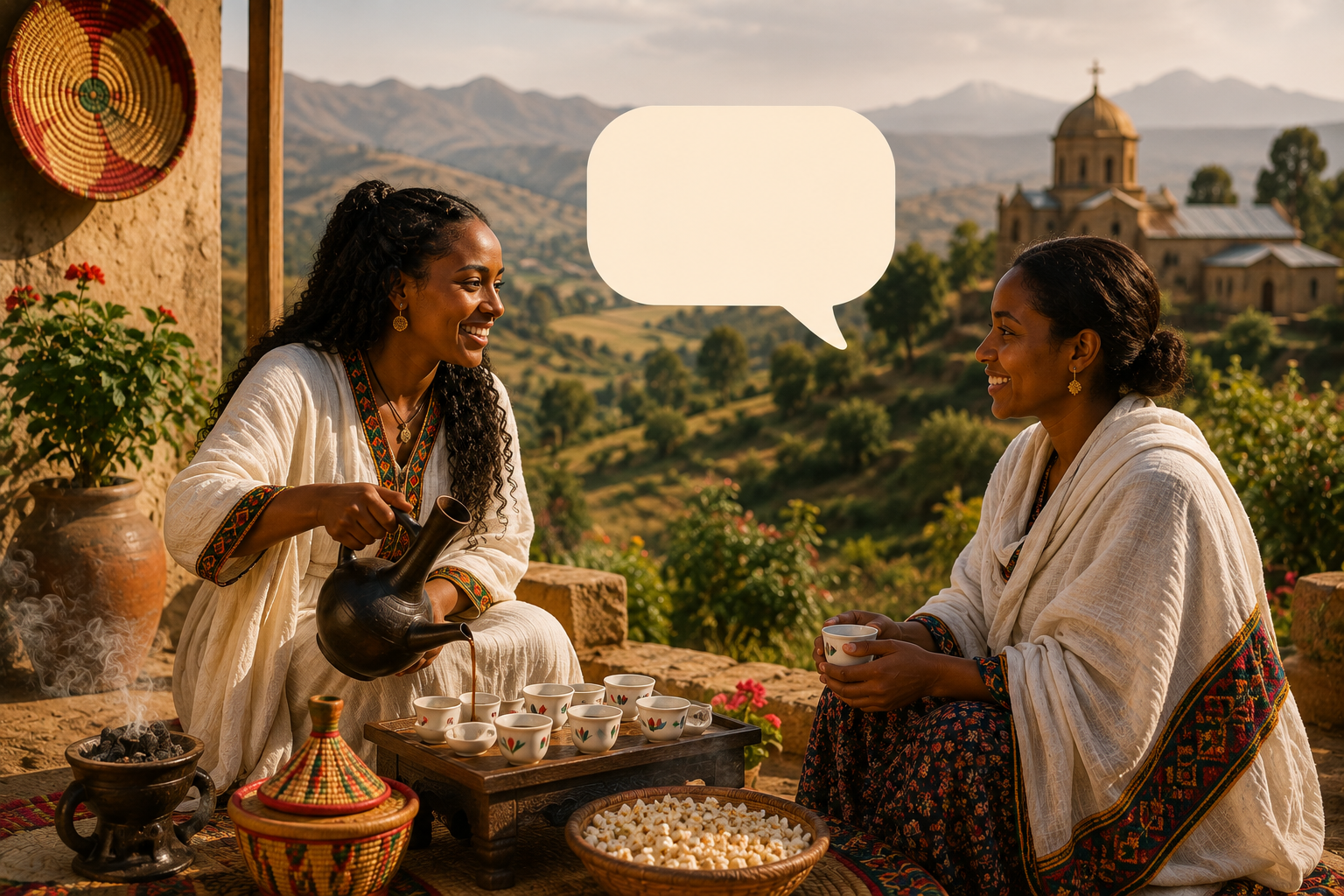
Master Amharic & Ge'ez Script
Learn Ethiopia's official working language through structured Fidel practice, ejective sound training, and cultural context.


Learn Amharic Online: The Complete 2026 Guide
Amharic is the official working language of Ethiopia and one of the most widely spoken Semitic languages in the world, with tens of millions of native speakers and significant diaspora communities globally, particularly in North America. It's also linguistically distinct from every other language in this series — Amharic belongs to the Semitic branch of the Afroasiatic language family, related (distantly) to Arabic and Hebrew, and it uses its own unique script unlike anything else covered so far.
The Ethiopic Script: The Biggest Thing to Understand Upfront
Amharic is written in Ge'ez script (often called Fidel), an abugida system where each character represents a consonant-vowel combination rather than a single sound the way Latin letters do. There are roughly 33 base consonant characters, each appearing in about seven forms depending on which vowel follows it — meaning the practical character set to learn is larger than the Latin alphabet, though the system is systematic and learnable once the underlying logic clicks. This is a genuinely different kind of challenge than anything in Swahili, Yoruba, Igbo, or Hausa, all of which use Latin-based writing. Learners coming from a Latin-alphabet background should expect the script itself to be an early, dedicated focus area, not something picked up incidentally.
Core Linguistic Features
1. Ge'ez Script (Fidel)
An abugida character system combining 33 base consonants across 7 vowel variations into systematic consonant-vowel characters.
2. Ejective Consonants
Distinctive consonant sounds produced with a burst of air that require direct auditory practice and native audio instruction.
3. Root-and-Pattern Grammar
A Semitic linguistic feature where core meanings stem from consonant roots layered with specific vowel patterns.
4. Subject-Object-Verb Structure
Sentence ordering differs significantly from English, requiring structural adjustment beyond vocabulary recall.
5. Social & Respect Norms
Ethiopian communication emphasizes formal greetings, hospitality customs, and age-based respect markers.
What to Actually Look for in an Amharic Course or App
| Feature Need | Why It Matters | Learning Impact |
|---|---|---|
| Dedicated Script Instruction | Teaches Fidel characters early rather than over-relying on temporary romanization. | Unlocks real-world signage, media, and authentic literature. |
| Native Audio Clarity | Provides clear audio models for ejective consonants and unfamiliar Semitic sounds. | Prevents persistent accent errors and severe mispronunciations. |
| Root Explanations | Explicitly breaks down the underlying logic behind root-and-pattern word families. | Accelerates vocabulary growth by making word meanings predictable. |
| Cultural Etiquette Context | Explains the social background behind traditional greetings and hospitality phrases. | Ensures respectful real-world interaction in Ethiopian communities. |
Why Live Conversation Practice Matters for Amharic
Between the unfamiliar script, ejective consonants, and a grammatical system quite different from English, Amharic is a language where structured guidance and live correction make an outsized difference compared to self-study alone. A tutor can catch pronunciation errors in real time and help make sense of the root-and-pattern system in a way that's harder to fully absorb from an app alone. Comparing tutoring platforms is worth doing if you're serious about developing genuinely usable spoken and written Amharic.
How Malegado Fits Into Learning Amharic
Malegado's structured, level-appropriate approach and emphasis on cultural context are well suited to a language like Amharic, where understanding hospitality customs and respect conventions matters as much as mastering an unfamiliar script and sound system. If you're exploring other African languages, our guide to learning Hausa online covers a very different but similarly rich language, underscoring just how much genuine linguistic diversity exists across the continent rather than a single "African language" learning experience.
A Realistic Routine for Learning Amharic
- Master Fidel Early: Commit dedicated study time to learning the Ge'ez script rather than leaning on romanized text.
- Train Ears on Ejectives: Listen to authentic native audio repeatedly to internalize non-English air-burst consonant sounds.
- Study Root Patterns: Memorize 3-consonant roots to easily recognize connected nouns, verbs, and adjectives.
- Practice SOV Sentence Flow: Reorganize English thoughts into Subject-Object-Verb word order during everyday practice.
- Learn Ethiopian Etiquette: Prioritize formal greeting protocols and hospitality phrases for authentic social connections.
Frequently Asked Questions
Amharic Language FAQs
Is Amharic hard to learn for English speakers?
It's one of the more demanding languages on this list for English speakers, primarily due to the Ethiopic script, ejective consonants, and a root-and-pattern grammar system all genuinely different from English. It's very learnable with consistent, structured practice, but expect a real early investment in the script specifically.
Do I need to learn the Ethiopic script, or can I use romanized Amharic?
Learning the script (Fidel) is strongly recommended rather than relying on romanization long-term, since the vast majority of authentic Amharic content (signs, documents, media) isn't romanized.
How is Amharic different from other African languages like Swahili or Yoruba?
Amharic is a Semitic language with its own unique script and root-and-pattern grammar, genuinely distinct from the Bantu structure of Swahili or the tonal Niger-Congo systems of Yoruba and Igbo — each African language family brings its own distinct learning considerations.
Learning Amharic opens doors to a rich cultural heritage and millions of speakers worldwide. By mastering the Ge'ez script early, training your pronunciation on ejective sounds, and embracing Semitic grammar patterns, you can build real fluency in Ethiopia's official working language.
Discover Amharic with Malegado
Combine script practice with native audio and cultural context. Download Malegado today to start learning Amharic online.