Special occasions in the Amharic community
Special occasions in the Amharic community are deeply rooted in faith, family unity, and hospitality. Among the Amhara people, major life events—such as weddings, baptisms, births, and religious holidays—begin with prayer and church services, especially within the Ethiopian Orthodox Tewahedo Church tradition. During celebrations like Genna (Ethiopian Christmas) or Timkat, families attend long, colorful liturgical ceremonies filled with chanting, drums (kebero), sistrums, incense, and processions. People dress in traditional white garments such as the habesha kemis and netela, symbolizing purity and respect. Religion and culture are closely intertwined, so spiritual observance is often the foundation of any major celebration.
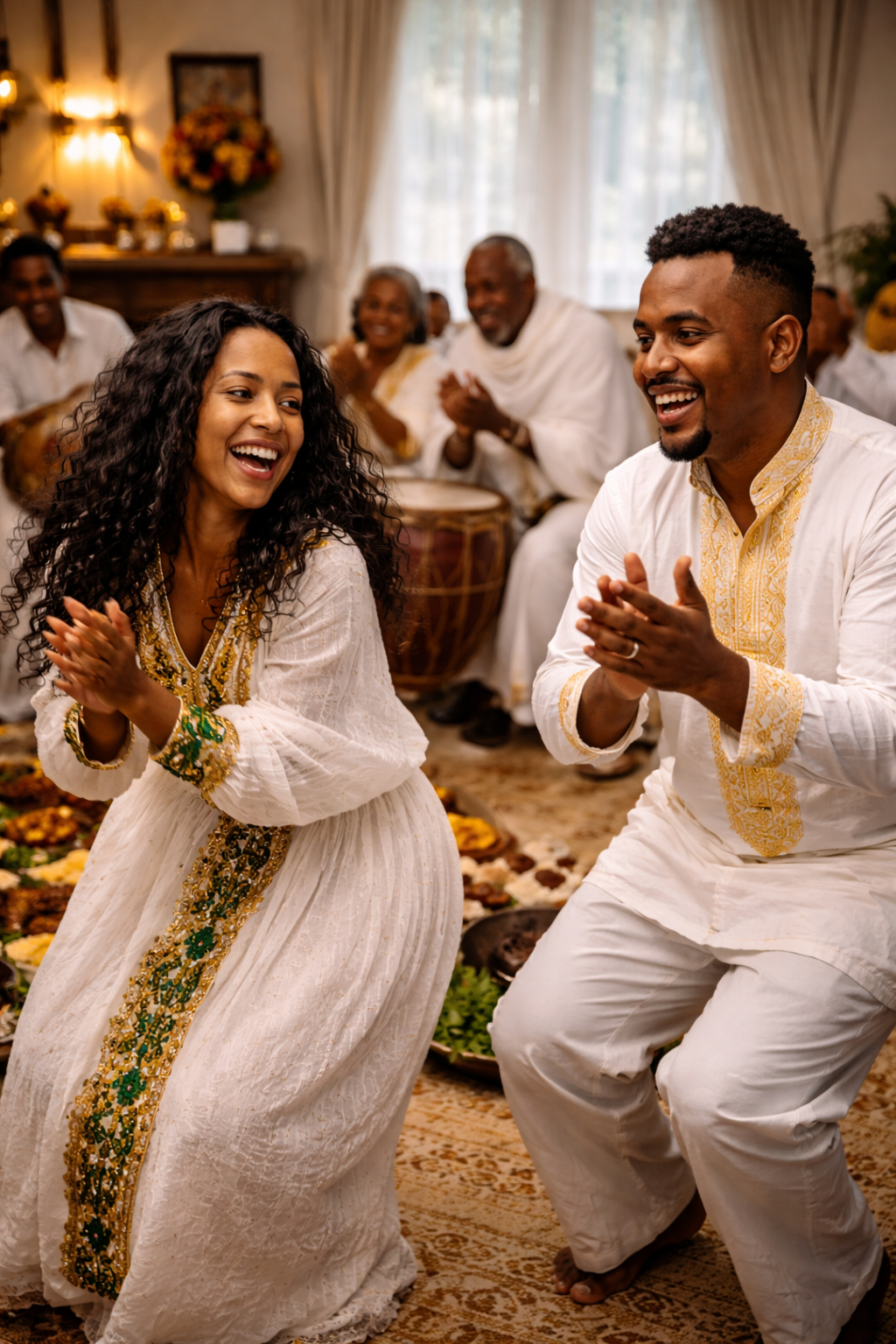
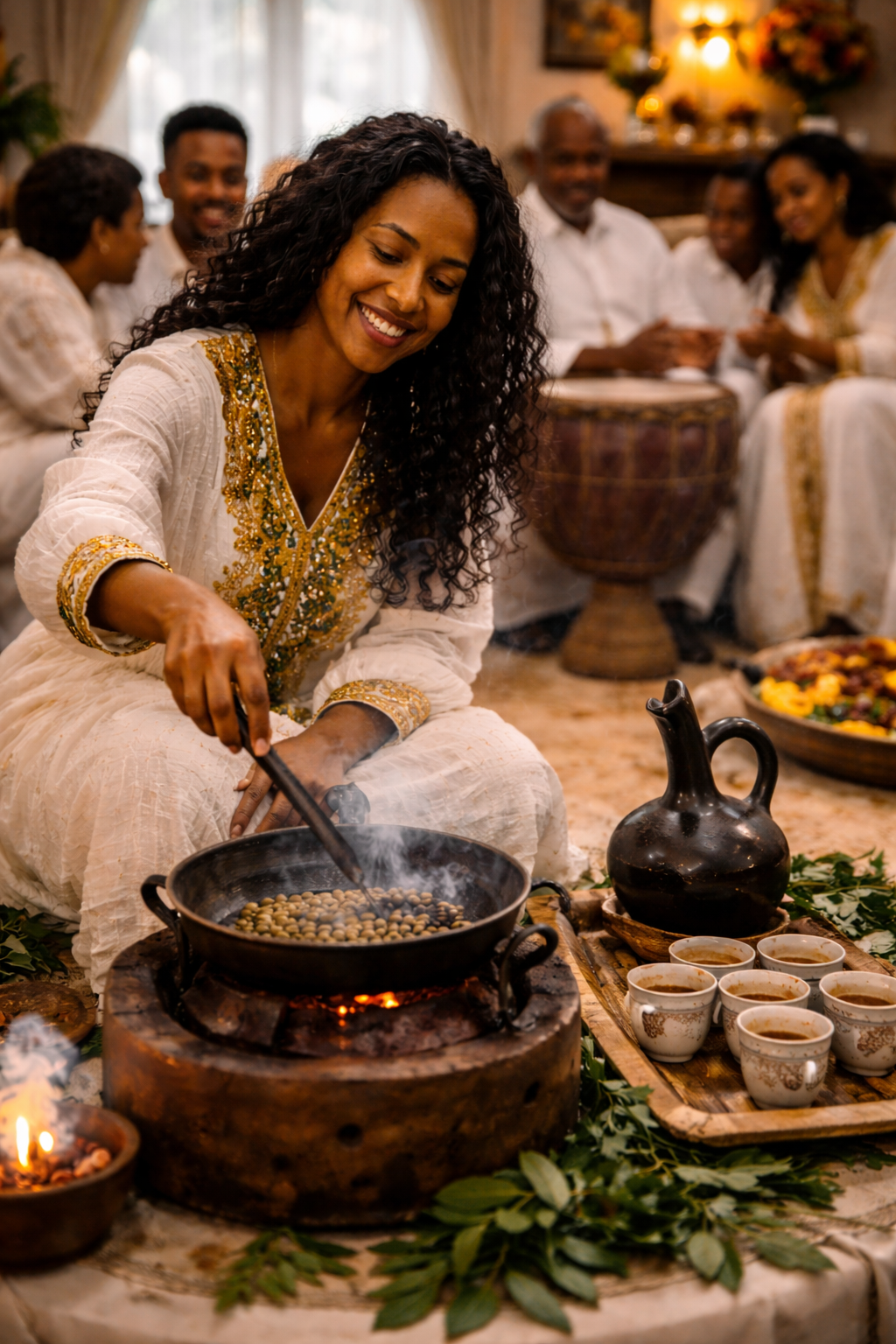
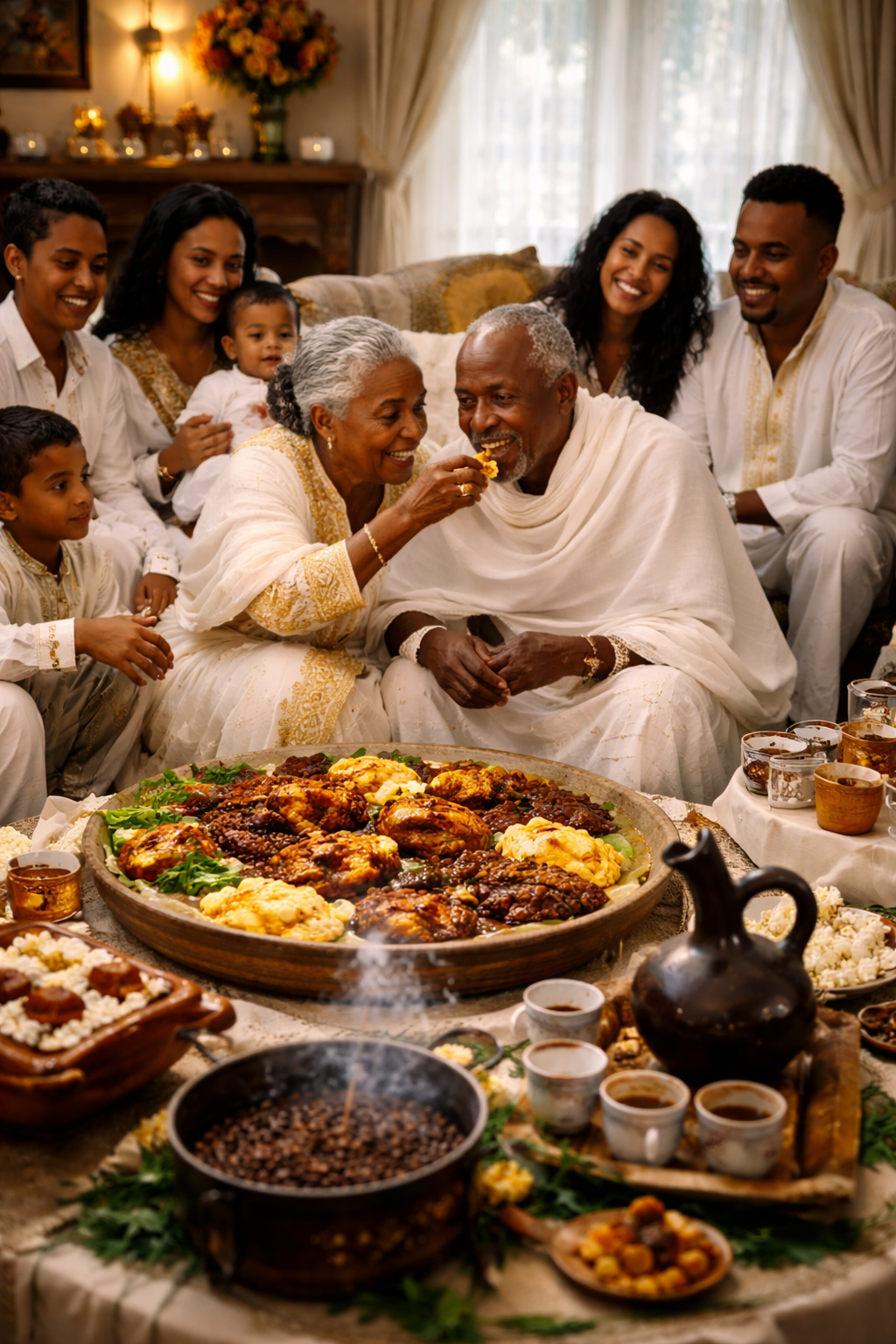
After the religious ceremonies, the social celebration begins at home or in communal spaces. Large platters of injera topped with dishes like doro wat, sega wat, and vegetarian stews are shared communally, emphasizing togetherness. Coffee ceremonies play a central role—fresh coffee beans are roasted, ground, and brewed in front of guests, creating a moment of hospitality and conversation. Music and dance follow, especially the energetic eskista shoulder dance. Elders give blessings, younger family members show respect, and guests are honored with gursha (feeding by hand), symbolizing love and unity. In the Amharic community, celebration is not only about joy—it is about strengthening faith, family bonds, and cultural identity.
Gallery