
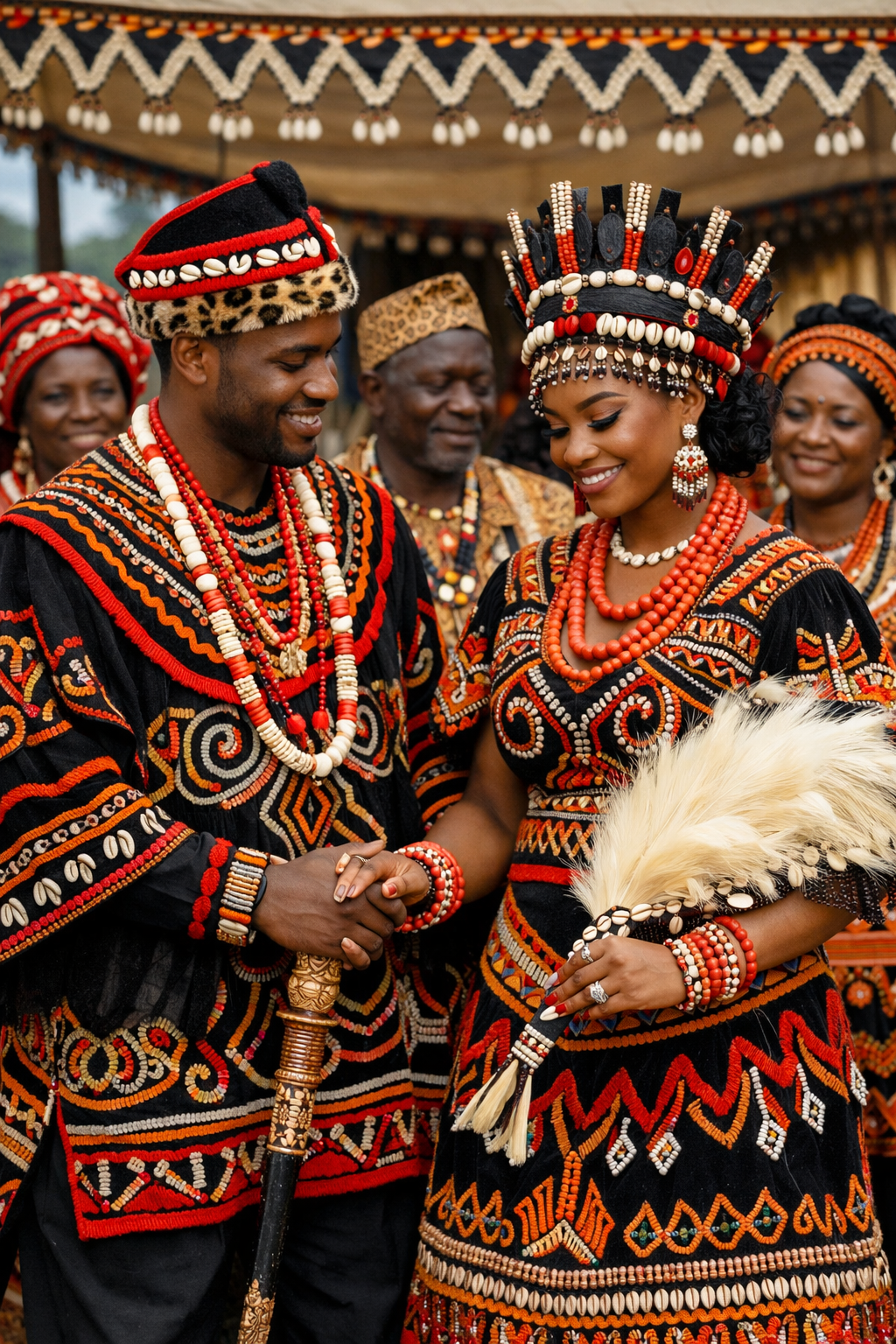
Traditional Marriage customs of the Mankon People
CameroonMankon
Mankon is one of the prominent Fondoms (kingdoms) in the Grassfields region of Cameroon, with rich traditions centered around respect for elders, family unity, and the Fon (traditional ruler). Mankon traditional marriage is a multi-stage process that formally unites two families, not just two individuals. It is colorful, symbolic, and deeply communal.
Here is a clear breakdown of the main stages:
1. Knock-Door (Introduction / Intention Visit)
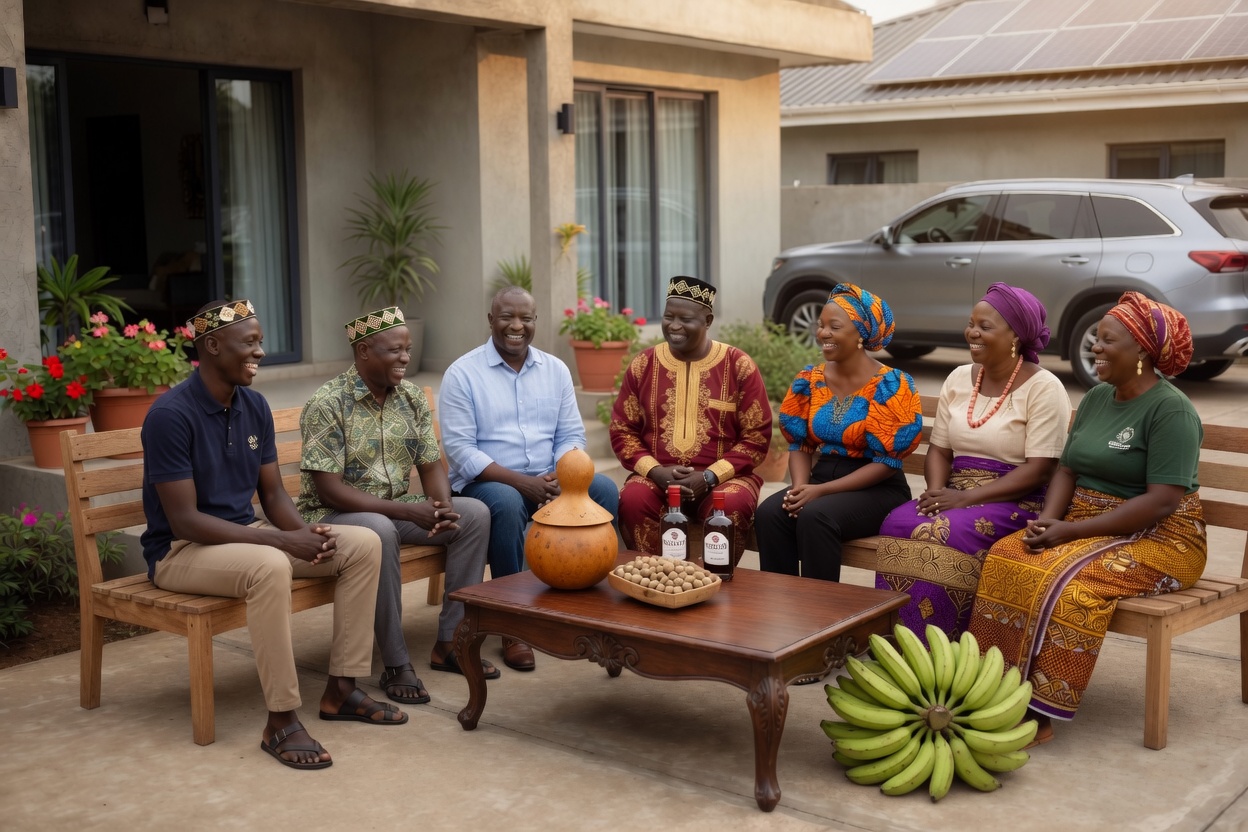
- This is the first official stage.
- The groom, accompanied by his family (often father, uncles, and elders), visits the bride’s family to formally declare their intention to marry.
- They bring gifts such as palm wine, whisky, plantains, meat, and other items.
- The bride’s family pretends not to know the reason for the visit at first (for dramatic effect).
- The groom states his intention, and the Fon (or his representative) is usually present to witness and give approval.
- The bride is hidden during this initial discussion.
2. Bride Identification / Selection
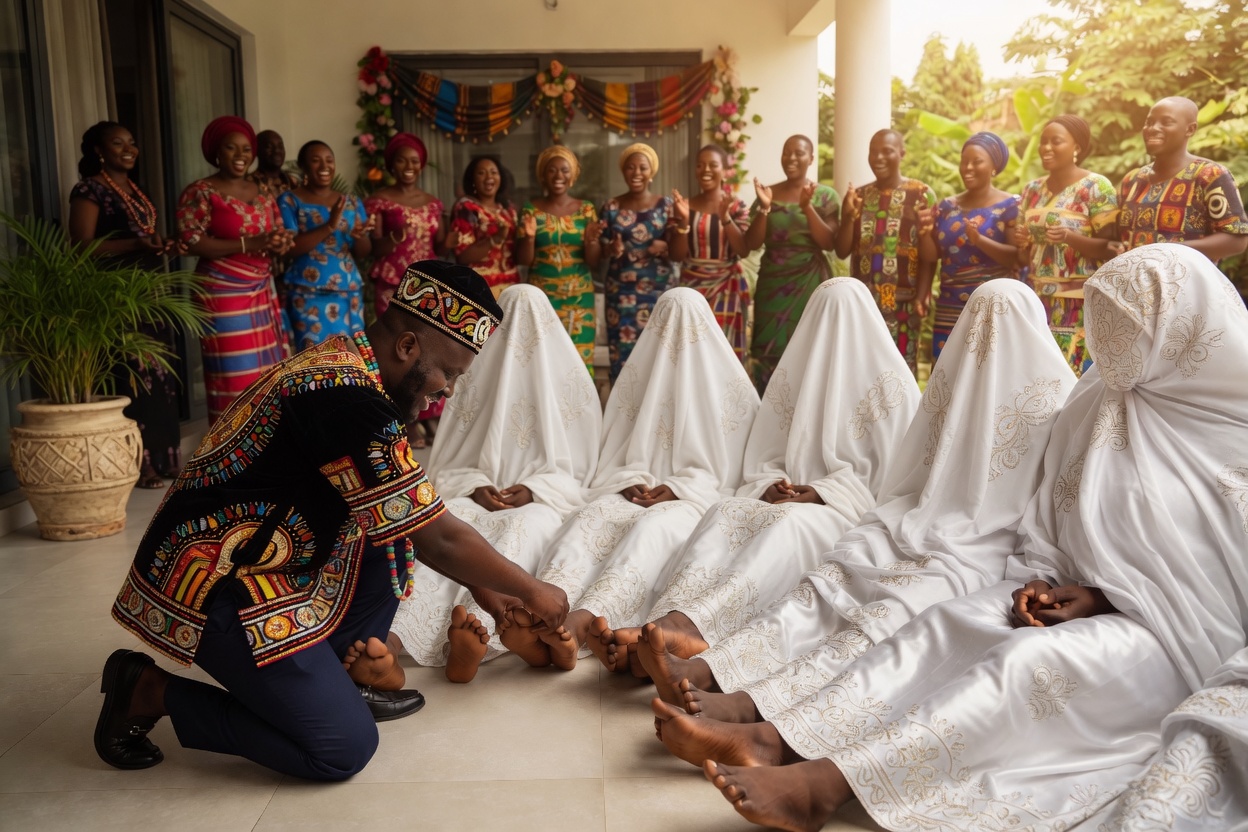
- A group of women (including the bride) are brought out with their heads and bodies covered in cloth, so only their legs or feet are visible.
- The groom must identify his bride by looking at their legs only.
- If he picks the wrong woman, he pays a small fine (traditionally 5,000 FCFA per mistake).
- Once he correctly identifies her, there is great celebration.
3. Bride Price Negotiation & Payment
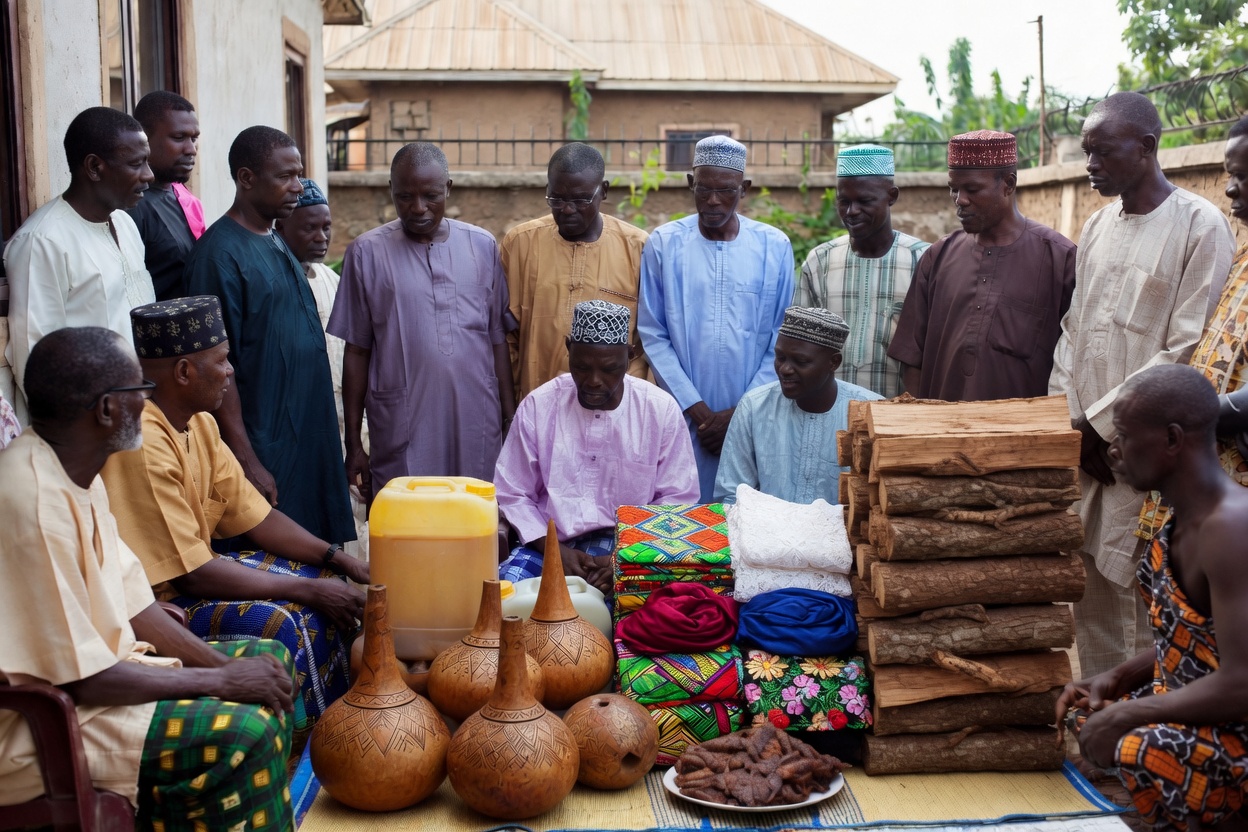
- Negotiations for bride price (in cash and kind) take place.
- Traditionally, it has a symbolic value around 100,000 FCFA, but this varies by family today and can be higher.
- Other gifts include palm oil, clothing, and items showing appreciation to the bride’s family for raising her.
4. The Main Traditional Marriage Ceremony
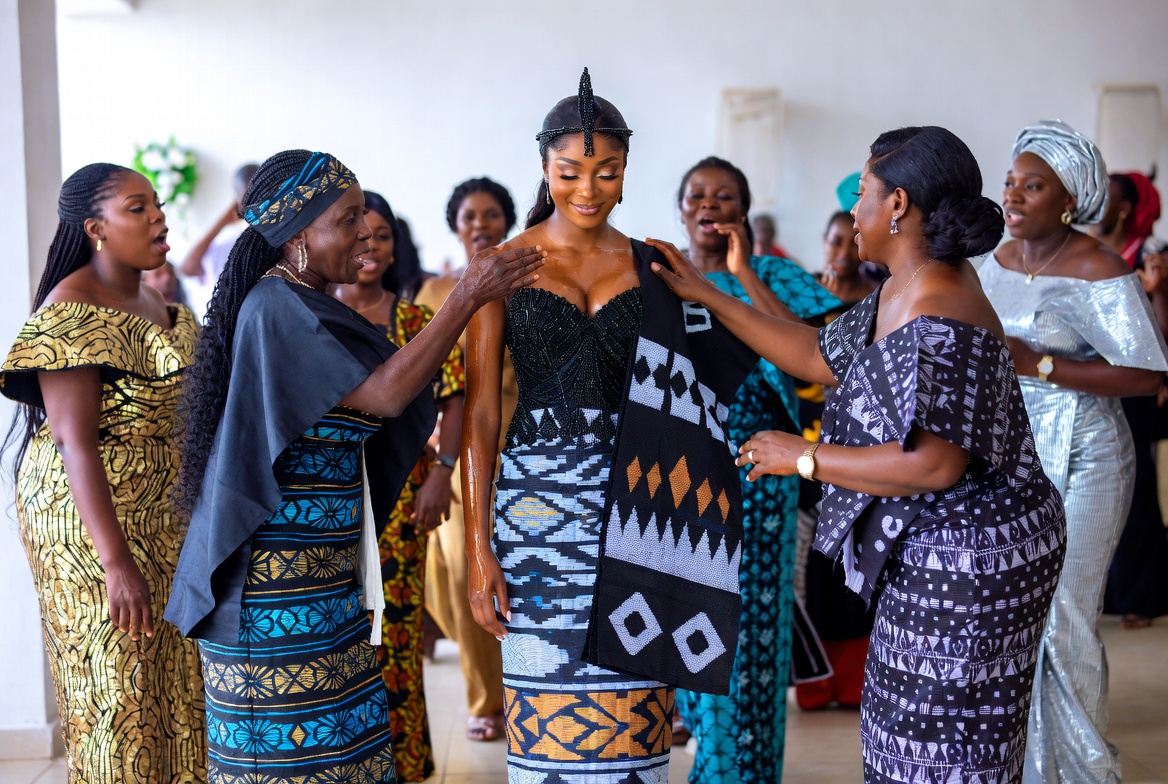
- The bride is often anointed with palm oil (symbolizing beauty, wealth, and blessings) and escorted to the groom’s family with singing and dancing.
- There are blessings from elders and the Fon.
- The bride may go through preparation at the palace or family home.
- Feasting, traditional dances, drumming, and merrymaking follow.
5. Handing Over & Final Rites
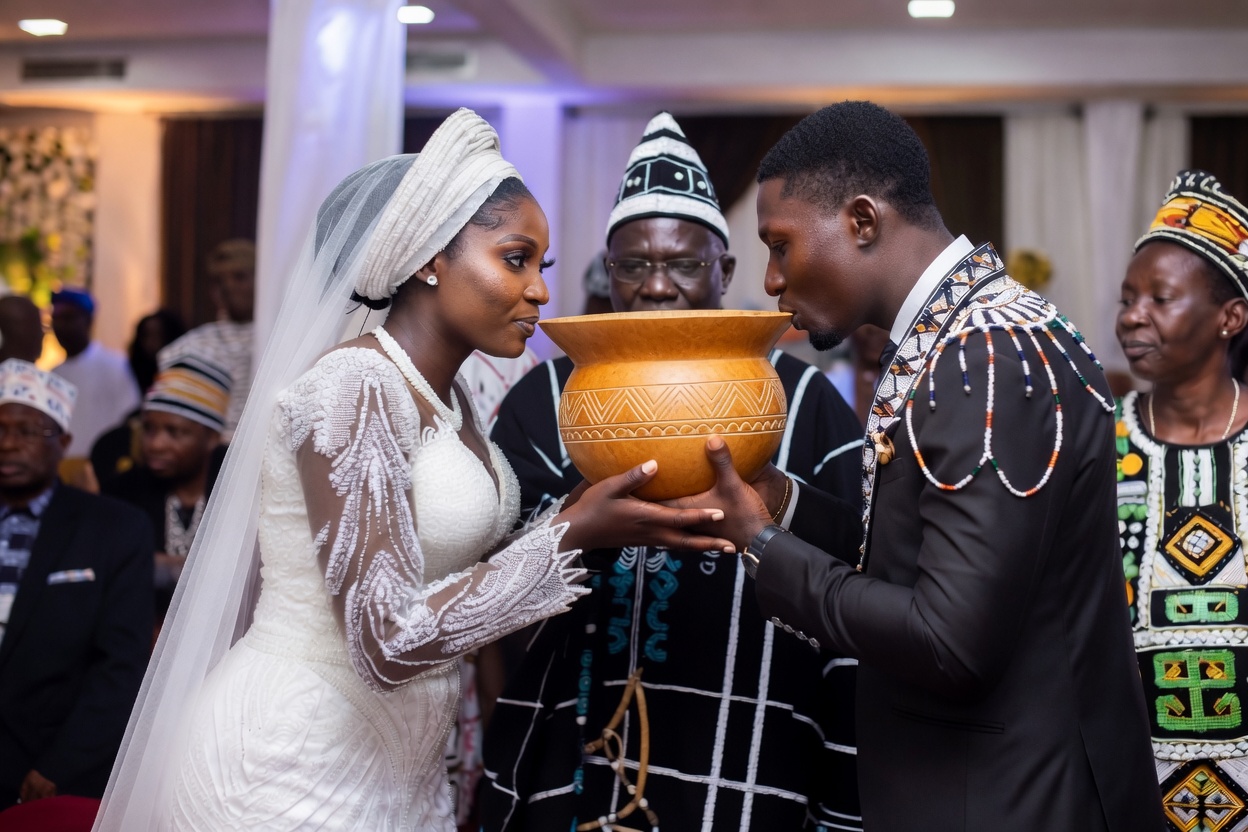
- Raffia wine or palm wine is used in symbolic rituals.
- The bride may sip from a calabash and pass it to the groom as a sign of unity.
- She is formally handed over to her new family.
Key Cultural Elements
- Palm oil — Symbolizes joy, prosperity, and the bond between families.
- Respect for the Fon — Many ceremonies involve the traditional ruler or his blessing.
- Community Participation — Weddings are big celebrations involving extended family, neighbors, and the entire village.
- Attire — Vibrant Toghu (Grassfields traditional cloth), beads, and elaborate headpieces.