
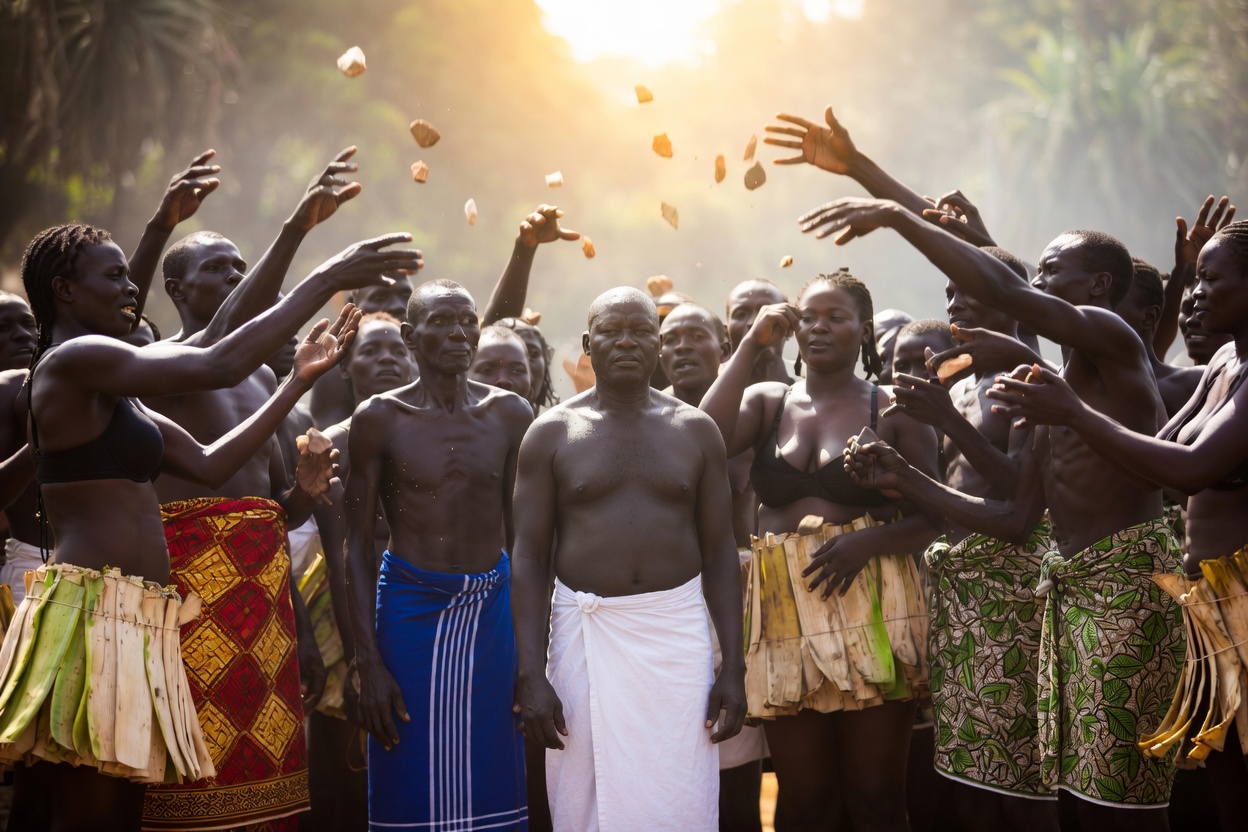
Akum: The stonning & Enthronement of the New Fon
CameroonAkum (mbekum/small London)Akum
In late 2024, the Akum people began the process of installing a new Fon (traditional ruler) — an event that had not taken place for approximately 66 years. This is far more than an administrative change; it is a deeply cultural, spiritual, and symbolic occasion that represents continuity, identity, and community cohesion.
1. Selection & Seclusion
- The Council of Elders (Kwifor) selects a worthy prince.
- The chosen prince enters a 7-day period of seclusion inside the Kwifor shrine.
- During this time he:
- Performs spiritual rituals and offerings
- Receives traditional instruction
- Prepares mentally and spiritually for leadership
2. The Public Ritual Attire
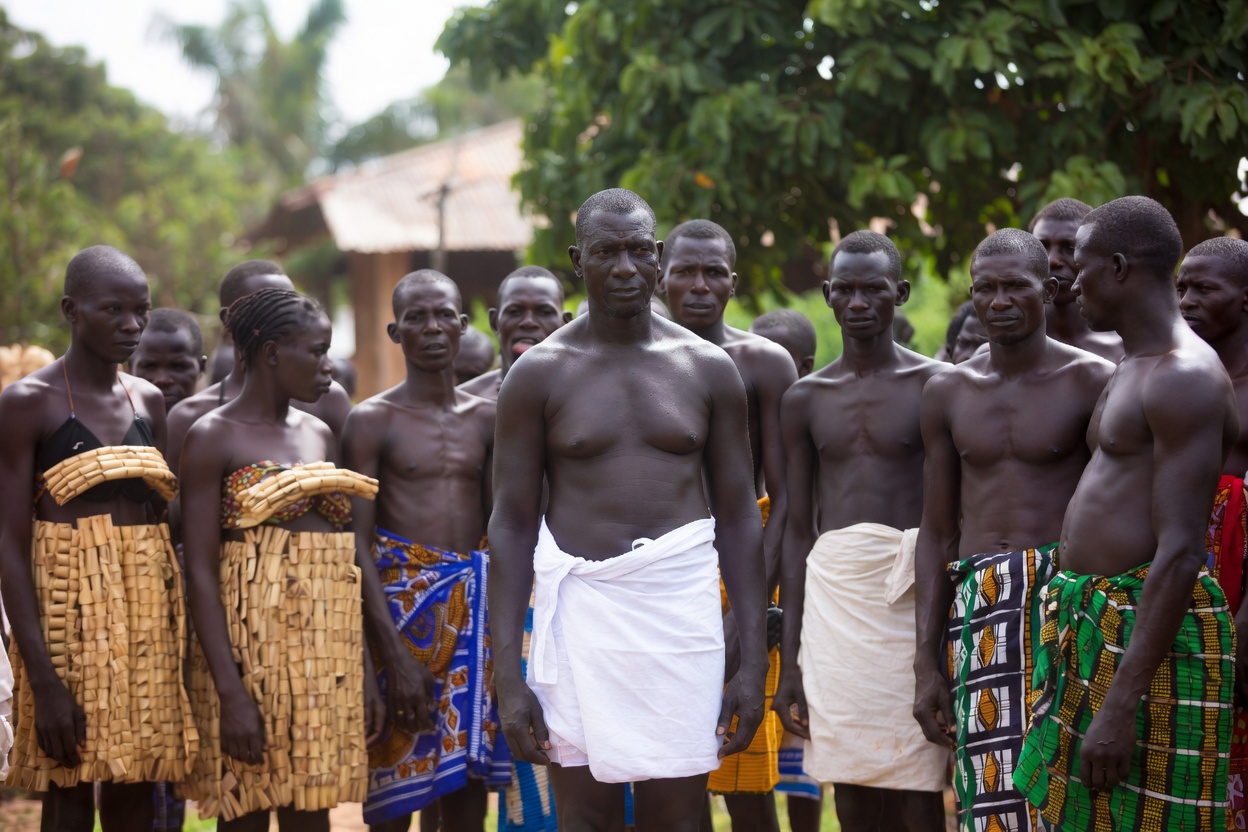 The prince first wears the full traditional regalia of the Fon.
- For the key public ritual, he appears lightly dressed:
- Barefoot
- Bare-chested
- Wearing only a simple white cloth around his waist
- Community members also dress specially:
- Women wear black bras and traditional wrappers
- Some wear skirts made from banana stems or bamboo
- These special clothes mark the occasion as sacred and distinct from everyday life.
3. The Symbolic “Stoning” Ritual
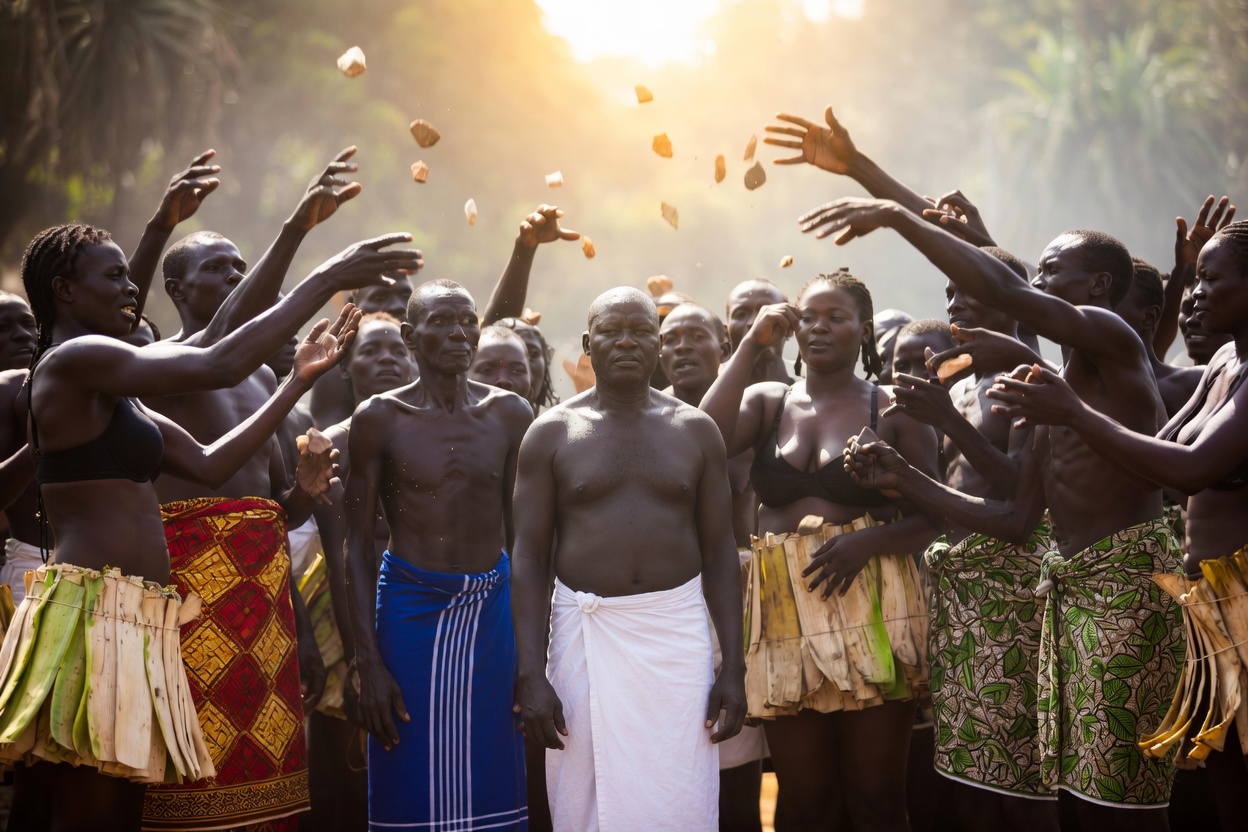 Community members gently throw small pebbles at the new Fon.
- This symbolic act represents:
- Communal acceptance and acknowledgment
- The transition from the old reign to the new
- After the stoning, the prince is no longer a private individual — he becomes the public and sacred ruler of Akum.
4. The Competition (Tantohs vs Kwifor)
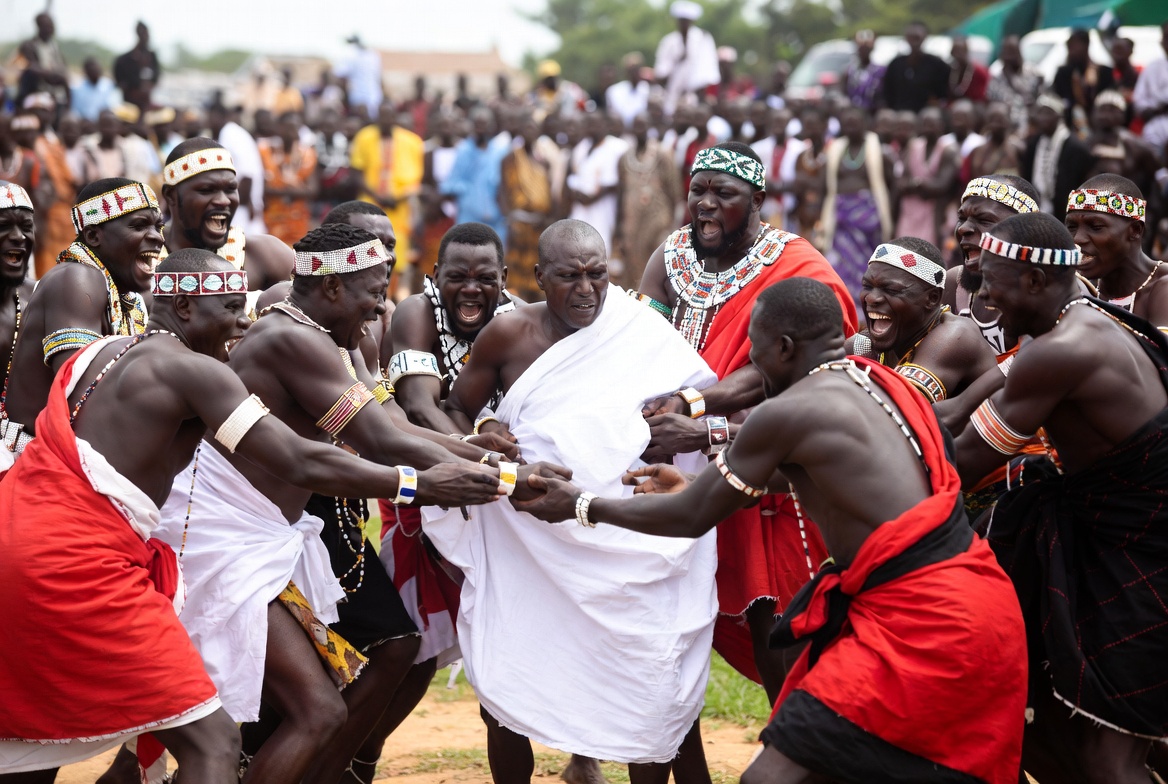 Immediately after the stoning, a playful but meaningful competition occurs between two groups:
- Tantohs and Kwifor
- Each group tries to “claim” the new Fon.
- The winning group earns the honor of escorting him to the palace.
- If neither wins clearly, alternative ritual steps are followed (e.g., returning him temporarily to the shrine).
5. Completion of the Ritual
- The Fon is washed to remove the ash used for body markings.
- He changes from the simple white ritual cloth into colorful, elaborate traditional attire.
- This marks the official end of the sacred transition phase.
6. Celebration & Festivities
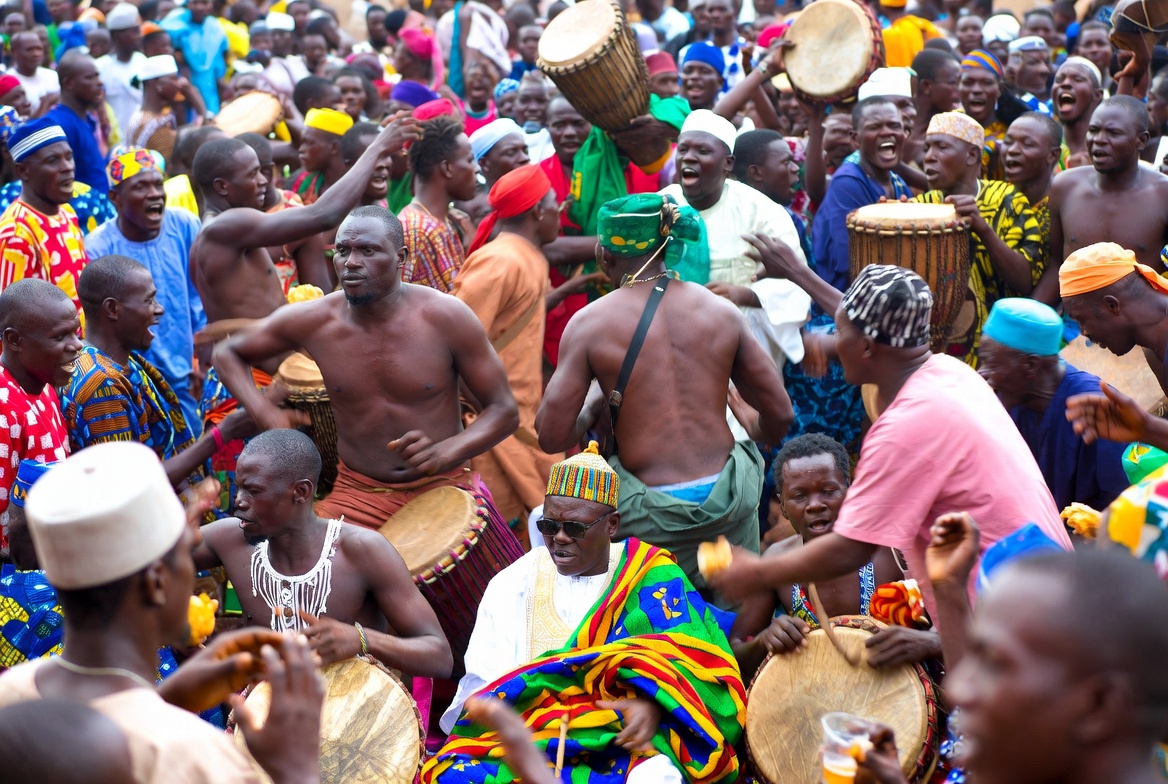 The day concludes with joyous celebrations:
- Traditional music and drumming
- Cultural dances
- Feasting and merriment
- The entire community comes together to mark the beginning of a new era under the new Fon.
This ritual beautifully blends spirituality, symbolism, playfulness, and communal unity — core values of Akum culture.