Burns Night in Glasgow
On 25 January, Glasgow does not treat Burns Night as a tourist show. It is a winter ceremony that still belongs to clubs, pubs, church halls, and family tables across the west.
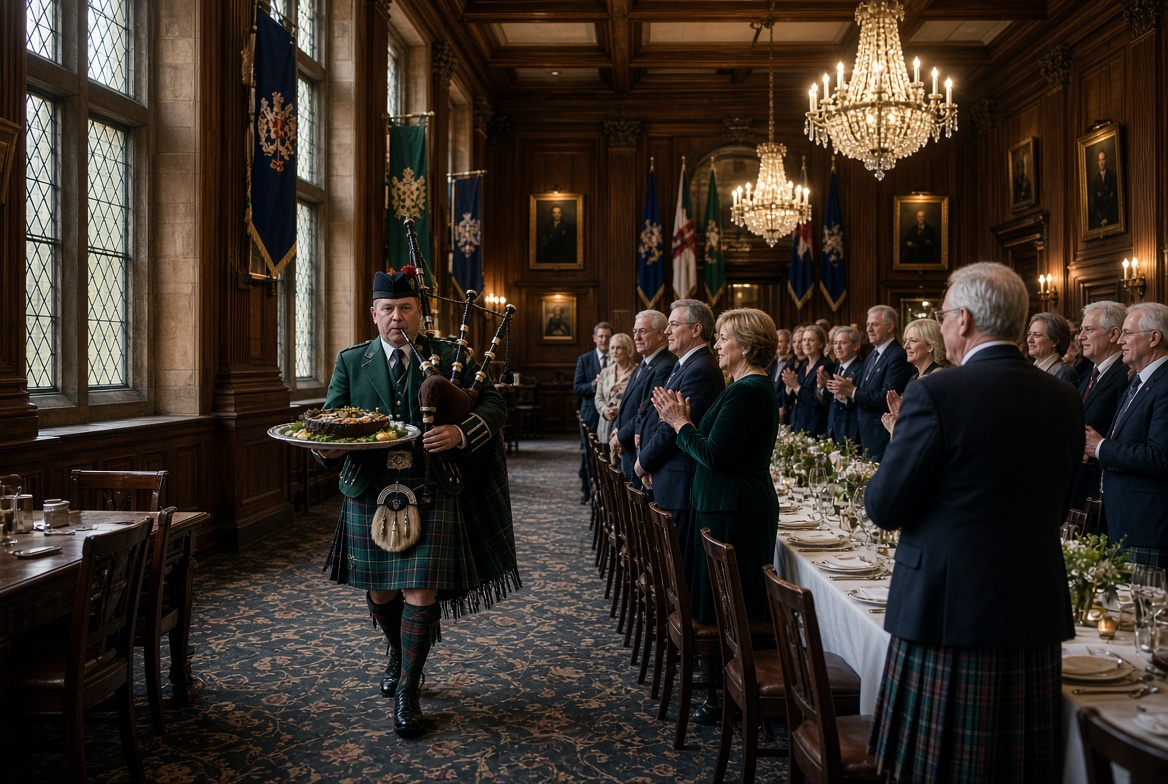
A typical night starts with people arriving in suits or kilts. The room is set with a table for the haggis. A piper plays the dish in. Someone recites Address to a Haggis in Scots, even if the rest of the evening is in English. The haggis is cut, then served with neeps and tatties.
After the meal come the speeches. The Immortal Memory is the serious one: a short talk about Robert Burns, class, love, or Scottish life. Then come the toast to the lassies and the reply. In a Glasgow hall the jokes are local, dry, and aimed at people in the room.
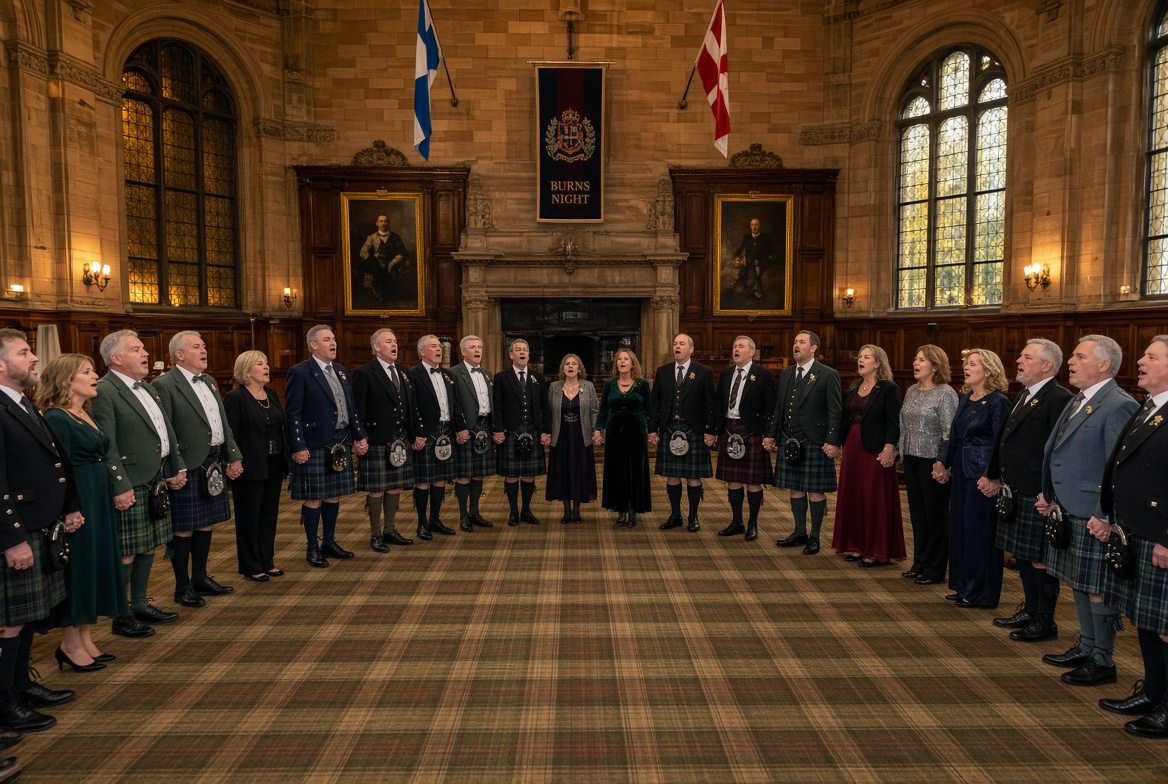
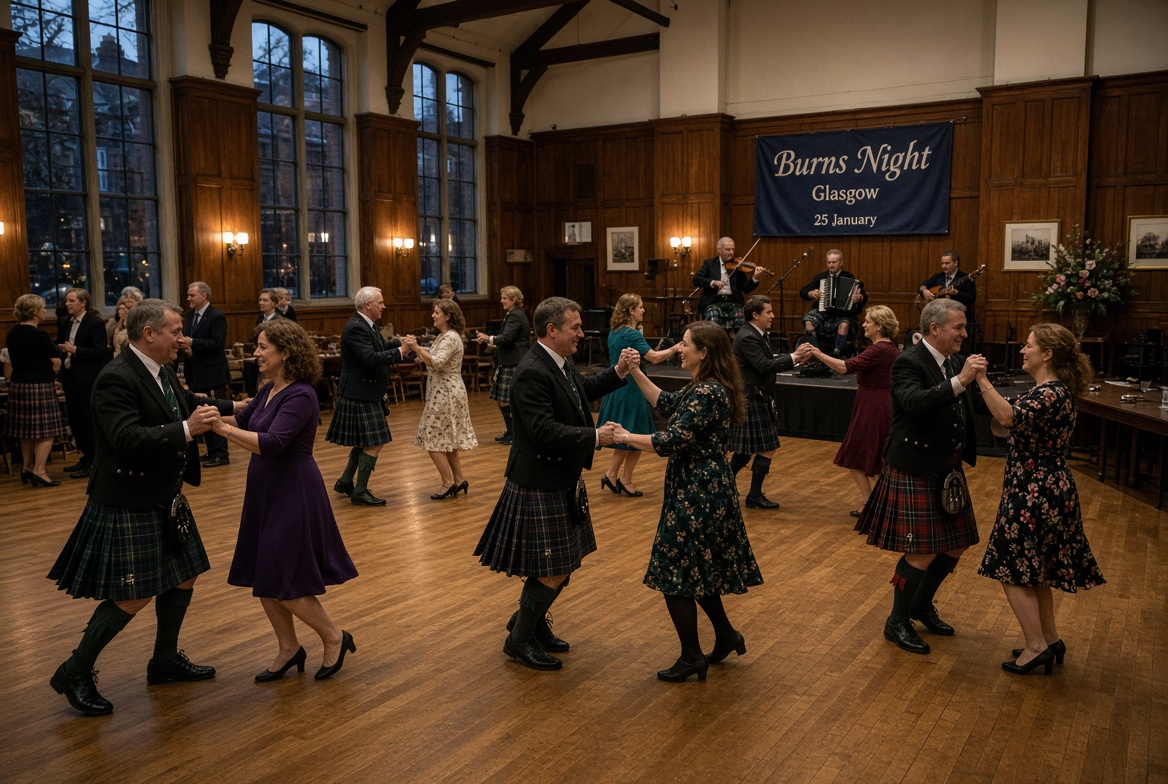
Later there is singing. Auld Lang Syne closes many nights, but before that you still hear My Love Is Like a Red, Red Rose or a rough chorus of A Man’s a Man for A’ That. Some rooms move into a small ceilidh. Others just keep drinking tea or whisky and talking.
What makes it significant in the west is not the costume. It is that a working city still stops in January to mark a poet in the language of the place. Schoolchildren learn the poems. Bowling clubs, universities, fire stations, and family houses all run some version of the same order: piper, haggis, speeches, song. That repeated ceremony is one of the clearest living traditions in English-speaking Glasgow.