
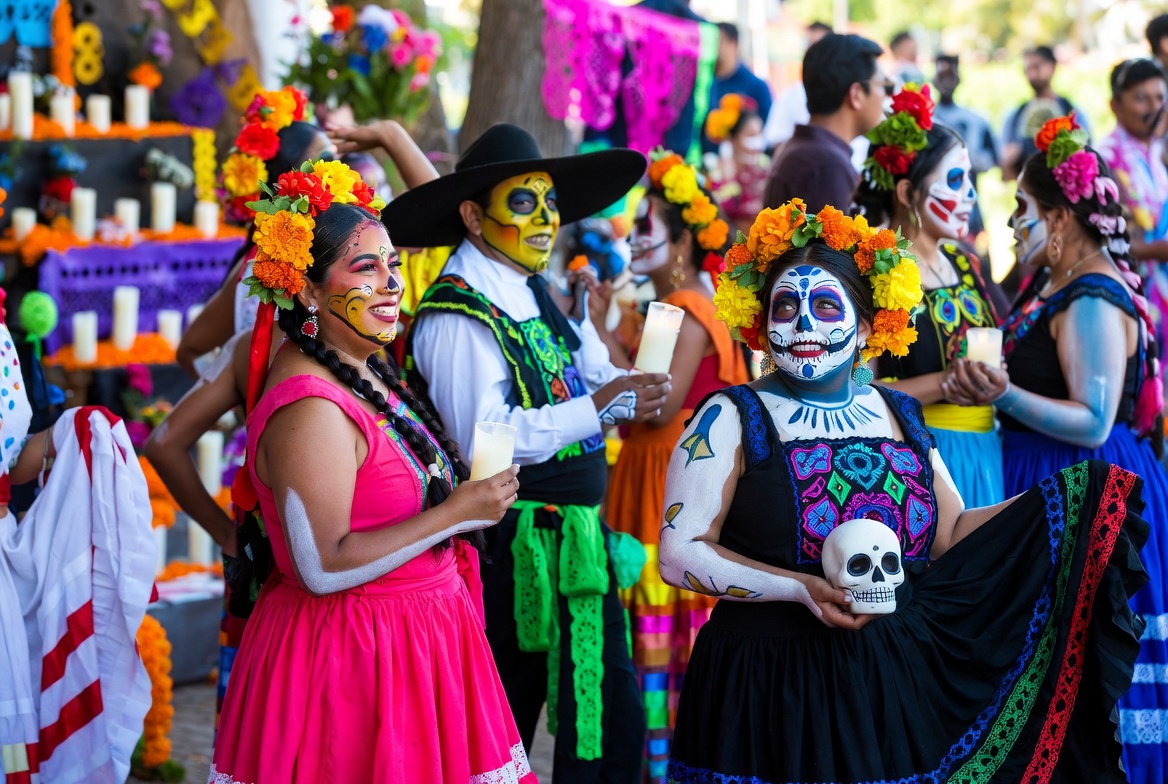
Honoring Our Ancestors: The Magic of Día de los Muertos
Every year on November 1st and 2nd, our neighborhood comes alive for Día de los Muertos (Day of the Dead). It’s not a sad occasion — it’s one of the most beautiful and meaningful celebrations in Mexican culture.
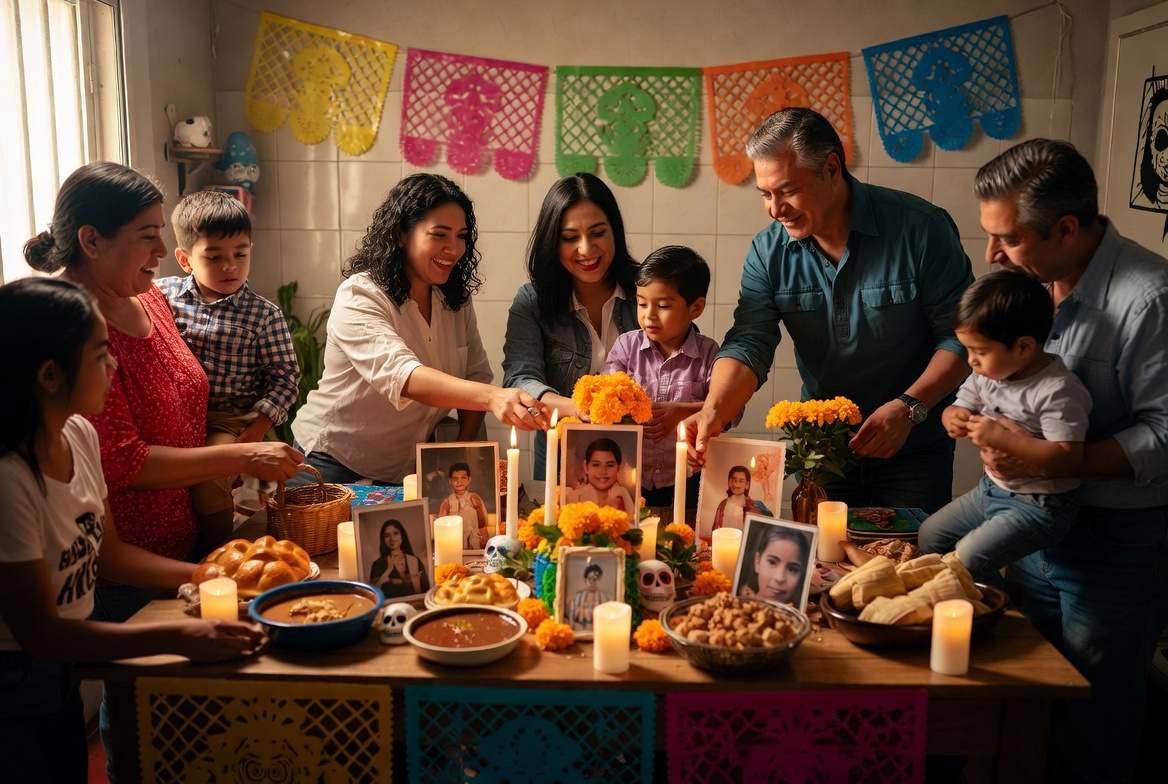
When I was a child, my abuela would wake up very early on November 1st to start building our ofrenda (altar) in the living room. We would place photos of our grandparents and great-grandparents on the table, along with their favorite foods: mole, tamales, pan de muerto (sweet bread), and fresh marigold flowers. We believed the strong scent of the cempasúchil (marigolds) would guide their spirits home.
On the night of November 1st, the whole family would walk together to the cemetery carrying candles and flowers. The graveyard transformed into a magical sea of lights and color. Families cleaned and decorated the graves with colorful paper cutouts, toys for the children who had passed, and bottles of tequila for the adults. People played music, told stories about their loved ones, and laughed through tears.
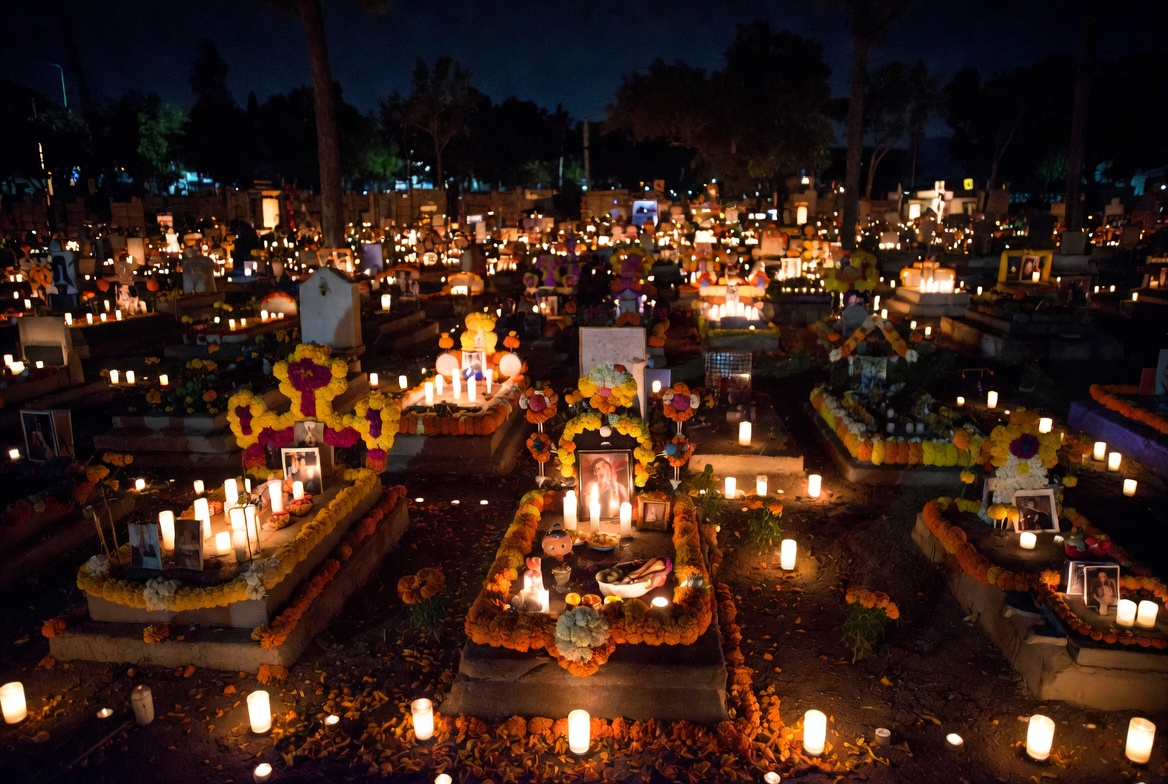
My favorite memory is when my abuela told us stories about her own mother while we ate pan de muerto by the graveside. She said, “They are not gone — they are just visiting us tonight.” That night, the line between the living and the dead felt very thin, but in the most loving way.
On November 2nd, the celebration continued with a big family meal. The house smelled of incense, chocolate, and freshly cooked mole. Neighbors would visit each other’s ofrendas, share food, and admire the altars.
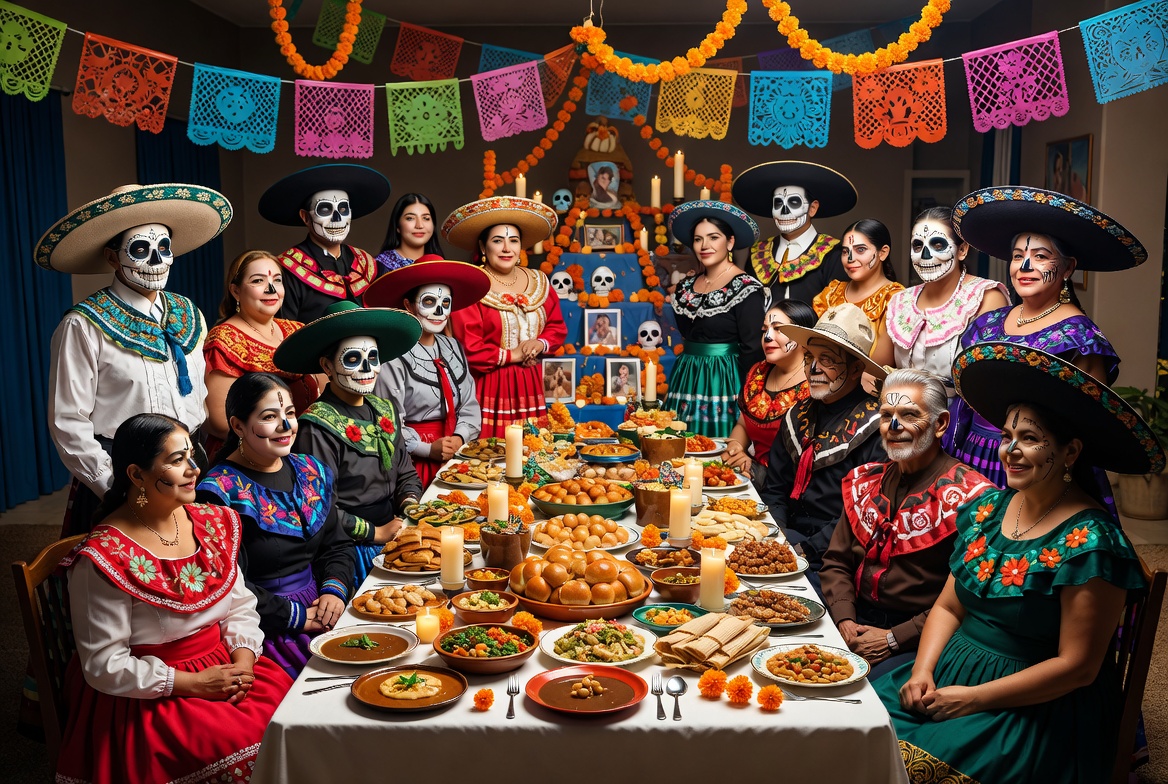
Día de los Muertos teaches us one of the most beautiful lessons in Mexican culture: death is not the end of love — it’s just another part of life. We honor our ancestors, remember them with joy, and strengthen the bonds between the living.