Language Learning for Different Goals
How to Learn a Language for Travel: The Complete Guide
How to Learn a Language for Travel: The Complete Guide
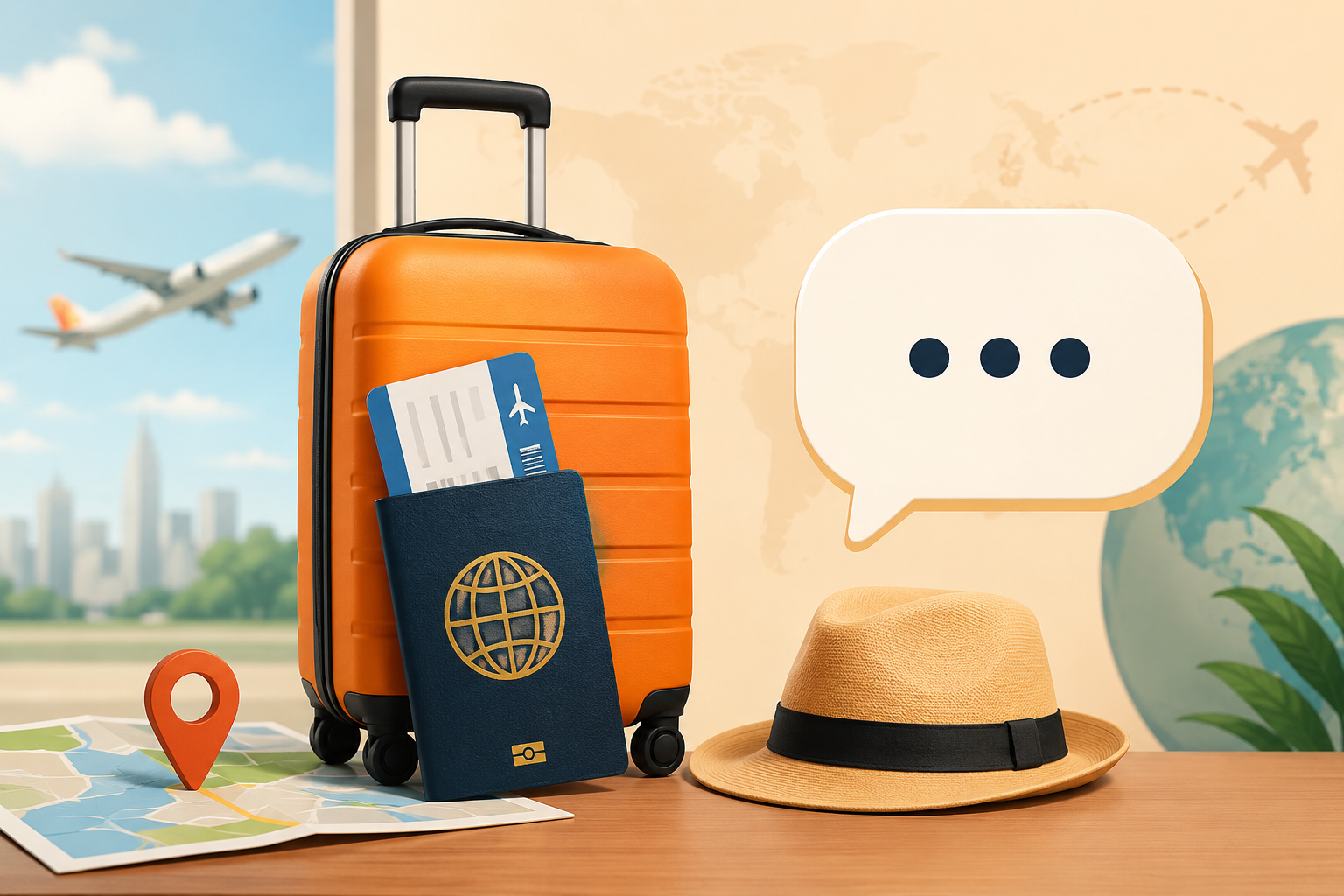
Learning a language for an upcoming trip is a completely different goal from learning one for fluency, and it deserves a completely different approach. You don't need to master grammar or hold a philosophical debate — you need to order food, ask for directions, handle an emergency, and have a few genuine, if imperfect, conversations along the way. Here's how to actually prepare, whether your trip is in six months or six weeks.
Travel language learning isn't the same as academic language learning
The instinct many people have is to open a full course and start from lesson one, the same way they'd approach a language they were learning long-term. For travel, that's usually the wrong starting point. You have limited time, a specific and predictable set of situations you'll actually encounter (restaurants, transport, hotels, basic small talk), and a much lower bar for "good enough" than a fluency-focused learner does. Optimizing for the wrong goal — grammatical completeness instead of practical usability — wastes the limited time you have before you leave.
What actually matters for travel
- Survival phrases you can produce instantly — greetings, politeness, numbers, "I don't understand," "how much," "where is"
- Listening comprehension over speaking perfection — understanding a fast reply matters more than saying something flawlessly yourself
- Confidence over accuracy — a rough sentence that gets your point across beats a grammatically perfect one you're too nervous to say
- Situational vocabulary — food, transport, and emergencies cover the overwhelming majority of real travel interactions
- Cultural norms around politeness and greetings — getting this right matters more to how you're received than grammar does
How much time do you actually have?
Six months or more. You have room to build real conversational ability, not just survival phrases. A structured routine — daily short lessons plus some speaking practice — can realistically get you to a comfortable, if imperfect, conversational level by the time you travel.
Six to eight weeks. Focus almost entirely on high-frequency, situational phrases rather than trying to build broad vocabulary. This is also a good window to add a few sessions of live conversation practice, since a tutor can drill the specific scenarios you'll actually face — ordering, checking in, asking for help — far more efficiently than a general course. If you're this close to a trip and want focused, situation-specific practice rather than a broad curriculum, comparing live tutoring platforms is worth doing now rather than a week before you fly.
Two weeks or less. Be realistic about scope. Memorize a tight set of essential phrases, practice pronunciation for the ones you'll use most (greetings, thank you, numbers, key questions), and accept that you'll be relying heavily on gestures, translation apps, and goodwill. That's completely fine — even minimal effort is noticeably appreciated by locals and makes a trip smoother.
Choosing which language to focus on
If you're heading somewhere Spanish- or French-speaking, both are popular travel languages with a huge amount of accessible learning material — our guides on learning Spanish online and learning French online go deeper into building a full routine if your trip gives you enough runway to go beyond survival phrases. For destinations with less commonly taught languages, prioritize whatever structured resource exists, even if it's less polished — some structure beats none.
How Malegado fits into travel prep
For travelers with more than a few weeks of runway, Malegado's emphasis on real conversational context and cultural understanding — not just vocabulary — is particularly useful, since travel conversations depend heavily on tone, politeness norms, and situational phrasing that pure flashcard apps tend to skip. The cultural breakdowns built into lessons cover exactly the kind of "how do people actually say this" context that turns memorized phrases into something you can use naturally in the moment.
A realistic pre-trip routine
- Identify your actual scenarios — food, transport, lodging, emergencies, small talk — and prioritize vocabulary around those, not a general curriculum.
- Practice out loud, not just silently — reading a phrase and being able to say it under pressure are different skills.
- Record yourself or use a speaking-practice tool so you're not hearing your own pronunciation for the first time in front of a stranger.
- Learn a few culturally specific courtesy phrases — these matter disproportionately to how warmly you're received.
- Accept imperfection — the goal is being understood and showing effort, not sounding like a native speaker.
Frequently Asked Questions
How long does it take to learn enough of a language for travel? For basic survival-level travel phrases, focused practice over 4–8 weeks is usually enough. For a more comfortable conversational level, plan for several months of consistent practice.
Is it worth learning a language if I'm only traveling for a week? Yes — even a small set of memorized phrases (greetings, thank you, basic questions) measurably improves interactions and is genuinely appreciated by locals, even if you're far from conversational.
Should I use an app or a tutor to prepare for travel? It depends on your timeline. An app works well if you have months to prepare; a few sessions with a live tutor are more efficient if your trip is only weeks away and you need focused, scenario-specific practice.