
Languages in Africa
Learn Hausa Online: The Complete 2026 Guide
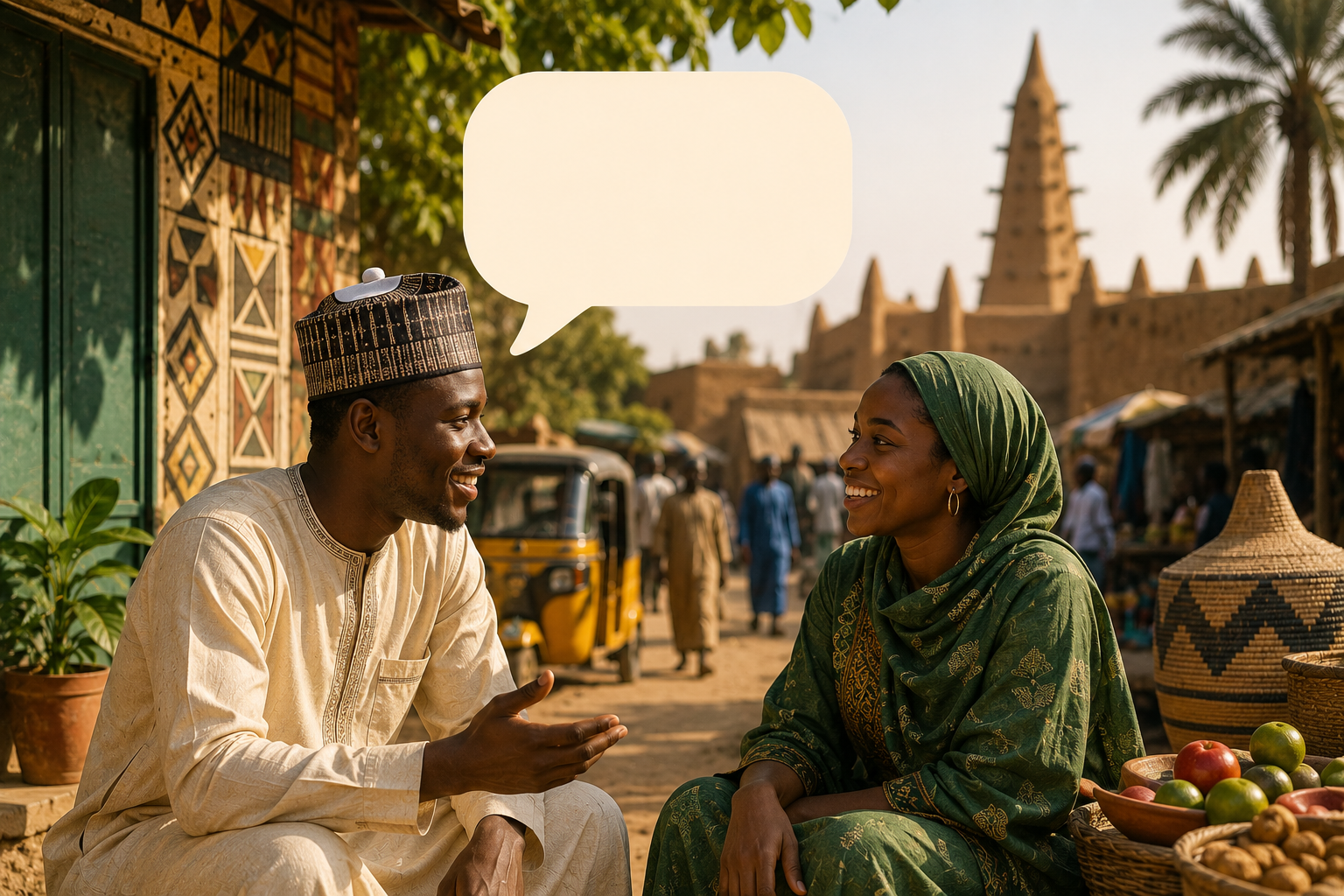
Learn Hausa Online: The Complete 2026 Guide
Hausa is one of the most widely spoken languages in Africa, with tens of millions of native speakers concentrated in northern Nigeria and Niger, and it functions as a major lingua franca across much of West Africa, used well beyond its native-speaker base for trade and daily communication. It also belongs to a different language family than Yoruba and Igbo: Hausa is Afroasiatic (related distantly to Arabic and Hebrew), while Yoruba and Igbo are Niger-Congo languages, which means the learning experience is genuinely different despite all three being major Nigerian languages.
What makes Hausa distinctive: its consonant sounds
The biggest early adjustment for English speakers learning Hausa usually isn't tone (though Hausa does have tone) — it's a set of consonant sounds that don't exist in English at all: implosive and ejective consonants, written as ɓ, ɗ, and ƙ. These involve producing sound with airflow patterns that feel unfamiliar to English speakers at first (an implosive draws air inward slightly rather than pushing it out). They're genuinely learnable with practice and real audio, but they're easy to mispronounce as ordinary b, d, and k sounds if you're not specifically trained to notice the difference — and getting them wrong changes both pronunciation accuracy and how natural your speech sounds to native listeners.
Grammar: what's different from English
Hausa has grammatical gender (masculine and feminine), which affects how certain words and verb forms agree within a sentence — a feature English doesn't have in the same way. It also has tone, though tone in Hausa is generally considered to carry a somewhat lighter functional load than it does in Yoruba or Igbo, meaning it matters for accurate, natural-sounding speech but tends to trip up communication less severely if imperfect in early stages. That said, treating tone as unimportant would still be a mistake — it's simply a different priority ranking than in Nigeria's other major languages.
A quick note on writing systems
Hausa is written today primarily in Boko, a Latin-based script similar in spirit to how English is written, which makes it more approachable for many learners coming from Latin-alphabet backgrounds than languages requiring an entirely unfamiliar script. Historically, and still in some religious and traditional contexts, Hausa has also been written in Ajami, an Arabic-based script — worth knowing about for cultural context, even though virtually all modern learning materials use Boko.
What to actually look for in a Hausa course or app
Real native audio with clear pronunciation of ɓ, ɗ, and ƙ, since these sounds are close to impossible to learn accurately from text description alone
Explicit grammar explanation of gender agreement, rather than expecting it to be absorbed purely through repetition
Some tone awareness, even though it carries a lighter role than in Yoruba or Igbo, ignoring it entirely still limits how natural your speech sounds
Cultural context, since greetings and respect conventions carry real social weight in Hausa-speaking communities, much as they do across West Africa generally
A genuinely built-out free tier — Hausa has historically had thinner mainstream app coverage relative to its actual number of speakers, so it's worth checking for real depth
Why live conversation practice helps with Hausa specifically
Because the implosive and ejective consonants are genuinely difficult to self-correct without direct feedback, live practice with a native or fluent speaker can meaningfully speed up accurate pronunciation — someone who can hear the difference between your attempt and the correct sound, in real time, is hard to replace with self-study alone. Comparing tutoring platforms is worth doing if accurate, natural pronunciation is a priority for you.
How Malegado fits into learning Hausa
Malegado's structured approach and emphasis on cultural context are well suited to Hausa, where understanding social conventions around greetings and respect is genuinely important across West African communication generally matters as much as mastering the language's distinctive sounds. If you're exploring other Nigerian languages, our guide to learning Igbo online covers a structurally very different language worth understanding on its own terms.
A realistic routine for learning Hausa
Train your ear on ɓ, ɗ, and ƙ early, using real native audio, since these sounds are the biggest early differentiator from English pronunciation.
Learn gender agreement explicitly, rather than hoping it's absorbed through pure exposure.
Don't ignore tone entirely, even though it's less critical than in some other Nigerian languages — it still affects how natural your speech sounds.
Get live feedback on pronunciation when possible, especially for the implosive and ejective consonants, which are hard to self-correct.
Learn greetings and respect conventions early, since they carry genuine social weight in everyday Hausa communication.
Frequently Asked Questions
Is Hausa hard to learn for English speakers? The main early challenge is a set of consonant sounds (ɓ, ɗ, ƙ) that don't exist in English, along with grammatical gender. Tone is present but generally considered less critical to basic communication than in some other African languages.
Is Hausa written the same way as English? Modern Hausa uses Boko, a Latin-based script, which is more approachable for Latin-alphabet learners than an unfamiliar script would be. A historical Arabic-based script (Ajami) is still used in some religious and traditional contexts.
How is Hausa different from Yoruba and Igbo? Hausa belongs to a different language family (Afroasiatic, versus Niger-Congo for Yoruba and Igbo), and its biggest learning challenge is distinctive consonant sounds rather than tone being the central obstacle, as it is for the other two.